
LangGraph Review 2026: The Framework That Quietly Became LangChain's Own Runtime
Most people still describe LangGraph as "the graph-based add-on for building agents with LangChain." That framing is out of date. On October 22, 2025, LangGraph hit a stable 1.0 release and became the officially documented runtime underneath LangChain's own agent abstraction — and its paid hosted product, formerly called LangGraph Platform, was renamed LangSmith Deployment the same season. This review covers what LangGraph actually is now, what it costs, what broke and got patched along the way, and whether the control it gives you is worth the learning curve.
| Open-source library? | Yes — MIT, still free |
| Paid hosted platform | LangSmith Deployment (was "LangGraph Platform") |
| Current stable version | langgraph 1.2.11 (1.0 line, GA Oct 2025) |
| Cheapest paid seat | LangSmith Plus, $39/seat/mo |
| Company valuation | $1.25B, $125M Series B (Oct 2025) |
LangGraph didn't win the "which agent framework" argument by being the friendliest. It won by being the one that doesn't fall over.
"The thing that changed in the last year isn't LangGraph's core idea — nodes, edges, explicit state, checkpoints you can replay — it's that LangChain Inc. bet the company on it. LangGraph is now the runtime under LangChain's own agent abstraction, its paid deployment product got folded into LangSmith and renamed, and $125M of fresh funding went straight into making the durability story real for enterprises."
If you tried LangGraph in 2024 as "the cyclical-graph library people argued about on Hacker News," the honest update is: the graph-of-nodes-and-edges mental model hasn't changed. What changed is that it's no longer a side project next to LangChain — as of the October 2025 1.0 release, it is the execution layer LangChain's own create_agent runs on, and the commercial product around it has a new name worth knowing before you go looking for docs.
Three products, one increasingly blurred stack.
LangChain Inc. now ships three layers that used to feel like separate products and now function as one stack: LangChain (prebuilt agent abstractions and provider integrations), LangGraph (the low-level graph runtime that LangChain itself runs on, and that you can also use directly, with or without LangChain), and LangSmith (observability, evals, and — since October 2025 — deployment and the visual debugging Studio, both of which used to have "LangGraph" in their names).
The one asterisk worth flagging early: if you bookmarked a 2024-era tutorial that says "LangGraph Platform" or "LangGraph Studio," those exact product names no longer appear on LangChain's current pricing or docs pages — the underlying products still exist, just under the LangSmith brand.
LangGraph's real 2026 story is the $125M and the production case studies, not the star count.
langchain-ai/langgraph, verified on GitHub, Sep 21, 2026.
LangChain + LangGraph combined, company-reported.
Led by IVP, $1.25B valuation, Oct 20, 2025.
Company-reported, not independently audited.
| Era | What LangGraph was | What changed it |
|---|---|---|
| 2023–2024 | Launched Jan 2023; reached a stable 0.1 release Jun 2024; positioned as an optional, lower-level companion to LangChain | LangGraph Studio launched (open beta) as the first "agent IDE," desktop-only, Apple Silicon |
| 2025 | Fast-growing but still framed by most users as "the graph library," separate from LangChain's main abstractions | Oct 20: $125M Series B at $1.25B (IVP-led). Oct 22: LangChain 1.0 + LangGraph 1.0 GA, zero breaking changes — LangGraph becomes the documented runtime under LangChain's agent abstraction. Same window: LangGraph Platform renamed LangSmith Deployment; LangGraph Studio renamed LangSmith Studio. |
| 2026 | Production runtime at Klarna (85M users), Uber, LinkedIn, Replit, AppFolio, Elastic; current release langgraph 1.2.11 | Patched CVE chain (Mar/Jun 2026 disclosures) in self-hosted SQLite/Redis checkpoint configs; BYOC on AWS reached general availability (Aug 2026) |
Named companies, with company-published numbers, not just logos.
| Company | What they built on LangGraph | Stated result |
|---|---|---|
| Klarna | AI Assistant for customer support, powered by LangGraph + LangSmith | 85M active users served; average resolution time cut 80%; ~70% of repetitive support tasks automated (official case study) |
| Uber | Network of specialized agents for large-scale code migration and automated test generation | Thousands of daily code fixes; ~21,000 developer hours saved; 10% developer-platform coverage improvement (per Uber's own published account, via ZenML LLMOps DB) |
| Hierarchical multi-agent recruiter for candidate sourcing, matching, and messaging | Freed human recruiters to focus on high-level strategy (official LangChain roundup) | |
| AppFolio | Copilot for property managers | 10+ hours/week saved; ~2x decision accuracy (official LangChain roundup) |
| Replit | Multi-agent AI coding copilot with human-in-the-loop review | Increased transparency into agent actions during long build sessions (official LangChain roundup) |
The praise is about durability. The complaints are about the learning curve — and about rename fatigue.
"using LangGraph for a month, every single 'graph' was the same single solution" — calling it "a very fancy and limited version of basic conditional statements... already built into languages." LangChain founder Harrison Chase replied on the same thread asking for the specific repeated pattern.
Enterprise reviewers describe it as "intuitive and flexible," with a real learning curve "especially when working with advanced configurations" — overall summarized as "impressive, stable, transparent" for production agent workflows.
Community verdict converges on: LangGraph is "worth it if you are building a stateful, multi-step agent that you intend to deploy, observe, and connect to real systems" and "overkill for a simple chain or a one-shot RAG query."
The open-source library is still free. The platform around it has a new name and three tiers.
LangSmith Developer
Free forever; 1 seat.
- 5,000 base traces/mo, 14-day retention
- 10 sandboxes, 5 LCU + 1 LSU monthly
- Community support
LangSmith Plus
+ usage-based LCU/LSU billing.
- 10,000 base traces/mo, unlimited added seats
- Deployment access + 1 free small serverless deployment
- 25 LCU monthly Fleet allowance
Enterprise
Self-hosted/hybrid available.
- Custom SSO/ABAC/RBAC
- Support SLAs, custom seats/workspaces
| Deployment option | Who it's for | Plan requirement |
|---|---|---|
| Self-Hosted Lite | Free, self-run, up to 1M node executions | Any plan (incl. Developer) |
| Cloud SaaS | Fastest path — fully managed inside LangSmith | Plus or Enterprise |
| Hybrid | SaaS control plane + your own data plane, for sensitive data | Enterprise only |
| Self-Hosted Enterprise | Full infrastructure control | Enterprise |
| BYOC (bring your own cloud) | Runs in your VPC; vendor manages provisioning. AWS reached GA Aug 2026. | Enterprise |
Source: langchain.com/pricing, verified Sep 22, 2026. LCU (LangChain Compute Unit) = $1.50; LSU (LangChain Storage Unit) = $1.00; base trace overage $2.50/1,000 (14-day retention), extended trace overage $5.00/1,000 (400-day retention).
Your answer depends on whether you need it to survive a crash.
LangGraph is likely overkill — a raw SDK or LangChain's higher-level agent helpers will be simpler.
This is exactly what LangGraph's checkpointing and durable execution are built for.
Self-Hosted Lite is free up to 1M node executions — the open-source core never has a seat fee.
LangSmith Plus at $39/seat/mo turns on Deployment (formerly LangGraph Platform).
Enterprise, custom pricing.
The thing LangGraph is actually known for: making agent state a first-class, inspectable object.
A LangGraph application is defined as nodes (steps — an LLM call, a tool call, custom logic) and edges (the transitions between them, including conditional branches and loops), all reading and writing a single, explicit shared state object. Every step of that execution can be checkpointed — saved to a persistence backend (in-memory, SQLite, Postgres, or Redis) — which is what enables durable execution: if a run is interrupted, it resumes exactly where it left off instead of restarting from scratch.
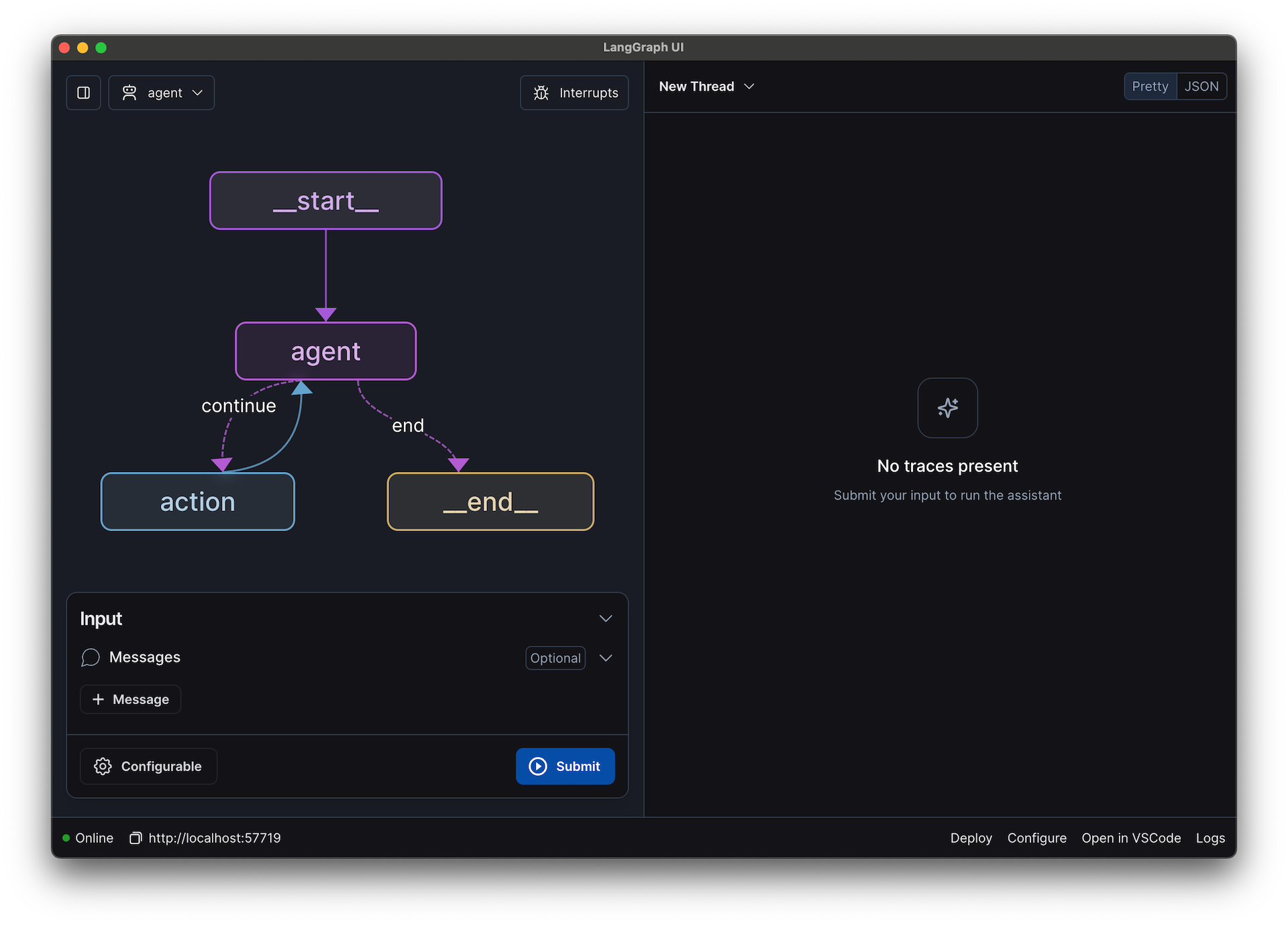
- State is explicit and inspectable at every node, not hidden inside a conversation history.
- Time-travel debugging lets you replay from any checkpoint and see exactly why the agent made a decision.
- Human-in-the-loop interrupts can pause execution mid-graph for approval, then resume from that exact point.
- The graph/node/edge/state model is a real mental-model tax if your task is actually a single LLM call — see the HN critique above.
- Self-hosted checkpoint backends (SQLite, Redis) carried real, now-patched CVEs in 2026 — see the Security section before a self-hosted rollout.
Define the graph, compile it, run it with checkpoints, let a human interrupt when it matters.
Official LangChain video: the graph/node/edge/state model explained by the team that built it.
Published by the official "LangChain" YouTube channel (youtube.com/@LangChain).
Five ways to run a graph in production — from free-and-local to fully managed.
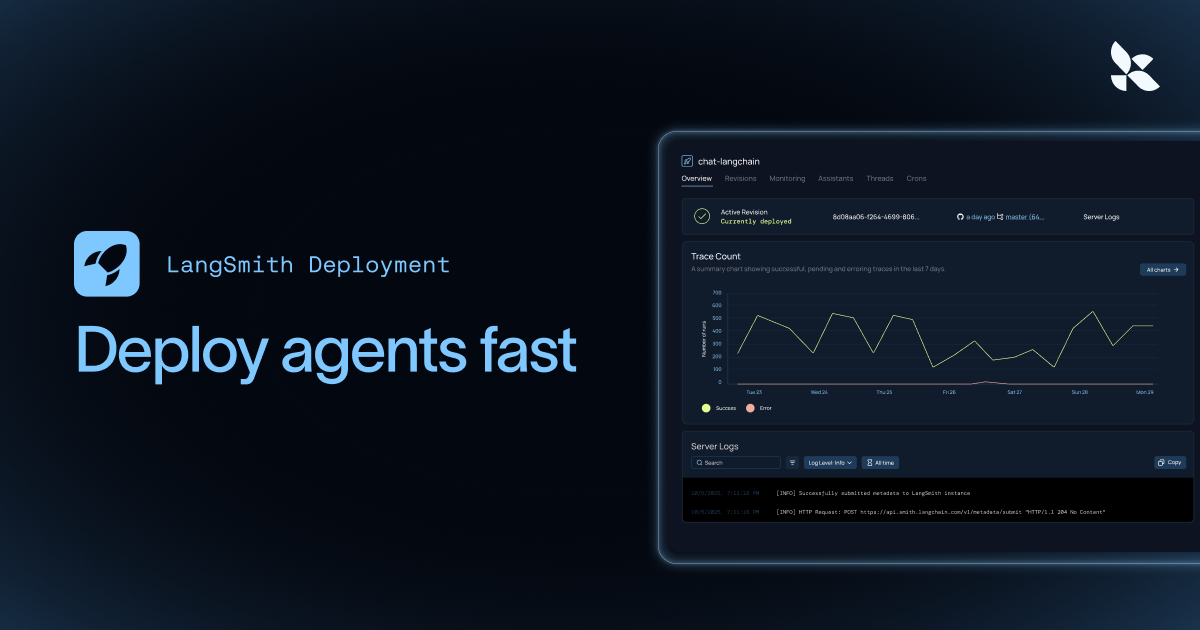
LangSmith Deployment (the renamed LangGraph Platform) is what turns a graph you can run on your laptop into a hosted service with autoscaling, streaming, and a managed checkpoint store. It's entirely optional: Self-Hosted Lite lets you run the same deployment tooling yourself, free, up to 1 million node executions, before any LangSmith plan fee applies.
LangGraph agents can call tools over MCP and talk to other frameworks' agents over A2A.
LangGraph supports Model Context Protocol (MCP) tool servers as a standard way to give a graph node access to external tools, and the broader agent-framework ecosystem in 2026 has converged on the Agent-to-Agent (A2A) protocol for cross-framework interoperability — notably, Google ADK's stated A2A support means an ADK-built agent can discover and invoke a LangGraph agent through a standardized task interface, and vice versa, rather than every framework being a walled garden.
Your real bill is model tokens plus usage units, not just the $39 seat.
| What you're doing | What you pay |
|---|---|
| Self-hosted, no LangSmith account | $0 to LangChain Inc.; your model provider's per-token rate; your own infra cost |
| LangSmith Developer | $0/seat; 5,000 base traces/mo included, then metered |
| LangSmith Plus | $39/seat/mo + LCU ($1.50) / LSU ($1.00) usage beyond the included Fleet allowance |
| Trace overage (any paid plan) | $2.50/1,000 base traces (14-day retention) or $5.00/1,000 extended traces (400-day retention) |
| Enterprise | Custom, includes self-hosted/hybrid deployment + SSO/ABAC/RBAC |
2026 brought real, patched CVEs in self-hosted checkpoint backends — worth knowing before you self-host.
People who need the agent to survive a crash, not just demo well.
| Situation | Why LangGraph fits | Likely plan |
|---|---|---|
| Solo developer prototyping a multi-step agent | Free, MIT, self-hostable, works with or without LangChain | Open source, Self-Hosted Lite |
| Team that needs durable, resumable, long-running agents | Checkpointing + human-in-the-loop interrupts by design | LangSmith Plus, $39/seat/mo |
| Regulated enterprise needing SSO/ABAC/RBAC or hybrid hosting | Self-Hosted Enterprise / Hybrid / BYOC options | Enterprise, custom |
| Team building a single-shot chatbot or simple RAG lookup | Poor fit — the graph/state model is overhead for a one-step task | Consider a lighter SDK instead |
| Team already standardized on LangSmith for observability | Deployment and Studio live in the same account/UI now | Whatever LangSmith tier is already in use |
Four real gaps, not manufactured ones.
"LangGraph Platform" and "LangGraph Studio" don't appear as product names on current pricing/docs pages, but thousands of tutorials, blog posts, and Stack Overflow answers still use the old names — a real onboarding tax as of this writing.
Multiple independent sources (Gartner Peer Insights, Hacker News, community practitioner posts) converge on the same point: the graph/node/edge/state mental model takes real time to internalize, especially for advanced configurations.
Three chainable vulnerabilities in self-hosted SQLite/Redis checkpoint configurations were disclosed and patched in 2026; the managed LangSmith Deployment product was not affected, but self-hosters needed to patch promptly.
LangChain Inc. has not published real revenue or paid-customer figures; the ~$16M ARR / ~1,000 customers number circulating online is a third-party estimate, not a company fact, and is treated that way throughout this review.
If LangGraph's graph-and-state model isn't what you need, here's how to think about it.
| If you mostly need... | Compare LangGraph with... |
|---|---|
| Fast prototyping of role-based agent "crews" without a graph | CrewAI — read our review |
| Multi-language (Python/Go/TS), Google-Cloud-native agents with first-class A2A | Google ADK — read our review |
| Conversation-first, human-in-the-loop dialogue patterns | Microsoft AutoGen/AG2 (github.com/microsoft/autogen) — now in maintenance mode at Microsoft |
| A lightweight, single-vendor SDK if you're committed to OpenAI models only | OpenAI Agents SDK (openai.github.io/openai-agents-python) |
| Document-heavy, retrieval-first pipelines | LlamaIndex Workflows (docs.llamaindex.ai) — often paired with LangGraph, not a strict replacement |
No affiliate relationship shapes this review.
JAVIS has not established a publisher affiliate program with LangChain Inc. Every CTA here points to the official product.
Go to the official page.
Open LangGraphRead the alternative that matches your real question.
Choose the next articleLangGraph makes the most sense next to the models it runs and the ready-made agents it's an alternative to building.
Questions people are actually searching right now
Is LangGraph still free?
Yes. The LangGraph library is MIT-licensed and free with no seat fee, self-hostable via Self-Hosted Lite up to 1 million node executions. LangSmith (observability, evals, and managed Deployment) has paid tiers on top, starting at $39/seat/month.
What happened to LangGraph Platform?
It was renamed LangSmith Deployment in October 2025, as part of LangChain Inc. consolidating its commercial products under the LangSmith brand. LangGraph Studio was renamed LangSmith Studio at the same time. The underlying products still exist — only the names changed.
Is LangGraph the same as LangChain?
No, but they're now tightly coupled. LangGraph is the lower-level graph/state runtime; as of the October 2025 1.0 release, LangChain's own agent abstraction runs on top of LangGraph under the hood. LangGraph can still be used standalone, with or without LangChain.
Is LangGraph 1.0 stable?
Yes. LangGraph 1.0 reached general availability on October 22, 2025, the same day as LangChain 1.0, with the company stating zero breaking changes from the prior 0.x line. The current release as of this review is langgraph 1.2.11 (Aug 2026).
Was LangGraph affected by security vulnerabilities?
Yes — three chainable CVEs (SQL injection, unsafe msgpack deserialization, RediSearch query injection) were disclosed in 2026 affecting self-hosted SQLite/Redis checkpoint configurations, plus two separate langchain-core CVEs. All are patched. LangChain stated the managed LangSmith Deployment product was not affected.
How much do Klarna, Uber, and LinkedIn actually use LangGraph for?
Per LangChain's own published case studies: Klarna's AI Assistant (85M active users, 80% faster resolution) runs on LangGraph + LangSmith; Uber uses a network of LangGraph agents for large-scale code migration and test generation; LinkedIn built a hierarchical multi-agent recruiter on LangGraph.
Is LangGraph better than CrewAI or Google ADK?
Different trade-offs, not simply better: CrewAI is faster to prototype with role-based crews; Google ADK is the natural choice for multi-language, Google-Cloud-native builds; LangGraph wins on explicit state, checkpointing, and production durability. See our CrewAI and Google ADK reviews for the direct comparisons.
Does LangGraph work outside Python?
Yes — LangGraph ships officially in both Python and JavaScript/TypeScript (langgraph and langgraph.js / @langchain/langgraph packages).
Where this came from, and when it was checked.
GitHub stats (stars/forks/license): GitHub data for github.com/langchain-ai/langgraph, Sep 21, 2026.
Package version: pypi.org/project/langgraph, current release 1.2.11, Aug 11 2026.
Pricing (Developer/Plus/Enterprise, LCU/LSU): langchain.com/pricing and langchain.com/langsmith/deployment, official, read directly, Sep 22, 2026.
Funding ($125M Series B, $1.25B valuation): langchain.com/blog/series-b, official, corroborated by dataconomy.com.
Product rename (Platform → LangSmith Deployment, Studio → LangSmith Studio): cross-checked against docs.langchain.com/langsmith/changelog and current langchain.com product pages, which no longer use the old names, Sep 2026.
1.0 GA date and "runtime underneath LangChain" claim: changelog.langchain.com official announcement, Oct 22, 2025.
Production case studies (Klarna, Uber, LinkedIn, AppFolio, Replit, Elastic): langchain.com/blog/customers-klarna and langchain.com/blog/is-langgraph-used-in-production, official; Uber detail via ZenML LLMOps Database summary of Uber's own published account.
Security CVEs: thehackernews.com coverage (Mar 2026 and Jun 2026 articles), citing CVE-2025-67644, CVE-2026-28277, CVE-2026-27022, CVE-2025-68664, CVE-2026-34070 with CVSS scores and patched-version numbers.
Real screenshots/media: langchain.com/langgraph social-preview image, opengraph.githubassets.com repo card, blog.langchain.com LangGraph Studio launch post (graph_screen.png), langchain.com/langsmith/deployment social-preview image.
Official video: youtube.com/watch?v=29XE10U6ooc, authorship confirmed on YouTube (author "LangChain", channel @LangChain).
User sentiment: Hacker News (direct quotes, linked), Gartner Peer Insights (summarized, the page could not be read directly, so sentiment is reported at lower confidence), r/LangChain pattern via 2026 practitioner write-ups; G2's lack of a distinct, populated LangGraph review page is disclosed rather than a rating being invented.