
Cursor Review 2026: Is the $60 Billion AI Code Editor Actually Worth Paying For?
Correction, Oct 3, 2026: an earlier version listed pooled usage and invoicing under Teams; on cursor.com/pricing they are Enterprise features. We added the $120/user Teams Premium seat, relabelled the $1B ARR milestone as Cursor's own figure from its Series D post, and corrected the hero image description.
Cursor stopped being "a VS Code fork with autocomplete" a while ago. It's now an agent-centered editor that SpaceX paid $60 billion to own outright. The valuation is not the interesting part. The interesting part is whether Composer and the new agent-first workflow actually save you time, or just move the busywork somewhere else.

| Agentic coding | Excellent |
| Large codebase work | Strong |
| Pricing predictability | Mixed |
| Non-coder simplicity | Not the target |
| Value at Pro/Pro+ | Strong |
Cursor is easy to love in a demo and easy to resent on an invoice.
"The moment Composer opens a pull request faster than I can review it, I stop feeling like I'm 'using an editor' and start feeling like I'm managing a very fast, occasionally overconfident junior engineer."
That's the honest way to describe working with Cursor's agent mode in 2026. It genuinely changes how much code you can move through in a day. It also means the thing you're now managing is trust, not syntax — did the agent touch the right files, did it test what it changed, and did the bill match what you expected this month.
One editor, four ways to hand off work.
Cursor is a standalone code editor (a VS Code fork) built by Anysphere, now operating as part of SpaceX's "SpaceXAI" division after an all-stock acquisition that closed in August 2026. The product itself is unchanged in shape: you still write code in a familiar editor, but almost every entry point now assumes an agent will do some of the work.
The practical takeaway: Cursor no longer assumes you're writing every line. It assumes you're deciding what gets built and reviewing what comes back.
This is no longer a startup story. It's the largest AI-software acquisition on record.
In June 2026, SpaceX agreed to acquire Anysphere (Cursor's parent company) in an all-stock deal; the transaction closed in August 2026 and Cursor now operates as a subsidiary under a new "SpaceXAI" division. That is a genuinely unusual outcome for a code editor, and it changes how I'd read everything else about the company.
SpaceX/Anysphere all-stock deal, SEC Form 8-K, closed Aug 14, 2026.
Nov 13, 2025, $2.3B round co-led by Accel & Coatue.
Third-party revenue tracking estimate, not an audited public figure.
312 verified reviews, G2.com, checked Sep 2026.
| Milestone | Date | Reported figure |
|---|---|---|
| $100M ARR | Jan 2025 | Third-party revenue tracker estimate |
| $500M ARR | Jun 2025 | Third-party revenue tracker estimate |
| Series D at $29.3B valuation | Nov 2025 | Confirmed — $2.3B round, Accel/Coatue co-lead |
| $1B ARR | Nov 2025 | Cursor's own statement (Series D post: “crossed $1B in annualized revenue”) |
| $2B ARR | Feb 2026 | Third-party revenue tracker estimate |
| SpaceX acquisition, $60B, all-stock | Signed Jun 16 / closed Aug 14, 2026 | Confirmed via SEC 8-K filing |
Cursor also says it's used by more than half of the Fortune 500, and Nvidia's Jensen Huang has publicly cited 40,000+ engineers using it internally. Those are adoption signals, not independent user counts — a "user" claim from an interested party is a different kind of evidence than an audited number, and I'm labeling it that way on purpose.
Developers like what it does. They're less sure about what it costs them in surprises.
I went through G2 reviews, Reddit threads, and independent developer write-ups to see what holds up once the novelty wears off.
Users describe Cursor's codebase understanding as feeling like "a code review from a senior developer," and say the jump in quality when switching to frontier/Pro-tier models justifies the cost for daily coders.
A July 2025 change from a 500-requests Pro plan to usage-metered billing "provoked complaints about unexpected charges"; Cursor rolled back the limits and issued refunds after the backlash.
Heavy refactoring users report the monthly agent allowance "can run out before month end," and generated code in large or unfamiliar codebases still needs careful review rather than blind merging.
If it were my money, I wouldn't start above Pro+.
Hobby
No card required.
- Limited agent requests
- Access to Composer
Pro
Per month.
- Extended agent limits
- Frontier model access
- MCP, skills, hooks, cloud agents
Pro+
3x Pro's agent limits.
- Best for daily agent users
- Frontier models included
- Cloud agents + Bugbot billing
Ultra
20x Pro's agent limits.
- Highest individual capacity
- Priority access to new features
Teams
Per user, per month (Standard seat). Premium seat: $120/user with 5x Standard Agent limits.
- Centralized team billing, SAML/OIDC SSO
- Admin/security controls
- Enterprise (custom pricing) adds pooled usage and invoice/PO billing
All plans: on-demand usage past the included amount bills in arrears; annual billing saves 20%. Source: cursor.com/pricing, verified Sep 20, 2026.
Don't pick a tier by price. Pick it by what keeps interrupting you.
Start with Hobby — it's free and shows you the ceiling.
Pro is a reasonable start at $20/month.
Pro+ is the first upgrade with a real justification.
Only then would I look at Ultra.
Teams/Enterprise, not a bigger individual plan.
Composer is the reason Cursor 2.0 feels like a different product.
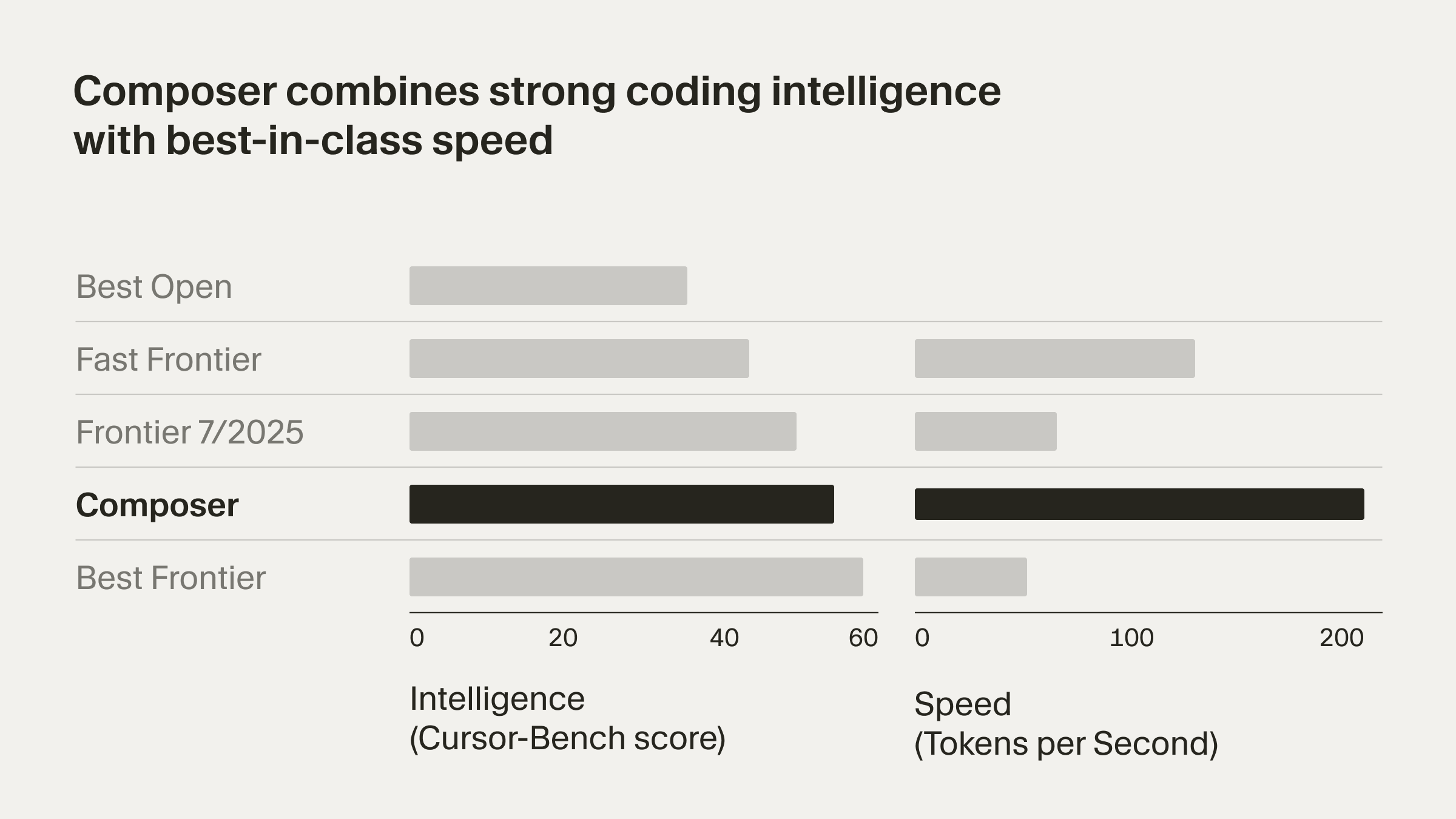
Cursor 2.0, released October 29, 2025, rebuilt the interface around agents instead of files, and introduced Composer — Cursor's own coding model. Anysphere describes Composer as roughly 4x faster than similarly capable models, completing most agent turns in under 30 seconds, and trained with codebase-wide semantic search so it handles large repos better than a model reading files cold.
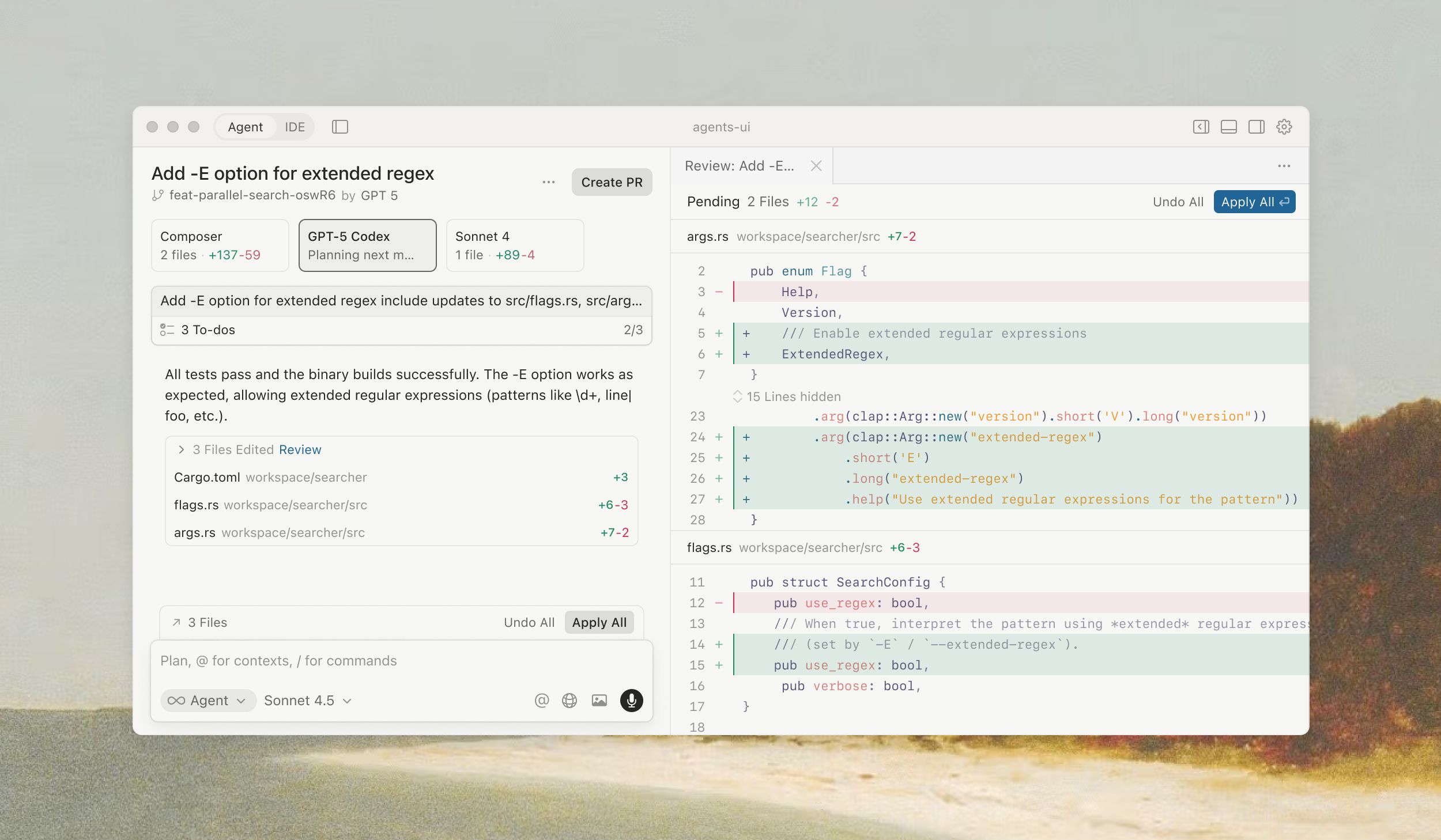

What actually changed in daily use: you can run several agents at once on separate git worktrees or remote machines, let more than one model attempt the same task and pick the best result, and let Cursor's built-in browser tool test the UI it just wrote instead of asking you to eyeball it.
- Handles whole-task requests, not just snippets.
- Codebase-wide context makes large-repo edits more coherent.
- Cloud/background agents keep working while you don't.
- Model choice (Composer or Claude/GPT/Gemini/Grok) isn't locked in.
- Faster turns mean faster mistakes if you stop reviewing diffs.
- Multi-agent runs consume usage quickly.
- Agent-centric UI is a real workflow shift, not everyone wants it.
- Composer is proprietary — you can't inspect it like an open model.
Official Cursor video: agents in Cursor can now record and share a working demo of what they built, instead of just handing you a diff to read.
The workflow only works if the review step survives.
The workflow is genuinely faster than hand-writing every change. It is not faster than a careless merge — the "human review" box is where the time savings either get banked or get erased by a bad rollback.
The most autonomous part of Cursor is also the part I'd supervise hardest.
Background/cloud agents in Cursor can run independently for hours or days, working in parallel, and Cursor's own marketing describes them handling "end-to-end feature building, testing, and demos." Cursor also connects outward: it can work in your terminal, collaborate in Slack, and review pull requests in GitHub through Bugbot.
- Isolated feature branches on a git worktree
- Test-writing and test-running
- PR review comments via Bugbot
- Repetitive refactors with clear success criteria
- Direct pushes to main / production branches
- Anything touching secrets, infra, or billing code
- Long unattended multi-day runs without checkpoints
- Merges without a human reading the diff
MCP is how Cursor stops being an island.
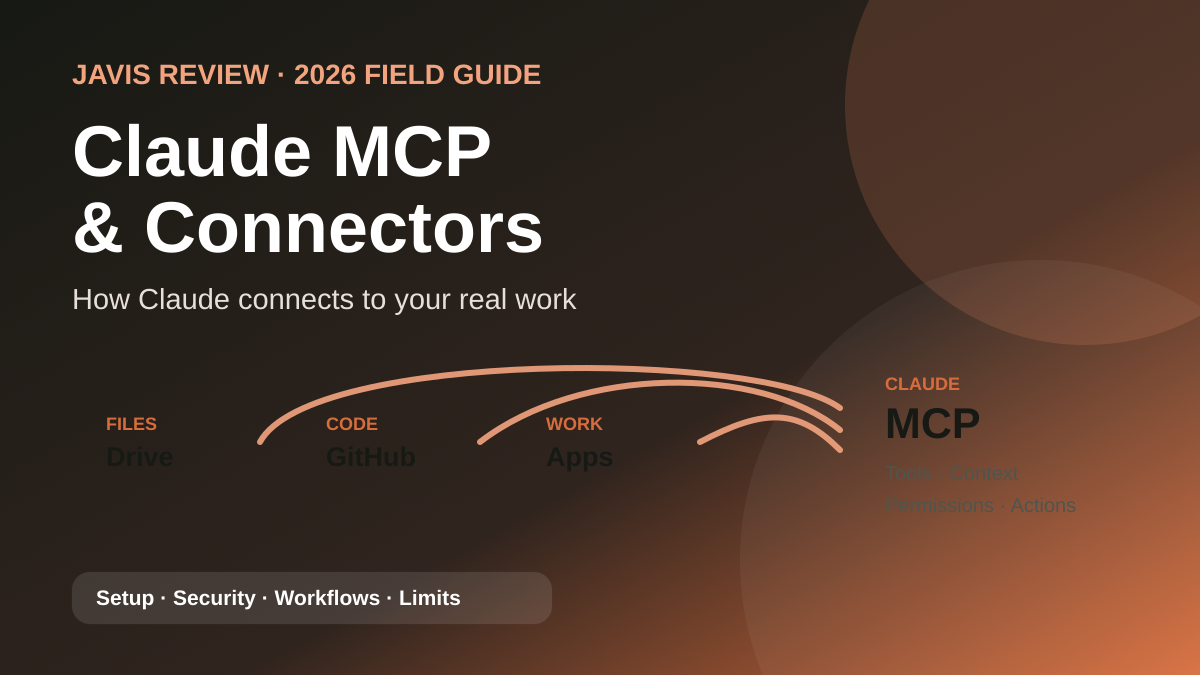
Cursor supports the Model Context Protocol natively: you add servers through mcp.json (project-level in .cursor/mcp.json, or global in ~/.cursor/mcp.json), both are merged, OAuth is supported for servers that need it, and the Cursor CLI uses the same MCP configuration as the editor. Team plans can publish shared MCP servers to a Team Marketplace so the whole org uses the same connectors.
Your Cursor subscription is not a model API bill.
Cursor is a personal/team productivity tool, not a developer API platform like a model provider — there's no "Cursor API" for building a separate product. The economics to actually track are usage-based overage and Bugbot's separate usage billing.
| What you're doing | What you pay for |
|---|---|
| Using Cursor day-to-day | Hobby / Pro / Pro+ / Ultra subscription |
| Going over your plan's included usage | On-demand overage, billed in arrears |
| Bugbot reviewing PRs | Usage-based Bugbot billing (separate line item) |
| Rolling Cursor out to a company | Teams ($40/user, or $120/user Premium) or Enterprise (custom), plus admin/security controls |
The privacy setting most individual users never check is the one enterprises pay to enforce by default.
Cursor is SOC 2 Type II certified with regular penetration testing, reports available through its Trust Center. Privacy Mode — enabled per-user or enforced org-wide by an admin — means code is never used for model training, and Cursor maintains zero data retention agreements with its model providers. Enterprise adds SSO/SCIM through major identity providers (Okta, Azure AD, Google Workspace), AES-256 encryption at rest, TLS 1.2+ in transit, and GDPR/CCPA compliance.

Cursor does not offer on-premises deployment — everything runs on SOC 2-compliant AWS infrastructure it controls. If your organization requires code to never leave a self-hosted boundary, that's a real constraint to check before rolling Cursor out.
I'd sort the best-fit users by workload, not job title.
| Work pattern | Why Cursor fits | Likely plan |
|---|---|---|
| Solo developer, daily coding | Composer + Agent for whole-task work | Pro / Pro+ |
| Team shipping fast, PRs reviewed constantly | Bugbot + shared MCP servers | Pro+ / Teams |
| Heavy agent user running parallel tasks | Highest agent capacity | Ultra |
| Company with compliance/governance needs | SSO, SCIM, Privacy Mode, audit-ready SOC 2 | Enterprise |
| Casual/occasional coder | Free tier is enough to evaluate fit | Hobby |
Cursor's capability is ahead of its billing clarity.
A request-based plan became a usage-metered one, triggering a public backlash and refunds in 2025; most third-party pricing explainers you'll find online already describe a version of the product that no longer exists.
Community and review sources describe slow or absent responses, with unresolved complaints on Cursor's own forums.
Reviewers note occasional inaccurate or resource-heavy output on bigger repos — this is an assistant, not an unsupervised engineer.
Everything runs on Cursor's own AWS infrastructure; there's no self-hosted deployment for teams that require it.
Cursor isn't the only agent-first option, and it isn't trying to be the same thing as all of them.
| If you mostly need... | I'd compare Cursor with... |
|---|---|
| A fully autonomous engineer that works with less supervision | Devin (Cognition) — read our Devin review |
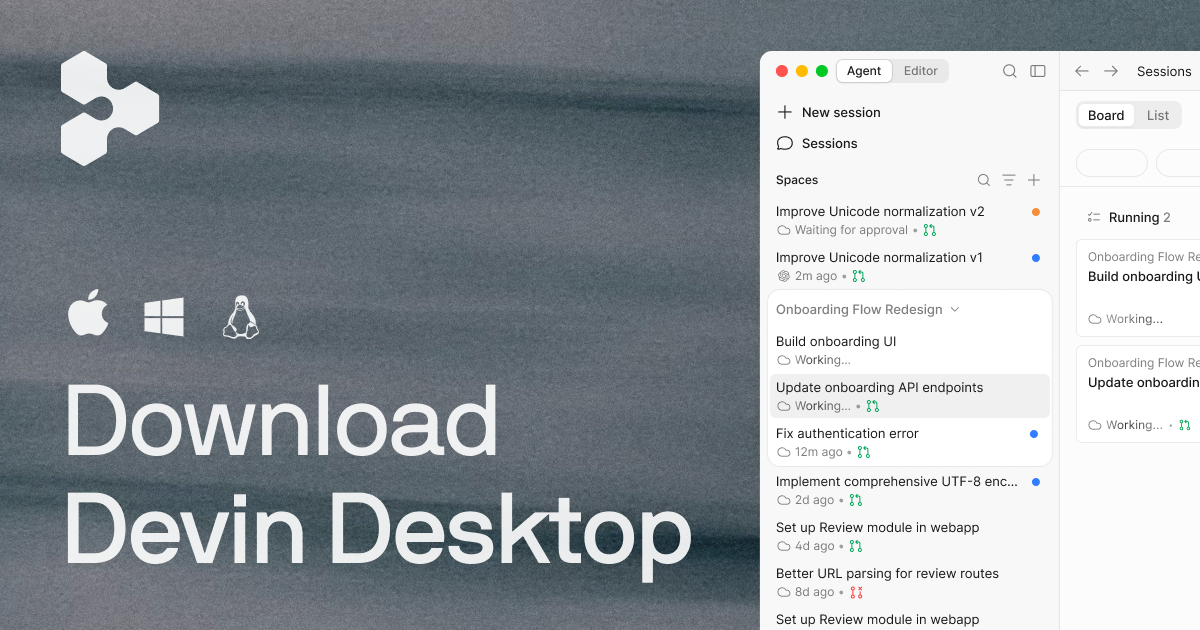
| An IDE that came from the same lineage but is now branded differently | Devin Desktop, formerly Windsurf — read our Windsurf review |
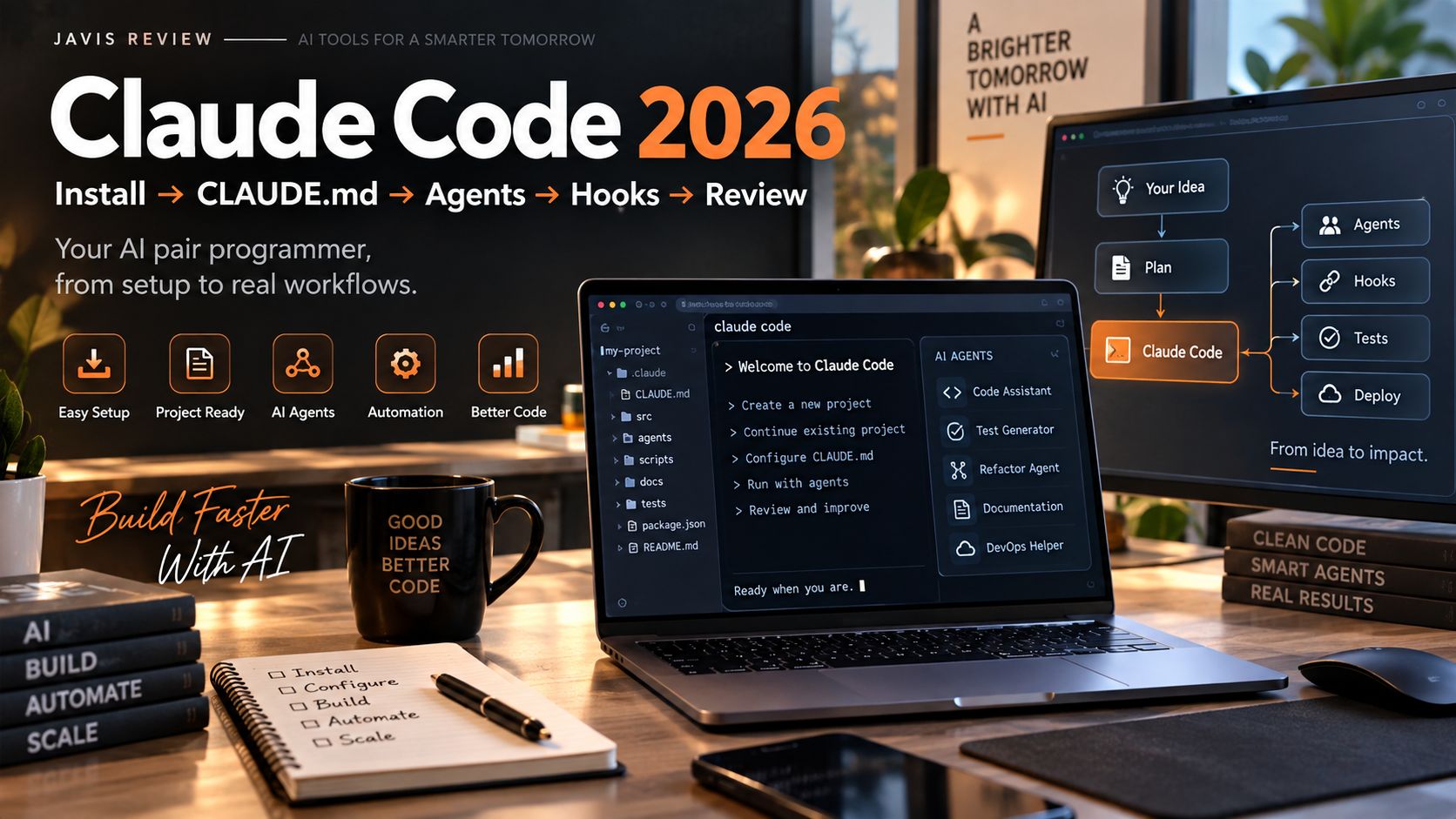
| Terminal-first agent coding tied to a general-purpose AI subscription | Claude Code — read our Claude Code guide |
| The most widely deployed IDE-native assistant | GitHub Copilot |
| Open or bring-your-own-model coding agents | Cline / Aider / OpenCode |
I don't have an affiliate reason to tell you Cursor is better than it is.
At the time of this review, JAVIS has not established a publisher affiliate program with Cursor/Anysphere/SpaceXAI. Every CTA in this article points to Cursor's official site.
Go to the official product.
Open CursorRead the alternative that matches your real question.
Choose the next articleDon't stop at one review. Coding-agent tools only make sense next to each other.
Cursor, Devin, and Windsurf are worth reading together because they now overlap and, in one case, share a parent company. These are the pages I'd read next.
Questions worth answering before you pay
Is Cursor free to use?
Yes — the Hobby plan is free with limited agent requests and access to Composer. No credit card is required to start.
Is Cursor built on VS Code?
Yes, Cursor is a fork of VS Code, so most extensions, keybindings, and the general layout will feel familiar.
What is Composer?
Composer is Cursor's own coding model, introduced with Cursor 2.0 in October 2025, built for fast agentic turns and trained with codebase-wide semantic search.
Did SpaceX buying Cursor change the product?
Not the editor itself as of this review — Cursor continues to operate its own product and brand under the new SpaceXAI division. Watch the official blog for roadmap changes.
Does Cursor support MCP?
Yes, natively, through mcp.json at the project or global level, with OAuth support and a Team Marketplace for shared servers on paid team plans.
Is my code used to train Cursor's models?
Not with Privacy Mode enabled — Anysphere states code is never used for training when Privacy Mode is on, and zero data retention agreements are in place with model providers.
Should I start on Pro+ or Ultra?
I wouldn't. Start on Pro, let it hit a real limit, then upgrade — Ultra is for a bottleneck you've already measured, not one you're predicting.
Is there a Cursor API for building products?
No. Cursor is a personal/team coding tool, not a model API platform — there's no separate developer API billed like a model provider's.
Where this came from, and when it was checked.
Pricing (Hobby/Pro/Pro+/Ultra/Teams): cursor.com/pricing, schema.org pricing data read directly from the page, Sep 20, 2026.
Product homepage claims (Fortune 500, engineer count, feature list): cursor.com homepage, Sep 20, 2026.
Cursor 2.0 / Composer: cursor.com/blog/2-0, official announcement.
MCP support: cursor.com/docs/mcp, official documentation.
Security / Privacy Mode / SOC 2: cursor.com/security and cursor.com/enterprise.
SpaceX acquisition: SEC Form 8-K disclosure; corroborated by CNBC, Yahoo Finance, Seeking Alpha reporting, Jun–Aug 2026.
Series D funding/valuation: Goodwin Law announcement, CNBC, Institutional Investor, Nov 2025.
ARR growth milestones: $1B from Cursor's Series D post (cursor.com/blog/series-d, Nov 13, 2025); the rest from third-party startup revenue-tracking sources (directional, not audited).
G2 rating and review patterns: G2.com Cursor product page, checked Sep 2026.
User sentiment patterns: Reddit and developer-forum discussion, dev.to independent reviews, checked Sep 2026.
Official video: youtube.com/@cursor_ai, "Cursor now shows you demos, not diffs," Feb 24, 2026.