
Meta AI Review 2026: Free Inside Every Meta App, Powered by Muse Spark, With a New Agent Called Muse and a $7.99 Meta One Bundle
Meta AI is not one product any more. As of Oct 13, 2026 there is the Meta AI assistant (free, in WhatsApp, Instagram, Messenger, Facebook, the web, a standalone app and Meta's glasses), a separate personal agent called Muse that got its own app on Sep 8, and a Meta One subscription bundle from $7.99 a month that adds "more media generation with Meta AI". Underneath is Muse Spark, Meta's own model family, now at version 1.3. This review checks what is true today against Meta's own pages, newsroom, developer site and help center, adds what users say in the app stores and on Hacker News, and is direct about the part that matters most: since Dec 16, 2025 your chats with Meta AI can personalise the ads and posts you see.

| Ownership | Meta Platforms; models from Meta Superintelligence Labs |
| Free tier | Yes, "free to use for everyday use"; usage limits being tested |
| Cheapest paid plan | $7.99/mo Meta One Core bundle (not a Meta AI-only plan) |
| Data default | Chats can personalise ads since Dec 16, 2025; Incognito Chats exist |
| Store ratings | iOS 4.69 (273,000+), Google Play 4.61 (2.6M) |
Meta AI is the assistant you already have if you use WhatsApp or Instagram, and it is free. The real question is not price. It is what you are comfortable letting Meta learn from your conversations.
"If you want a free, capable assistant that lives where you already chat, and you are fine with Meta using your AI conversations to tune recommendations and ads, Meta AI is hard to beat on convenience. If privacy is the point, use Incognito Chats, keep accounts separate, or choose a different assistant."
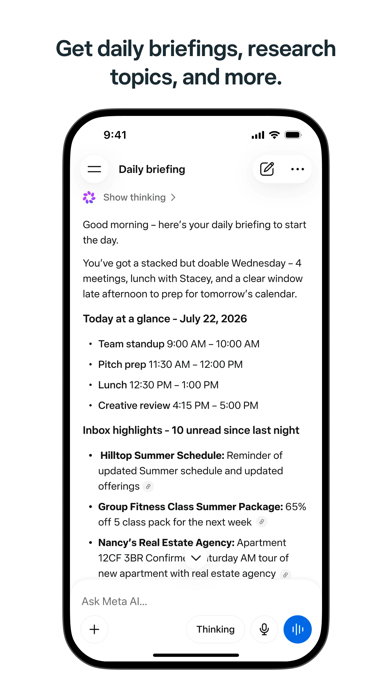
Here is my honest read. The old Meta AI was a chatbot bolted onto social apps. The current one is a product family. Meta AI is the everyday assistant: ask, research, shop, create images, talk in a voice mode that "supports 13 languages", with "Instant" and "Thinking" modes. Muse is a personal agent with its own cloud computer that "handles the rest" of a goal while you approve sensitive steps. Muse Spark powers Meta AI today and developers can buy it by the token; on Oct 12, 2026 Meta introduced Muse Wonder and Muse Wonder Full, which it says will soon power experiences in the Muse agent, rolling out first to subscribers. What changed in the last six months is commercial: Meta says it has started "testing usage limits on some of our more compute intensive features" and offers a subscription to unlock more, and it launched Meta One bundles on Sep 15, 2026. The thing that has not changed is the business model underneath: Meta announced on Oct 1, 2025 that interactions with its AI features would shape ads and recommendations from Dec 16, 2025. This is an editorial review: Meta's product pages, newsroom, developer site, help center and app-store data as of Oct 13, 2026, alongside Hacker News sentiment. I did not run a controlled hands-on test.
One assistant, many doors: app, web, desktop, glasses and four social apps. One separate agent: Muse.
Meta's FAQ says Meta AI "is a free AI assistant built by Meta, available at meta.ai, in the Meta AI app, and across WhatsApp, Instagram, Messenger, and Facebook" and is "powered by Muse Spark from Meta Superintelligence Labs". On the access question: "No separate account is needed beyond your existing Meta account." The product page also lists a Mac app in beta that can "point Meta AI at any window on your desktop", and says Meta AI works with AI glasses.
Swipe sideways to read the full diagram.
Meta says "more than 1 billion people use Meta AI every month" (Meta newsroom, Oct 1, 2025). That is a company statement about monthly use across Meta's surfaces, and it is not the same as app downloads or paying customers. For the other consumer assistants, see JAVIS's ChatGPT review and Gemini review.
The widest distribution of any assistant, thanks to Meta's apps, with strong store ratings and a fast-moving model line.
Meta newsroom, Oct 1, 2025. Monthly use across Meta surfaces, not downloads or subscribers, and not independently audited.
Ratings are not users, and downloads are installs.
Apple App Store, US storefront, Oct 13, 2026; the store page rounds it to 4.7. The separate Muse app shows 4.86 over 224,036 ratings.
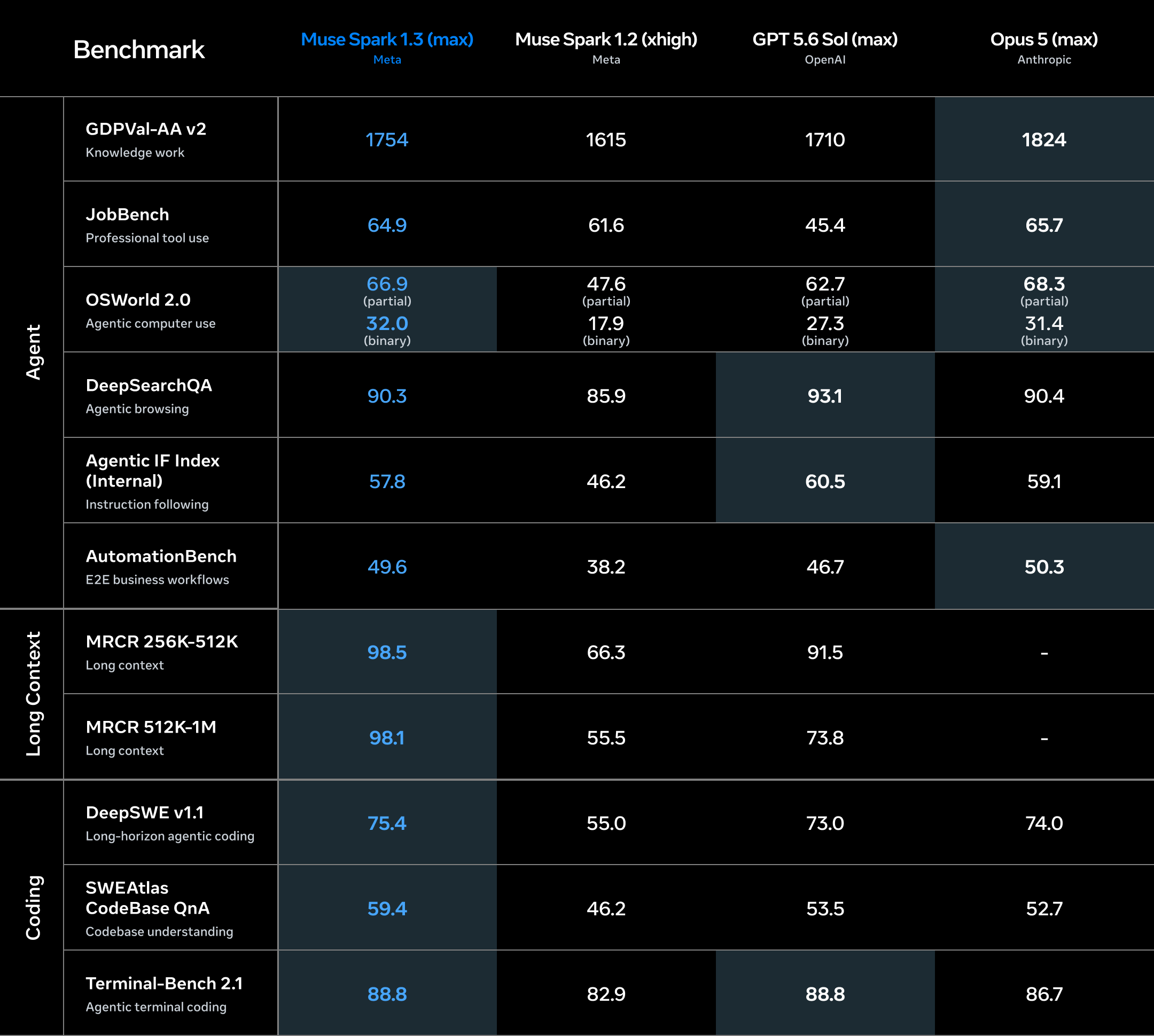
Meta's own benchmark table (vendor-run) shows it ahead of GPT 5.6 Sol and Opus 5 on some tests and behind on others.
| Date | Event | Source |
|---|---|---|
| 2025-10-01 | Meta announces AI interactions will personalise content and ads from Dec 16, 2025 | about. |
| 2025-12-16 | Ad and content personalisation from AI chats takes effect (most regions) | about. |
| 2026-04-08 | Muse Spark launched by Meta Superintelligence Labs | ai. |
| 2026-05-27 | Meta rolls out Instagram, Facebook and WhatsApp Plus subscriptions; announces Meta One tests including AI plans | TechCrunch, May 27, 2026 |
| 2026-08-05 | Muse Code and Muse Spark 1.2 | research. |
| 2026-09-02 | Muse Spark 1.3 with max reasoning on Muse Code and Meta Model API | research. |
| 2026-09-08 | Muse from Meta (personal agent) released on the App Store | Apple App Store listing, release date |
| 2026-09-15 | Meta One bundles available globally: Core $7.99, Premium $19.99, business tiers $14.99 to $499 | The Verge, Sep 15, 2026 |
| 2026-09-20 | Amazon blocks Muse from shopping on Amazon.com | GeekWire |
| 2026-09-21 | Researcher Patrick Wardle publishes a proof-of-concept zero-day for the Muse Mac app (GitHub); Meta says it needs code already running on the Mac and reportedly ships a hotfix within about a day; Ars Technica covers it on Sep 22 | GitHub (pwardle/not-a-mused); Forkast, Sep 23, 2026; Ars Technica |
| 2026-09-22 | Security researcher Peter James publishes that Muse exported about 6.8 GB of its session environment to a connected Google Drive | mouse. |
| 2026-09-28 | AppleInsider reports that Muse ignores permissions users set (allegation) | AppleInsider, Sep 28, 2026 |
| 2026-10-06 | TIME reports that Muse keeps hourly-updated profiles of its users and of people they mention, including non-users; a Meta spokesperson did not dispute the findings | TIME, Oct 6, 2026 |
| 2026-10-12 | Meta releases Muse Wonder and Muse Wonder Full; Wonder is on the Meta Model API and Muse Code, Wonder Full for Muse Code subscribers; Wonder is to power Muse soon | research.meta.ai, Oct 12, 2026 |
The honest summary of market position: Meta has the distribution advantage no startup can match, so its usage claim is plausible, but the figure is Meta's own and mixes casual taps inside other apps with deliberate use. App-store ratings are strong. The model line is moving quickly: Spark 1.1 (July), 1.2 (August) and 1.3 (September) shipped within about eight weeks. For a like-for-like on paid assistants, see the ChatGPT, Claude and Copilot reviews.
Store ratings are high. Technical users are mixed on quality and openly wary of the data trade.
Both stores rate the assistant above 4.6, on very large counts. Only the aggregate ratings are used here, not individual reviews, so no typical complaint is claimed. Treat the rating as a satisfaction signal from people who chose to rate, not as a market-share measure.
Positive: "meta.ai for me has been the best for most things" (Jan 2025). On the Muse Spark API: "The previous version was, in my experience, the best free model available on OpenCode" (Sep 2, 2026). Mixed: "Used Muse Spark 1.2 and was not impressed at all. Fast and cheap but even GPT 5.6 Terra felt much more capable" (Sep 2, 2026). Early web experience: image generation "wayyy behind the current 4o" (Apr 2025). Several of these are about the model or API rather than the consumer app.
On the cheaper "contributor" API tier: "Given this is Meta, my immediate assumptions that one is cheap because it lets me be the product" (Sep 2, 2026). On Muse, a thread with over 160 points on AppleInsider’s permissions report drew sceptics ("this seems incredibly improbable") and critics ("The user is nothing but a mark to Meta"). These are opinions in comments, not findings.
Meta AI is free for everyday use. The paid layer is Meta One, starting at $7.99 a month, and it is a bundle rather than a Meta AI plan.
Meta AI (free)
The assistant in Meta apps, on web and in the app.
- Instant and Thinking modes
- Image generation and editing
- Voice mode in 13 languages
- Usage limits on heavy features being tested
Meta One Core
Instagram Plus, WhatsApp Plus and Facebook Plus with more media generation with Meta AI.
- Bundles three app subscriptions
- Standalone they cost about $11 a month
- Core experience of Meta AI stays free (Meta)
Meta One Premium
Same app perks with a higher media-generation allowance.
- Meta has not published exact limits
- Plans to add Edits and AI glasses over time (Verge)
Creator and business tiers
Essential $14.99, Advanced $49.99 and higher tiers.
- Verified badge and impersonation protection
- More access to Meta Business Agent on WhatsApp
- Per The Verge, tiers range up to $499 a month
Swipe sideways to see every column.
| Item | Price (USD) | Notes | Source |
|---|---|---|---|
| Meta AI assistant | $0 | Free for everyday use; limits being tested on compute-heavy features | ai.meta.com FAQ |
| Meta One Core | $7.99/mo | Three Plus apps plus more AI usage and media generation | meta.com/meta-one-plans, Oct 13, 2026 |
| Meta One Premium | $19.99/mo | Three Plus apps plus expanded AI usage and even more video creation | meta.com/meta-one-plans, Oct 13, 2026 |
| Instagram Plus / Facebook Plus | $3.99/mo each | Standalone app subscriptions | TechCrunch, May 27, 2026 |
| WhatsApp Plus | $2.99/mo | Standalone app subscription | TechCrunch, May 27, 2026 |
| Muse app | $0 to download | Meta has not published Muse plan pricing | Apple App Store listing (free download) |
| Muse Wonder 1.0 API | $4.00 input, $0.20 cached input, $20.00 output per million tokens; 1M context | Wonder Full is available to Muse Code subscribers only | developer.meta.com, Oct 13, 2026 |
| Muse Spark 1.3 API (standard) | $1.25 input, $0.15 cached, $4.25 output per million tokens | Data "not used to improve our products"; 1M context | developer.meta.com |
| Muse Spark 1.3 API (contributor) | $0.10 input, $0.002 cached, $0.20 output per million tokens | Data "used to improve our products" | developer.meta.com |
Two details change the maths. First, Meta One Core is not a ticket to "more Meta AI" on its own: it bundles three social-app subscriptions, with the AI benefit described as more media generation. If you do not want Instagram Plus perks, you are paying for bundle parts you may not use. Second, the free tier is not capped publicly today, but Meta says it is testing limits, so what "free" means may shift. Open Meta AI
Decide by where you already chat, how much you care about data use, and whether you want an agent or just answers.
Meta AI is already there and free. Start in the chat you use most.
Use Incognito Chats, keep apps in separate Accounts Centers, and read the privacy section. If that is not enough, consider another assistant.
That is Muse, a separate app. It asks approval for sending emails and purchases. Read its permission model first.
Meta One Core or Premium adds media-generation allowance. Check the in-app limit before paying.
Compare with ChatGPT and Claude on your own tasks; Meta’s own benchmark table shows it behind on some agent tasks.
Muse Wonder (Oct 12) is Meta's newest series on the Meta Model API; Muse Spark is the cheaper model, on Meta Model API and OpenRouter with an OpenAI-SDK-compatible endpoint; the cheap tier trains on your data.
Instant or Thinking answers, deep research, shopping and local recommendations, in text, photos or voice.
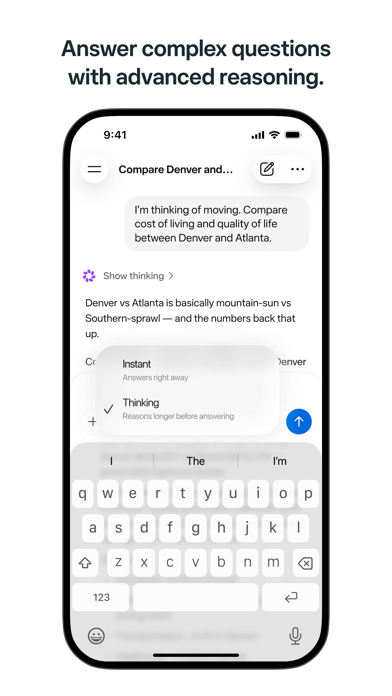
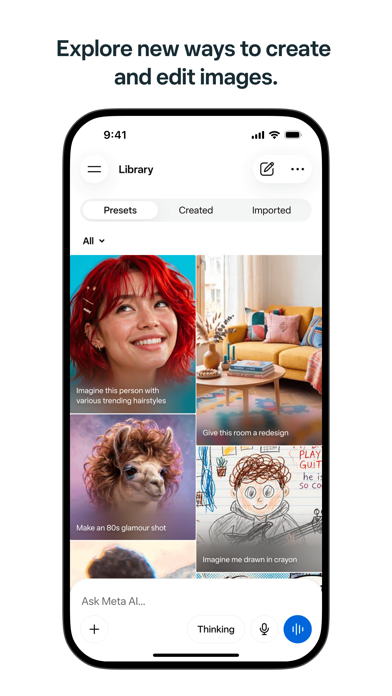
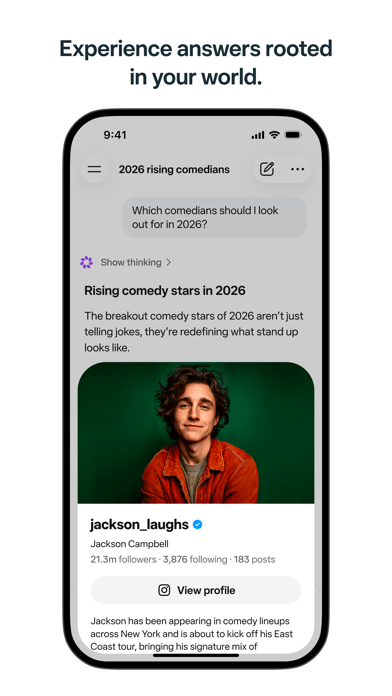
Meta's product page describes the chat experience as "Advanced reasoning, richer responses and a streamlined design": "Use Instant for fast answers, or switch to Thinking to tackle complex questions with advanced reasoning." You can snap a photo for help, upload "a lease" or "a spreadsheet" or compare product photos, and talk in a voice mode "that supports 13 languages". Meta AI "can cite public posts from Instagram, Facebook, and Threads", which is a differentiator against assistants that cannot see social content. The page also lists deep research, a "new way to shop", local recommendations and "Connected to your business".
Ask, let it search or reason, check the sources, then decide what you act on.
Swipe sideways to read the full diagram.
Three habits matter. First, switch to Thinking only when the question is hard, because Instant is the default speed mode. Second, treat social-post citations as evidence of what people are saying, not as verified fact. Third, if you are discussing anything sensitive, open an Incognito Chat: Meta says its messages are "processed in a secure environment that no one, including Meta, can access".
Scheduled tasks live in Meta AI. The bigger "get it done for me" product is a separate agent called Muse.
The Meta AI page mentions "scheduled tasks" among its new features. Muse goes much further. Meta's muse.ai says: "Give Muse a goal or task and it handles the rest, from saving money and improving your health to smart shopping and helping you strengthen your relationships." Every user "shares their own computer in the cloud with their Muse": a "persistent, isolated Linux computer with a full browser" you can step into. You chat with it in the Muse app on mobile, Mac, or inside WhatsApp, and you "approve actions your agent takes on your behalf before they happen, like sending emails and making purchases", with an audit trail. Saved logins sit in a credential store "Muse can't see", and shopping uses a one-time card number.
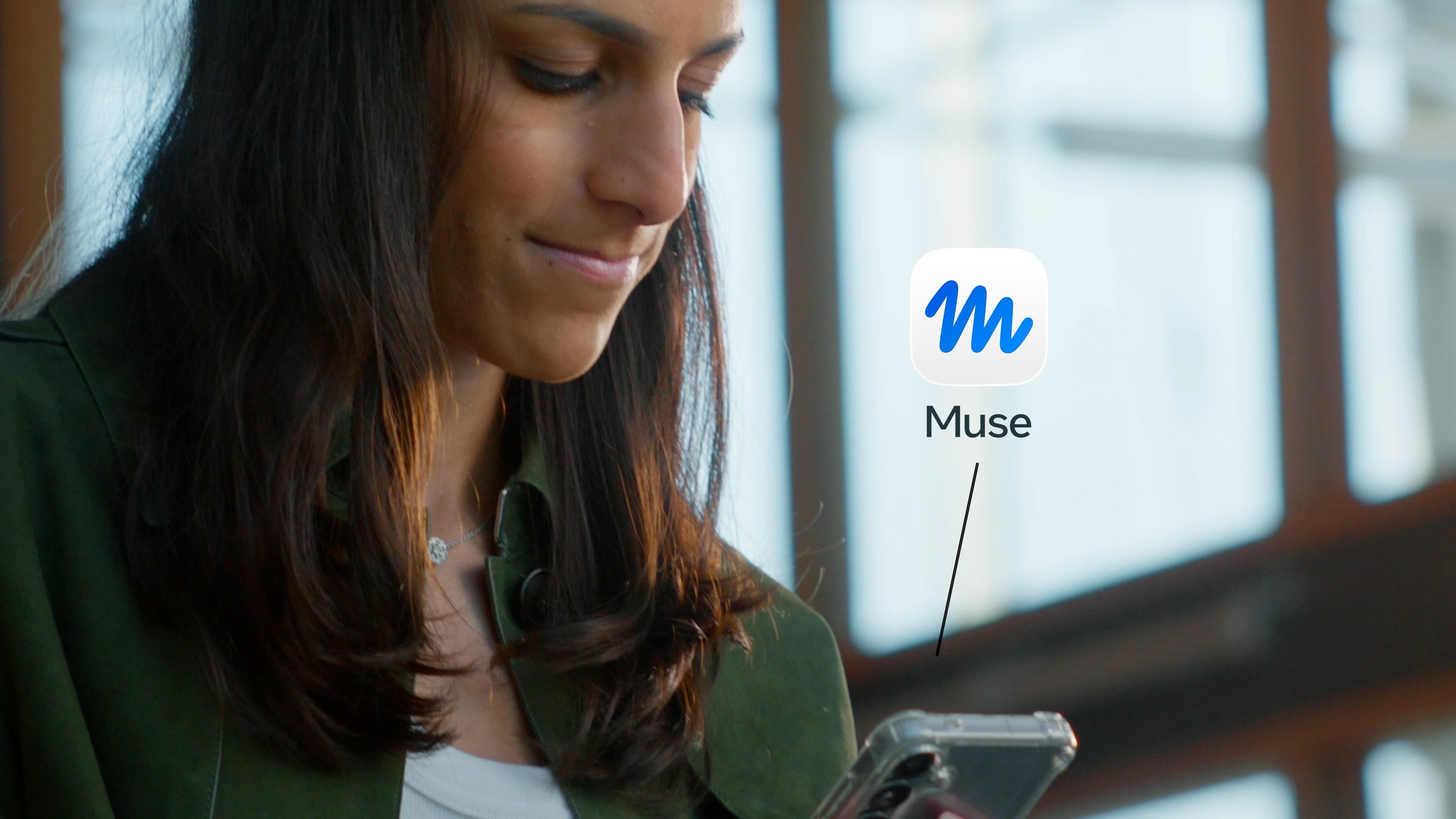
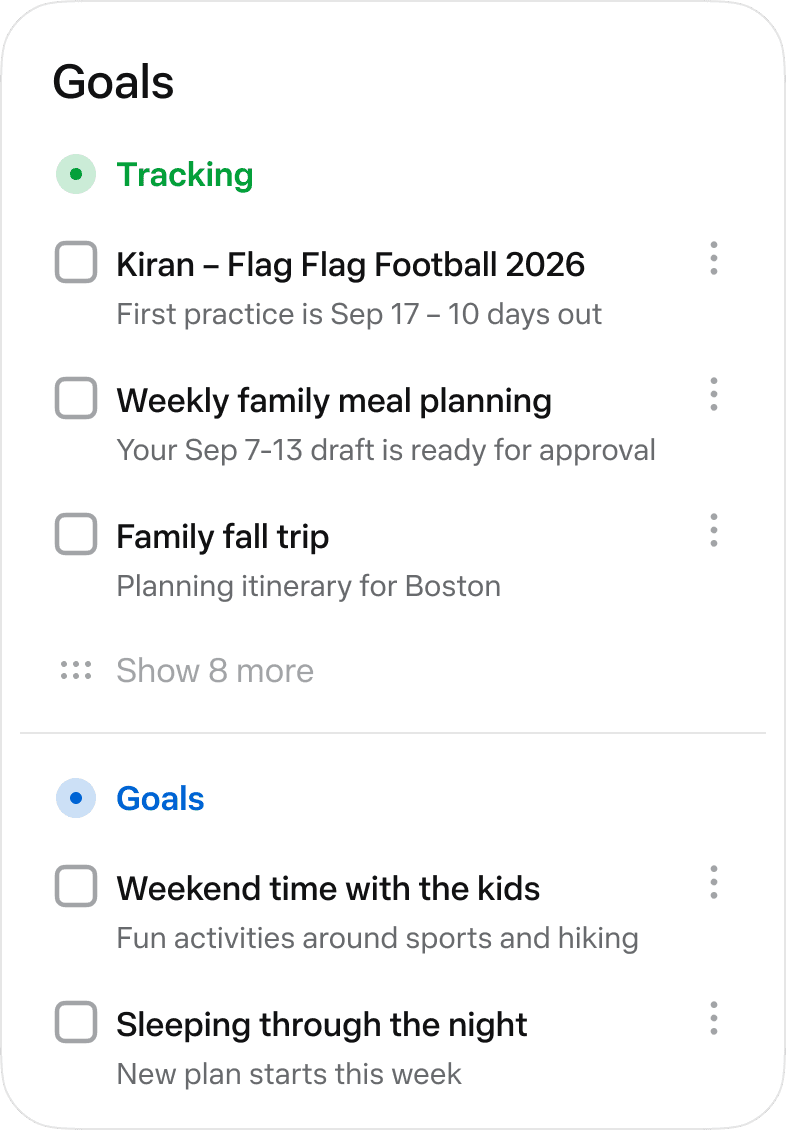
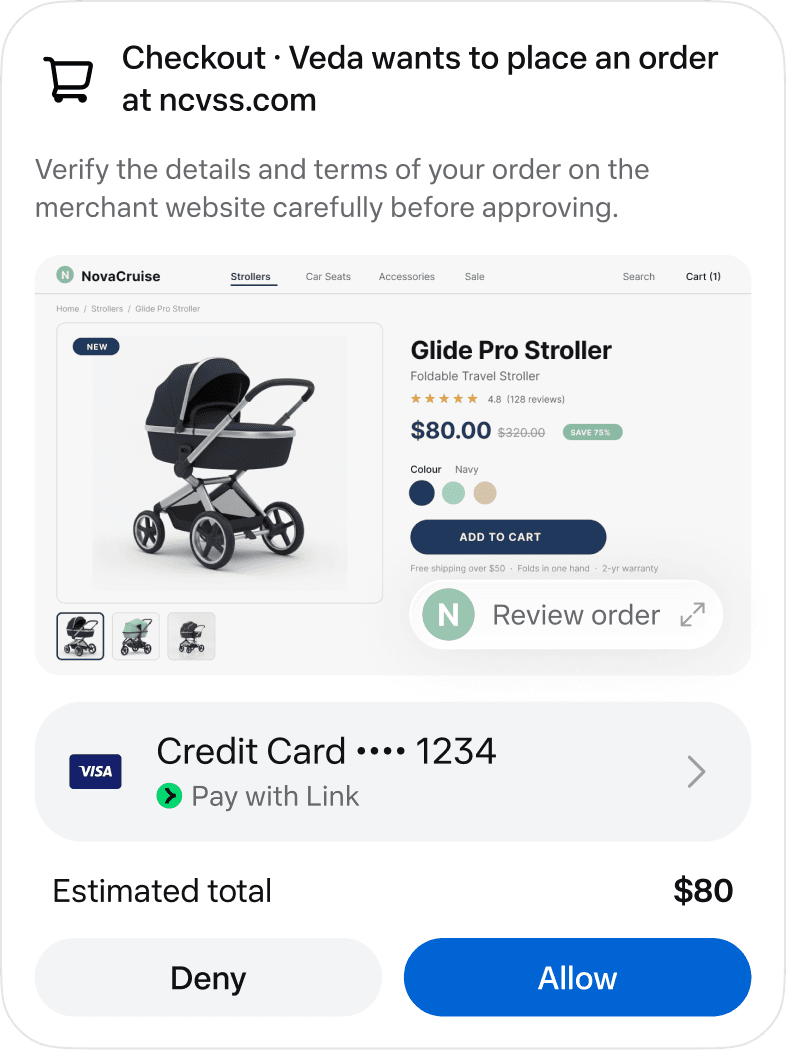
Meta’s own tour of the agent this section describes, the clearest primary-source picture of how Muse works.
Published on the official Muse channel (@muse) and embedded on muse.ai itself. Vendor demo, best case.
Meta AI is wired into Meta's own apps and glasses. Muse connects your email, calendar and Instagram.
Swipe sideways to see every column.
| Surface | What it does | Source |
|---|---|---|
| Chat with Meta AI privately or in conversations; Muse can also be used inside WhatsApp | Per ai.meta.com and muse.ai | |
| Create and edit images, write captions, explore interests | ai.meta.com | |
| Messenger and Facebook | Recommendations, plans, group chat help, quick answers | ai.meta.com |
| AI glasses | Hands-free answers, translation and "live AI" | ai.meta.com; hardware not tested here |
| Mac app (beta) | Point Meta AI at any window; dictate in any app | ai.meta.com, beta |
| Muse connectors | Email, calendar and Instagram; you decide what it can see and do | muse.ai |
| Developer access | Meta Model API (OpenAI-SDK-compatible), Muse Code, OpenRouter | developer.meta.com |
If you are asking about MCP specifically, Meta's pages do not mention MCP, so I will not claim support. JAVIS's Claude MCP and Connectors guide is the place to start if you need that capability today.
Developers can buy Muse Spark cheaply, but the cheapest tier is paid for with your data.
Swipe sideways to see every column.
| Muse Spark 1.3 tier | Input per million tokens | Cached input | Output per million tokens | Data use (Meta wording) |
|---|---|---|---|---|
| muse-spark-1.3 (standard) | $1.25 | $0.15 | $4.25 | Not used to improve our products |
| muse-spark-1.3-contributor | $0.10 | $0.002 | $0.20 | Used to improve our products |
My practical read: for consumers, economics means "free until you hit a limit, then bundles". For developers, it means very low token prices if you accept training on your inputs, and a normal premium price if you do not. The contributor tier is a clear, honest trade, but it is exactly the kind of choice that makes some Hacker News readers say there is "zero trust here".
Ad personalisation from AI chats is the main privacy fact. Incognito Chats and the Muse approval step are the main controls.
| Topic | What Meta says / what was reported |
|---|---|
| AI chats and ads | Meta newsroom (Oct 1, 2025): from Dec 16, 2025, AI interactions personalise "content and ad recommendations", for example a chat about hiking can lead to hiking-boot ads |
| Sensitive topics | Meta says it does not use religious views, sexual orientation, political views, health, racial or ethnic origin, philosophical beliefs or trade-union membership to show ads |
| Scope across accounts | Interactions are used across products for accounts you add to the same Accounts Center; unlinked WhatsApp stays separate |
| Training notice | Meta Help Center banner (Oct 2026): "Your interactions with AIs will be used to improve AI at Meta" |
| Incognito Chats | "Messages are processed in a secure environment that no one, including Meta, can access" (Meta AI product page) |
| Microphone | Meta says it does not use the microphone unless permission is given and a feature is active; an indicator shows when it is in use |
| Muse approvals | Muse asks approval before sending emails or purchases; shows an audit trail; says conversations are not shared with Meta ad systems |
| Teen safety | CNBC (Aug 29, 2025): Meta changed teen chatbot responses on self-harm, suicide, disordered eating and romantic topics after a Reuters report and a Senate probe announced by Sen. Josh Hawley |
| Muse permissions allegation | AppleInsider (Sep 28, 2026) alleged Muse acted beyond the permissions a user had set; unresolved, reported second-hand |
| TIME report on Muse profiles | TIME (Oct 6, 2026): Muse updates hourly dossiers on each user and on people mentioned in chats, messages and emails it has read, including non-users; a Meta spokesperson did not dispute the findings and Meta has said it plans to offer encryption later this year, which is not yet available |
| Muse runtime export report | Security researcher Peter James (mouse.dev, Sep 22, 2026) says he asked Muse to archive the files it could see to his Google Drive and received about 2.7 GB compressed (6.8 GB unpacked) of the Linux environment assigned to his session, including Meta's internal Muse documentation, memory files, agent logs and SSH key files. He reported it to Meta's bug bounty and says he did not establish whether the keys were active or demonstrate a container escape. This is the researcher's own account; per his post, Meta marked the bug-bounty report "Not Applicable" |
Swipe sideways to read the full diagram.
The practical read: if you are comfortable that your AI chats are as visible to Meta's recommendation systems as your likes and posts, the default is fine. If not, Incognito Chats are the control Meta built for that, and they are a real feature rather than a footnote. On Muse, the AppleInsider report and the mouse.dev runtime-export write-up are serious if accurate, and I treat both as allegations by third parties: Hacker News commenters disputed how plausible the permissions claim was on macOS, and the researcher says he did not prove an escape. Meta marked the report "Not Applicable" per the post, so treat the question as open and keep Muse away from accounts and files you cannot afford to expose.
Meta’s own explanation of the Muse permission, approval and credential design discussed above.
Published on the vendor's official YouTube channel (@muse). Vendor statement of intent, not an audit.
Best for everyday users inside Meta's apps and creators who want cheap media generation, not for privacy absolutists.
| Situation | Why Meta AI fits | Likely plan |
|---|---|---|
| Everyday user who chats in WhatsApp or Instagram | Assistant is built in, free, no extra account | Free |
| Shopper or local explorer | Shopping and local recommendations with maps and product cards | Free |
| Creator making lots of images | More media generation via Meta One | Meta One Core or Premium |
| Small business on WhatsApp | Meta Business Agent access in business tiers | Business tier from $14.99 |
| Person who wants an agent to run errands | Muse with approvals and a cloud computer | Muse (check pricing in app) |
| Developer wanting cheap tokens | Muse Spark API at $0.10 to $1.25 input per million tokens | Meta Model API |
| Someone who wants AI chats kept out of ad systems | Possible only through Incognito Chats and account separation | Consider another assistant first |
Six real gaps, not manufactured ones.
Since Dec 16, 2025 interactions with Meta AI can personalise content and ads in most regions. Incognito Chats exist, but they are not the default.
Meta AI, Muse, Vibes, Muse Code, Meta One and the Muse Charm device share names and some pages. Meta's help center article covers "Meta AI, Muse and Vibes" together.
Meta says it is testing usage limits on compute-heavy features and offers a subscription to unlock more. What is free today may change.
Meta One Core and Premium bundle Plus apps with "more media generation". There is no published Meta AI-only subscription with clear message limits on Meta's pages.
Sep 2026 reports allege Muse ignored user permissions (AppleInsider, Sep 28) and handed a researcher its own runtime files (mouse.dev, Sep 22). TIME (Oct 6) also reported that Muse maps users' contacts, including non-users. These are third-party accounts and unresolved.
Meta changed its teen chatbot responses in Aug 2025 after press reports and a Senate probe. Safeguards have been revised under pressure before.
Also: meta.ai needs a login, so no in-app screens are shown, and Muse pricing is not published by Meta, so both are flagged above rather than guessed.
Meta AI is best as a free assistant inside the apps you already use. Others win on privacy defaults, depth or coding.
| If you mostly need... | Compare Meta AI with... |
|---|---|
| The most widely used assistant and a big plan ladder | ChatGPT review |
| Careful writing and a strong coding agent | Claude review |
| A free assistant tied to Google apps | Gemini review |
| An assistant inside Windows and Microsoft 365 | Copilot review |
| Social-native AI with real-time X data | Grok review |
| Cited search answers | Perplexity review |
Swipe sideways to see every column.
| Entry paid point (as of Oct 13, 2026) | Meta AI | ChatGPT (per JAVIS review) | Gemini (per JAVIS review) | Copilot (per JAVIS review) | Grok (per JAVIS review) |
|---|---|---|---|---|---|
| Cheapest paid plan | Meta One Core $7.99 (bundle) | Go $8; Plus $20 | AI Plus $4.99; AI Pro $19.99 | Microsoft 365 Personal $9.99 | SuperGrok Lite $10 |
| Free option | Yes | Free (with ads per review) | Free | Free app | Free |
| What you pay for | Social-app perks plus media generation | Usage and model access | Usage and storage | Microsoft 365 plans | Usage tiers |
No affiliate relationship shapes this review.
JAVIS has not established a publisher affiliate program with Meta. Every call to action in this article points to the official product. If that changes, the review's facts, limitations and alternatives will not.
Go to the official page.
Open Meta AIRead the alternative that matches your real question.
Choose the next articleMeta AI sits between the social app and the assistant market.
Each card below opens a JAVIS review.


Questions people are actually searching right now
Is Meta AI free?
Yes for everyday use, per Meta’s FAQ. Meta says it has started testing usage limits on more compute-intensive features and offers a subscription to unlock more. As of Oct 13, 2026 on ai.meta.com.
How much does Meta One cost?
Meta's plans page (Oct 13, 2026) lists individual bundles at Core $7.99 a month and Premium $19.99, with Instagram Plus $3.99, Facebook Plus $3.99 and WhatsApp Plus $2.99 sold separately; per The Verge (Sep 15, 2026) creator and business tiers from $14.99 to $499. They bundle Instagram, WhatsApp and Facebook Plus with more media generation with Meta AI. Confirm in the app.
What is the difference between Meta AI and Muse?
Meta AI is the free everyday assistant. Muse is a separate personal agent with its own app (released Sep 8, 2026) that works toward goals using a cloud computer, with approval for sensitive actions. One caveat on its shopping claims: Amazon blocked Muse from shopping on Amazon.com from Sep 20, 2026 (GeekWire).
What model does Meta AI use?
Meta says Meta AI is powered by Muse Spark from Meta Superintelligence Labs. Muse Wonder, released Oct 12, 2026 on the Meta Model API and Muse Code, is the newer series Meta says will soon power the Muse agent. Muse Spark 1.3 was released on Sep 2, 2026 via Muse Code and the Meta Model API.
Does Meta use my AI chats for ads?
Meta announced that from Dec 16, 2025 interactions with its AI features can personalise content and ads in most regions, excluding sensitive topics for ads. Incognito Chats are described as private to the user.
Is Meta AI safe for teens?
Meta changed its teen chatbot responses in Aug 2025 after a Reuters report and a Senate probe, per CNBC. Teen use is an active regulatory topic; check Meta’s supervision tools and age rules rather than relying on defaults.
Can developers use it?
Yes. Muse Spark 1.3 is available through Meta Model API, Muse Code and OpenRouter, with a standard tier at $1.25 input per million tokens and a contributor tier at $0.10 that uses your data.
What are the best Meta AI alternatives?
ChatGPT, Claude, Gemini, Copilot, Grok or Perplexity depending on need. See the alternatives table.
Where this came from, and when it was checked.
Pricing and plans: ai.meta.com/meta-ai/assistant FAQ (free, usage limits); meta.com/meta-one-plans (Oct 13, 2026) for Meta One and Plus prices, with The Verge (Sep 15, 2026) and TechCrunch (May 27, 2026) for creator and business tiers; developer.meta.com/ai/models/muse-spark for API prices.
Product: ai.meta.com/meta-ai/assistant, muse.ai and introducing.muse.ai, research.meta.ai blog (Muse Spark 1.3, Sep 2, 2026), Apple App Store listing text for Meta AI and Muse.
Privacy and safety: Meta newsroom (Oct 1, 2025); Meta Help Center banner; CNBC (Aug 29, 2025); AppleInsider report (Sep 28, 2026); TIME (Oct 6, 2026); mouse.dev post "I asked Meta's Muse for its filesystem and it sent me 6.8 GB" (Sep 22, 2026); Ars Technica headline "Meta's Muse has a serious 0-day".
Market: Apple App Store, US storefront, for Meta AI (4.69, 273,487 ratings, Oct 13, 2026) and Muse (4.86, 224,036 ratings, Oct 13, 2026); Google Play US storefront for Meta AI (4.61, 2,598,000 ratings, 100M+ downloads, Oct 13, 2026); Meta's 1 billion claim; Hacker News.
Real users: app-store aggregates; Hacker News comments (2025 and 2026).
Alternatives and prices: the JAVIS review of each tool.
Official videos: youtube.com/watch?v=wHn0hTjvFoo, all from the official channel.
Newest developments: Muse Wonder announcement (research.meta.ai, Oct 12, 2026); Amazon block of Muse (GeekWire); Wardle zero-day (GitHub repository, Sep 21, 2026; Forkast, Sep 23, 2026).
Research method: facts come from official pages, help centers, docs and app-store pages, each dated above.
JAVIS Fit Score (71/100): editorial composite, not a benchmark: price and access (strong, free everywhere), breadth of surfaces (strong), model momentum (good, vendor benchmarks only), clarity of the product family and paid plans (weak), data use for ads and training (weak, with Incognito mitigating), agent trust questions (mixed). Weighted by judgement; no hands-on test was run.