
Microsoft Agent Framework Review 2026: What You Get When AutoGen and Semantic Kernel Merge
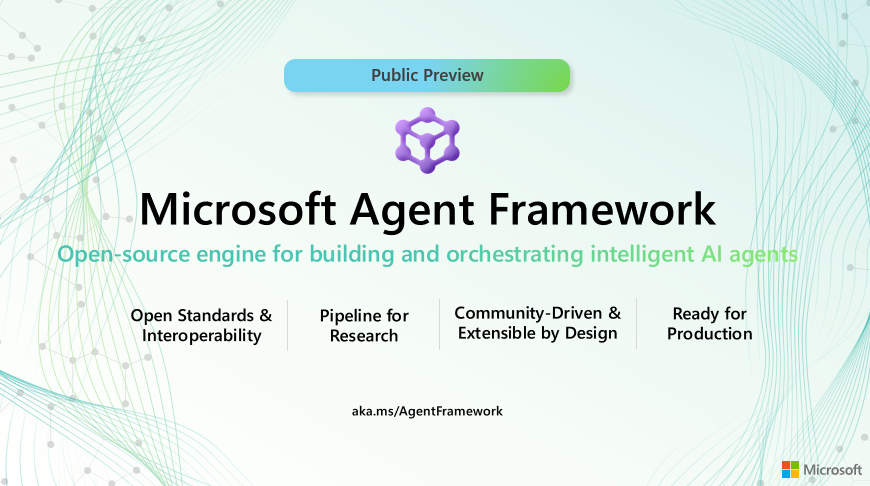
Microsoft Agent Framework is not a new experiment — it's the declared successor to two frameworks a lot of teams already had code in: AutoGen and Semantic Kernel, both now in maintenance mode. It's free, MIT-licensed, and open source, in Python, .NET and (in preview) Go. This review covers what actually shipped between the October 2025 preview and today, what "production-ready" really means at v1.0, and whether the migration is worth it if you're already on one of the two frameworks it replaces.
| Framework cost | $0 — MIT license |
| Languages (GA) | Python + .NET |
| Go support | Public preview |
| v1.0 GA date | Apr 2, 2026 |
| Predecessors | Semantic Kernel + AutoGen (maintenance mode) |
This isn't Microsoft's first agent framework. It's Microsoft admitting the first two weren't going to converge on their own.
"If you already had production code in Semantic Kernel or research code in AutoGen, the honest pitch here isn't 'a new framework is better.' It's 'we're not going to keep maintaining two of these, so here's the one that absorbs both.' That's a completely different decision than evaluating a brand-new tool — it's a migration decision with a deadline attached, even if Microsoft hasn't stated one explicitly."
What actually earns the score here is that Agent Framework isn't vaporware dressed up as a rebrand: it shipped a real v1.0 GA in April 2026, then a second serious feature wave (Agent Harness, hosted agents, CodeAct) by BUILD 2026 in June, and that wave was itself GA by August. The GitHub repo had commits on the same day I checked it. That's a project moving, not a press release sitting still.
Four pillars, and a strong opinion about which one you should reach for first.
Microsoft Learn organizes the whole framework around four pillars: Agents (an LLM plus tools and MCP servers), the Harness Agent (an opinionated, batteries-included agent for long multi-step tasks — planning, context compaction, file memory, approval flows, observability), Workflows (graph-based orchestration connecting agents and functions through explicit paths), and Integrations (model providers, tools, evaluation, UI). Microsoft's own guidance is refreshingly plain: "if you can write a function to handle the task, do that instead of using an AI agent."
The asterisk worth flagging early: Go support exists but is explicitly public preview — declarative agents, RAG, CodeAct, and functional workflows aren't there yet for Go developers.
The real story isn't star count — it's how fast Microsoft is shipping behind it.
microsoft/agent-framework, verified on GitHub, Sep 21, 2026.
Verified on GitHub, Sep 21, 2026.
Signals active usage + active maintenance load.
Pushed 2026-09-21, the day of this check.
| Date | Milestone | What it means |
|---|---|---|
| Oct 1, 2025 | Public preview announced | Unifies Semantic Kernel + AutoGen; both move to maintenance mode |
| Feb 2026 | Release Candidate | Feature surface locked; community hardening period |
| Apr 2/3, 2026 | v1.0 GA | Stable APIs; native MCP + A2A; DevUI, Foundry hosting, Copilot SDK as preview |
| Jun 3, 2026 | BUILD 2026 wave | Agent Harness, Foundry Hosted Agents, CodeAct, Handoff Orchestration reach 1.0 |
| Aug 2026 | Harness + Hosted Agents GA | BUILD-announced preview features graduate to General Availability |
The praise is about convergence. The skepticism is about history.
A Microsoft Python advocacy team member framed it as good news: the framework's concepts "converge with LangChain v1 and Pydantic-AI," meaning skills transfer between tools rather than locking developers in.
The most upvoted skepticism was blunt: "come back in a few years and see if it still lives" — a direct reference to Microsoft folding Semantic Kernel and AutoGen into this one, and whether Agent Framework itself gets folded into something else next.
Agent Framework's managed memory layer is "fully managed, enterprise-scalable" but explicitly called out as "Azure-only and still in preview" — the framework's most locked-in differentiator.
There's no pricing page, because there's nothing to buy.
Self-hosted OSS
Run it yourself, point it at any supported model.
- MIT license, no seat fee
- Azure OpenAI, OpenAI, Anthropic, Gemini, Ollama and more
Foundry Hosted Agents
Per vCPU-hour + GiB-hour, scale-to-zero.
- Persistent filesystem state across scale-downs
- Automatic OpenTelemetry observability
Foundry-native agents
Prompt/workflow agents built directly in Foundry.
- "No additional charge" beyond model tokens
- Per Azure's own pricing page
Azure commitment
Governance, compliance, support at scale.
- Azure enterprise agreements
- Standard Azure support tiers
Source: azure.microsoft.com/pricing/details/foundry-agent-service, learn.microsoft.com/agent-framework, verified Sep 21, 2026.
Your real question isn't "is it good?" — it's "am I already on Semantic Kernel or AutoGen?"
Start directly on Agent Framework — the predecessors are in maintenance mode.
No forced deadline yet, but plan a migration path; new features aren't coming to Semantic Kernel.
Same logic — AutoGen's orchestration patterns map to Agent Framework's Workflow abstraction.
The framework itself is provider-agnostic, but you'll miss the managed-memory and hosted-agent differentiators, which are Azure/Foundry-specific.
Independent comparisons still give that win to CrewAI, not Agent Framework.
The part that's actually new, not just consolidated: an opinionated agent for long tasks.
Most of Agent Framework is "AutoGen's simplicity plus Semantic Kernel's enterprise plumbing," which is a consolidation story. The Harness Agent is the genuinely new piece: an opinionated, batteries-included agent built for long, multi-step tasks, with planning and todo tracking, automatic context compaction so long sessions don't blow the context window, file access and memory, "don't-ask-again" tool approval so you're not re-approving the same safe action every turn, and observability built in from the start. By BUILD 2026 it reached GA alongside Foundry Hosted Agents.
- DevUI visualizes execution, message flows, tool calls and orchestration decisions in real time — no more reconstructing a multi-agent run from logs.
- Native MCP + A2A support shipped at 1.0, not bolted on later.
- CodeAct mode reports 52.4% latency improvement and 63.9% token reduction on Microsoft's own representative workloads.
- CodeAct's efficiency numbers are vendor-reported, not independently reproduced by JAVIS.
- DevUI and several BUILD-2026 features were still functional previews as recently as mid-2026 — check current GA status for the specific capability you need.
Explicit execution paths, not an implicit conversation.
Official Microsoft Azure video introducing Agent Framework as the open-source engine for agentic AI apps.
Published by the official "Microsoft Azure" YouTube channel (youtube.com/@MicrosoftAzure).
Not a browser-automation product — the automation here is deployment, not clicking web pages.
Section 10 in the JAVIS flagship template covers browser/automation; Agent Framework has no browser-agent surface, so this section is repurposed to cover its real automation story: going from a local DevUI session to a running, scaled production agent. Foundry Hosted Agents let you deploy as containers on managed infrastructure with zero-scaling (you pay nothing while idle), persistent filesystem state across scale-downs, per-session isolation, and automatic OpenTelemetry observability — with, per Microsoft's own claim, minimal code changes from your local DevUI setup.
Both major agent-interop protocols shipped at 1.0.
Model Context Protocol (MCP) lets agents dynamically discover and call external tools exposed by MCP-compliant servers. Agent-to-Agent (A2A) protocol support lets an Agent Framework agent coordinate with agents running in entirely different frameworks — LangChain, custom implementations, others — through structured, protocol-driven messaging, rather than requiring everyone to standardize on Microsoft's own stack.
Your bill is your model bill plus (optionally) your Azure bill — never a framework license.
| What you're doing | What you pay |
|---|---|
| Self-hosting, any supported model provider | $0 to Microsoft; your model provider's own token rate |
| Foundry-native prompt/workflow agents | "No additional charge" beyond model token cost, per Azure's pricing page |
| Foundry Hosted Agents (running your MAF code) | Container compute: vCPU-hour + GiB-hour, scale-to-zero |
| File Search storage (if used) | 1 GB free/day, then metered per GB/day |
Read the Third-Party Systems disclaimer before you connect a non-Microsoft model.
These two CVEs were confirmed against Microsoft's own security blog to apply to Semantic Kernel specifically, not Microsoft Agent Framework itself. They're included here because the underlying lesson — treat AI-model output as untrusted input to any tool/filter function — applies directly to how you configure Agent Framework's own middleware and tool-approval flow.
People already inside the Microsoft/Azure orbit get the most out of this, by design.
| Situation | Why Agent Framework fits | Likely path |
|---|---|---|
| Existing Semantic Kernel or AutoGen codebase | Official migration guides map concepts directly | Self-hosted OSS, then migrate |
| .NET shop building agents alongside existing Azure apps | First-class .NET GA support, not an afterthought | Self-hosted OSS or Foundry-native |
| Team wanting one shared programming model across Python + .NET | Consistent concepts/APIs across both languages | Self-hosted OSS |
| Enterprise needing managed hosting, observability, governance | Foundry Hosted Agents, OpenTelemetry, scale-to-zero | Foundry Hosted Agents / Enterprise Azure |
| Solo developer who just wants the fastest prototype | Independent comparisons still favor CrewAI here | Consider CrewAI instead |
Four real gaps, not manufactured ones.
This is the successor to two frameworks Microsoft previously shipped and is now retiring into maintenance mode. The Hacker News skepticism — "come back in a few years and see if it still lives" — is a fair question, not an unfair one.
The fully managed, enterprise-scalable memory layer that independent comparisons single out is explicitly Azure-only and still in preview as of this check — not something a non-Azure team benefits from.
Semantic Kernel users shift to Agent/Tool abstractions; AutoGen users re-map orchestration patterns to Workflows. Microsoft provides migration guides and assistants, but this is genuine engineering effort, not a drop-in upgrade.
Semantic Kernel shipped two patched RCE-class vulnerabilities in 2026 (CVE-2026-26030, CVE-2026-25592). Not an Agent Framework flaw directly, but a reminder that "AI agent framework" as a category has a real, recent security track record worth taking seriously.
If Agent Framework's Azure-centric story isn't your story, here's how to think about it.
| If you mostly need... | Compare Agent Framework with... |
|---|---|
| The most fine-grained graph control and biggest third-party integration ecosystem | LangGraph (langchain.com/langgraph) |
| The fastest time-to-prototype and largest self-reported community | CrewAI (crewai.com) |
| A lightweight, OpenAI-native agent stack instead of a model-agnostic one | OpenAI Agents SDK — read our review |
| Google's model-agnostic equivalent | Google Agent Development Kit (ADK) |
There's nothing to sell you here, and that shapes this review.
Microsoft does not run a publisher affiliate program for an open-source, MIT-licensed SDK, and JAVIS has none in place. Every CTA in this review points to the official GitHub repository or official Microsoft documentation — never a purchase link, because there isn't one for the framework itself.
Go to the official repo.
Open the repoRead the alternative that matches your real question.
Choose the next articleAgent Framework makes the most sense next to the other agent stacks it's directly competing with.


Questions people are actually searching right now
Is Microsoft Agent Framework free?
Yes. It's MIT-licensed and free to self-host. You pay your model provider directly for API calls, and optionally pay Azure for Foundry-hosted compute if you use managed hosting.
Is Semantic Kernel dead?
Not deleted, but in maintenance mode — it isn't receiving new features. Microsoft's own guidance points new and existing projects toward Agent Framework.
Is AutoGen dead?
Same status as Semantic Kernel: maintenance mode, with Agent Framework as the declared successor and official migration guide.
Is v1.0 actually production-ready?
The core (Agents, Workflows, MCP, A2A, model providers, middleware) reached stable GA on Apr 2, 2026. Some capabilities (DevUI, Foundry hosted agents, Agent Harness) were functional previews at that point and reached GA separately, by around August 2026 — check current status for the specific feature you need.
Does it only work with Azure/Microsoft models?
No — it explicitly supports Microsoft Foundry, Anthropic, Azure OpenAI, OpenAI, Ollama and more. Azure is where its most differentiated managed features (hosted agents, managed memory) live, not a hard requirement to use the framework at all.
What is CodeAct?
An execution mode where the model writes one sandboxed Python program that calls tools via call_tool(), instead of a per-call tool-calling loop, running in a Hyperlight micro-VM. Microsoft reports 52.4% latency improvement and 63.9% token reduction on its own workloads.
How does it compare to LangGraph and CrewAI?
Independent comparisons give LangGraph the edge on fine-grained graph control and ecosystem breadth, and CrewAI the edge on prototyping speed and community size. Agent Framework's case is being the single Microsoft-supported successor with the deepest Azure/Foundry hosting path.
Where this came from, and when it was checked.
GitHub stats (stars/forks/issues/license/activity): GitHub data for github.com/microsoft/agent-framework, Sep 21, 2026.
Framework architecture, pricing model, Third-Party Systems disclaimer: learn.microsoft.com/en-us/agent-framework/overview, official, read directly.
Launch announcement (Oct 2025): devblogs.microsoft.com/foundry official post.
v1.0 GA details (Apr 2026): devblogs.microsoft.com/agent-framework official post.
BUILD 2026 wave (Agent Harness, Hosted Agents, CodeAct): devblogs.microsoft.com/agent-framework official post, corroborated by InfoQ GA coverage.
Foundry hosting pricing model: azure.microsoft.com/pricing/details/foundry-agent-service, official.
Semantic Kernel CVEs: microsoft.com/security/blog official post, confirmed to apply to Semantic Kernel specifically.
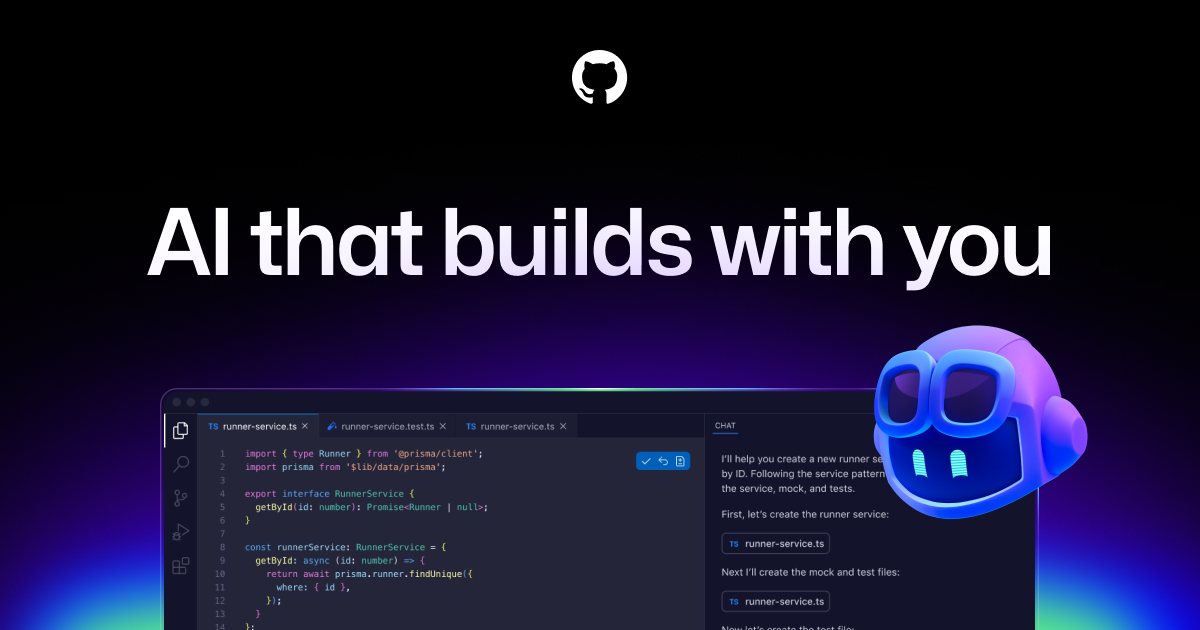
Real screenshots/media: devblogs.microsoft.com/foundry hero graphic, devblogs.microsoft.com/agent-framework DevUI + BUILD-2026 screenshots, opengraph.githubassets.com repo card.
Official video: youtube.com/watch?v=yOBcPuLLmuY, authorship confirmed on YouTube (author "Microsoft Azure", channel @MicrosoftAzure).
Developer sentiment: Hacker News (news.ycombinator.com/item?id=46377537); independent comparisons from AgentMelt, Karmesh Gupta (Medium), InfoQ.