
Kilo Code Review 2026: One Free AI Agent for VS Code, JetBrains and the CLI -- Now Owned by Anaconda
Kilo Code is the open-source coding agent that started in March 2025 as an explicit "superset" of Cline and Roo Code, then out-shipped both of them: parallel agents across git worktrees, a single session you can pick up in VS Code, JetBrains or the terminal, and 500+ models billed at the provider's own rate with no markup. It raised an $8M seed round in December 2025 and now claims 5M+ users across every surface. What most people evaluating it in 2026 don't yet know: on July 15, 2026, Kilo Code's parent company was quietly acquired by Anaconda, the Python/data-science platform company -- a deal aimed squarely at enterprise AI governance, not at pulling the plug on the free product. This review covers what's verified true today: real pricing across three separate axes (platform tier, model inference, cloud compute), an honest 3.87-of-5 Marketplace rating with real complaints straight from Kilo's own GitHub issues, and what the Anaconda deal does and doesn't change.
| Core tech (multi-surface + model routing) | Genuinely differentiated |
| Free tier | Real -- MIT license, full IDE/CLI, BYOK |
| Cheapest paid inference | $19/mo (Kilo Pass Starter) |
| Ownership status | Acquired by Anaconda (Jul 15, 2026) |
| Marketplace record | 3.87/5 (213 reviews), 1.58M installs |
Kilo Code's actual pitch is "one agent, every surface." That's real -- and it just got a very different owner.
"Kilo Code didn't invent agentic coding, and it says so itself: it launched in March 2025 as an explicit merge of Cline and Roo Code's best ideas, with a blog post literally titled 'Roo or Cline? We're building a superset.' What it built since then is a genuinely differentiated multi-surface product: the same agent, the same session, works in VS Code, JetBrains, and a CLI that's a hardened fork of OpenCode, with 500+ models you can swap mid-task at the provider's own rate -- Kilo takes no cut. Parallel agents running across separate git worktrees, native subagent delegation, and inline autocomplete across every surface are real, shipped, and confirmed live on kilo.ai as of this check. What most coverage still hasn't caught up to: on July 15, 2026, Kilo's parent company was acquired by Anaconda -- not because Kilo was struggling (it wasn't; it had just raised $8M and claimed 5M+ users) but because Anaconda wants an enterprise governance layer over AI coding spend, and Kilo's open, multi-model routing engine was the fastest way to get one. Co-founder and CEO Scott Breitenother stayed on, and Kilo says nothing changes for individual developers today."
None of that erases two real, current rough edges: a 3.87-out-of-5 Marketplace rating with genuine, recent complaints about runaway token spend and a background CLI process that kept running after uninstall, and a pricing structure that now spans three separate axes -- platform tier, model-inference plan, and per-hour cloud compute -- which is objectively harder to budget than a flat monthly fee. If you want a free, fast-moving, genuinely multi-IDE agent and you're comfortable reading a slightly more complex pricing page than Cursor's, Kilo Code is one of the strongest options in this category right now. If you specifically want to avoid any tool that just changed corporate ownership with undisclosed deal terms, that's a legitimate reason to wait a cycle and watch what "open core future" ends up meaning in practice.
One agent, four surfaces, and a brand that just split into "Kilo" (the company) and "Kilo Code" (the flagship agent).
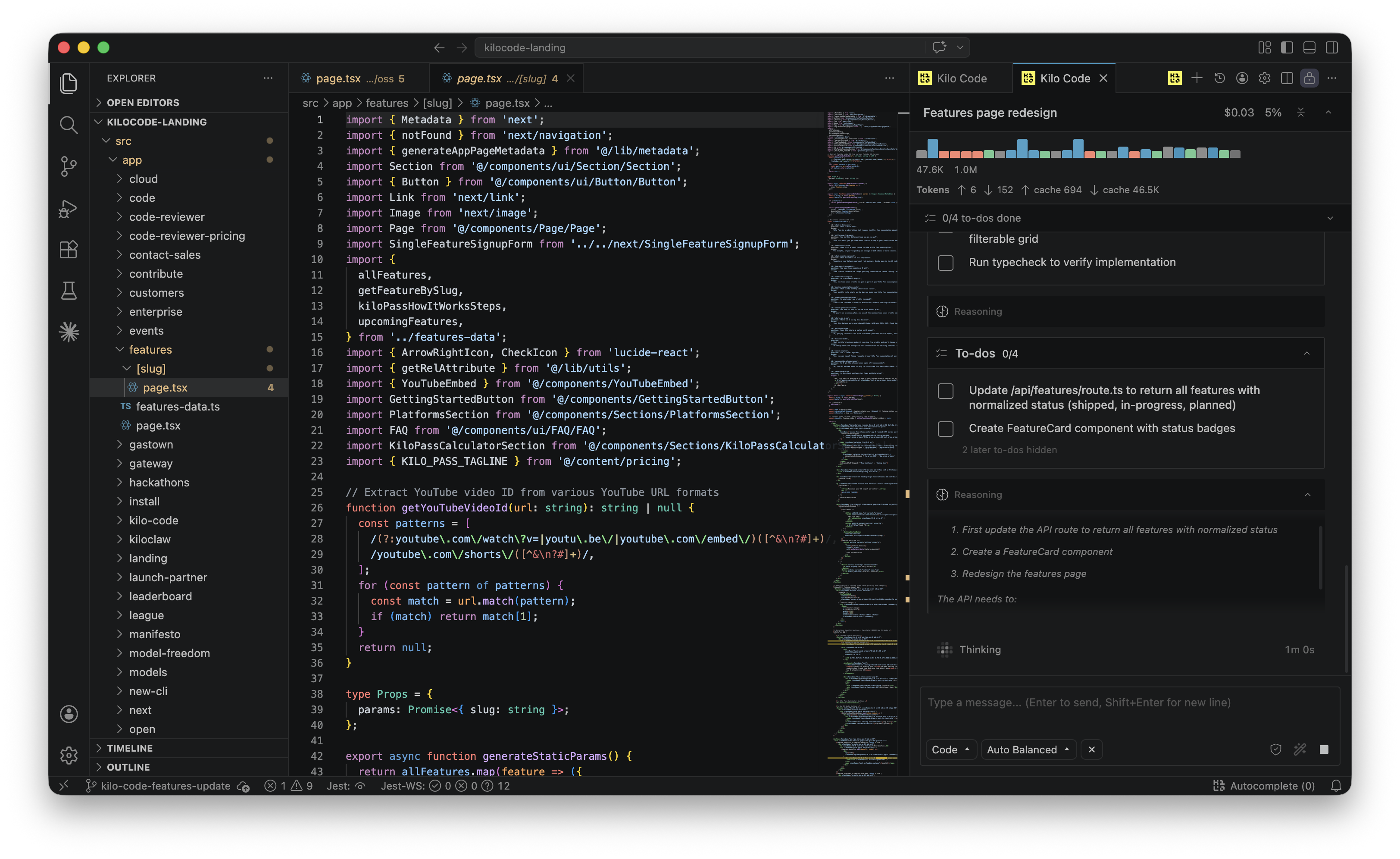
Kilo Code is an open-source (MIT-licensed) AI coding agent built by Kilo, Inc. -- confusingly, both names are used interchangeably in the wild, and kilocode.ai itself now 308-redirects to kilo.ai. The product meets you in four places with one continuous account and, in most cases, one continuous session: the VS Code extension (1,577,969 installs per the Marketplace's own live API, version 7.8.1), a JetBrains plugin (live on the JetBrains Marketplace), a CLI installable via npm/curl/Homebrew/AUR that is openly documented as "a fork of OpenCode, enhanced to work within the Kilo agentic engineering platform," and a browser-based Cloud Agent at app.kilo.ai/cloud for running tasks with no local machine at all. The GitHub repository (Kilo-Org/kilocode) shows real, near-daily commit activity -- last pushed Sep 28, 2026, the day before this review.
Worth being precise up front, the same way JAVIS was precise about Roo Code's shutdown: Kilo Code is not the same company it was in December 2025. It is now a subsidiary/product line of Anaconda, Inc. -- a much larger, VC-backed data-science and Python-packaging company best known for the Anaconda distribution and Conda. The stated rationale, per Anaconda CEO David DeSanto's own words in the acquisition announcement, is that "organizations are spending enormous sums, with very little visibility into where the risk is and if they are getting an ROI" on AI coding tools -- and Kilo's open, multi-provider routing engine was the fastest path to giving enterprises that visibility.
From a 52-comment Hacker News launch post to a $8M seed round to an Anaconda acquisition, in 16 months.
Company-reported on kilo.ai, all surfaces combined, Sep 2026.
Independently observed live via Marketplace gallery API, Sep 29, 2026.
Live API check, Sep 29, 2026. MIT license. 617 open issues.
Closed Dec 10, 2025, led by Cota Capital, per Kilo's own blog.
| Date | Event | Result |
|---|---|---|
| 2025-03-10 | GitHub repository created | Kilo-Org/kilocode goes public |
| 2025-03-26 | Public launch, positioned as a "superset" merging Cline and Roo Code features; $15 in free model credits offered to new users | 98-point, 52-comment Hacker News thread; genuine skepticism about differentiation from commenters, direct founder replies |
| 2025-06-09 | "3 Months of Kilo Code" blog post | Company claims #3 ranking on OpenRouter's usage leaderboard |
| 2025-07-29 | Blog post "Stop selling 'unlimited', when you mean 'until we change our minds'" | 358 Hacker News points, 342 comments -- Kilo's biggest organic marketing moment, critiquing rivals' pricing practices |
| 2025-10 | Teams and Enterprise plans launch | First move beyond a pure free/BYOK model |
| 2025-12-10 | $8M seed round announced (Cota Capital lead; Breakers, General Catalyst, Quiet Capital, Tokyo Black) | 750,000+ downloads, #1 on OpenRouter, 6T tokens/month claimed at the time |
| 2026-02 | "Kilo Pass" subscription-credit plans launch | Starter/Pro/Expert tiers with bonus credits added alongside pure BYOK |
| 2026-05-15 | Roo Code (a sibling fork of Cline) shuts down its extension entirely | Kilo Code ships a same-week Roo-to-Kilo migration guide, per JAVIS's own Roo Code review |
| 2026-07-15 | Anaconda acquires Kilo Code (deal terms undisclosed) | CEO Scott Breitenother stays; MIT license and free individual tier confirmed unchanged |
| 2026-09-29 | This review, live-checked | v7.8.1 live, 1.58M Marketplace installs, 27.4k GitHub stars, 5M+ claimed total users |
A respectable but unspectacular 3.87/5 -- and two very specific, still-live complaints worth knowing before you install it.
"Best open source IDE for AI, and full featured. Works very well with their subscriptions or with others. It's real open source... I feel free!!" -- Salvador Santander Gutiérrez, 5★, v7.7.3. Another 5★ reviewer (Laa Laa) wrote: "I've tried ClaudeCode, Cline, Continue, for me this one is the best 'side panel' AI agent in VSCode, it natively supports BYOK, and it is super fast."
"Model is stuck in loop and burning money very easy... I just request simple code changes and it burned a few dollars... I like Kilo code concept but I was us[ing] the cheapest models and it is burning money a lot." -- huseyingulgen, 1★, Sep 2026. Separately: "after uninstalling the extension, the Kilo binary kept running in the background, making my MacBook run extremely hot." -- John Bowny, 1★, Aug 2026.
On the Anaconda deal: "Every time a competitor [was] acquired, sold out, or changed business models, Kilo made a snarky post. All companies are the same" (commenter Bolwin); "I guess Anaconda will want it to be (more) profitable, which in turn will make the product less appealing" (zb3). At launch, commenter bluelightning2k was blunter still: "isn't this literally just 'we are trying to fork roo code and pay $15 of your tokens so we can show VCs that we have users'" -- a co-founder posting as "janpaul123" replied directly to defend the approach.
Three separate axes, not one price tag: platform tier, model inference, and cloud compute.
This is the part of Kilo Code that's easiest to get wrong by skimming. "Free" is true for the platform itself -- but what you pay for AI inference is a genuinely separate decision, and cloud compute (running Kilo unattended) is billed by the second on top of that. All figures below were pulled live from kilo.ai/pricing on 2026-09-29.
Platform plans
Free & Open Source
VS Code, JetBrains & CLI extensions, agentic coding assistant, code completion/generation, works with any AI model.
Teams
Everything in Free, plus usage analytics & reporting, AI adoption score, shared agent modes, centralized billing, shared BYOK, team management, data privacy controls, priority support.
Enterprise
Everything in Teams, plus model/provider limits, shared Private Gateway BYOK, audit logs, SSO/OIDC/SCIM, SLA commitments, dedicated support.
Model inference (a separate choice from the platform tier above)
Auto Free / BYOK / Local
Free community models, your own provider API keys, or fully local via Ollama/LM Studio.
Kilo Gateway
500+ models across 60+ providers through one key, billed at the provider's exact rate -- Kilo states it takes no markup.
Kilo Pass
Starter $19/mo (up to $26.60 in credits), Pro $49/mo (up to $68.60), Expert $199/mo (up to $278.60) -- bonus credits, +50% more if billed annually.
Platform-plan and inference-plan pricing verified live at kilo.ai/pricing, Sep 29, 2026. Cloud-compute figures from the same page. VS Code/JetBrains/CLI installation methods and free-tier scope cross-checked against the official GitHub README, checked the same day.
Where Kilo Code actually fits versus the rest of the fork family.
Kilo Code's free tier is a real, unusual fit -- most competitors pick one surface and stay there.
Kilo Code is a reasonable landing spot -- it shipped a same-week migration guide -- but also compare Zoo Code (the more config-compatible direct fork) and Cline (the original parent project).
Kilo Code was acquired by Anaconda on Jul 15, 2026 with undisclosed terms -- reasonable to wait a release cycle or two and watch how "open core future" plays out before betting a team workflow on it.
Look at Cursor or GitHub Copilot instead -- Kilo Code's Free/Teams/Enterprise + Auto/Gateway/Pass + per-hour cloud compute model is genuinely more to read than a single price tag.
That's Kiro's specific pitch, not Kilo Code's -- see our Kiro review.
The same agent, the same session, four surfaces -- plus native parallel agents that replaced the old Orchestrator idea.
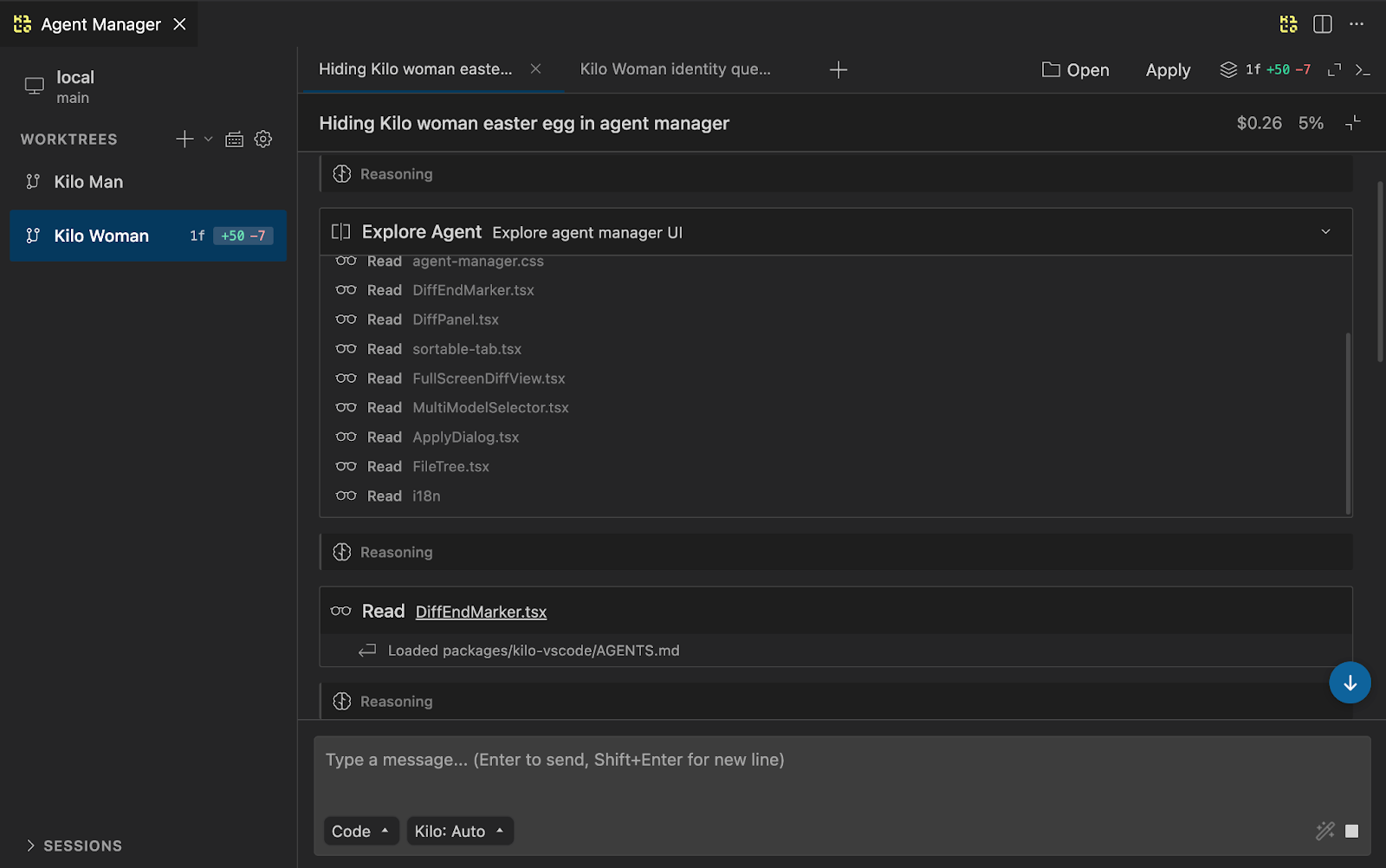
Kilo Code ships four built-in agent modes, confirmed directly against its own current documentation: Code (the default, with full tool access -- read, edit, glob, grep, bash, task, webfetch, plus any connected MCP server's tools), Ask (read-only, for exploring and explaining a codebase without touching it), Plan (read-only plus restricted editing limited to plan files under .kilo/plans/, for architecture and design discussions before code gets written), and Debug (full access, tuned for methodically narrowing down and fixing issues). Teams can also define fully Custom agents with their own tool permissions and behavior instructions. Notably, the Orchestrator mode Kilo Code originally inherited from the Roo Code side of its lineage is now explicitly documented as deprecated -- modern Code/Debug agents support native subagent delegation directly, so a dedicated coordinator mode is no longer needed. That's a real, verifiable product evolution past the design Roo Code shipped.
| Mode/Agent | Job | Tool access |
|---|---|---|
| Code (default) | General implementation and editing | Full: read/edit/glob/grep/bash/task/webfetch + MCP tools |
| Ask | Explains and explores the codebase | Read-only |
| Plan | Architecture and design before coding starts | Read-only + editing limited to .kilo/plans/ |
| Debug | Systematic root-cause troubleshooting | Full access |
| Custom | Team-defined persona and workflow | As permissive or restrictive as configured |
| Orchestrator | Deprecated -- superseded by native subagents | N/A (no longer a distinct mode) |
- One agent, one account, continuous sessions across VS Code, JetBrains, CLI and Cloud -- confirmed via "cross-platform sessions" in the product's own screenshots and docs, a real differentiator versus single-surface tools.
- 500+ models with mid-task switching and no Kilo markup -- genuinely model-agnostic, including Claude, GPT-5.5-class models, Gemini, and local Ollama/LM Studio models.
- 27,429 GitHub stars and near-daily commits (last push Sep 28, 2026) -- a real signal of an actively maintained, fast-moving codebase, not an abandoned fork.
- A live, open GitHub issue (#12756, filed Aug 1 2026) documents the Read tool ignoring offset/limit parameters since roughly v7.4.17 -- a real, currently-unresolved regression.
- A live, open GitHub issue (#10558, filed May 25 2026) documents a model hitting its output limit mid-reasoning and producing no result while still being charged -- $3.37 for zero output in one reported case.
Prompt in, plan or code out -- with parallel worktrees for when one task isn't enough.
The kilo run --auto command is Kilo's explicit answer to CI/CD automation: the docs state plainly that --auto "auto-approves permission prompts unless a rule explicitly denies the action," with the direct warning to "only use it in trusted environments." That's an honest, disclosed risk statement rather than a buried footnote -- worth reading in full before wiring Kilo into an unattended pipeline.
Inline ghost-text completion plus a genuinely free automated PR reviewer.
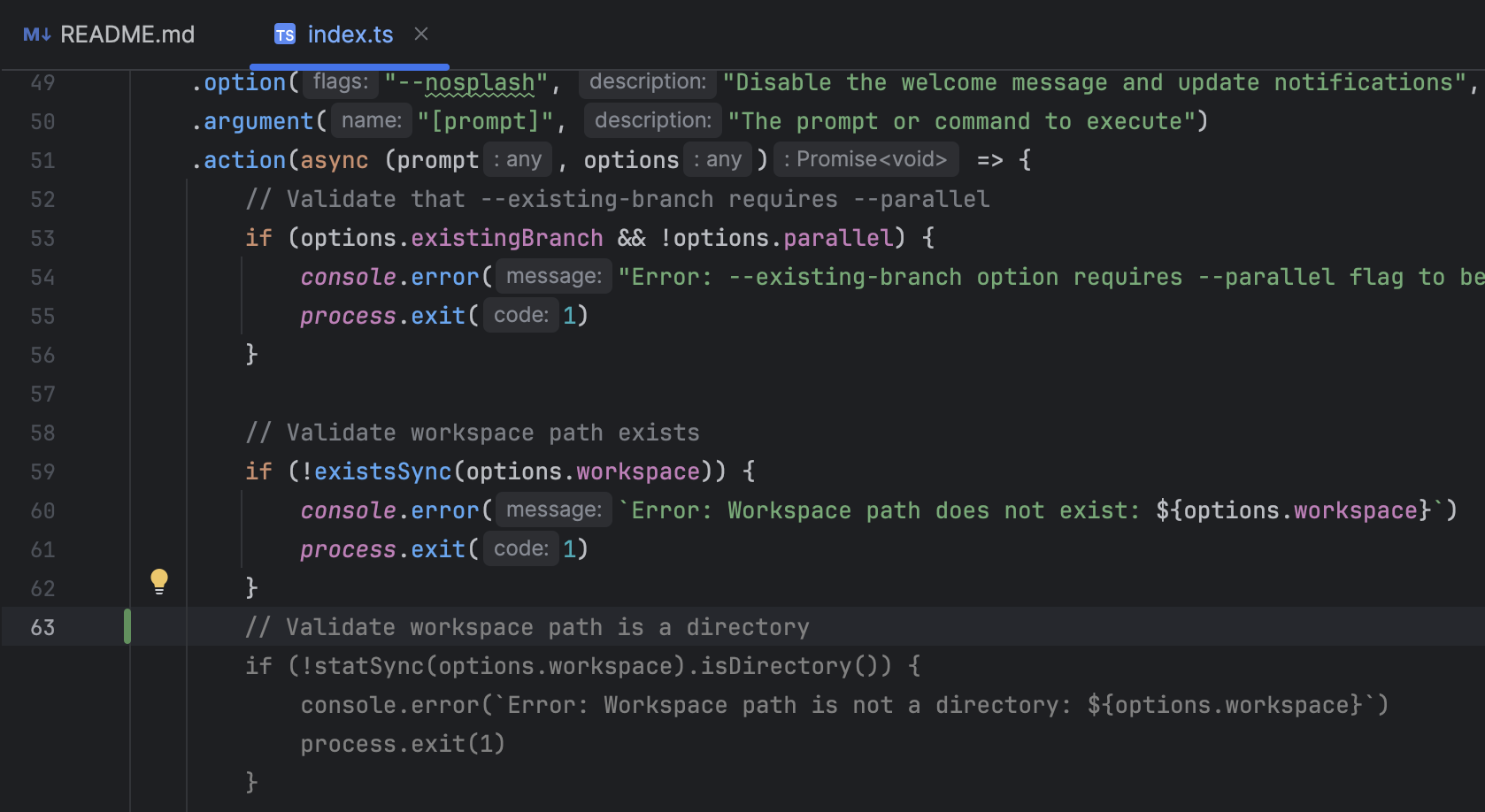
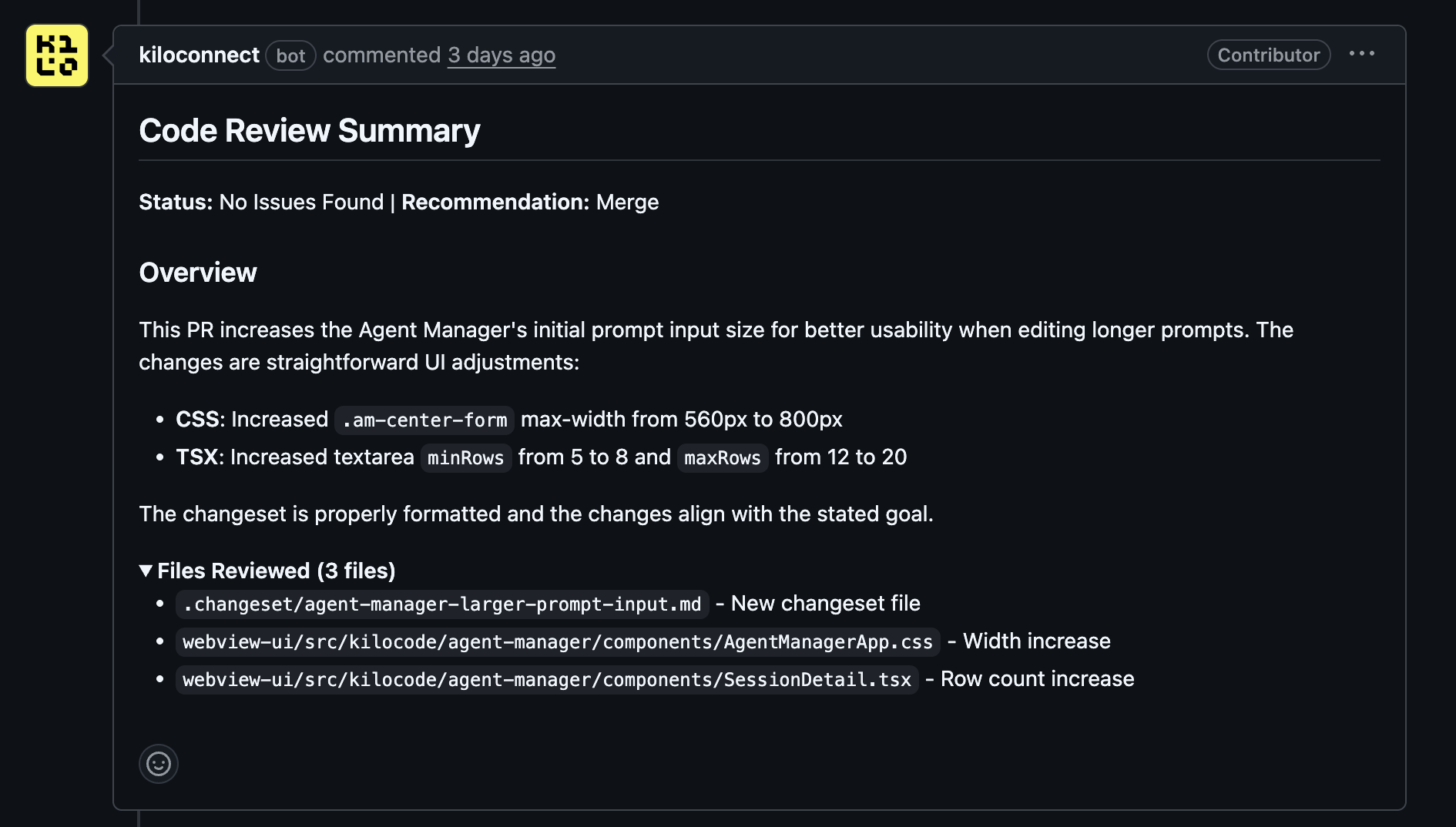
Beyond the chat agent, Kilo Code ships inline autocomplete -- multiline, ghost-text suggestions with tab-to-accept, powered by the same 500+ model catalog (including Claude, GPT-5.5-class models, and Gemini) or a local Ollama model for fully offline use. Separately, Kilo Code Reviewer is an automated PR-review product: it detects a new pull request on GitHub or GitLab (Bitbucket is listed as "coming soon"), reviews the diff with read-only repository access, and posts inline PR comments flagging bugs, security issues, performance problems, and style violations -- confirmed directly on kilo.ai's own code-reviews page, which states reviews are free "with Kilo Auto or a free model," no credit card required.
A genuine MCP client, plus a built-in marketplace for agents, skills and plugins.
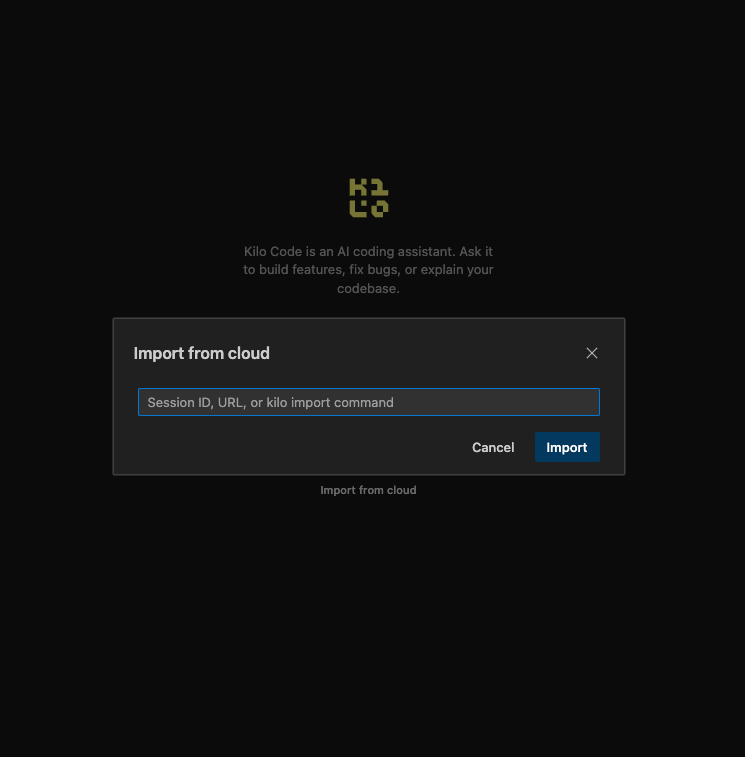
Kilo Code implements the Model Context Protocol (MCP) as a client, letting any MCP server -- databases, internal APIs, or custom tooling -- plug in as additional tools alongside the agent's built-ins. On top of that sits the Kilo Marketplace, an in-product catalog for installing community agents, skills, MCP servers, and plugins without leaving your editor. The provider layer underneath all of this is the Kilo Gateway: a unified API across 500+ models and 60+ providers, with streaming, BYOK, and usage tracking, billed at the provider's own rate.
For readers comparing MCP implementations across the ecosystem more broadly, see our Claude MCP & Connectors guide -- Claude is one of the 500+ models Kilo Code plugs into directly with your own API key.
No Kilo markup on tokens -- but three separate meters mean real bills can still surprise you.
| What you're doing | What you actually pay |
|---|---|
| Running the core extension/CLI/JetBrains plugin | $0 to Kilo -- MIT license, no seat limit |
| Calling a model via BYOK or the free Auto tier | Whatever your provider charges directly, or $0 on free/local models |
| Calling a model via Kilo Gateway | Provider's own rate, per Kilo's own no-markup claim -- not independently re-verified against every provider's list price |
| A Kilo Pass subscription | $19-$199/mo, with bonus credits (see Pricing) -- a middle path between pure BYOK and pure pay-as-you-go |
| Running agents in the cloud unattended | $0.60-$1.20/hr (Cloud Agent/"Gas Town"), separate from any per-token inference cost |
| A model looping/hitting its output limit mid-task | Real risk, documented live in GitHub issue #10558 and multiple 1-star Marketplace reviews -- you're billed for tokens consumed even when no usable output is produced |
A real Trust Center and SOC 2 documentation -- now backed by Anaconda's enterprise sales machine.
Kilo's security posture, confirmed directly against kilo.ai/security-and-compliance, includes SSO/SAML and OIDC login options, SCIM-based provisioning/deprovisioning, role-based access control with centralized team administration, and provider/model allowlists enforceable by organization policy. SOC 2 documentation is available through a dedicated Trust Center (trust.kilo.ai), and paid plans specifically support no data retention for AI prompts and outputs -- a concrete, checkable claim rather than vague "we care about privacy" language. Audit logs are available for governed rollout and investigation workflows, and the company runs a HackerOne-based coordinated vulnerability disclosure program with a published Safe Harbor statement for researchers.
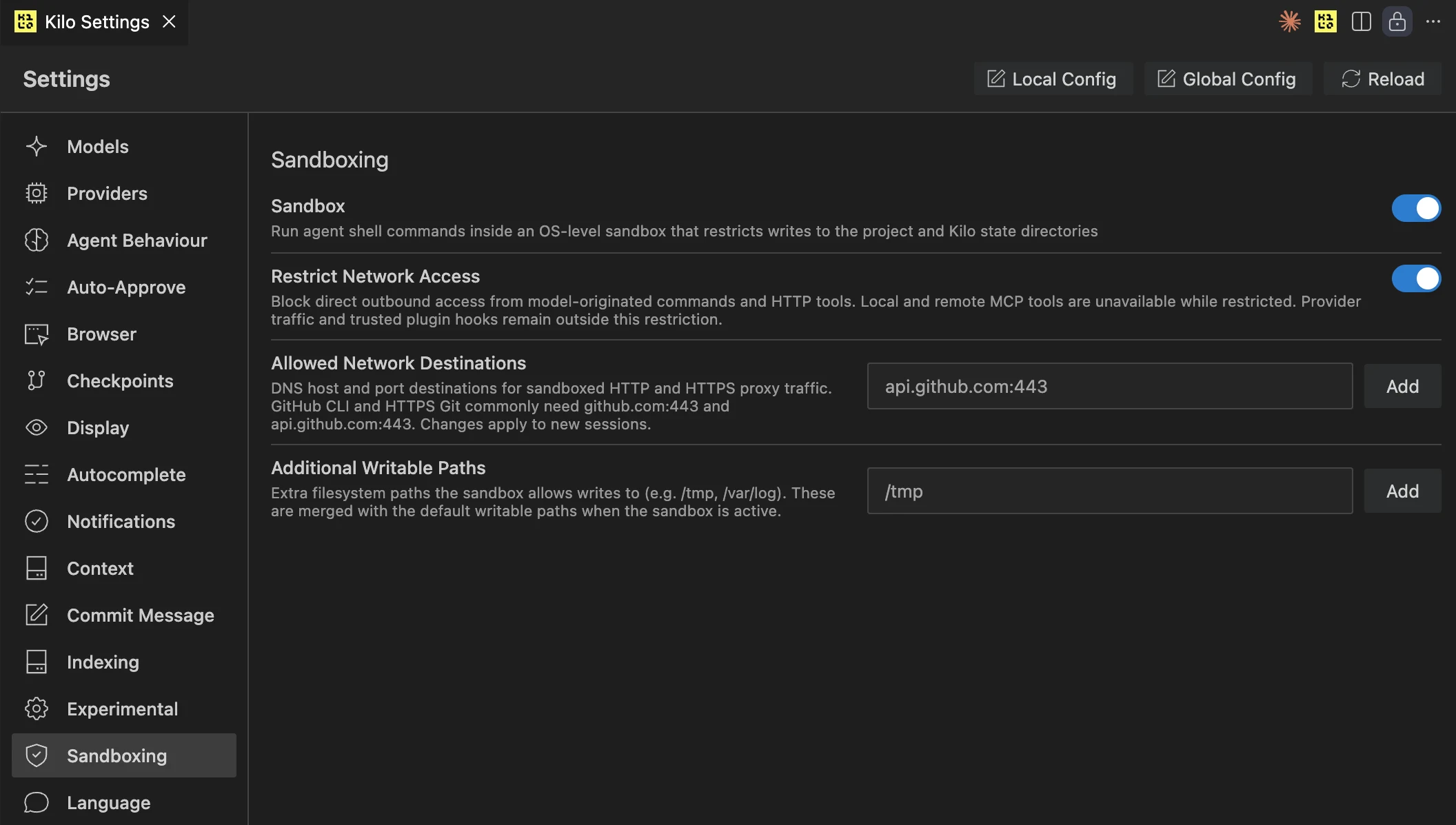
What's genuinely new since the Anaconda acquisition is context, not a feature: Anaconda's own stated rationale for buying Kilo was enterprise AI governance -- "very little visibility into where the risk is," per CEO David DeSanto -- so expect the audit-log, SSO/SCIM, and provider-allowlist side of this story to get real investment going forward, likely faster than the free individual tier does.
A strong fit for multi-IDE teams and BYOK power users; a harder sell if you want simple, predictable billing.
| Your situation | Fit | Likely plan |
|---|---|---|
| Solo developer who already has API keys for Claude/OpenAI/Gemini | Strong -- free platform, zero markup on your own keys | Free + BYOK |
| Team split across VS Code and JetBrains | Strong -- one of the few agents that genuinely covers both natively | Teams, $15/user/mo |
| Want a single flat monthly price and don't want to think about credits | Weak -- three pricing axes to track | Consider Cursor or GitHub Copilot instead |
| Enterprise wanting model/provider governance and audit logs | Growing -- the exact reason Anaconda bought Kilo | Enterprise, custom pricing |
| Former Roo Code user post-shutdown | Reasonable -- same-week migration guide shipped, shared DNA | Free, then evaluate Teams if migrating a whole team |
| Wary of tools that just changed ownership with undisclosed terms | Legitimate caution -- wait a cycle and watch for pricing/roadmap changes | N/A -- re-evaluate in a few months |
Four real, current limitations -- not hypothetical ones.
Platform tier (Free/Teams/Enterprise), model inference (Auto/Gateway/Kilo Pass), and per-hour cloud compute are each billed separately -- genuinely harder to predict a monthly bill than a single flat-fee competitor.
GitHub issue #12756 (Read tool ignoring offset/limit params, live since ~v7.4.17) and #10558 (models hitting output limits mid-task while still billing tokens) are both still open as of this review, each with 17 comments of user reports.
3.87/5 across 213 Marketplace reviews is respectable but not exceptional for 1.58M installs -- genuine complaints include UI clutter from unwanted model options and, in one case, a background CLI process that kept running (and heating up a MacBook) after the extension was uninstalled.
Anaconda acquired Kilo's parent company on Jul 15, 2026 without disclosing deal terms. Kilo states nothing changes today for individual users, but "open core future" language and a stated enterprise-governance rationale are real signals worth watching over the next few release cycles.
Four different reasons to look elsewhere, mapped to what you actually need.
| If you mostly need... | Compare with... |
|---|---|
| The original, largest-community open-source VS Code agent (69,490 GitHub stars, live-checked) | Cline -- see our Cline review |
| The specific tool Kilo Code partly forked from -- now discontinued, useful as context | Roo Code -- see our Roo Code review (shut down May 15, 2026; Kilo is one of its living heirs) |
| AWS-native, spec-first planning before any code is written | Kiro -- see our Kiro review |
| A polished, proprietary, fully-managed AI IDE instead of an open-source extension | Cursor -- see our Cursor review |
| The mainstream, IDE-agnostic default most teams already have access to | GitHub Copilot -- see our GitHub Copilot review |
| A terminal-first, minimal-UI pair programmer instead of a full IDE agent | Aider -- see our Aider review |
| An autonomous agent control center rather than an inline IDE assistant | OpenHands -- see our OpenHands review |
No affiliate relationship shapes this review.
JAVIS has no publisher affiliate program with Kilo, Inc., Kilo-Org, or Anaconda. Every CTA in this article points to a real official source: kilo.ai (the current official site, since kilocode.ai now redirects there) or the GitHub repository.
Free tier, no credit card required for the core extension.
Go to kilo.aiRead Anaconda's own announcement.
Read the acquisition postKilo Code only makes sense next to the fork family it came from and the tools it competes against.
If you're deciding what to actually install this week, these are the six reviews most worth reading alongside this one.

Questions people are actually searching right now
Is kilocode.ai still the official website?
The domain still resolves and belongs to the company, but it now returns a live HTTP 308 permanent redirect to kilo.ai, confirmed 2026-09-29. Use kilo.ai going forward; the VS Code extension and GitHub org still use "Kilo Code" and "kilocode" as identifiers.
Was Kilo Code acquired?
Yes. Anaconda, Inc. -- the Python/data-science platform company -- acquired Kilo's parent company, announced July 15, 2026. Deal terms were not disclosed. Co-founder and CEO Scott Breitenother remains in place, and Kilo's own announcement states the product "works exactly as it did last week" for existing users, with the MIT-licensed open-source repo maintained.
Is Kilo Code really free?
The core platform (VS Code extension, JetBrains plugin, CLI) is free and MIT-licensed with no seat limit. What you pay for AI model inference is a separate decision -- free/local models, your own API keys (BYOK), or a paid Kilo Pass/Gateway plan, plus optional per-hour cloud compute if you run agents unattended.
How is Kilo Code different from Cline and Roo Code?
Kilo Code launched in March 2025 explicitly positioned as a "superset" merging Cline and Roo Code's features, then diverged with its own multi-surface architecture (VS Code + JetBrains + CLI + Cloud with continuous sessions), native parallel agents across git worktrees, and inline autocomplete -- features neither Cline nor the now-discontinued Roo Code shipped in the same form.
What happened to Roo Code, and is Kilo Code a replacement?
Roo Code (a sibling fork of Cline) shut down its VS Code extension entirely on May 15, 2026. Kilo Code is one of several living heirs -- alongside Cline itself and the community fork Zoo Code -- and shipped a same-week migration guide, per JAVIS's own Roo Code review.
Does Kilo Code support Claude, GPT, and Gemini?
Yes -- Kilo Code lists 500+ models across 60+ providers via its Kilo Gateway, including Claude, GPT-5.5-class models, Gemini, DeepSeek, and fully local models via Ollama or LM Studio, plus direct ChatGPT Plus/Pro subscription login support.
Is Kilo Code's CLI related to OpenCode?
Yes, directly confirmed in Kilo's own GitHub README FAQ: "Kilo CLI is a fork of OpenCode, enhanced to work within the Kilo agentic engineering platform."
What is Kilo Code's Marketplace rating?
3.87 out of 5 (displayed as roughly 4 stars) across 213 reviews on the VS Code Marketplace, independently observed live via the Marketplace's own gallery API on Sep 29, 2026, alongside 1,577,969 total installs.
Where this came from, and when it was checked.
Domain redirect (kilocode.ai → kilo.ai): direct check, confirmed 308 Permanent Redirect, Sep 29, 2026.
Product description, features, pricing, security/compliance, docs structure, agent modes, screenshots used: kilo.ai (official site, multiple pages read directly), checked Sep 29, 2026.
GitHub repository (stars, forks, license, README, CLI/JetBrains/CLI installation instructions, agent mode list, "fork of OpenCode" FAQ): github.com/Kilo-Org/kilocode, official, Sep 29, 2026.
VS Code Marketplace (install count, rating, review count, version, individual review text): marketplace.visualstudio.com listing (kilocode.Kilo-Code), Sep 29, 2026.
JetBrains plugin existence: plugins.jetbrains.com/plugin/28350-kilo-code.
Anaconda acquisition (date, rationale, executive quotes, what changes/stays the same): anaconda.com/blog/anaconda-acquires-kilo-code and anaconda.com/blog/kilo-code-joins-anaconda-what-builders-should-know, official, read directly, Sep 29, 2026; corroborated via news.ycombinator.com/item?id=48929515 (read directly, comments from users "zb3" and "Bolwin").
$8M seed round (amount, date, investors, growth metrics at the time): blog.kilo.ai/p/kilo-raised-8-million-seed-round, official, read directly, Sep 29, 2026.
Launch history, founding timeline, "superset" positioning, early Hacker News reception: news.ycombinator.com/item?id=43483802 (read directly, comments from users "bluelightning2k," "adamgordonbell," "janpaul123," "rounce," "jiri," and others), blog.kilocode.ai posts referenced via Hacker News' own story index, Sep 29, 2026.
Real, documented product bugs (Read tool offset/limit regression, model output-limit billing issue): github.com/Kilo-Org/kilocode/issues #12756 and #10558, read directly, Sep 29, 2026 -- both confirmed still open.
Cline comparison stats (GitHub stars/forks, license): github.com/cline/cline, Sep 29, 2026.
Roo Code shutdown and Kilo migration-guide claim: corroborated against JAVIS's own previously published, independently sourced Roo Code review (javisreview.com/review/roo-code-review-2026/) rather than freshly re-verified from a first-party Kilo migration-guide page in this review cycle -- flagged as such.
Official video search: checked kilo.ai's own YouTube channel (@kilocode) directly; its About page explicitly states "Kênh này không có bất kỳ nội dung nào" ("this channel has no content"). A "Kilo Code Demo" video linked from Kilo's own VS Code Marketplace listing was checked and resolved to a third-party creator (Justin Halsall, not an official Kilo channel) -- excluded rather than misattributed as official.