
Warp Review 2026: The Terminal That Became an Agent Platform, Went Open Source, and Now Bills by the Credit
Warp is no longer just a nicer terminal. In April 2026 its client went open source under AGPL v3, in August Warp renamed its Oz agent to Warp Agent and launched Warp Factories (early access) for fleets of cloud agents, and on the pricing page the Free plan keeps the terminal free while agent usage runs on credits: Build is $20 a month ($18 billed annually) with 1,500 credits. This review checks what is true today against Warp's own pricing page, docs and changelog, adds what real users say on Hacker News and Trustpilot, and is blunt about where the credit meter and the AI push cost people trust.

| Ownership | Independent VC-funded startup (per Warp's open-source post, quoted on HN) |
| Free tier | Real terminal; Warp Agent needs credits or your own keys |
| Cheapest paid plan | $18/mo Build, billed annually ($20 monthly) |
| Open source | AGPL v3 client since Apr 2026; 65,347 GitHub stars |
| Trustpilot record | 1.7/5 as displayed, 22 reviews |
Warp is still the nicest terminal editing experience around, and it is now an open-source client wrapped around a credit-metered agent business.
"The terminal part earned its fans. The agent part is where Warp now makes its money, and where most of the complaints live. If you want the terminal and an agent you already pay for, Warp is easy to like. If you expect a $20 plan to cover a heavy day of agent work, read the credit section before you subscribe."
My honest read: Warp has three jobs now. It is a terminal (blocks, a real text editor in the input, completions). It is a place to run any CLI coding agent you already use, such as Claude Code or Codex, with notifications, a rich input box and inline code review. And it is its own agent product (Warp Agent in the app and as a standalone CLI, plus cloud agents) that burns credits. The first two are where I would start. The third is competitive, but you are buying metered usage, not a flat subscription. This is a VERIFIED EDITORIAL REVIEW: Warp's pricing page, docs, changelog, privacy pages and GitHub repository were checked on Oct 3, 2026, alongside Hacker News and Trustpilot sentiment. I did not run a controlled hands-on test.
One app, three layers: a terminal, an agent you can run anywhere, and cloud automation for teams.
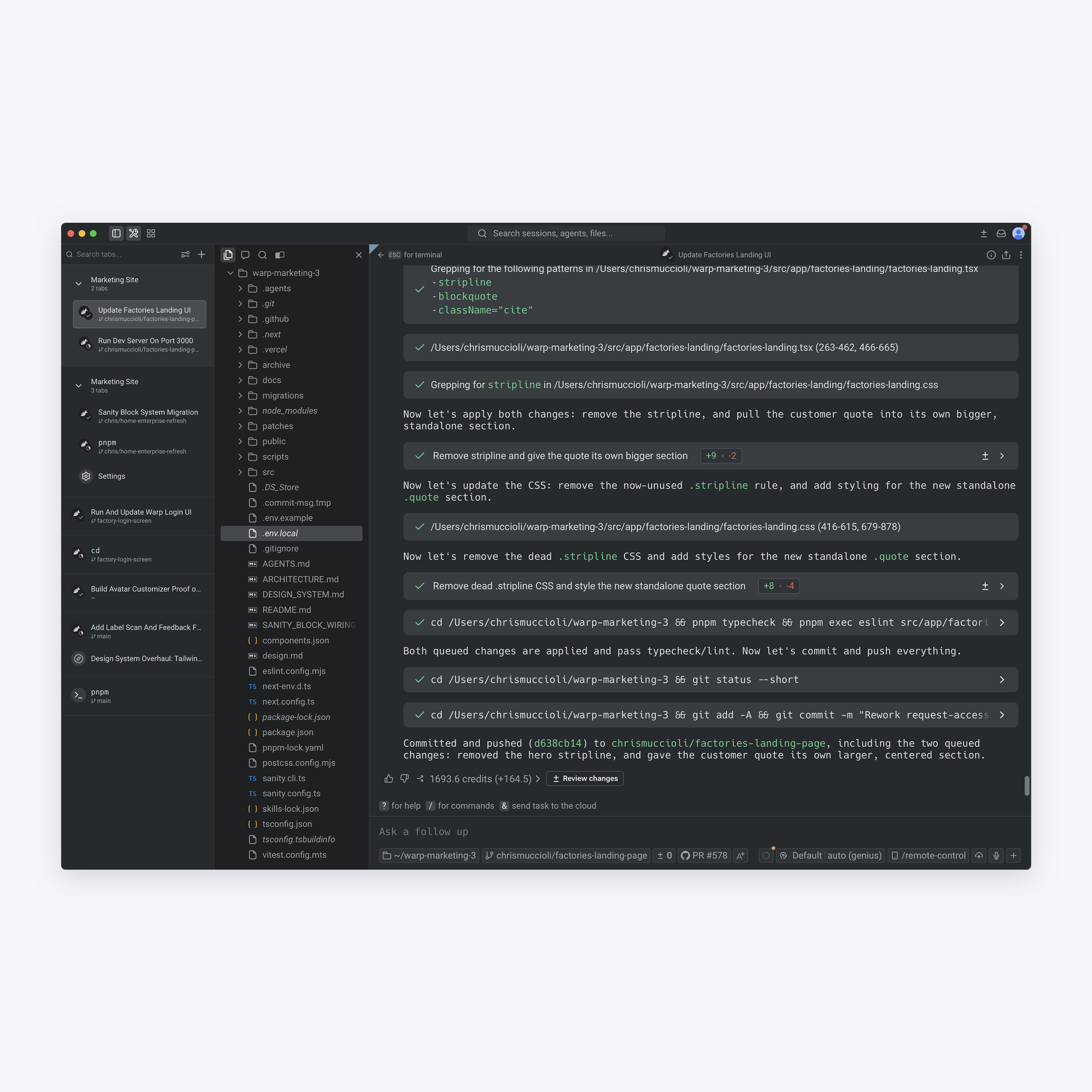
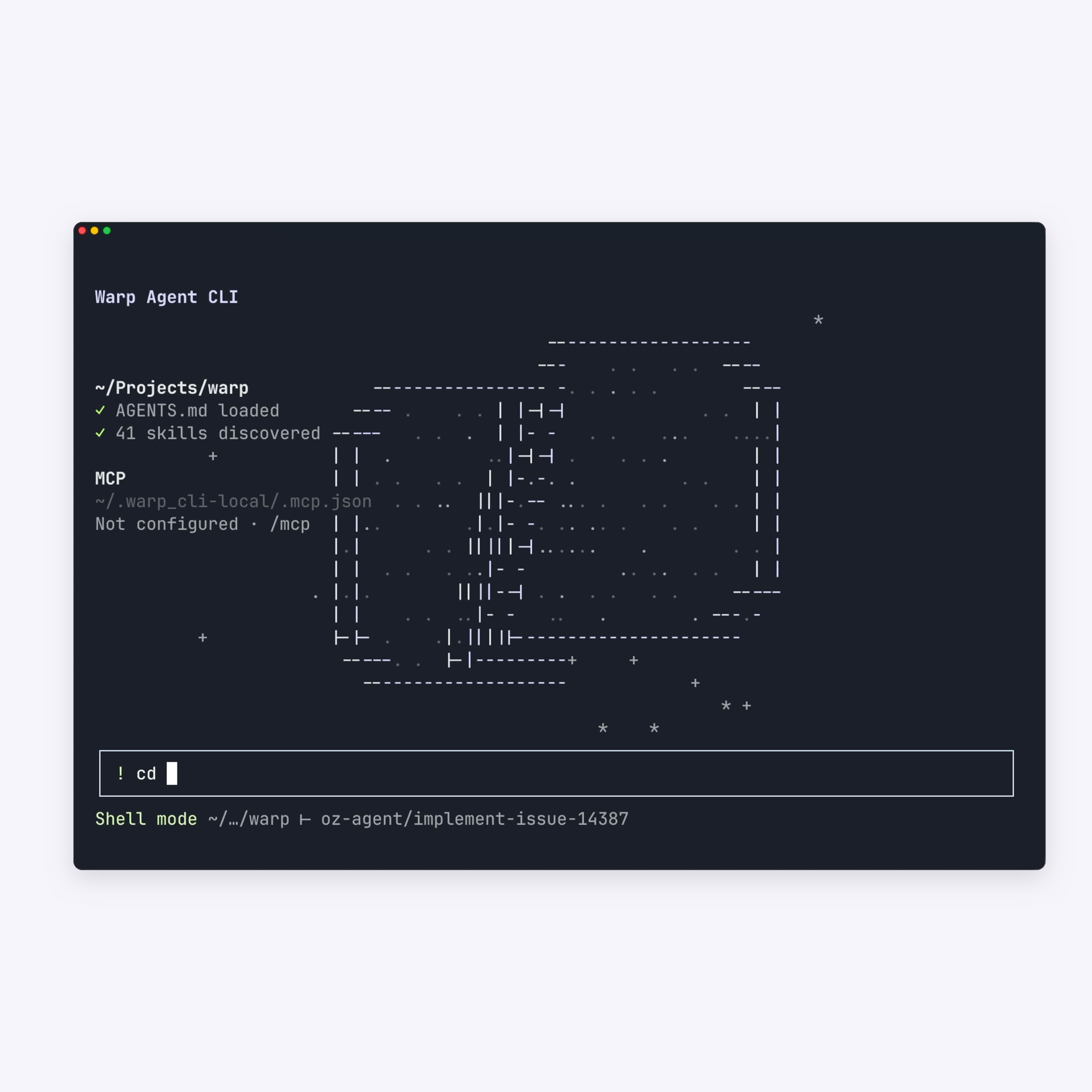
Warp's docs describe it as an "open source Agentic Development Environment that combines a modern, high-performance terminal with powerful agents to help you build, test, deploy, and debug code." Underneath that sentence sit four things you will actually touch. The terminal is built in Rust and adds block-based output, multi-line editing and rich completions. The Warp Agent writes code, runs commands and handles multi-step tasks in three places: inside the app, as the Warp Agent CLI (run warp in any terminal), and as cloud agents in the background. A built-in code editor and review panel handle diffs. And Warp Drive stores shared workflows and context for a team. Separately, Warp supports third-party CLI agents such as Claude Code, Codex and OpenCode, which it calls "universal agent support".
Ownership: Warp is a venture-funded private company. A statement quoted in the Hacker News launch thread, attributed to Warp's open-source announcement, reads "Yes, we are a VC funded startup", and I found no acquisition. Its homepage lists customers such as Anthropic, OpenAI, Docker, Google, GitHub, Amazon and Nvidia, which I treat as marketing, not audited. OpenAI is the "founding sponsor" of the open-source repository per the README.
One of the best-known terminal brands among developers, with adoption numbers that are mostly Warp's own.
Homepage claim, Oct 3, 2026. A people count with no definition of active, free versus paid, or time window. Not paying customers.
GitHub data for warpdotdev/warp, Oct 3, 2026. Stars measure interest, not users. The client was opened in Apr 2026.
As shown on warp.dev and the Product Hunt page, 3.1K followers. A small, self-selected sample.
"Warp is now open-source", Apr 28, 2026. Attention measure, not a satisfaction measure.
| Date | Event | Source |
|---|---|---|
| 2026-04-27 | Changelog: "Warp is now open source" plus a TOML settings file | docs.warp.dev changelog |
| 2026-04-28 | Open-source blog post; OpenAI named founding sponsor; Oz cloud platform stays proprietary | Warp blog; GitHub README |
| 2026-08-13 | Changelog: "Renamed the Oz agent UI to Warp Agent across the app and CLI" | docs.warp.dev changelog |
| 2026-08-18 | Warp Factories announced (closed beta, up to $10k of usage for selected teams) | Warp blog |
| 2026-09-23 | Sign in with ChatGPT to use your ChatGPT plan with Warp's agent; blog post Sep 29 | Changelog; Warp blog |
| 2026-09-30 | Latest weekly release at the time of writing (v0.2026.09.30.08.29) | docs.warp.dev changelog |
What I weigh most is the repositioning. A terminal that spent years selling a better command line now describes itself as "The Open Platform for Automating Development" and sells factories of agents. That tells you where the revenue is expected to come from: usage of agents, not terminal licences.
People love the input editor. The recurring complaints are AI creep, login history, credits and support.
Praise: one commenter said Warp's shell wrapping is "the only terminal where I can actually edit a long command in place". Pushback: "The terminal emulator was never their selling point, the AI wrapper was", and another said constant pushing of agents "really put me off". A third wrote that AI features "only activate if you log in". The founder replied that there is "a single 'turn off all the AI stuff' button".
TrustScore shown as 1.7 out of 5 with 12 reviews in the last 12 months. Reviewers quote "My 2,500 requests were gone in just one hour!", a refund dispute ("I paid 40$ for 3 minutes"), unresponsive support, and "I just want a simple, elegant, smart terminal app". Tiny sample, and billing complainers are over-represented on Trustpilot.
4.8 stars; users praise "fast performance" and a modern interface, with many switching from iTerm2. Criticisms flagged there include a forced login requirement, onboarding friction and settings that "can be a bit unintuitive". The login requirement was lifted later, per a Hacker News reply linking Warp's own post.
Free, Build, Max, Business, Enterprise. The terminal is free; agent usage is credits.
Free
The terminal, with the agent on your own keys or pay-as-you-go credits.
- Modern terminal and Warp Agent CLI access
- Reload credits at pay-as-you-go rates
- Bring your own AI inference (limits apply)
- Limited cloud agents, Warp Drive and conversation storage
Build
1,500 credits, described as $20 of agent usage at API rates.
- Full Warp Agent access to frontier and open models
- Reload credits with volume discounts, auto-reload, spend cap
- Extended cloud agents, unlimited Warp Drive
- Private email support
Max
18,000 credits, 12x Build.
- Everything in Build
- 18,000 included credits
- Same reload options
Business
Up to 25 seats, 1,500 credits per seat.
- Team usage metrics, SAML SSO
- Admin-configurable data controls
- Bring your own API keys and custom endpoints
- Zero Data Retention coverage per docs
| Item | Price | What it covers |
|---|---|---|
| Free | $0 / month | Terminal, Agent CLI access; no bundled agent usage per docs |
| Build | $20 monthly, $18 annual | 1,500 credits ($20 of usage at API rates); full Warp Agent |
| Max | $200 monthly, $180 annual | 18,000 credits; 12x Build |
| Business | $50 per user monthly, $45 annual | 1,500 credits per seat; up to 25 seats; SSO; BYOK |
| Enterprise | Custom | Unlimited seats, BYOLLM, self-hosted cloud agents, audit-grade admin controls |
| Factories (early access) | Pay as you go: 20% markup, no subscription | Build/Max up to 10 seats, Business up to 25; some teams get up to $10,000 of usage |
| Add-on credit pack (docs) | Price | Per credit | Discount |
|---|---|---|---|
| 400 credits | $10 | $0.025 | Base rate |
| 1,000 credits | $20 | $0.020 | 20% off |
| 3,000 credits | $50 | $0.016 | ~35% off |
| 6,500 credits | $100 | $0.0153 | ~40% off |
Arithmetic you can check: Build gives 1,500 credits for $20, about $0.0133 a credit ($0.012 on annual billing); Max is 18,000 credits for $200, about $0.0111. The cheapest add-on rate in the docs table is $0.0153, so Max beats the top add-on pack. A team of 10 on Business is 10 x $50 = $500 a month ($450 annual) before any reloads. Warp's docs say credit usage is "non-deterministic" and there is "no exact formula for predicting usage", so these are rates, not forecasts.
Decide by which agent you already pay for and how much you want in one app.
Free plan. You can opt for plain terminal at onboarding and use the "turn off AI" switch. Also compare Ghostty or iTerm2.
Use them inside Warp on the Free plan for rich input, notifications and code review. No Warp credits are needed for that.
Build, or Free with your own API key if you are an individual or an org with 10 or fewer employees.
Price Max against a pile of reload packs, and compare flat-priced alternatives (see Alternatives).
Business up to 25 seats; larger orgs need Enterprise, and BYOK for more than 10 employees needs Business.
Warp Factories is early access with request-access; budget and a pilot are required.
The agent works in a real terminal, so it can drive tools like psql, vim and debuggers.
Warp's agents overview says the Warp Agent "runs commands in a real terminal, carries your context across every surface, and works interactively or in the background", and that you stay in the loop "approving actions and reviewing diffs before anything lands". Three capabilities stand out in the docs. Full Terminal Use lets the agent attach to interactive apps such as psql, vim, python, gdb or your dev server, read the live terminal buffer and type into it, then hand control back. Planning turns a request into an editable plan that executes step by step. Codebase Context indexes your Git-tracked repo; Warp states "No code is stored on Warp servers". There are also rules (WARP.md or AGENTS.md), skills, slash commands, voice input and conversation forking.
| Capability | Free | Build | Max | Business | Enterprise |
|---|---|---|---|---|---|
| Terminal and third-party agents (Claude Code, Codex, OpenCode) | Yes | Yes | Yes | Yes | Yes |
| Warp Agent in app, with bundled usage | No (credits or own keys) | 1,500 credits | 18,000 credits | 1,500 per seat | Custom pools |
| Warp Agent CLI | Included (Mac, Linux) | Included | Included | Included | Included |
| Bring your own API key | Individuals / orgs of 10 or fewer | Same limit | Same limit | Yes | Yes, plus BYOLLM |
| Cloud agents | Limited | Extended | Extended | Extended | Self-hosted option |
| Team data controls, SSO | No | No | No | Yes | Yes, plus governance |
- Real terminal control: the agent can use interactive programs, not only run one-off commands.
- Permissions are per action type (always ask, always allow, agent decides) and file edits still show a diff.
- Works with the agents you already use, so you are not locked into Warp's own.
- Credit cost per task is unpredictable by Warp's own description.
- Model names on the pricing page (for example Fable 5, Claude Opus 5, GPT-5.6, Gemini 3.1 Pro, GLM 5.2, Kimi K3) change quickly; check what your plan can actually pick.
- Agent quality depends on the model you choose and how tidy your repo and rules are.
Warp's own demo of the agent operating inside interactive terminal programs, the clearest primary-source picture of the core feature above.
Published by the official "Warp" YouTube channel (https://www.youtube.com/@warpdotdev). Vendor demo, so it shows the best case.
Plan first, let the agent run commands, and review the diff before it lands.
The pieces I would use first are the review step and the rules file. Warp says the agent will address inline review comments from its code review panel, and that this panel also works with third-party agents. For long tasks, Remote Control publishes a Claude Code, Codex or OpenCode session to the cloud so you can check in from a phone or browser. Credit use shows per turn through a chip under each response, and in the CLI the /cost command shows credits per response.
Warp's own walkthrough of planning mode, which is the first step of the workflow diagram above.
Published by the official "Warp" YouTube channel (https://www.youtube.com/@warpdotdev). Vendor demo; it does not show credit costs.
Automation is where Warp is heading, and where the bill and the risk are biggest.
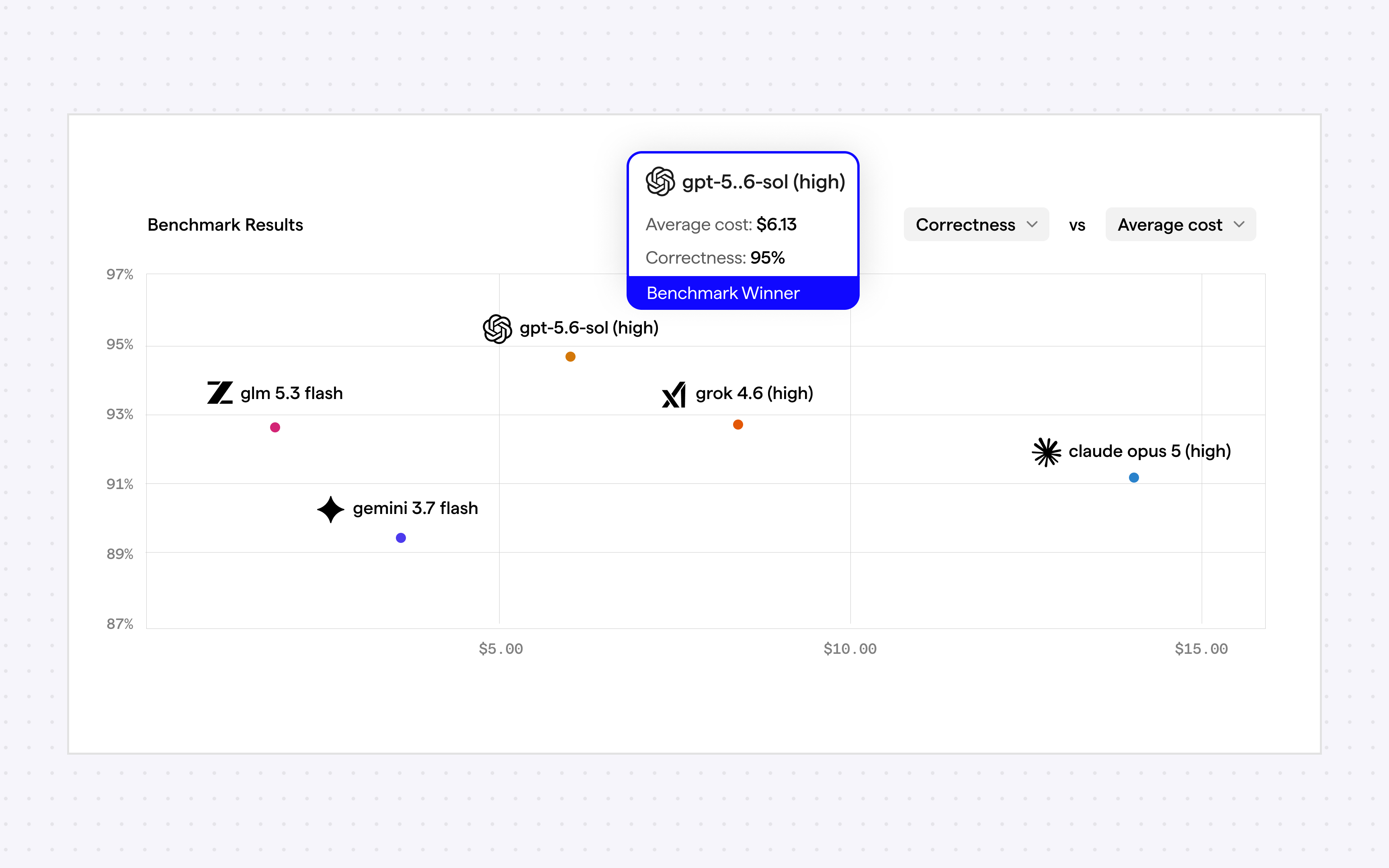
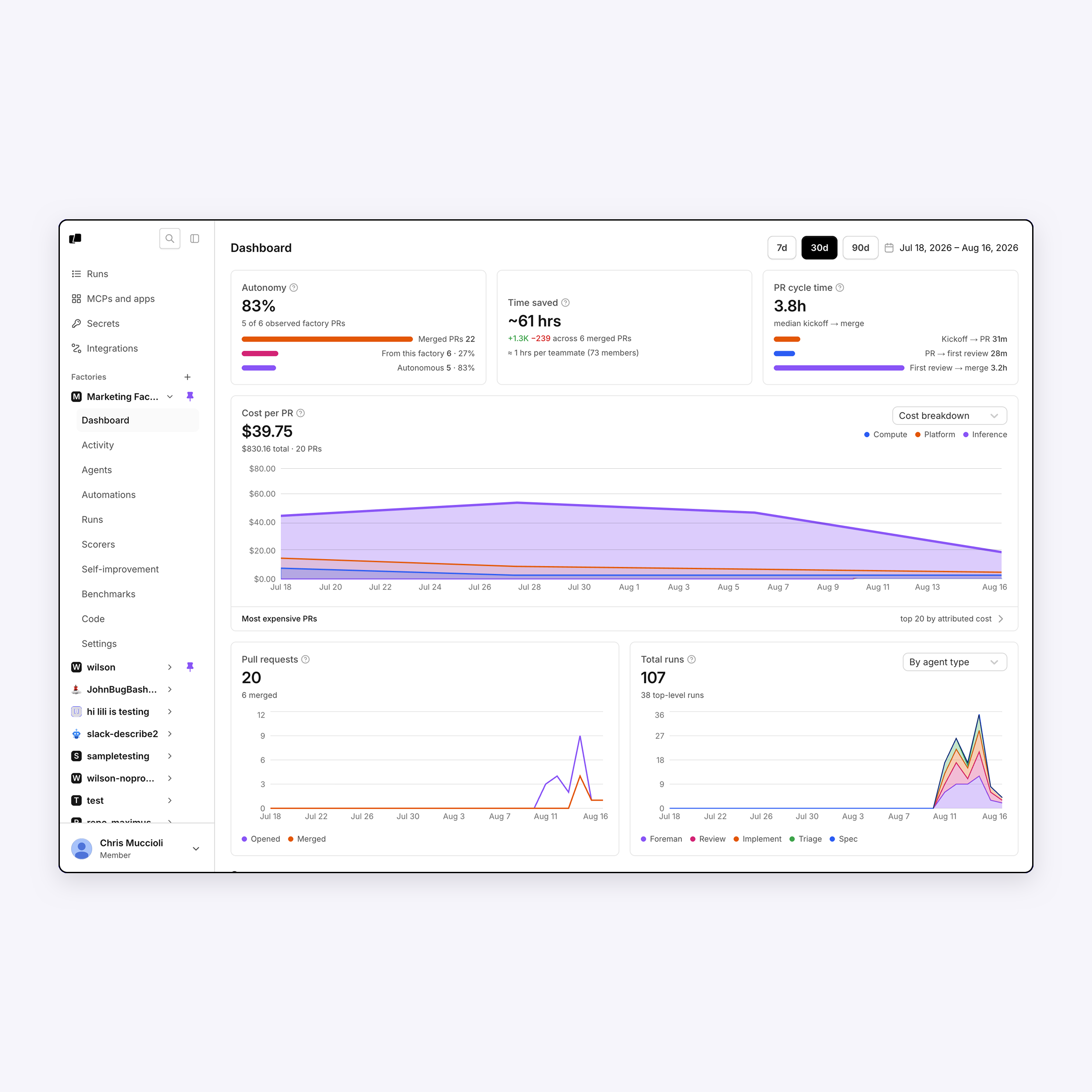
Warp's docs describe an Automation Platform that "orchestrates agents locally or in the cloud at scale" with triggers, schedules, parallelism and observability. Cloud agents can be started from Slack, Linear or GitHub (mention @Warp), from schedules and webhooks, or from the CLI and API. Warp Factories, announced Aug 18, 2026, goes further: a repeatable process "where cloud agents triage, spec, implement, review, and verify work", defined as code and orchestrated by a "foreman" agent. It is in closed beta. Warp's blog says it automates "about 30% of our tasks through our factories", and shows a dashboard example of $57.55 cost per PR. Those are Warp's numbers on its own repository, which is itself driven by factories per the README.
| Job | Trigger Warp lists | Credits that apply | What to watch |
|---|---|---|---|
| Fix an issue from Slack or Linear | @Warp mention | AI + compute + platform credits (cloud run) | Agents can open PRs; review each one |
| First-pass PR review | GitHub event | Cloud run credits | Warp markets this use case; quality is unmeasured here |
| Scheduled maintenance task | Schedule or webhook | Cloud run credits, billed per agent hour for platform | Platform credits bill by the agent hour |
| Local run with your own API key (Business/Enterprise) | You, in the app or CLI | Platform credits only (customer-supplied inference) | Docs say these local runs still accrue platform credits |
| Factory fleet on a repo | Request early access | 20% markup on API rates or plan credits | Closed beta; self-improvement claims are Warp's own |
- Repetitive, well-scoped engineering chores with a clear review step.
- Teams that want agents with run history, usage metrics and a self-hosting path.
- Cloud runs bill for inference, compute and platform separately, and credit cost is non-deterministic.
- Warp Factories is closed beta with no public track record outside Warp's own repo.
- A fleet that opens PRs needs human review capacity, or it just moves the bottleneck.
Warp reads MCP servers, wraps other agents, and plugs into Slack, Linear and GitHub.
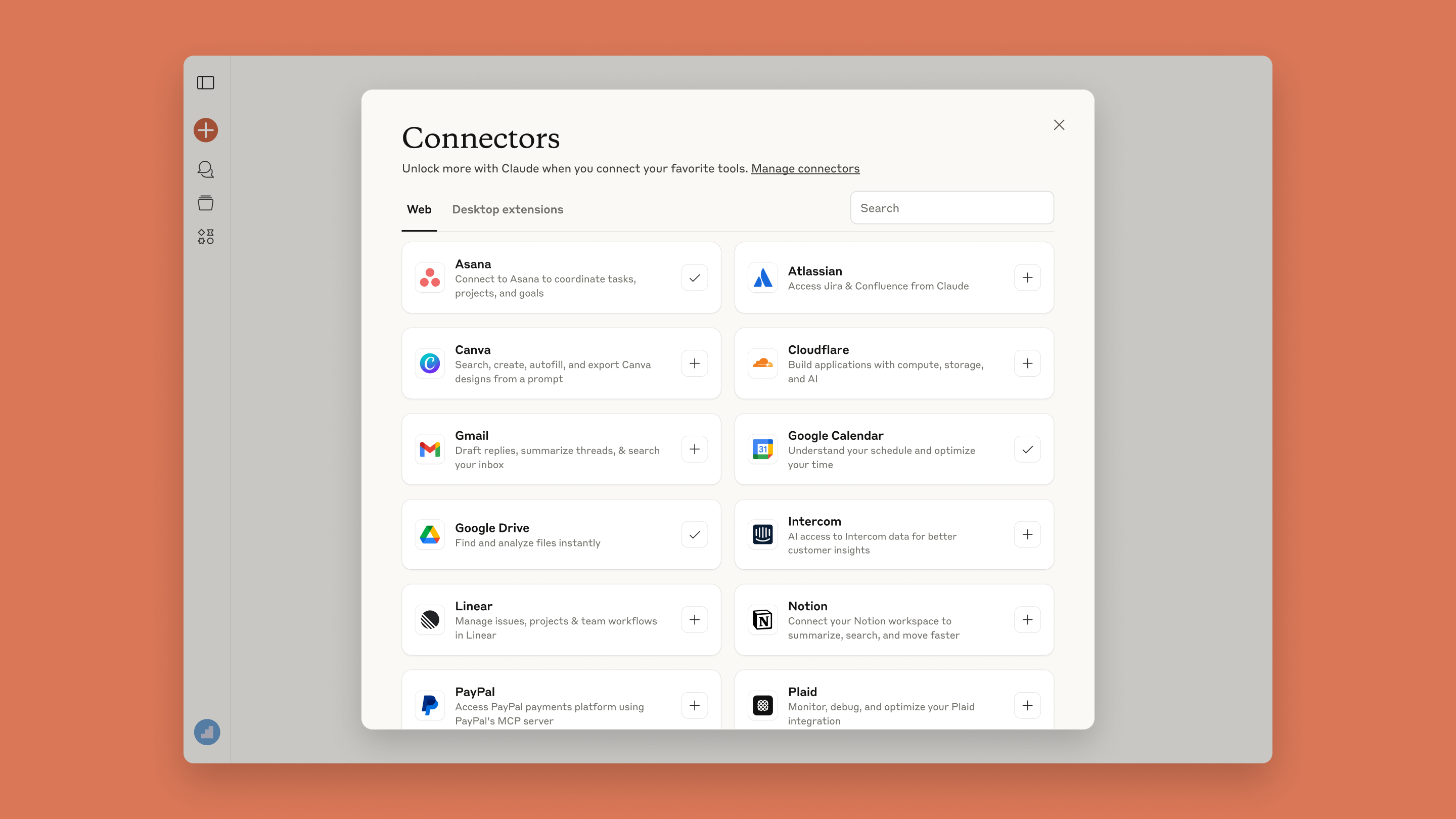
Warp supports Model Context Protocol servers (scoped per profile), including file-based project servers, and ships a built-in Factory MCP server for logged-in users since Aug 18. For third-party agents it publishes plugins: warpdotdev/claude-code-warp and warpdotdev/codex-warp on GitHub add notifications, and an OpenCode plugin exists too. Cloud agents connect to Slack, Linear and GitHub, and the changelog also mentions Azure DevOps, AWS ECR and Docker registry credentials for agent runs. If MCP is new to you, JAVIS's Claude MCP and Connectors guide explains the idea, and the Claude Code setup guide covers the agent most people run inside Warp.
| Integration | What it does | Status as read |
|---|---|---|
| Claude Code, Codex, OpenCode in Warp | Rich input (Ctrl-G), notifications, inline code review, Remote Control | Documented in docs.warp.dev; plugin repos on GitHub |
| MCP servers | Give the Warp Agent extra tools; per-profile access rules | Documented; project servers launch from the repo root by default |
| Slack, Linear, GitHub | Mention @Warp to investigate bugs, suggest fixes, open PRs | Pricing page "Integrations" section |
| Custom inference endpoint | Any OpenAI-compatible endpoint such as OpenRouter or LiteLLM | Warp app only, public URL required; limits apply to larger orgs |
| ChatGPT sign-in | Use your ChatGPT plan with Warp's agent | Changelog Sep 23, 2026; Settings > Agents > Warp Agent > Custom Inference |
| Oz Agent API / CLI / SDK | Drive cloud agents programmatically | OpenAPI spec published at docs.warp.dev |

Know your credit rate, then decide whether to bring your own key.
| What you are doing | What you pay / hit |
|---|---|
| Using Claude Code or Codex inside Warp | $0 for Warp on Free; those agents are billed by their own vendors. Warp's docs describe them as separate from the Warp Agent, and I found no statement that they consume Warp credits |
| Warp Agent on Build | $20 a month ($18 annual) for 1,500 credits, about $0.0133 a credit (JAVIS arithmetic) |
| Heavy user buying reloads at the top pack | 6,500 credits for $100 is $0.0153 a credit, which is more than Max's $0.0111 (JAVIS arithmetic from docs) |
| Heavy user on Max | $200 a month ($180 annual) for 18,000 credits |
| Your own API key (individual or 10 or fewer employees) | No Warp credits for requests on your key; you pay the provider. Auto models always use Warp credits, per the pricing FAQ |
| Business/Enterprise with your own key, local runs | Platform credits still apply, billed by the agent hour, rate on the pricing page |
| Out of credits mid-task on a paid plan | Premium models pause until the next cycle (30 days from signup) unless you have add-on credits or auto-reload (default off, $200 monthly limit when enabled) |

Warp's own walkthrough of connecting your own API key, the main way to control cost on this tool.
Published by the official "Warp" YouTube channel (https://www.youtube.com/@warpdotdev). Vendor tutorial; it does not cover the 10-employee limit in detail.
SOC 2 and zero-retention paper on paid tiers, but read the defaults yourself.
| Control | What Warp says |
|---|---|
| Compliance | SOC 2 Type II attestation from an accredited third party, report on request via the Trust Center (pricing FAQ) |
| Zero Data Retention | ZDR agreements with Anthropic, OpenAI, Google, xAI and Fireworks AI; providers may not train on data processed through Warp, for Warp-provided inference only. Business and Enterprise are covered; individuals can get full ZDR by switching off "Help improve Warp" |
| Your own keys | Requests go straight to your provider under your own terms; Warp ZDR does not apply |
| Secret redaction | Detects secrets and PII before data goes to servers or LLMs, but it is disabled by default and regex-based; not applied in Session Sharing |
| Telemetry | Opt-out via Settings > Privacy; native Network Log; exhaustive telemetry table published |
| Codebase indexing | "No code is stored on Warp servers" |
| Agent permissions | Per action type: always ask, always allow, agent decides; default denylist covers rm, curl, wget, eval, ssh and shells |
The practical read: turning on secret redaction and keeping the default denylist are cheap safeguards. The open-source client (AGPL v3) lets you audit what the app sends, which is a real advantage over closed terminals, but the Oz cloud platform and servers remain proprietary per the open-source announcement.
Best for developers who live in the terminal and want agents beside their existing tools.
| Situation | Why Warp fits | Likely plan |
|---|---|---|
| Daily terminal user who edits long commands | The input editor and blocks are the product's best-loved parts | Free |
| Claude Code or Codex user wanting notifications and review | Rich input, inline review and Remote Control around the agent you already pay for | Free |
| Individual wanting one app with its own agent | Warp Agent in app and CLI, planning, Full Terminal Use | Build (or Free + own key) |
| Heavy agent user | Max beats reload packs per credit, but cost is still metered | Max |
| Engineering team with SSO and data controls | Usage metrics, SSO, ZDR, shared spend, BYOK | Business or Enterprise |
| Someone who wants a pure, minimal terminal | Warp is heavier and more opinionated than minimal terminals | Look at Ghostty or iTerm2 first |
| Platform team piloting agent fleets | Factories and cloud agents, early access only | Enterprise / request access |
Six real gaps, not manufactured ones.
Warp's own docs call usage "non-deterministic" and say there is "no exact formula". Trustpilot reviewers describe credits vanishing quickly. Budgeting is guesswork until you have your own history.
The terminal is free, but the docs say the Free plan "doesn't include bundled AI usage for the Warp Agent". You pay credits or bring a key.
Hacker News commenters said constant agent promotion pushed them away, and some distrust the company after earlier login and monetisation decisions. Warp now offers a switch to disable AI and no login for plain terminal use.
Own API keys and custom endpoints are for individuals and organisations with 10 or fewer employees; larger organisations need Business or Enterprise.
Trustpilot shows 1.7 over 22 reviews with refund and support complaints. Small sample, but consistent.
Oz became Warp Agent in Aug 2026, and cloud agent, Factories and credit-bucket rules are changing fast. Names in screenshots and old guides may be out of date.
Also, the open-source client does not make the service free: the cloud platform and model access remain Warp's commercial layer, and the AGPL licence means forks must publish changes.
Warp is best when you want a terminal and agents together. Others win on price, minimalism or editor depth.
| If you mostly need... | Compare Warp with... |
|---|---|
| A fast, minimal terminal, free and open source | Ghostty (MIT licence, about 61,800 GitHub stars on Oct 3, 2026) or iTerm2 on Mac |
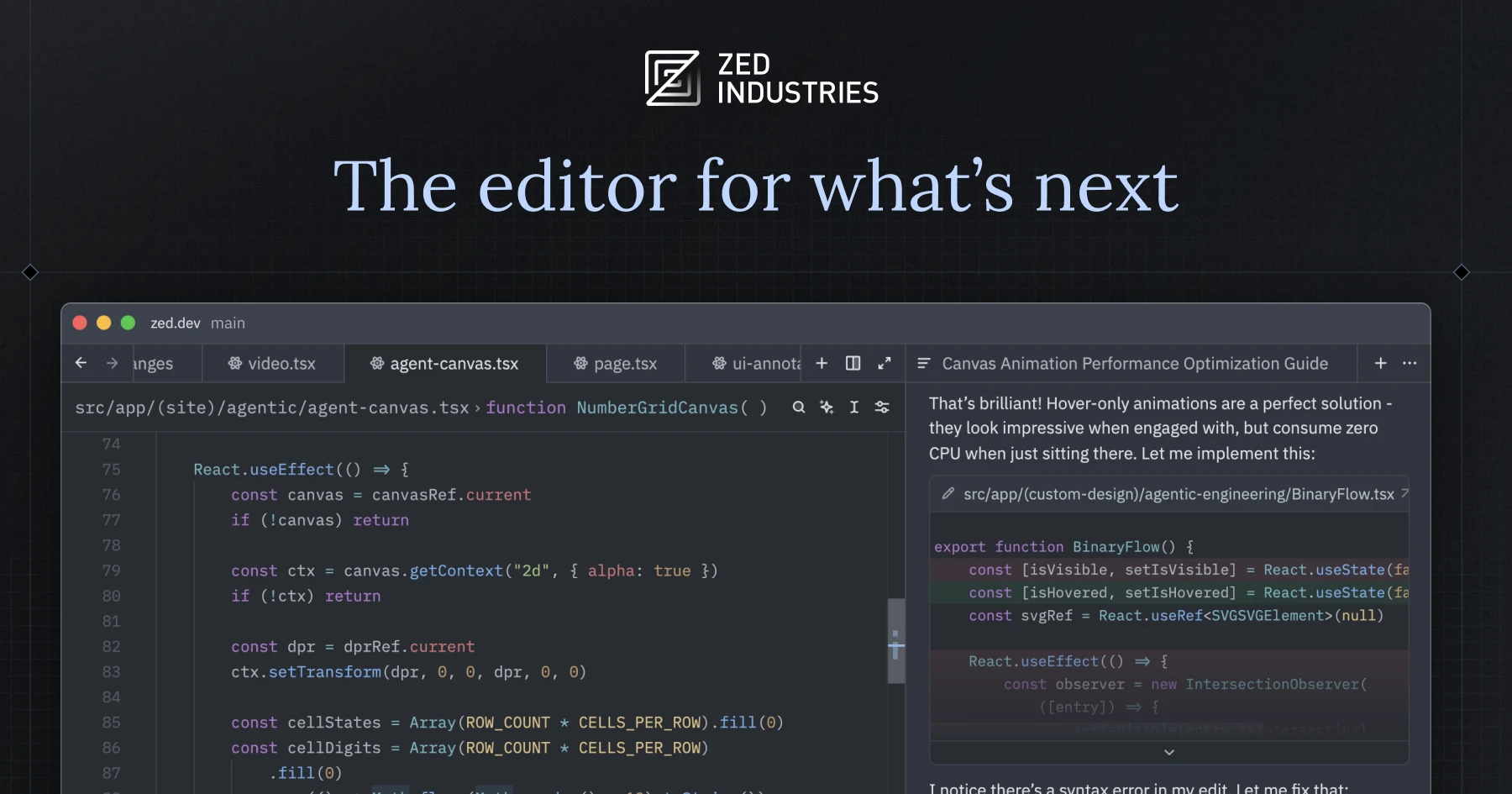
| An AI editor rather than a terminal app | Cursor review, Zed review |
| An open-source agent in your editor | Cline review |
| Assistant bundled with your Git host | GitHub Copilot review |
| The agent most people run inside Warp | Claude Code setup guide |
| Understanding MCP connectors | Claude MCP and Connectors guide |
| Entry point (verified Oct 3, 2026) | Warp | Ghostty | Claude Code in Warp |
|---|---|---|---|
| Terminal | Free | Free (MIT) | Runs inside Warp Free |
| Agent included | None on Free; Build $20 monthly ($18 annual) for 1,500 credits | None | Billed by Anthropic, not Warp |
| Unit that runs out | Credits | N/A | Your Anthropic plan limits |
| Open source | Client AGPL v3; cloud platform proprietary | MIT | Not applicable |
No affiliate relationship shapes this review.
JAVIS has not established a publisher affiliate program with Warp. Every CTA in this article points to the official product. If that changes, the review's facts, limitations and alternatives will not.
Go to the official page.
Open WarpRead the alternative that matches your real question.
Choose the next articleWarp sits between the terminal and the agent layer.
Every card below links to a published JAVIS review.

Card images come from each product's own site or its JAVIS review page.
Questions people are actually searching right now
Is Warp free?
The terminal is free. On the Free plan the Warp Agent has no bundled usage: you buy credits, bring your own API key (individuals and organisations with 10 or fewer employees) or run third-party agents such as Claude Code. Verified on warp.dev and docs.warp.dev, Oct 3, 2026.
How much does Warp cost in October 2026?
Build is $20 a month ($18 billed annually) with 1,500 credits; Max is $200 ($180 annual) with 18,000 credits; Business is $50 per user ($45 annual) for up to 25 seats; Enterprise is custom. Verified on warp.dev/pricing.
Is Warp open source?
The client is, since April 27-28, 2026: AGPL v3, with the UI framework crates under MIT. The Oz cloud platform and servers remain proprietary per Warp's announcement.
What happened to Oz?
Warp renamed the Oz agent UI to Warp Agent across the app and CLI in the Aug 13, 2026 release. Oz still appears in CLI commands, the API and docs for cloud agents.
Does Warp work with Claude Code and Codex?
Yes. Warp auto-detects supported CLI agents and adds a rich input editor, notifications, inline code review and Remote Control. They run under your own agent subscription; Warp's docs treat them as separate from the Warp Agent.
Does Warp train on my data?
Warp says ZDR agreements with its LLM providers prevent training on data processed through Warp, and Business and Enterprise plans are covered by ZDR. Its privacy policy also describes using collected AI inputs to improve models unless you opt out, so check settings for your plan.
Can I use Warp without AI?
Yes. Warp's founder said on Hacker News that you can pick a plain terminal at onboarding with no login and that there is a single switch to turn off the AI features; the changelog confirms slash commands in the terminal work even when AI is disabled.
What are the best Warp alternatives?
Ghostty or iTerm2 for a terminal alone, Cursor or Zed for an AI editor, and Cline or GitHub Copilot for agents inside your editor. See Alternatives above.
Where this came from, and when it was checked.
Pricing and plans: warp.dev/pricing, checked Oct 3, 2026 including its FAQ data; docs.warp.dev plans and refunds, credits, add-on credits, platform credits and pricing FAQ pages.
Product and launches: docs.warp.dev overview and agents pages; docs.warp.dev/changelog (2026.04.27, 08.13, 08.18, 09.23, 09.30 entries); Warp blog posts (Apr 28, Aug 18, Sep 3, Sep 29, 2026); github.com/warpdotdev/warp README and API (65,347 stars, AGPL-3.0, pushed Oct 3, 2026).
Security: warp.dev privacy policy page; docs.warp.dev privacy, secret redaction and CLI permissions pages (vendor statements).
Market: warp.dev homepage ("800k+ devs"), GitHub, Product Hunt page (4.8, 79 reviews), Hacker News item 47936264 (373 points, 118 comments).
Real users: Hacker News thread; Trustpilot warp.dev 1.7/5, 22 reviews, (the displayed score and star split are not arithmetic-identical); G2 could not be read and Reddit was not available to us, so neither is cited.
Alternatives: ghostty-org/ghostty on GitHub; live JAVIS reviews.
Official videos: youtube.com/watch?v=gBdehHrtb94, DawcFWyudV0 and jbSBnbPzQwY; author "Warp" on YouTube.
JAVIS Fit Score (72/100): editorial composite of terminal and workflow quality (strong), open-source client and agent breadth (strong), third-party agent support (strong), credit metering and no bundled Free-plan agent usage (weak), privacy defaults and policy tension (mixed), trust, support and billing sentiment (weak). Weighted by judgement; no automated test was run.