
LLM-Assisted Reverse Engineering: Ghidra, MCP and Agent Skills
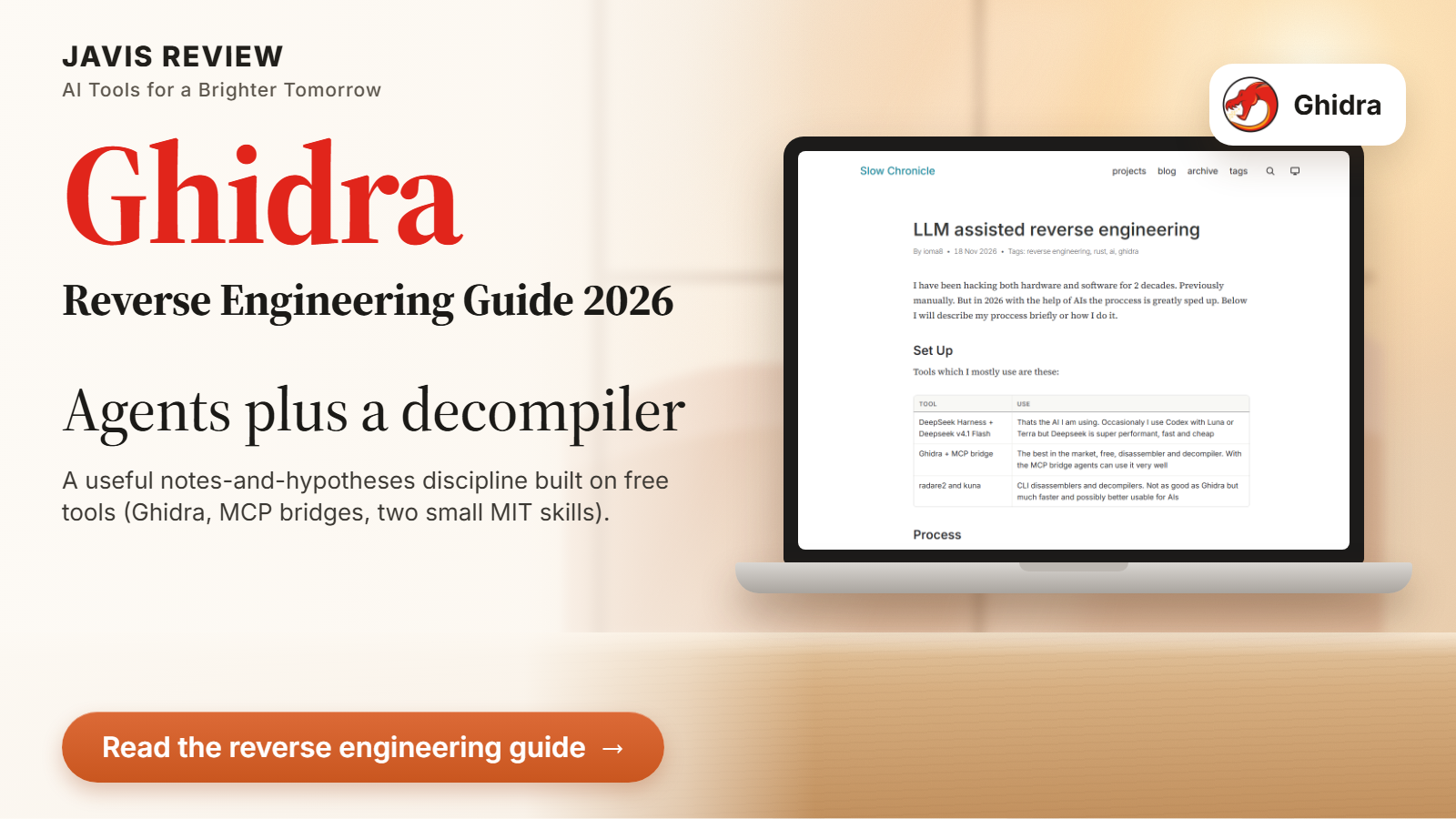
A reverse engineer with two decades of experience published his 2026 workflow: point an agent at a binary, make it keep notes, and give it a Ghidra bridge plus a few skills. This guide lays out the workflow, checks the tools it names, adds what Hacker News said, and marks where the law and the evidence stop.
There are no affiliate links in this guide.
| Workflow by | ioma8 (Slow Chronicle) |
| Cost | Ghidra and the skills are free; model usage is extra |
| Runs on | Desktop with Java and Ghidra |
| Catch | Single-author evidence; tool versions must match |
| Evidence | Post, five repositories, Hacker News |
The useful idea is not a tool, it is a discipline: make the agent write down what it learns and test one hypothesis at a time. The tools around it are free and real, but the evidence is one person's account.
The author's own words: the agent should document all findings along the way to Markdown files, so it does not lose the track after compaction or a handoff.
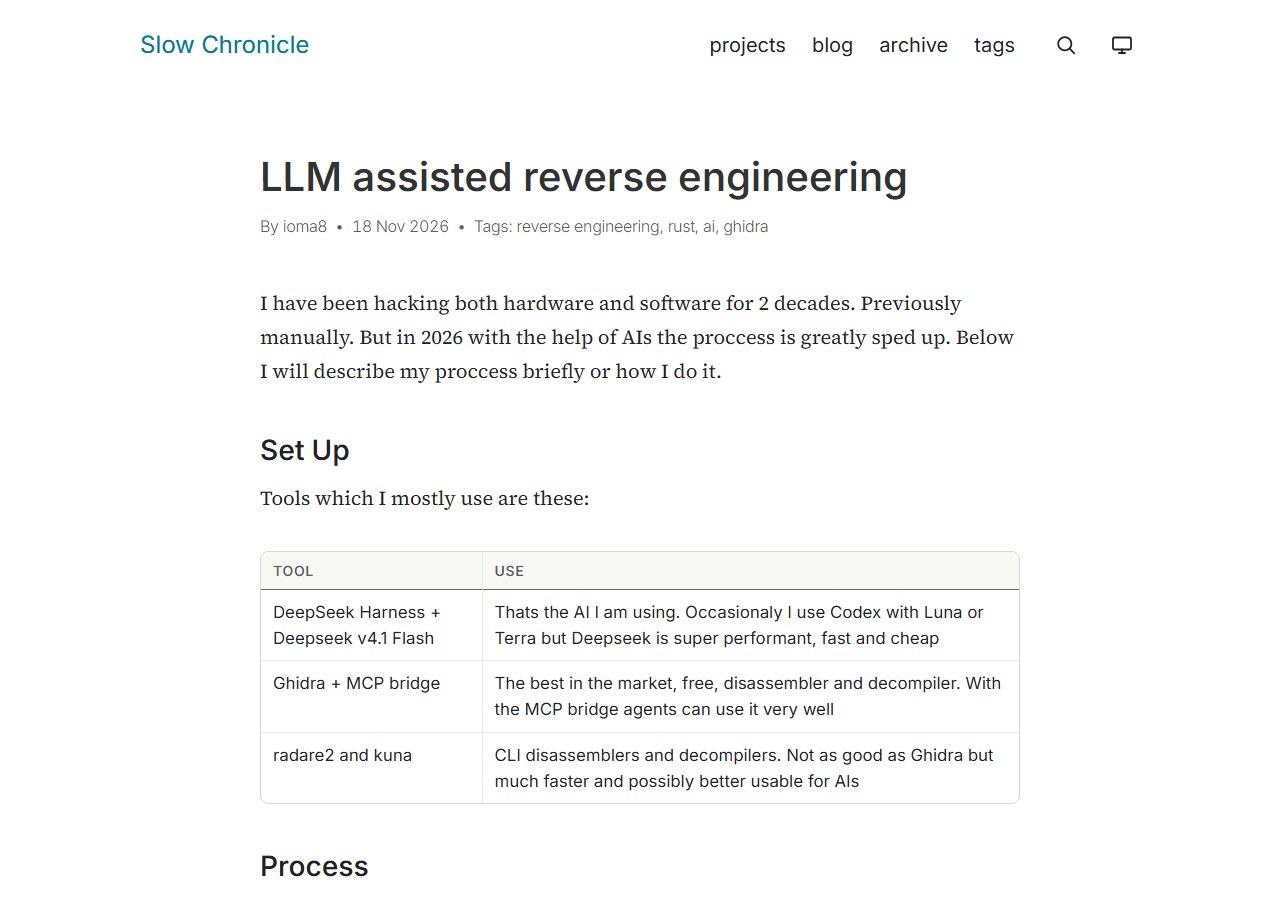
What it is. On Nov 18, 2026, a developer who goes by ioma8 posted "LLM assisted reverse engineering" on his blog Slow Chronicle. He describes how he points a coding agent at a binary (a desktop program, a website or a firmware image), identifies the platform, picks a decompiler, and has the agent record findings in Markdown notes. For hard spots he adds a debugger, logging probes, outside access to the running program, or a specific change of approach.
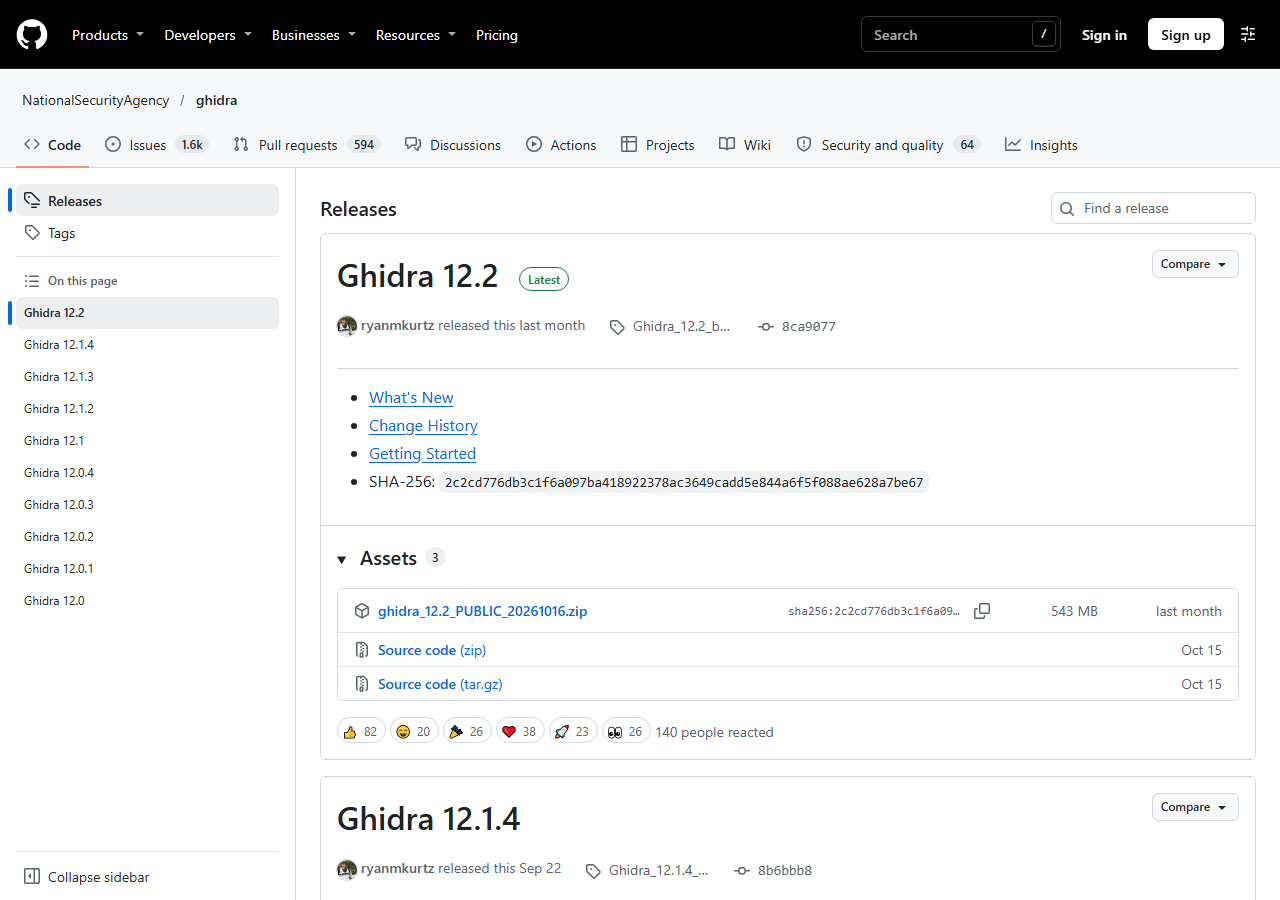
Why it matters now. The post reached 307 points and 79 comments on Hacker News by Nov 20, 2026 (story 50553225), and it points to two small open-source agent skills. Ghidra, the free decompiler at the center, is an NSA-built framework with about 100,700 stars and a 12.2 release dated Oct 22, 2026.
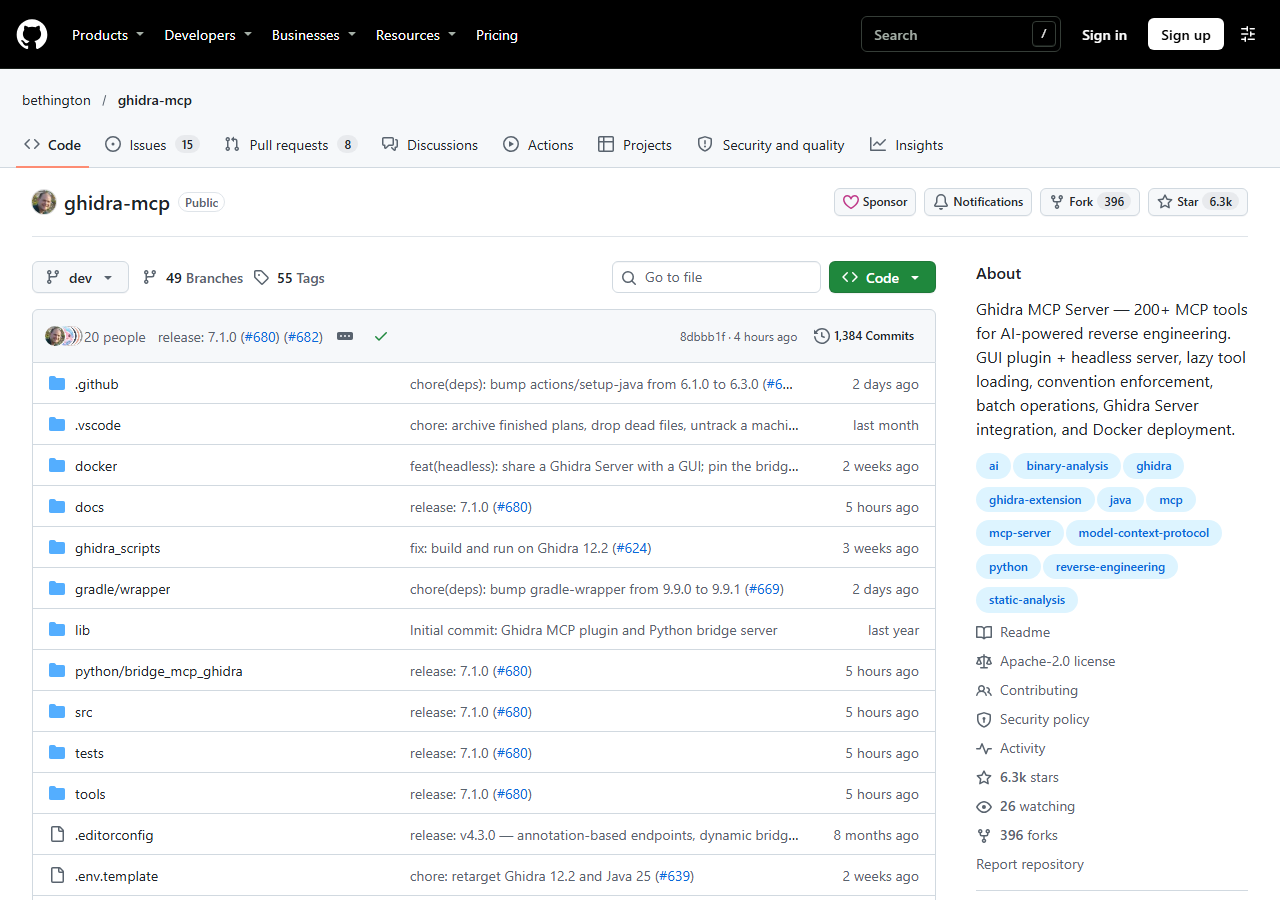
The catch. The success list in the post (a typewriter-style device, camera protocols, synthesizer firmware and more) is the author's own claim, and JAVIS cannot confirm it. The skill that connects agents to Ghidra warns that the extension and the Ghidra version must match, or every decompile fails. And reverse engineering has legal edges that a blog post does not settle.
Not a hands-on test: JAVIS has not installed Ghidra, any bridge or any skill, and has not analyzed a binary with an agent. This guide is built from the post, the project READMEs and skill files, GitHub repository pages and the Hacker News thread, all as of Nov 20, 2026. Commands are copied from the READMEs and untested by us.
What you need to know in thirty seconds.
| Fit score part | Points of 20 |
|---|---|
| Usefulness | 17 |
| Evidence depth | 11 |
| Tooling maturity | 15 |
| Reproducibility | 12 |
| Legal clarity | 10 |
| Total | 65 of 100 |
The process in seven steps, as the author describes it.
His tool table lists a DeepSeek harness with DeepSeek v4.1 Flash as the main model (he says he occasionally uses Codex with Luna or Terra), Ghidra with an MCP bridge, and the command-line disassemblers radare2 and kuna. JAVIS has not checked model availability or quality.
For building probes and tools he uses Python with uv for quick prototypes and Rust for the final implementation, because the strict compiler gives the agent fast, precise feedback.
Swipe sideways to see every column.
| Stage | What the author uses | JAVIS status |
|---|---|---|
| Model | DeepSeek v4.1 Flash, sometimes Codex | Author's statement, unchecked |
| Decompiler | Ghidra plus MCP bridge | Ghidra and bridge repositories checked |
| Light tools | radare2, kuna | Named by the author only |
| Probes and tools | Python with uv, then Rust | Author's choice |
One borrowed skill and two the author published. All are small.
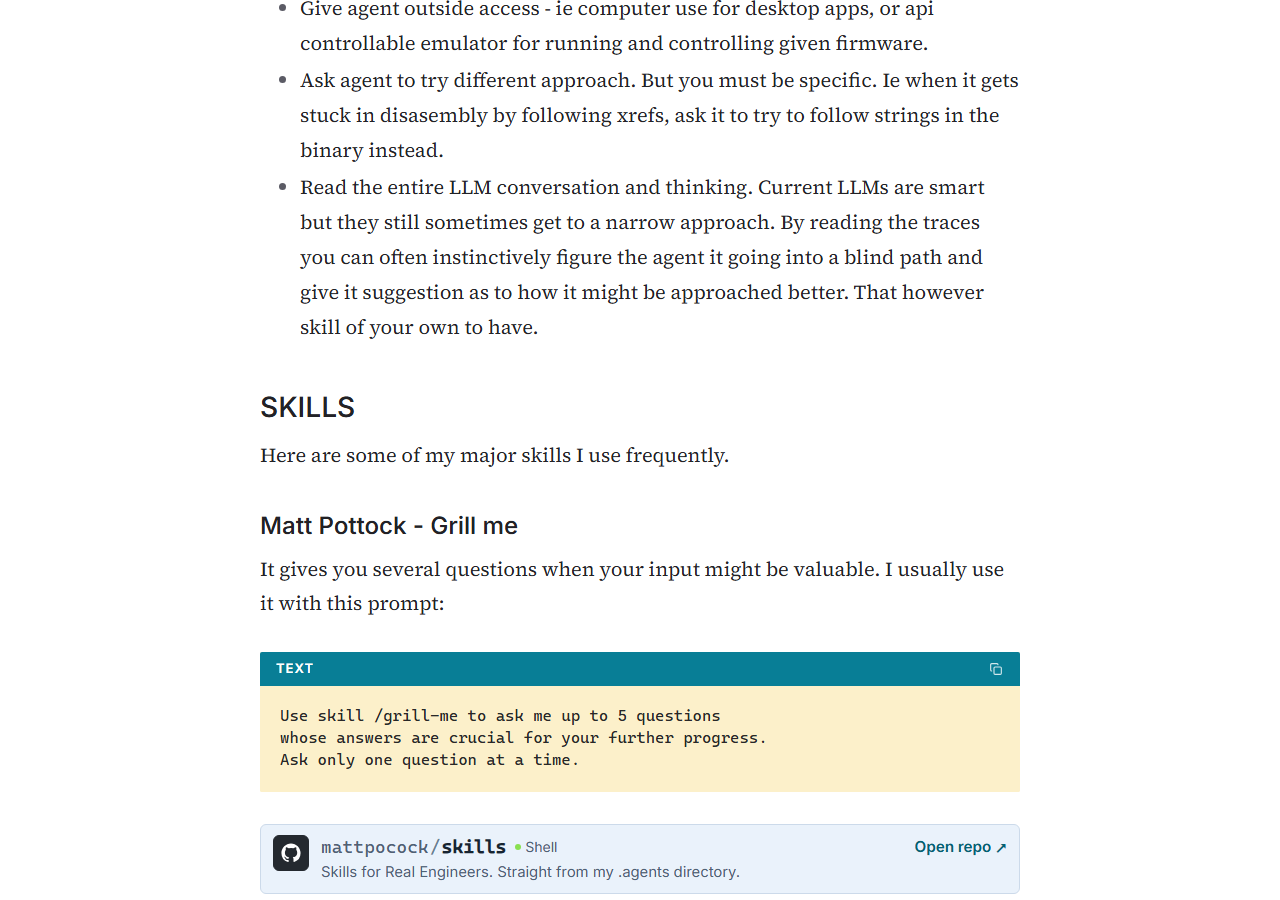
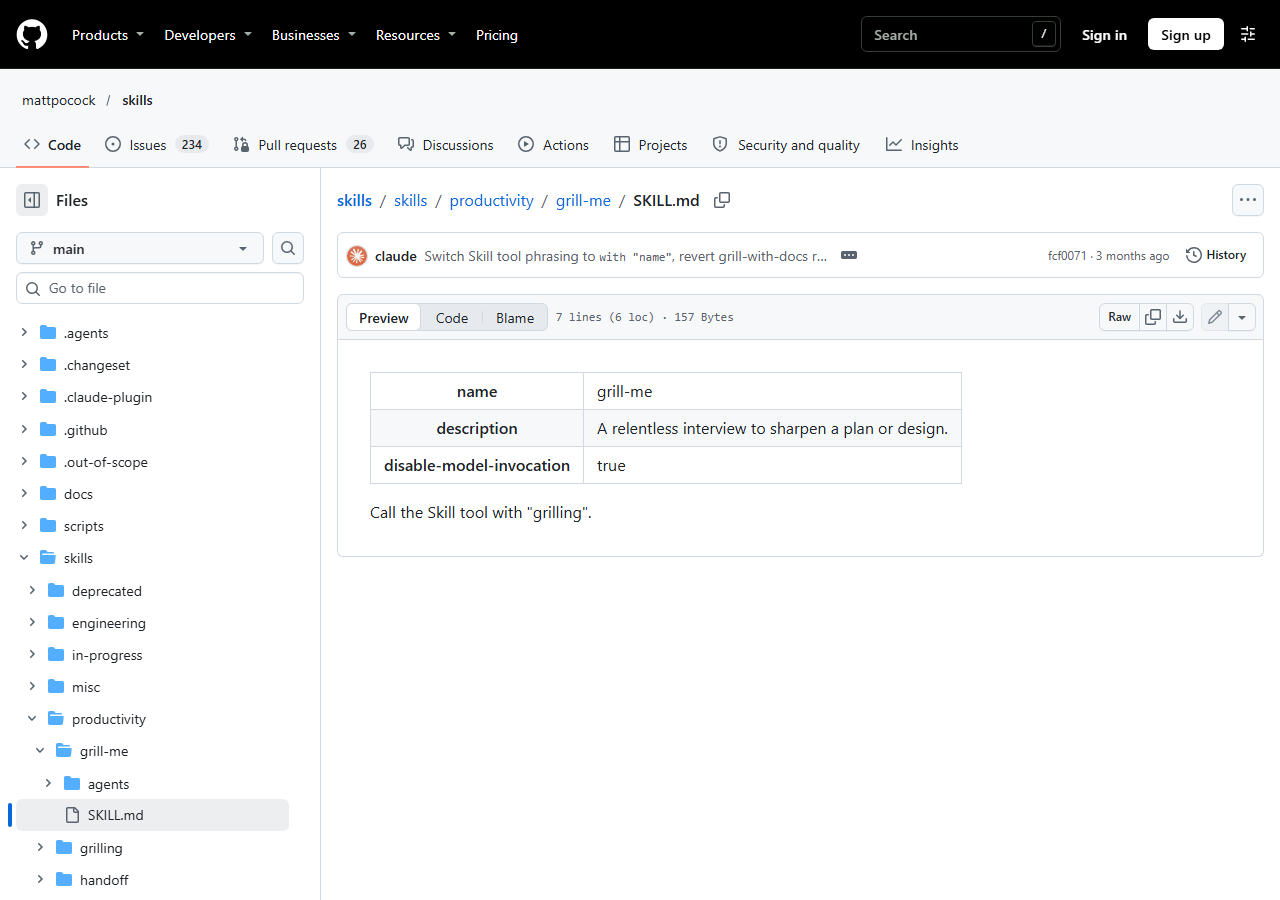
Asks you questions when your answers are valuable. The author pairs it with a prompt asking for up to five crucial questions, one at a time. It lives in the mattpocock/skills repository (MIT, about 328,500 stars), where the grill-me file itself only calls a skill named grilling.
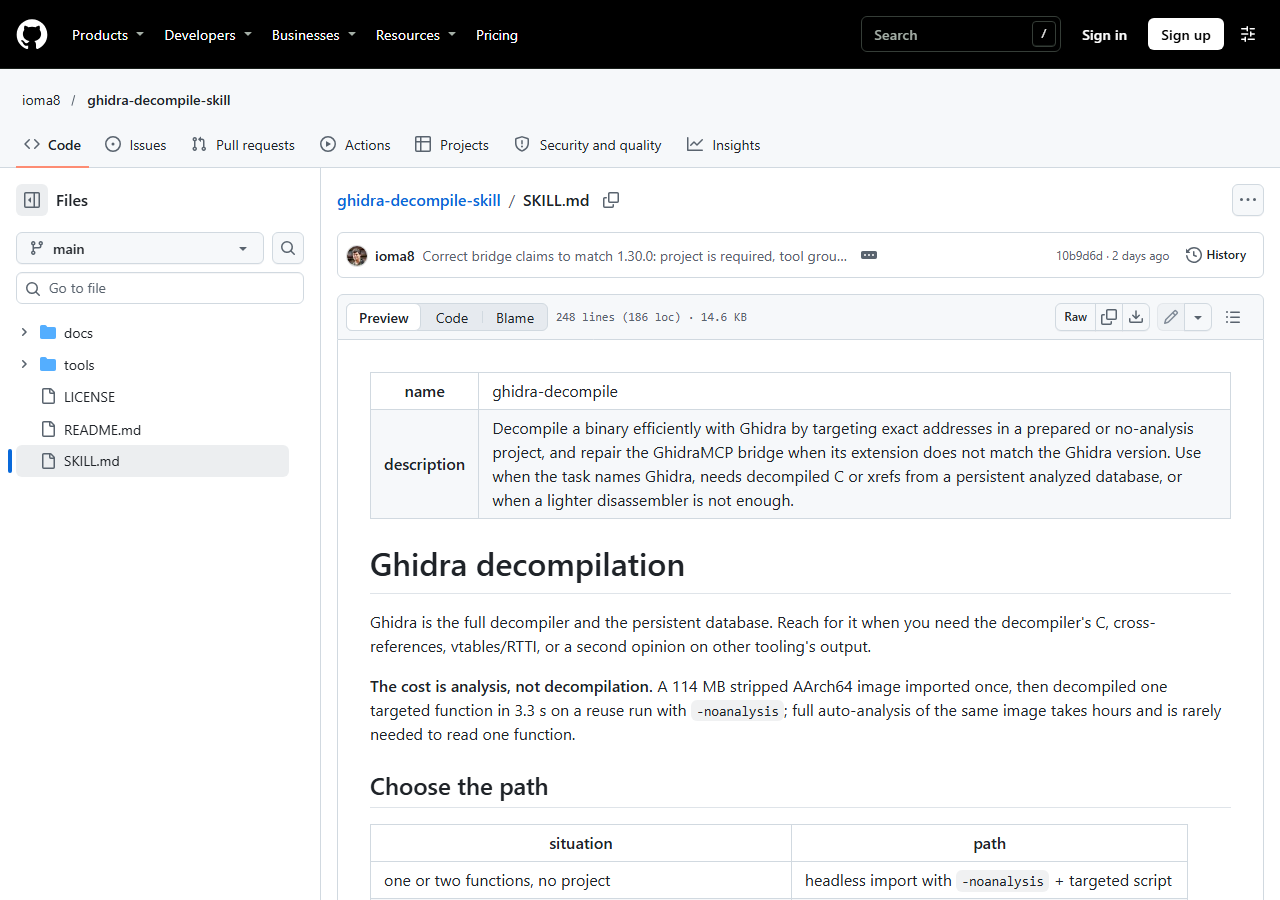
Created Nov 11, 2026, MIT, 38 stars, 13 commits, no releases. Ships 22 Ghidra scripts and a SKILL.md method.
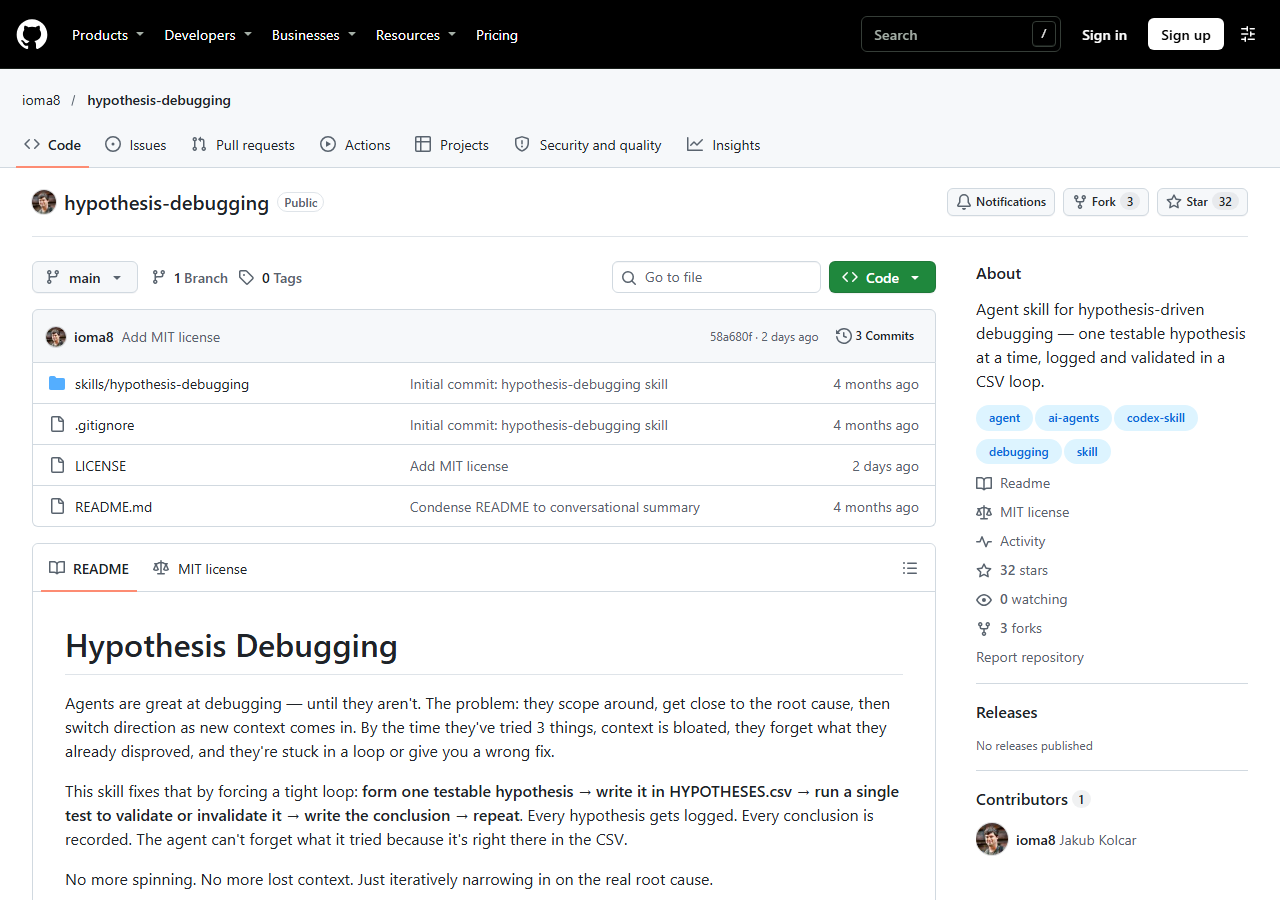
Created Jul 24, 2026, MIT, 32 stars, 3 commits. Forces a loop of one hypothesis, one test, one recorded conclusion.
ghidra-decompile: the efficiency claim and the trap
The README's main claim is that the cost is analysis, not decompilation: a 114 MB stripped AArch64 image, imported once with analysis switched off, decompiled one targeted function in 3.3 seconds, while full auto-analysis of the same image takes hours. That is the author's measurement on his own file, not a benchmark, and JAVIS did not repeat it.
SleighLanguageDescription. The fix it gives is to build a specific branch and confirm the extension reports version 12.2. Other pages show the same gap. Ghidra 12.2 was released on Oct 22, 2026. LaurieWired's GhidraMCP 2.0, dated Oct 10, 2026, lists Ghidra 12.1.4 as its prerequisite. The newest published release of the bethington bridge, v7.0.0 of Oct 21, 2026, also lists Ghidra 12.1.4, while that repository's README now names Ghidra 12.2, so a download and the current source can differ. Check versions before you start.

npx skills add ioma8/ghidra-decompile-skill
# README: needs Node 22.20+, then copy tools/*.java to ~/ghidra_scripts
The command-line path needs only Ghidra. The bridge path also needs the bethington/ghidra-mcp project and uv, according to the README.
Swipe sideways to see every column.
| Situation (from SKILL.md) | Suggested path |
|---|---|
| One or two functions, no project | Import with analysis off, then run a targeted script |
| Repeating questions about one binary | Keep the project and reprocess it between runs |
| Many queries, cross-references, renaming, a person at the GUI | Open the project and use the GhidraMCP bridge |
| Whole-binary pseudocode sweep | An analyzed project with a batch script |
hypothesis-debugging: the loop
The README says agents scope around, get close to the cause, then switch direction, until the context is bloated and they forget what they disproved. The skill forces one testable hypothesis at a time, written in a file called HYPOTHESES.csv, one test to confirm or reject it, and a written conclusion before the next step.
npx skills add ioma8/hypothesis-debugging
Ghidra with a bridge, command-line scripts, or IDA: three routes, with different costs and maturity.
Swipe sideways to see every column.
| Option | What it is | Verified facts (Nov 20, 2026) |
|---|---|---|
| Ghidra | Open-source reverse engineering framework from the NSA Research Directorate | Apache-2.0, about 100,700 stars, release 12.2 on Oct 22, 2026; README lists JDK 25 |
| LaurieWired/GhidraMCP | MCP server plus Ghidra plugin | Apache-2.0, about 12,000 stars, 10 contributors, release 2.0 on Oct 10, 2026, targets Ghidra 12.1.4, 58 open issues and 38 open pull requests |
| bethington/ghidra-mcp | Larger Ghidra MCP server, GUI plugin and a no-GUI mode | Apache-2.0, about 6,300 stars; README says 219 tools, the 7.0.0 release notes say 209 |
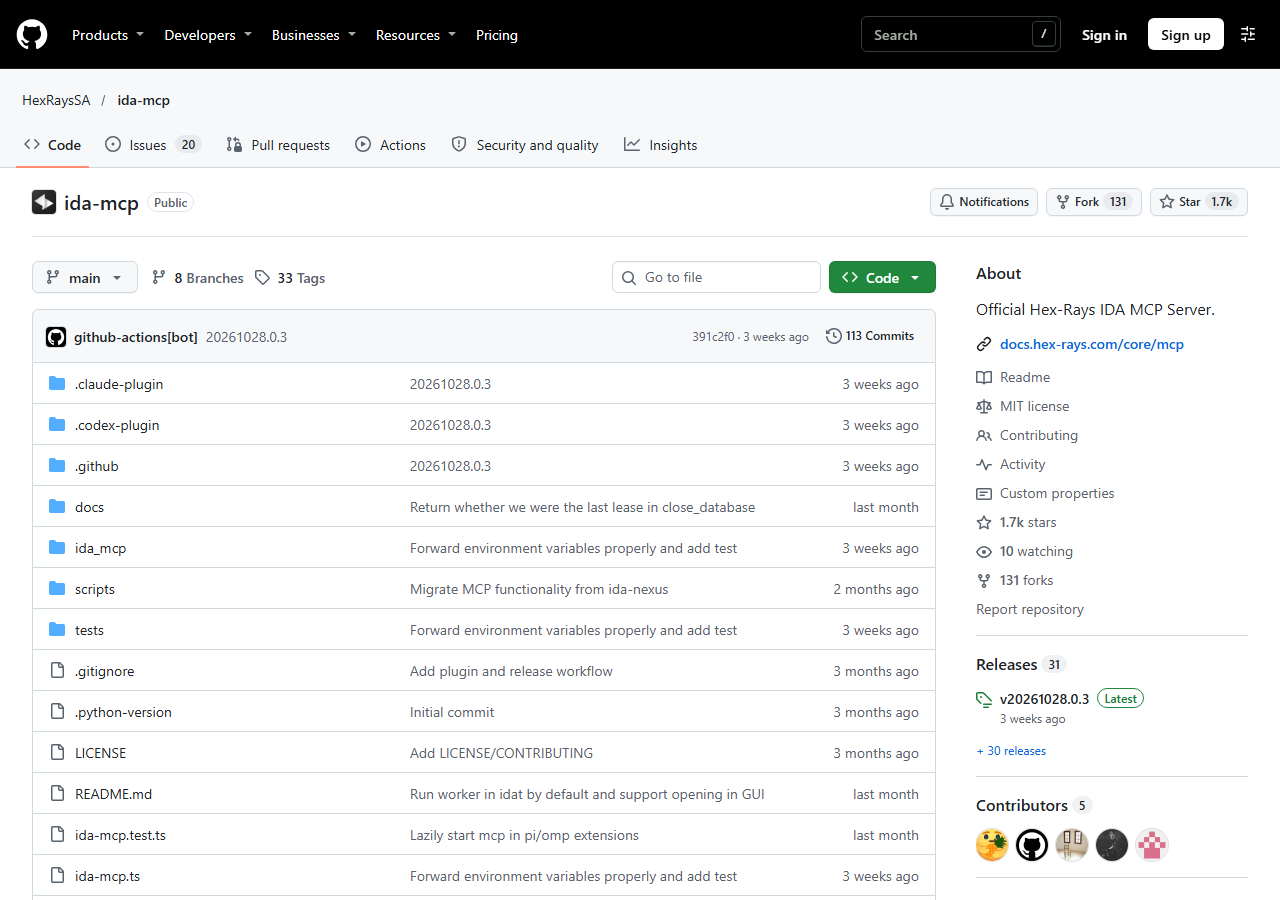
| Hex-Rays ida-mcp | Official MCP server for IDA | MIT, about 1,650 stars; needs IDA 9.4 or higher; IDA itself is a separate product |
| Command-line Ghidra scripts | Targeted decompile by address, no bridge | Method in the ghidra-decompile skill, needs Ghidra only |
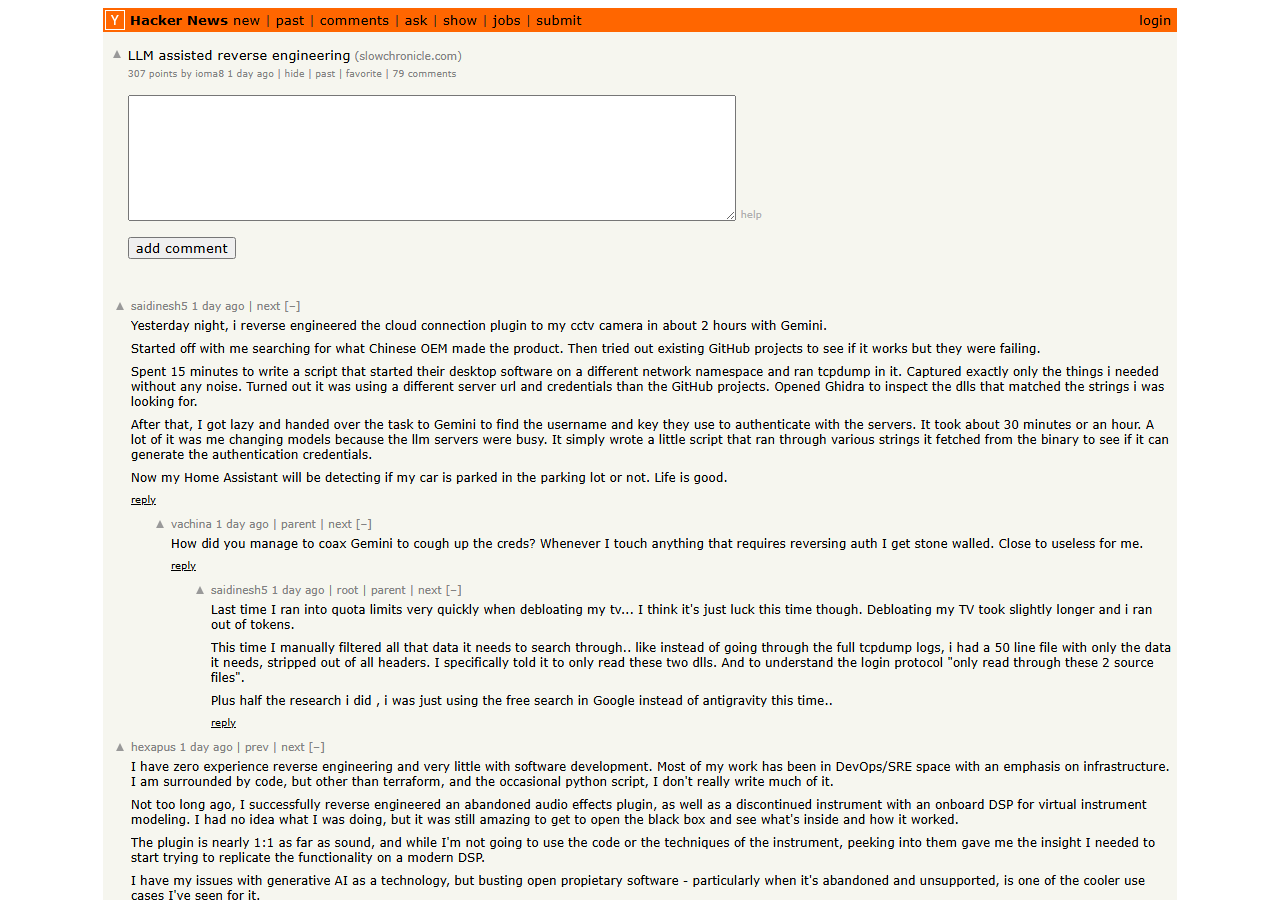
Hacker News readers disagreed on which route works best. One said IDA Pro works better than Ghidra for models, another said the standard Ghidra MCP is poor but scripting Ghidra from the command line, or having a model build a better MCP, gives similar or better results than IDA, and that the official IDA MCP is the easier win if you will pay (comments 50554264 and 50554454). These are opinions, not tests. JAVIS did not compare them and does not know IDA's current price.


What the notes-plus-hypotheses habit looks like on a device you own.
Illustration, not a test or a real case. Suppose you own an old USB gadget and want to know why a command returns an error. The agent keeps a notes file and a hypotheses table like this, and never starts a new idea before the last one has a recorded conclusion.
Swipe sideways to see every column.
| ID | Hypothesis | Experiment | Conclusion |
|---|---|---|---|
| H1 | The error code comes from a length check | Send a shorter packet and log the reply | Rejected: same error |
| H2 | A handshake string must come first | Search the binary for strings near the send routine | Confirmed: string found at the call site |
| H3 | The checksum covers the header | Probe the function with two known inputs | Open |
The format follows the skill's CSV loop. The point is that H1 stays in the file after it fails, so the agent cannot quietly retry it three turns later. A Hacker News reader who does this work noted the limit: for truly black-box targets hypothesis testing is all you can do, but where the information is already in the binary, careful tracing can beat guess-and-check (comment 50554878).
Hacker News: many war stories, a few warnings. The sample is small and self-selected.
The thread (story 50553225) showed 307 points and 79 comments on Nov 20, 2026. Three comments worth acting on:
Calls the guessing loops his main annoyance and has to tell the model to stop guessing on large targets. Says a big win for hardware work is having the model write emulation harnesses for firmware.
Reports analyzing a camera's cloud plugin in about two hours with Gemini. In a follow-up he explains how he cut token use: a 50-line filtered capture and an instruction to read only two files (comment 50559011).
Reminds readers that reverse engineering can be restricted by rules and regulations, giving Apple's developer agreement as an example.
Other readers described models refusing some reverse engineering requests and shared workarounds (for example comment 50554699). JAVIS does not cover how to get around a vendor's safety rules. Model providers set those rules, and breaking them can end your account. Another reader said the best way to learn was to do most of the clicking in Ghidra and let the model verify the work (comment 50557099).
Reverse engineering is a tool; what you do with it decides whether it is legal. This is information, not legal advice.
One example of how narrow the exceptions are: United States law at 17 U.S.C. 1201(f) lets a person who lawfully obtained the right to use a program circumvent an access control for the sole purpose of identifying and analyzing the elements needed for interoperability with an independently created program, to the extent this is not infringement. That is a limited interoperability exception, not a general permission, and other countries differ. Contracts matter too: as one commenter noted, license and developer agreements can forbid reverse engineering outright.
Swipe sideways to see every column.
| Where a rule can come from | Example in this guide |
|---|---|
| Statute | 17 U.S.C. 1201(f), a narrow interoperability exception |
| Contract or license | A developer agreement that forbids reverse engineering, raised by a commenter |
| Model provider rules | Refusals that some readers reported when asking for reverse engineering help |
| Local law | Differs by country; this guide does not cover it |
Devices and software you own, for repair, interoperability or learning, where the license and local law allow it; your own code; security research with permission.
Bypass licensing, break terms you agreed to, analyze systems you have no right to touch, or share extracted proprietary code or secrets.
Where this guide, and the workflow, stop.
The process and the success list come from a single blog post. HN comments are supportive anecdotes, not measurements.
ghidra-decompile was created Nov 11, 2026 with 38 stars and 13 commits; hypothesis-debugging has 3 commits. Neither has releases.
Bridge extension and Ghidra must match, and the official release has moved to 12.2 while a popular bridge targets 12.1.4.
The author uses a cheap fast model and praises it; JAVIS did not test any model on a binary.
Swipe sideways to see every column.
| Claim | Source | Checked by JAVIS |
|---|---|---|
| Agents speed up reverse engineering | The author's post | No, single account |
| 3.3 s to decompile one function | ghidra-decompile README | No, author's own file |
| Bridge fails on Ghidra 12.2 | ghidra-decompile README | Release pages agree on versions |
| Tool stars, licenses, dates | GitHub pages | Yes, Nov 20, 2026 |
| IDA beats Ghidra for models | One HN commenter | No, opinion |
Not covered: a hands-on run, IDA licensing or price, radare2 and kuna beyond the author's one-line description, Windows or macOS setup details, and an audit of any skill file for unsafe instructions. Read a skill before you install it, since a skill steers what an agent does on your machine.
A short decision list.
You already use a coding agent, own the device or software you want to understand, and can read a decompiler's output well enough to catch a wrong claim.
You want a one-click result with no checking, plan to bypass licensing, or cannot install Java tooling and keep versions aligned.
Five actions.
Free tools, no affiliate links.
Ghidra, the bridges named here (except IDA) and both skills are open source and free to download. Model usage, and IDA if you choose it, are separate costs that JAVIS did not price. JAVIS has no affiliate relationship with anything named in this guide, and every outside link goes to the original post, a repository or Hacker News.
Using agents on sensitive work? Read these next.

Questions people ask about LLM-assisted reverse engineering.
Is Ghidra free?
Yes. The repository lists the Apache-2.0 license, and the project is developed by the NSA Research Directorate.
Do I need an MCP bridge?
Not necessarily. The ghidra-decompile skill documents a command-line route that needs only Ghidra, and one Hacker News reader preferred command-line scripting over the standard bridge.
Why did my decompile fail after updating Ghidra?
The skill README describes a version mismatch between the bridge extension and Ghidra 12.2 that fails every decompile. Check that the extension version matches.
Is it legal?
It depends on the software, the license, your country and your purpose. Studying your own device is different from bypassing licensing. This is not legal advice.
Which model should I use?
The author uses DeepSeek v4.1 Flash and sometimes Codex. JAVIS did not test models for this work.
Did JAVIS try it?
No. This guide is built from public pages as of Nov 20, 2026.
Where this came from, and when.
Author post: slowchronicle.com/posts/llm-assisted-reverse-engineering, dated Nov 18, 2026, as of Nov 20, 2026.
Skills: ioma8/ghidra-decompile-skill (README and SKILL.md), ioma8/hypothesis-debugging, mattpocock/skills, as of Nov 20, 2026.
Tools: NationalSecurityAgency/ghidra, LaurieWired/GhidraMCP, bethington/ghidra-mcp, HexRaysSA/ida-mcp, as of Nov 20, 2026.
Hacker News: story 50553225 with comments 50554264, 50554454, 50554878, 50556237, 50559011, 50554380, 50554699 and 50557099, as of Nov 20, 2026. Release dates are the UTC dates as GitHub lists them.
Law: 17 U.S.C. 1201, subsection (f), as of Nov 20, 2026.
Images: screenshots taken by JAVIS on Nov 20, 2026; diagram and chart drawn by JAVIS. The Fit Score is editorial judgment, not a benchmark.
Not covered: hands-on tests, performance claims, model comparisons, IDA pricing and legal advice.