
OpenAI Agents SDK Review 2026: Is It Still the Right Choice Now That the Agents API Exists?
The Agents SDK is OpenAI's free, MIT-licensed, self-managed library for building agent apps in your own infrastructure — the successor to the experimental "Swarm" project. It just got a major April 2026 overhaul (harness, sandboxing, memory), and three weeks before this review, OpenAI's older Assistants API fully sunset. This review covers what the SDK actually does today, what it costs (nothing extra), and — the question everyone's actually asking now — whether you want the SDK or its newer managed sibling, the Agents API.

| SDK cost | $0 — MIT license |
| Languages | Python (full) + TypeScript |
| Runs where | Your own infrastructure |
| Launched | Mar 11, 2025 |
| Assistants API status | Sunset Aug 26, 2026 |
The SDK didn't get replaced by the Agents API. It got a sibling.
"The easiest mistake right now is assuming OpenAI shipped the Agents API to retire the Agents SDK, the way it retired the Assistants API. It didn't. The SDK is still the pick when you want your own code to own deployment, storage and approvals. The API is the pick when you'd rather hand that to OpenAI. Confusing the two is the actual risk here, not either product being weak."
What earns the score is that this isn't a framework coasting on its March 2025 launch. The April 2026 update added a real harness, real sandboxing, and real memory primitives — the same ingredients competitors charge more complexity for — and it's still free beyond your model bill. The gap is that some of that power (TypeScript parity, for one) is still catching up to the Python side.
Five primitives you'll actually touch, plus a harness underneath them now.
The SDK's mental model is small on purpose: an Agent (instructions + tools + guardrails), Handoffs (a specialized tool call for transferring control to another agent), Guardrails (input/output safety checks that can halt a run), Sessions (automatic conversation-history management), and Tracing (built-in visualization for debugging multi-agent runs). Since April 2026, all of that sits on top of a model-native harness with native sandbox execution and configurable memory.
Runs in your infrastructure — you decide deployment, storage and how approvals are wired up. That's the core trade-off against its newer sibling, the Agents API, covered in Alternatives below.
The real headline isn't adoption — it's that the API it used to sit next to just disappeared.
openai/openai-agents-python, verified on GitHub, Sep 21, 2026.
Verified on GitHub, Sep 21, 2026.
openai/openai-agents-js, smaller — features land Python-first.
Notably low relative to star count.
| Date | Milestone | Why it matters |
|---|---|---|
| Mar 11, 2025 | Agents SDK released | Production-ready successor to the experimental "Swarm" project |
| May–Jun 2025 | TypeScript port + open-source harness | Non-Python teams get a supported path |
| Apr 15, 2026 | "Next evolution": harness, sandbox, memory | Closes the gap with heavier frameworks on long-horizon tasks |
| Aug 26, 2026 | Assistants API fully sunset | Every /v1/assistants, /v1/threads call now errors — no grace period |
| Sep 10, 2026 | Agents API launches (public beta) | A managed sibling appears — reviewed separately |
The praise is about speed-to-first-agent. The caveat is about ceiling, not floor.
One developer reported building a working agent in about 10 minutes of tinkering, calling it "a lightweight framework with minimal abstractions, accessible for developers new to agent development."
Framed as "a lightweight, tool-centric model that favors speed over deep orchestration" next to LangGraph's stateful graphs and CrewAI's role-based crews.
The April 2026 update lets businesses "go build these long-horizon agents using our harness and with whatever infrastructure they have" — an explicit pitch at teams who want infra control, not a managed black box.
Free SDK, standard token bill — the same table whether you use the SDK or the Agents API.
gpt-5.6-luna
Per 1M input/output tokens.
- Cheapest current flagship-family tier
gpt-5.6-terra
Per 1M input/output tokens.
- Balance of cost and capability
gpt-5.6-sol
Per 1M input/output tokens.
- Promotional pricing window
gpt-6-astra
Per 1M input/output tokens.
- Highest capability, highest cost
Tool add-ons: web search $10/1k calls · file search $2.50/1k calls + $0.10/GB/day storage (1GB free) · Code Interpreter $0.03–$1.92/20-min session. Source: developers.openai.com/api/docs/pricing, verified Sep 21, 2026.
The real fork isn't "which framework" — it's "who runs the loop."
Agents SDK — this is exactly its design point.
Look at the Agents API instead — reviewed separately.
Independent comparisons still favor LangGraph for that specific need.
CrewAI is the faster starting point.
It's fully gone (Aug 26, 2026) — migrate to Responses/Conversations API, and add the Agents SDK if you need multi-step orchestration on top.
The two primitives that actually decide whether a multi-agent app is safe to ship.
Handoffs let one agent hand a conversation to a more specialized agent mid-run — a specialized tool call under the hood, not a hidden re-routing hack. Guardrails run input/output checks that can halt execution before something irrelevant, harmful, or simply wrong reaches a user or a downstream tool. Together with Tracing (which visualizes every step of a run), this is the part of the SDK independent reviewers single out as genuinely well-engineered, not just "fine for a demo."
- Tracing gives you a real debugging view of multi-agent runs without bolting on a third-party observability tool.
- Guardrails are a first-class stop mechanism, not an afterthought prompt instruction.
- Sessions handle conversation history automatically, removing a whole class of state-management bugs.
- Deep, branch-heavy orchestration is explicitly not this SDK's strength — independent comparisons point that need to LangGraph.
- TypeScript support trails Python for every major new capability (sandboxing, harness, memory all launched Python-first).
Runner owns the loop; you own what happens around it.
OpenAI's official DevDay 2025 opening keynote — where AgentKit (Agent Builder, ChatKit, Connector Registry) debuted around the Agents SDK.
Published by the official "OpenAI" YouTube channel (youtube.com/@OpenAI). This is the Oct 6, 2025 full keynote (AgentKit + broader announcements), not an SDK-only demo — framed honestly here as the event where the surrounding ecosystem debuted, not a dedicated SDK tutorial.
Not browser automation — model-directed file and code execution instead.
Section 10 in the JAVIS flagship template covers browser/automation; the Agents SDK has no browser-agent surface, so this section covers its real automation story instead. Since the April 2026 update, agents can execute model-directed work — writing files, running code — inside a sandbox that's either OpenAI-hosted or self-hosted, rather than requiring you to wire up your own code-execution environment from scratch.
Function tools, hosted tools, and MCP servers — three ways in, one Agent object.
Agents can call plain function tools you write, OpenAI's own hosted tools (web search, file search, Code Interpreter), or any MCP-compliant server — all through the same tool-calling interface, so switching a tool's implementation doesn't require rewriting the agent's logic.
Your real bill is your model + tool bill — the SDK itself is free either way.
| What you're doing | What you pay |
|---|---|
| Running the SDK against any model | $0 to OpenAI for the SDK; standard token rate for the model you call |
| Using OpenAI-hosted tools | Web search $10/1k calls · file search $2.50/1k calls + storage · Code Interpreter per-session |
| Using the OpenAI-hosted sandbox | Standard token rate for the model; sandbox compute billed per OpenAI's hosted-tool pricing |
| Using a self-hosted sandbox | Your own infrastructure cost, outside OpenAI's bill entirely |
Guardrails are the safety net; you still own the sandbox choice.
Teams who want OpenAI's own opinionated but lightweight path.
| Situation | Why the SDK fits | Likely path |
|---|---|---|
| Building a new agent app on OpenAI models | First-party, minimal-abstraction, actively maintained | Agents SDK, Python |
| Migrating off the sunset Assistants API | Direct recommended orchestration layer above Responses/Conversations API | Agents SDK |
| Want OpenAI to run the loop instead | Not this SDK's design point | Agents API instead |
| Need deep stateful graph orchestration | Not the SDK's strength per independent comparisons | LangGraph instead |
| TypeScript-only team needing the newest features | Sandboxing/harness/memory still Python-first | Wait or use Python for the harness layer |
Three real gaps, not manufactured ones.
Every major 2026 capability (native sandbox, harness, memory) launched Python-first, with TypeScript "planned for a future release" — a real gap if your team is JS/TS-only.
The SDK and the new Agents API are genuinely different products with a genuinely confusable name. Teams researching casually risk building on the wrong one for their actual deployment model.
Independent comparisons are consistent: if your workflow needs fine-grained, stateful, branch-heavy control, LangGraph is the better-suited tool, not this SDK.
If the SDK's lightweight, self-managed model isn't your fit, here's how to think about it.
| If you mostly need... | Compare the SDK with... |
|---|---|
| OpenAI to run the harness/session for you instead | OpenAI Agents API — read our review |
| The most fine-grained graph control and biggest integration ecosystem | LangGraph (langchain.com/langgraph) |
| The fastest role-based prototyping | CrewAI (crewai.com) |
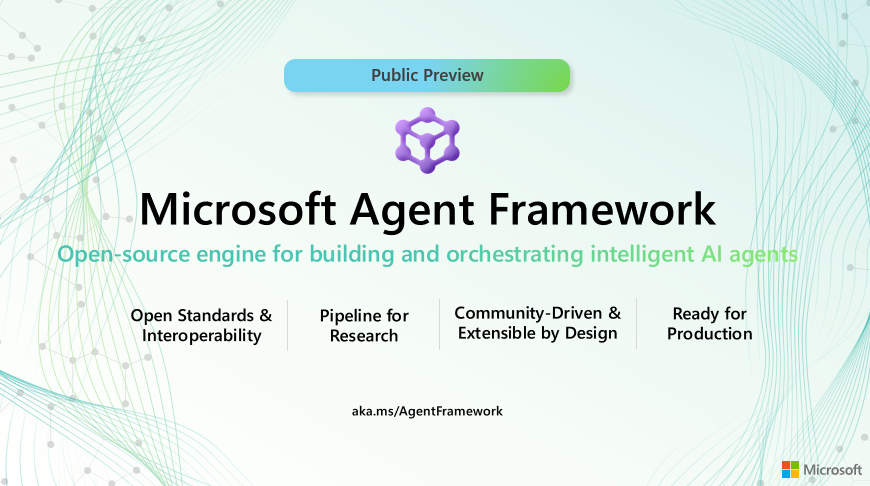
| A model-agnostic, Azure-friendly alternative | Microsoft Agent Framework — read our review |
Nothing to sell you here beyond your own model usage.
OpenAI does not run a publisher affiliate program for an open-source, MIT-licensed SDK, and JAVIS has none in place. Every CTA in this review points to the official GitHub repository or official OpenAI documentation.
Go to the official repo.
Open the repoRead the alternative that matches your real question.
Choose the next articleThe SDK makes the most sense next to the other agent stacks it's directly competing with.

Questions people are actually searching right now
Is the OpenAI Agents SDK free?
Yes. It's MIT-licensed with no separate fee. You pay standard OpenAI token rates for whichever model you call, plus standard per-call rates for any hosted tools you use.
What's the difference between the Agents SDK and the Agents API?
The SDK runs inside your own application — you manage deployment, storage and approvals. The Agents API (launched Sep 10, 2026) runs a managed harness inside OpenAI's own service instead. Reviewed separately.
Is the Assistants API still available?
No. It was deprecated Aug 26, 2025 and fully sunset Aug 26, 2026 — every call to /v1/assistants, /v1/threads and /v1/threads/runs now errors, with no grace period.
Does the SDK support TypeScript?
Yes, via openai-agents-js, but new capabilities (sandboxing, harness, memory) have consistently launched Python-first, with TypeScript support following later.
What is "Swarm"?
OpenAI's earlier experimental multi-agent project. The Agents SDK, released March 2025, is its production-ready successor.
Does the SDK lock me into OpenAI models?
No — it's explicitly provider-agnostic: it supports OpenAI's own Responses and Chat Completions APIs plus, per its own documentation, "100+ other LLMs" through compatible endpoints. That said, it reads as most naturally OpenAI-centric in practice compared to frameworks like LangGraph or Microsoft Agent Framework that are model-agnostic by primary design.
Is it better than LangGraph or CrewAI?
Different trade-offs: LangGraph wins on fine-grained stateful orchestration, CrewAI wins on fastest role-based prototyping, and the Agents SDK wins on being the lightweight, first-party, minimal-setup option if you're already committed to OpenAI models.
Where this came from, and when it was checked.
GitHub stats (stars/forks/issues/license): GitHub data for github.com/openai/openai-agents-python and .../openai-agents-js, Sep 21, 2026.
Core primitives, SDK-vs-API distinction: developers.openai.com/api/docs/guides/agents and .../agents/sdk, official, read directly.
April 2026 harness/sandbox/memory update: community.openai.com mirror of the official openai.com announcement, corroborated by TechCrunch (2026-04-15).
Token/tool pricing: developers.openai.com/api/docs/pricing, official, read directly; cross-checked against eesel.ai's independent breakdown.
Assistants API sunset (Aug 26, 2026): developers.openai.com/api/docs/deprecations, official.
Real screenshots/media: community.openai.com-mirrored official announcement image, opengraph.githubassets.com repo card.
Official video: youtube.com/watch?v=hS1YqcewH0c, authorship confirmed on YouTube (author "OpenAI", channel @OpenAI).
Developer sentiment: Composio and Galileo independent comparisons, TechCrunch reporting, InfoQ launch coverage.