
OpenAI Codex Review 2026: Is It Finally the Coding Agent to Beat?
Correction, Oct 4, 2026: an earlier version named GPT-5.3-Codex as Codex's default model; per OpenAI's Codex release notes, GPT-6-Astra became the CLI's bundled default on Sep 4, 2026, and GPT-6.1 Sol replaced it on Sep 29, 2026.
Codex spent 2025 as the agent people compared everything else to Claude Code against. By September 2026, after four model bumps, a price restructure, and an app nobody asked for, the comparison has flipped in some real ways: Reddit's own tally is that Codex is "slightly lower quality but actually usable," while Claude Code is "higher quality but unusable" once you hit its limits. That's the actual trade-off, not a marketing slogan.

| Backend/CLI coding | Excellent |
| Frontend/UI work | Mixed |
| Rate-limit headroom | Strong |
| Non-coder simplicity | Not the target |
| Value at Plus ($20) | Strong |
Codex won by being usable, not by being the smartest model in the room.
"Every Codex release for the last year has been a step change... we're pulling the CLI and desktop app into more of our workflows — each release raises the bar." — Austin Ray, AI Dev X Team Lead, Ramp (official OpenAI customer testimonial)
That's a vendor-selected quote, and I'm labeling it as one. But it lines up with what independent developers say in a different register: Codex's ceiling is a notch below Claude Code on raw output quality, especially on frontend work, but its rate limits let you actually work all day instead of budgeting your prompts like a rationed resource. In 2026, "usable all day" beat "occasionally brilliant" for a lot of teams.
One agent, five surfaces, one ChatGPT account tying it together.
Codex is OpenAI's coding agent, not a single app — it's a terminal CLI, an IDE extension, a cloud task runner, a desktop app, and a ChatGPT web/mobile integration, all authenticated through the same ChatGPT account and sharing the same task history. OpenAI's own framing: "The best way to build with agents... Codex accelerates real engineering work, from planning and building features to refactors, reviews, and releases."
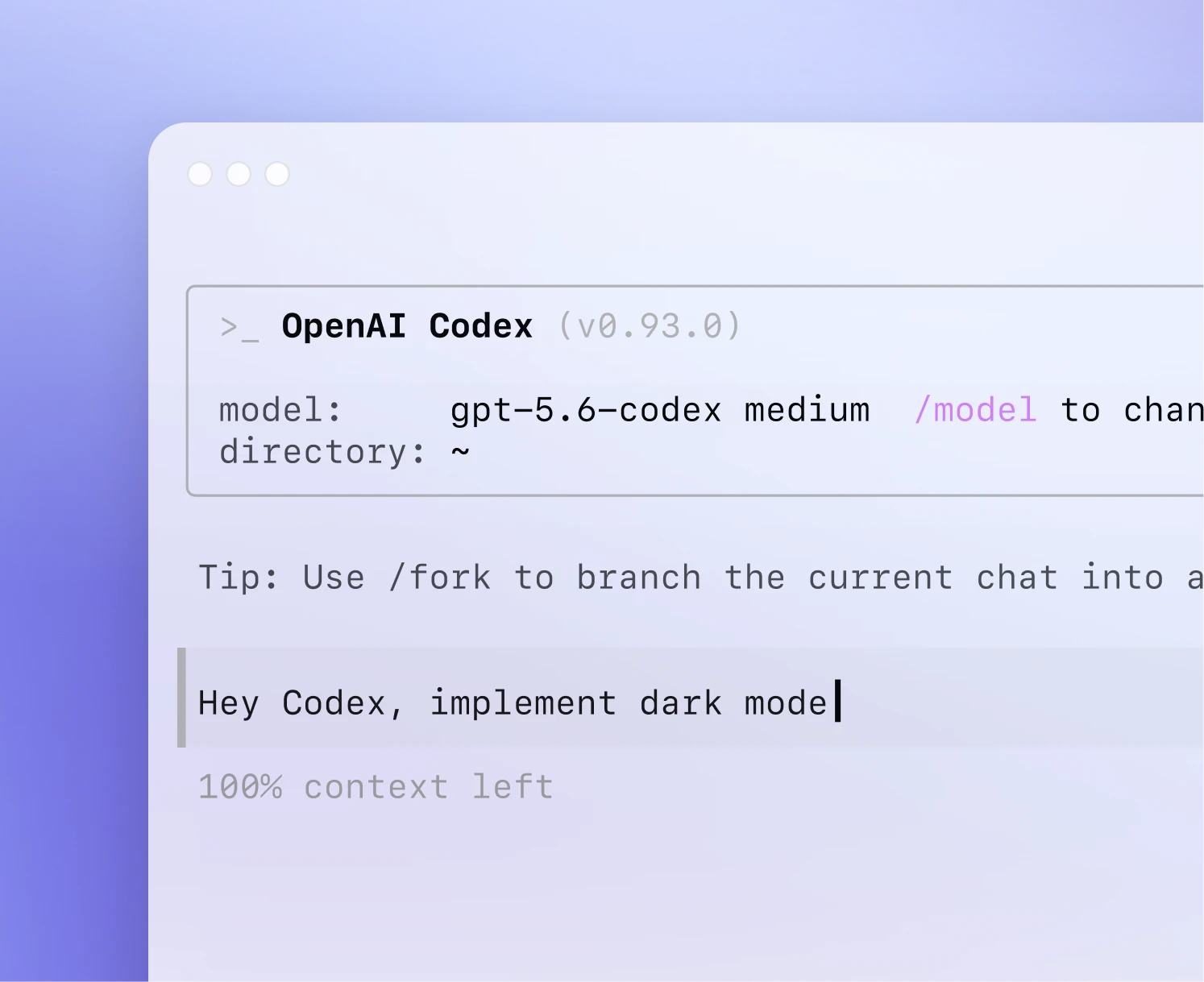
The practical takeaway: whichever surface you start a task on, you can check on it, redirect it, or approve its next step from any of the others — the CLI is the anchor, not the whole product.
Codex rides on top of the fastest-growing revenue line in software, but it isn't the whole story.
OpenAI's company-wide annualized revenue run rate crossed $40 billion in August 2026, per Bloomberg — up from $25B in February 2026 — after what reporting describes as "an enterprise breakout." Codex itself passed 2 million weekly active users by March 2026, per OpenAI's own reporting at the time. I'm keeping these two numbers separate on purpose: one is whole-company revenue (ChatGPT subscriptions, API, Sora), the other is a single-product usage claim, and conflating them would overstate what Codex specifically is worth.
OpenAI-reported figure, as of March 2026.
Company-wide, Aug 2026, reported by Bloomberg.
Live GitHub count, checked Sep 21, 2026.
Post-$122B raise, Q1 2026; Anthropic briefly passed it at $965B in May 2026.
| Milestone | Date | What changed |
|---|---|---|
| Codex CLI open-sourced | Apr 16, 2025 | Terminal agent, Apache-2.0, Rust |
| Codex Cloud research preview | May 2025 | Async/background task runs |
| GPT-5-Codex | 2025 | First Codex-tuned GPT-5 variant |
| Codex desktop app | Feb 2026 | Manage multiple long-running agents |
| Codex Security launched | Mar 2026 | Separate app-security agent product |
| GPT-5.3-Codex | Feb 24, 2026 | 400K context, 128K completion tokens |
| Pro $100 tier added | Apr 9, 2026 | Filled the $20→$200 pricing gap |
| GPT-5.3-Codex-Spark deprecated | Sep 14, 2026 | Research-preview variant retired |
Named enterprise customers OpenAI cites publicly include Duolingo, Ramp, Cisco Meraki, Harvey, Sierra, and Wonderful — official testimonials, not independent reviews, and I'm treating them that way in the section below.
Developers aren't picking Codex because it's the best model. They're picking it because it doesn't run out on them.
I looked at independent developer write-ups, an analysis of 500+ Reddit comments across r/ClaudeCode, r/codex, and r/ChatGPTCoding, and OpenAI's own named customer quotes, and kept the three kinds of evidence separate.
The community's own summary of the 2026 coding-agent split: "Claude Code is higher quality but unusable. Codex is slightly lower quality but actually usable." Codex Plus users report running all day in terminal workflows; Claude Code Pro users report hitting limits in hours.
Frontend/UI is called out as Codex's weakest area: "GPT-5.4 really struggles a lot with UI and frontend optimization," while backend, DevOps, and CI/CD tasks are described as a stronger fit.
"Codex performed best in our backend Python code-review benchmark. It was the only one to catch tricky backward compatibility issues and consistently found the hard bugs that other bots missed." — Aaron Wang, Senior Software Engineer, Duolingo
Six paths in, and the honest one for most developers is Plus at $20.
Free
No card required.
- Limited Codex access
- GPT-5 Thinking Mini
Go
Per month, global since Jan 2026.
- 10x Free's message/task limits
- Still "Limited" Codex access
Plus
Per month.
- Full Codex access ("Yes")
- CLI, IDE extension, Cloud, desktop app
- 10–60 cloud tasks per 5-hour window
Pro
5x or 20x Plus's Codex usage.
- $100: "Expanded" Codex usage
- $200: "Maximum" Codex tasks
Business / Enterprise
Standard vs Premium seat, per user/month.
- Pooled admin, security controls
- Enterprise: custom, ZDR options
Source: chatgpt.com/pricing and openai.com/business/pricing, verified Sep 21, 2026. Business seat pricing ($20/mo Standard, $100/mo Premium, billed annually; +25% if billed monthly) is per openai.com/business/pricing, Sep 21, 2026. API/pay-per-token access (bypassing plan quotas) is covered separately below.
Pick a tier by what actually blocks you, not by the sticker price.
Free — it'll show you the ceiling fast.
Go doesn't really upgrade Codex — go straight to Plus if code matters.
Plus at $20/month is the honest starting point.
Pro $100 is the first upgrade with a real justification.
Only then would I look at Pro $200.
Business or Enterprise, not a bigger individual plan.
GPT-5.3-Codex is the Codex-tuned model this agent loop was built around.
GPT-5.3-Codex, released February 24, 2026, is OpenAI's Codex-tuned model from early 2026: a 400K-token context window with up to 128K completion tokens, built specifically for the agent loop — read the codebase, plan, edit, run tests, and iterate — rather than one-shot chat answers. OpenAI has said the model was "instrumental in creating itself," meaning earlier Codex generations were used in its own training and evaluation loop. A lighter, faster "GPT-5.4-mini" variant handles quick, low-stakes turns at a lower usage cost. It is no longer the CLI's bundled default: per OpenAI's Codex release notes, GPT-6-Astra took that place on Sep 4, 2026, and GPT-6.1 Sol on Sep 29, 2026.
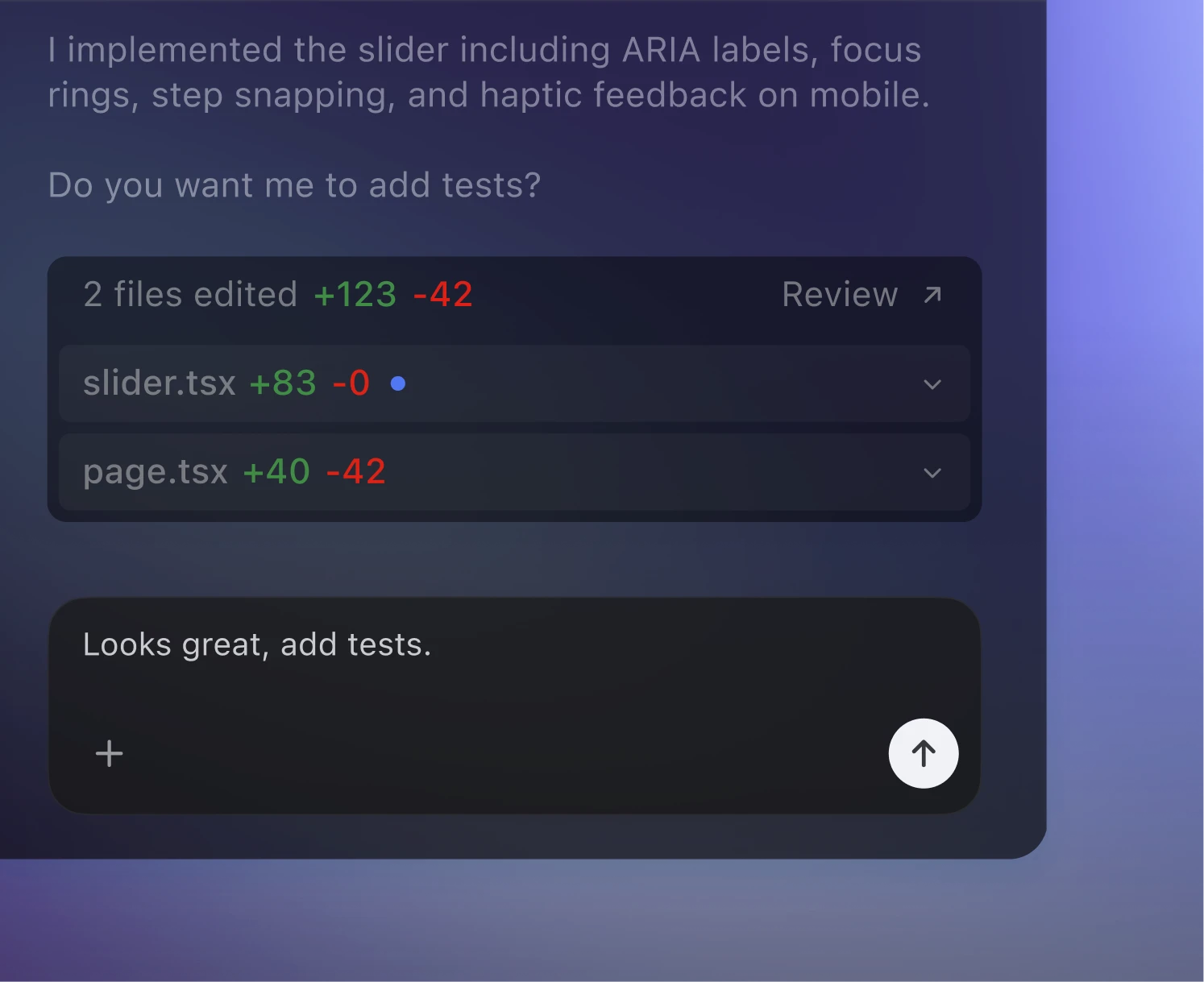

What that means in daily use: Codex reads more of a large repo before acting, holds a longer plan in its head across a multi-step task, and — per the Duolingo and Ramp testimonials above — is specifically credited with catching backward-compatibility bugs and issues in PR review that other bots missed. It is not, by the community's own account, the strongest model for frontend/UI generation.
- 400K context handles genuinely large repos without losing the thread.
- Rate limits are generous enough to use all day at Plus.
- Strong at code review and catching regressions, per both vendor and independent evidence.
- Open-source CLI means no lock-in to a proprietary editor.
- Frontend/UI output needs more review than backend output.
- No built-in hosting/deployment — you still ship elsewhere.
- Model naming (5.3, 5.4-mini, 5.5, 5.6, GPT-6) changes fast enough that guides go stale within weeks.
- Codex is proprietary — you can't inspect the model like an open-weight one.
Official OpenAI video, from the OpenAI YouTube channel, covering the most recent developer-facing Codex improvements.
The workflow is only as good as the approval step you don't skip.
Codex is genuinely faster at producing a first draft of a change than writing it by hand. It is not faster than a bad merge — the approval-gate box is the one place the whole workflow either earns its time savings or loses them.
Cloud tasks are the most autonomous part — and the part I'd watch closest.
Codex Cloud can run tasks in the background for extended periods without you attending to them, and the Codex desktop app (launched February 2026) exists specifically to manage several of these long-running agents at once. Codex also reaches into GitHub for PR review and into JetBrains/VS Code directly.
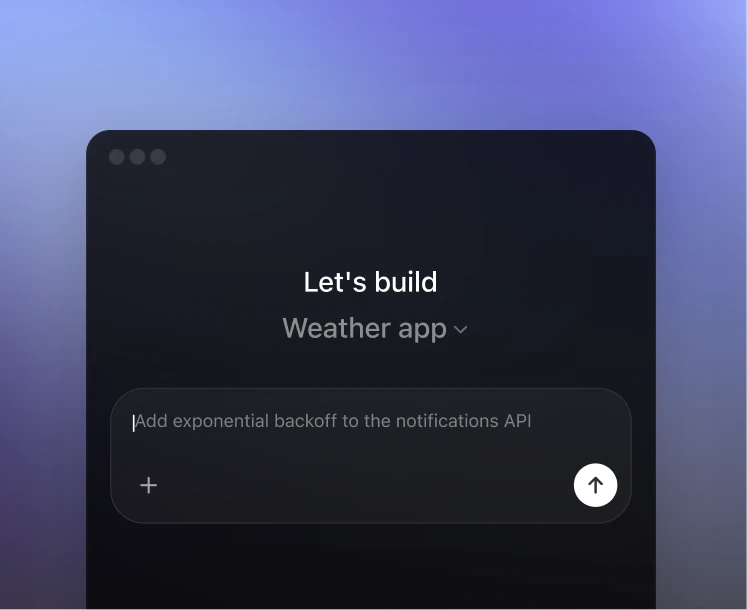
- Isolated branches, test-writing, test-running
- PR review comments on GitHub
- Repetitive refactors with clear success criteria
- Security scanning via Codex Security
- Direct pushes to production branches
- Anything touching secrets, infra, or billing code
- Long unattended runs without checkpoints
- Frontend changes without a visual review pass
MCP is how Codex connects to the tools you already use.
Codex supports the Model Context Protocol natively, configured in config.toml under [mcp_servers.<name>] entries. The codex mcp subcommand family (shipped since March 2026) handles registration, OAuth login, listing, and removal entirely from the terminal — for example, codex mcp add context7 -- npx -y @upstash/context7-mcp for a local stdio server, or a --url flag for a remote HTTP server. Configuration is shared across the CLI, IDE extension, and desktop app.

Two completely different bills, depending on how you access Codex.
Most developers use Codex through a ChatGPT plan — Sign in with ChatGPT, and usage counts against your plan's quota, no separate invoice. But Codex CLI and the API also support pay-per-token access with your own OpenAI API key, which bypasses ChatGPT plan limits entirely and bills per token instead.
| Access path | What you pay for |
|---|---|
| Sign in with ChatGPT (Free/Go/Plus/Pro/Business/Enterprise) | Included in your plan's quota; no per-token bill |
| Own OpenAI API key, GPT-5.3-Codex | ~$1.75 / 1M input tokens, ~$14.00 / 1M output tokens (per third-party pricing aggregators, Sep 21, 2026; not confirmed on OpenAI's own pricing page) |
| Rolling Codex out to a company | Business ($20–$100/seat/month) or Enterprise (custom), plus admin/ZDR controls |
The sandbox is the real safety feature — not a settings toggle you check once.
Codex runs inside one of three sandbox modes: read-only (look, don't touch), workspace-write (the default — edit and run commands inside the working directory only), and danger-full-access (no filesystem/network boundary at all). Layered on top, an approval policy — untrusted, on-request, on-failure, or never — decides when Codex has to stop and ask before it acts outside that sandbox.
On data handling: Codex CLI and the IDE extension default to zero data retention for local surfaces — code stays in your environment. Codex Cloud tasks instead follow your ChatGPT Enterprise/Business retention policy, which is not automatically zero. OpenAI's API platform is SOC 2 Type II certified, and API inputs/outputs are retained up to 30 days by default unless your account has a qualifying Zero Data Retention agreement in place.
I'd sort the best-fit users by workload, not job title.
| Work pattern | Why Codex fits | Likely plan |
|---|---|---|
| Backend/CLI-heavy solo developer | Strong review + regression-catching, generous limits | Plus |
| Team doing PR review + CI/CD automation | GitHub integration, code-review strength | Plus / Pro $100 |
| Heavy parallel cloud-task user | Highest capacity, background app management | Pro $200 |
| Company with governance/compliance needs | Admin controls, ZDR options, SOC 2 Type II | Business / Enterprise |
| Frontend-heavy product team | Not the strongest fit today — review Codex's UI output closely | Free (evaluate first) |
Codex's usability is ahead of its polish in a few specific spots.
Independent developer sentiment consistently flags weaker frontend/UI output compared to backend, DevOps, and CI/CD tasks — this is a review-carefully area, not a blind-merge area.
Codex writes and tests code, but shipping it still means your own deploy pipeline — independent reviewers note this as a real gap versus all-in-one platforms.
An April 2026 rebalance pushed heavy Plus users toward the $100 Pro tier; pricing/limits have shifted enough in 2026 that guides (including parts of this one) go stale within weeks.
GPT-5-Codex → GPT-5.3-Codex → GPT-5.3-Codex-Spark (deprecated) → GPT-5.4-mini, alongside a separate GPT-5.4/5.5/5.6/GPT-6 chat-model line — tracking which model is doing the coding work takes real effort.
Codex isn't the only agent worth trying, and it isn't trying to be all of them.
| If you mostly need... | I'd compare Codex with... |
|---|---|
| A terminal agent bundled with a general Claude subscription, higher ceiling but tighter limits | Claude Code — read our Claude Code guide |
| Google's free-tier-friendly open-source terminal agent | Gemini CLI — read our Gemini CLI review |
| A fully open-source, bring-your-own-model pair-programmer with no vendor lock-in at all | Aider — read our Aider review |
| A polished, opinionated standalone editor | Cursor (cursor.com) |
| The most widely deployed IDE-native assistant | GitHub Copilot |
I don't have an affiliate reason to tell you Codex is better than it is.
At the time of this review, JAVIS has not established a publisher affiliate program with OpenAI. Every CTA in this article points to OpenAI's official site.
Go to the official product.
Open CodexRead the alternative that matches your real question.
Choose the next articleCoding-agent reviews only make sense read next to each other.
Codex, Gemini CLI, and Aider are worth reading together because they represent three different bets on how much you should pay, and to whom, for an AI pair programmer. These are the pages I'd read next.

Questions worth answering before you pay
Is Codex free to use?
Yes — the Free ChatGPT plan includes limited Codex access with no credit card required. Full ("Yes") Codex access starts at the $20/month Plus plan.
Is Codex CLI open source?
Yes. The CLI is Apache-2.0 licensed, written primarily in Rust, hosted at github.com/openai/codex, with 125,635+ stars and 19,542+ forks as of Sep 21, 2026.
What model does Codex use?
Per OpenAI's Codex release notes, the default in the Codex CLI's bundled model catalog is GPT-6.1 Sol as of Sep 29, 2026; from Sep 4, 2026 it was GPT-6-Astra. Earlier Codex-tuned models such as GPT-5.3-Codex (released Feb 24, 2026, 400K context window) and the faster GPT-5.4-mini came before them. This changes often — check the in-app model picker for the current default.
Does Codex support MCP?
Yes, natively, via config.toml and the codex mcp subcommand family, with OAuth login support, shared across the CLI, IDE extension, and desktop app.
Is my code used to train OpenAI's models?
Codex CLI and IDE-extension usage defaults to zero data retention — code isn't retained server-side. Codex Cloud tasks instead follow your ChatGPT plan's retention policy, which is not automatically zero-retention.
Should I start on Pro instead of Plus?
I wouldn't. Start on Plus, let cloud-task limits actually block you, then upgrade to Pro $100 — Pro $200 is for a bottleneck you've already measured on Pro $100, not one you're predicting.
Is Codex better than Claude Code?
Independent sentiment in 2026 doesn't call it simply "better" — the recurring pattern is that Claude Code's ceiling is higher but its limits bite sooner, while Codex is somewhat lower-ceiling but usable all day. Which one wins depends on whether your bottleneck is quality or quota.
Can I use Codex without a ChatGPT plan?
Yes — Codex CLI also accepts a standalone OpenAI API key and bills per token instead of counting against a ChatGPT plan's quota.
Where this came from, and when it was checked.
Product homepage, surfaces, testimonials: openai.com/codex, Sep 21, 2026.
Pricing structure (Free/Go/Plus/Pro/Business/Enterprise, Codex access level per plan): chatgpt.com/pricing and openai.com/business/pricing, Sep 21, 2026.
GPT-5.3-Codex model details: Wikipedia "GPT-5.3-Codex" article and OpenAI's official changelog/announcement posts, Sep 21, 2026.
Changelog / version history: learn.chatgpt.com/docs/changelog (OpenAI's official Codex/ChatGPT changelog, redirected from developers.openai.com/codex/changelog), Sep 21, 2026.
Codex CLI default model: github.com/openai/codex release notes rust-v0.153.4 (Sep 4, 2026), rust-v0.154.0 (Sep 9, 2026) and rust-v0.159.1 (Sep 29, 2026), Oct 4, 2026.
MCP support: developers.openai.com/codex/mcp and independent setup guides, Sep 21, 2026.
Sandbox/security model: developers.openai.com/codex/concepts/sandboxing and developers.openai.com/codex/agent-approvals-security.
GitHub stats: GitHub data for github.com/openai/codex, Sep 21, 2026.
Company revenue run-rate ($40B, Aug 2026): Bloomberg, "OpenAI's Revenue Run Rate Tops $40 Billion Ahead of IPO," Aug 13, 2026.
OpenAI valuation (~$852B): third-party funding-tracking sources (valueaddvc, Sacra), treated as directional company-level context, not a Codex-product metric.
User sentiment (Reddit/dev.to 500+ comment analysis): independent developer write-up, checked Sep 21, 2026.
Official video: youtube.com/@OpenAI, "Codex just got better for developers," authorship confirmed on YouTube.
API token pricing ($1.75/$14.00 per 1M): OpenRouter and pricepertoken.com, two independent token-pricing trackers that agree with each other, Sep 21, 2026; not confirmed on OpenAI's own pricing page (see API/Economics section for the explicit caveat).