Weaviate Review 2026: Still BSD-3-Clause Open Source -- But No Longer Just a Vector Database
Weaviate's core database is exactly as open as it was in 2019: BSD-3-Clause, self-hostable, unlimited objects on your own hardware, no strings attached. What's changed is everything around it. In June 2026 Weaviate shipped Engram, a managed AI-agent memory service that turns the company from "vector database vendor" into something closer to an AI infrastructure platform. And nine days before this review was checked, a merged pull request quietly finished building a second, proprietary "Weaviate License" gate inside the same repository -- dormant today, but worth watching. This review covers what Free/Flex/Premium actually cost, what the license change really means, and whether the memory-usage and migration complaints in the community are as bad as they sound.
| Core license | BSD-3-Clause (fully open source) |
| Free self-hosted tier | Community Edition, unlimited on your infra |
| Cheapest cloud plan | Flex, from $45/mo pay-as-you-go |
| Latest funding | $50M Series C @ $200M valuation (Oct 2025) |
| Docker pulls (live) | 22.1M+, semitechnologies/weaviate |
Weaviate kept its promise on the license. It quietly built the plumbing to change that later.
"Go read the LICENSE file in weaviate/weaviate today and it says exactly what it said years ago: BSD-3-Clause outside one directory. That's real, and it's still the most permissive license among the major vector databases. But as of a pull request merged nine days before this review, that one directory -- `wl/` -- now carries a second, proprietary 'Weaviate License,' gated by a cryptographic LICENSE_KEY, checked against license.weaviate.io. Nothing is gated behind it yet; enforcement is off by default and the PR says so explicitly. It's infrastructure for a future Weaviate hasn't built yet. Meanwhile the product itself just got a lot bigger: Engram, a standalone managed memory service for AI agents, went GA in June 2026, and MCP support shipped built into the core binary. This is a database company turning into a platform company in real time."
Weaviate's core interaction model hasn't changed since it first stood out from the vector-database pack: hybrid search that fuses BM25 keyword matching with vector similarity in one tunable query, plus built-in vectorizer modules so you can send raw text or images and let Weaviate generate the embeddings. What's new in 2026 is the layer built on top -- Query Agent, Engram, a built-in MCP server -- and a licensing structure that bears watching even though it hasn't changed anything yet.
One open-source core, three ways to consume it.
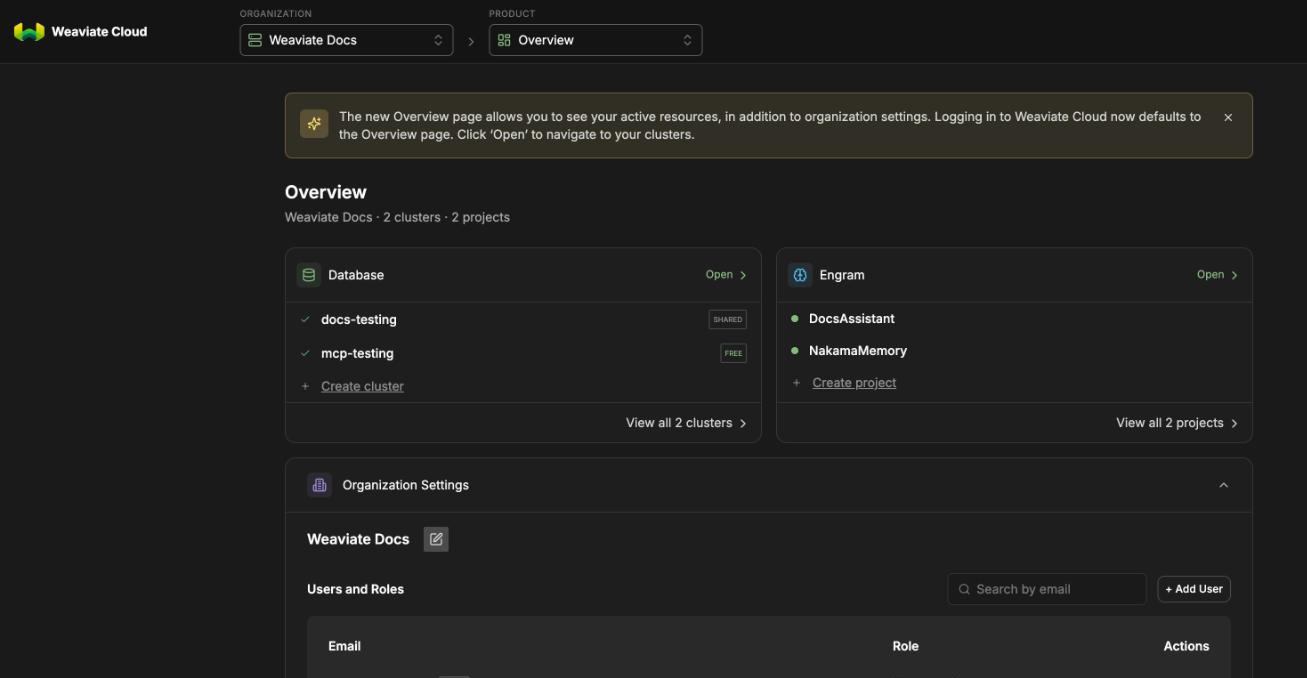
Weaviate is an AI-native vector database: it stores objects and their vector embeddings together, and lets you query both with structured filters and semantic/hybrid search in the same request. As of 2026 it ships as a free, fully open-source self-hosted core (Community Edition), a managed Weaviate Cloud (Free/Flex/Premium), and -- new this year -- Engram, a separate managed memory service for AI agents built on top of the same database.
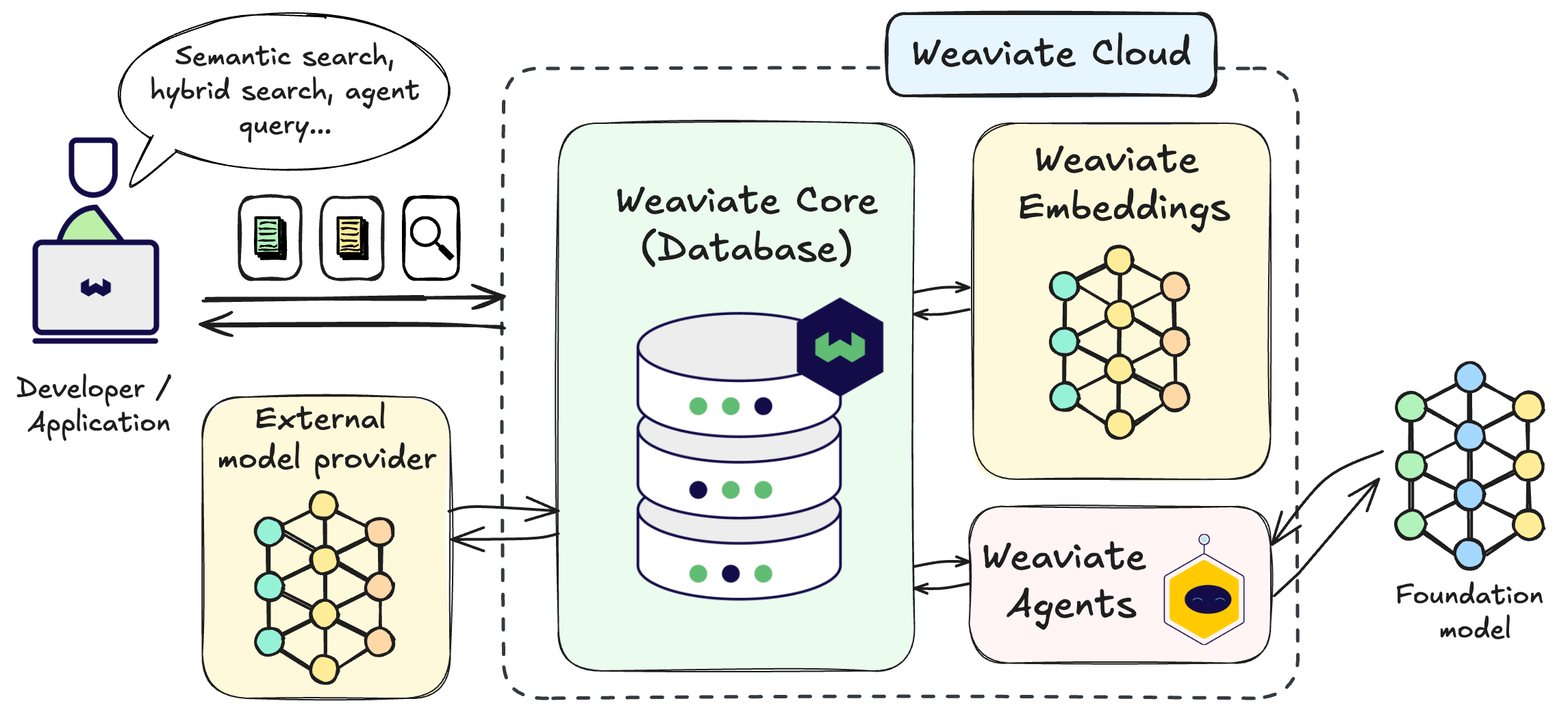
The one asterisk worth flagging up front: the BSD-3-Clause promise still covers everything you can actually use today. What changed is that the repository now contains the scaffolding for a second license track that doesn't apply to anything yet. More on that in Security & Control.
A real, growing project -- at a noticeably more modest valuation than the "vector DB unicorn" framing suggests.
weaviate/weaviate, verified on GitHub, Sep 22, 2026.
semitechnologies/weaviate, verified via Docker Hub, Sep 22, 2026.
Series C, Oct 10, 2025, led by Battery Ventures & Zetta Venture Partners.
Seed ($1.2M) through Series C ($50M); Ricoh's Mar 2026 strategic investment amount undisclosed.
| Date | Event | Result |
|---|---|---|
| Aug 2020 | Seed round, $1.2M | As SeMI Technologies, spun out of the Kubrickology consultancy |
| 2022 | Series A, $16M | Company renamed from SeMI Technologies to Weaviate |
| Apr 2023 | Series B, $50M | Funds AI-native demand growth |
| Oct 10, 2025 | Series C, $50M, led by Battery Ventures & Zetta Venture Partners | Valuation $200M |
| Mar 13, 2026 | Strategic investment from Ricoh (RICOH Innovation Fund) | Amount undisclosed; corporate-venture stake, not an acquisition |
The praise is about hybrid search and support. The complaints are about memory at scale and version upgrades.
Reviewers consistently call out the BM25+vector hybrid search and smooth Python/REST integration as standout strengths, alongside "impeccable" support and an active Slack community -- but note that cloud pricing "can scale up quickly if you're handling large datasets" and that sharding/schema design has a real learning curve.
Memory usage is the most concrete recurring operational complaint: one forum thread reports 60M imported objects still consuming roughly 130GB of RAM -- and running out of memory -- even after capping the vector cache; another shows memory usage more than double the on-disk size at smaller scale.
Antoni Rosinol, co-founder of Stack AI: "The biggest benefit of using Weaviate isn't just the technology -- it's the team behind it. The level of support we receive through their engineering team and support channels has been company-saving help." Stack AI reports saving "tens of thousands of dollars" versus alternatives like Pinecone.
Free self-hosted, or four cloud tiers billed on three real dimensions.
Free
1 cluster/user, 100K objects, 1GB memory.
- 1 collection, up to 3 tenants
- 2,000 embed req/day + 1,000 Query Agent req/mo
Flex
Unlimited objects, 1,000 collections, 99.5% uptime.
- 7-day backup retention
- 30,000 Query Agent req/mo included
Premium (Shared)
99.9% uptime, 30-day backups, SSO/SAML.
- Metrics endpoint, phone + Slack support
- Unlimited Query Agent
Premium (Dedicated)
99.95% uptime, 45-day backups, HIPAA (AWS).
- PrivateLink (AWS), customer-managed keys
- ~40 regions, AWS/GCP/Azure
| What's gated | Free | Flex | Premium Shared | Premium Dedicated |
|---|---|---|---|---|
| SSO / SAML | × | × | ✓ | ✓ |
| HIPAA compliant | × | × | × | ✓ |
| PrivateLink (AWS) | × | × | × | ✓ |
| Customer-managed encryption keys | × | × | × | ✓ |
| Regions available | 2 (AWS) | 7 (AWS, GCP) | 7 (AWS, GCP) | ~40 (AWS, GCP, Azure) |
Vector-dimension unit rates start from $0.00465/1M dims (Flex) down to $0.002718/1M (Premium Dedicated); storage from $0.12/GiB down to $0.10/GiB; backups from $0.029/GiB down to $0.0134/GiB. Source: weaviate.io/pricing, verified Sep 22, 2026.
Your answer depends on whether you're paying with money or with ops time.
Community Edition, self-hosted -- genuinely free, BSD-3-Clause, unlimited on your own hardware.
Free tier: 100K objects, no card required; upgrade to Flex ($45/mo) when you outgrow it.
Flex covers 99.5% uptime with next-business-day support at pay-as-you-go pricing.
Premium (Shared), prepaid, from $400/mo.
Premium (Dedicated) is the only tier that includes them.
Layer Engram on top of any tier -- free up to 1,000 pipeline runs/month.
The feature that made Weaviate's name is still its most mature: search that doesn't force a choice between keywords and meaning.
Weaviate's hybrid search fuses BM25F keyword scoring with vector similarity in a single query, controlled by a tunable alpha parameter (0 = pure keyword, 1 = pure vector) -- a first-class feature since early versions, not a bolt-on. Layered on top is the Query Agent (public preview Mar 4, 2025; GA Sept 2025), which translates a plain-English question into the right collection, filters and ranking without you writing query code.
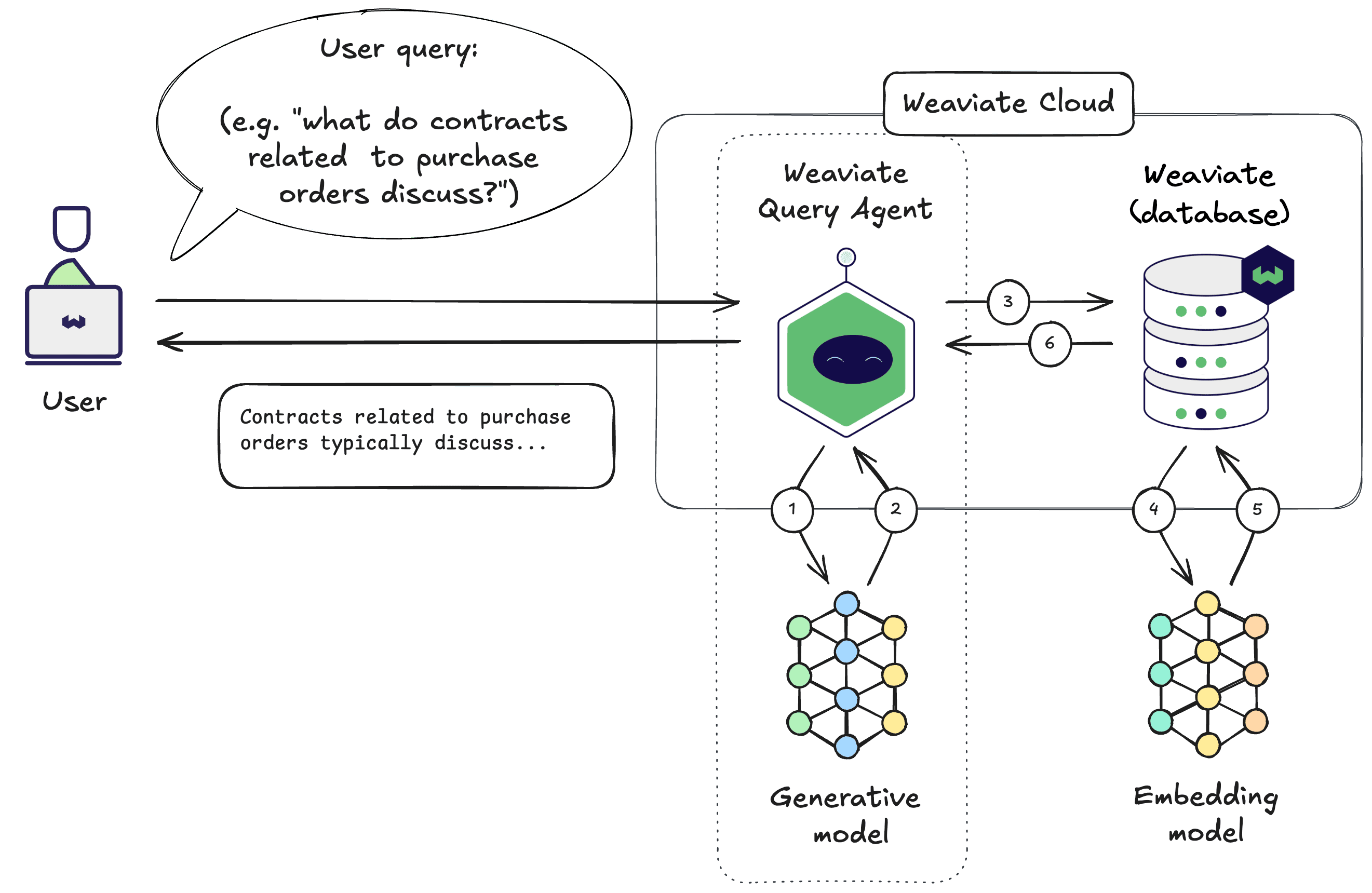
- Hybrid search plus built-in vectorization means fewer moving pieces than stitching a vector DB to a separate embedding service.
- Query Agent removes a real class of hand-written query code for common retrieval patterns.
- Multi-modal vectorizers (including Gemini audio support added in 2026) cover more than just text.
- Built-in vectorizer modules add a dependency on the model provider you choose; bring-your-own-vectors avoids that but adds your own pipeline back.
- Query Agent request limits are tier-gated (1,000/mo on Free, 30,000/mo on Flex, unlimited on Premium).
Official Weaviate video: vector search, hybrid search and retrieval-augmented generation in practice.
Published by the official "Weaviate vector database" YouTube channel (youtube.com/@Weaviate).
The biggest 2026 change: Weaviate now sells a memory layer, not just a search layer.
Engram went generally available on June 3, 2026 -- a separate managed service, built on Weaviate's own hybrid search, that turns raw agent conversation events into structured, durable, permission-scoped memory. An async extract-transform-commit pipeline pulls facts out of noisy interactions, reconciles them against what's already known (handling deduplication and time-evolving facts), and serves the result back through the same retrieval infrastructure -- without making the agent wait for memory processing to finish. It replaces Weaviate's earlier Personalization Agent, which Weaviate's own product page now marks "Sunset," advising teams to move personalization workloads onto Engram and retrieval workloads onto Query Agent.
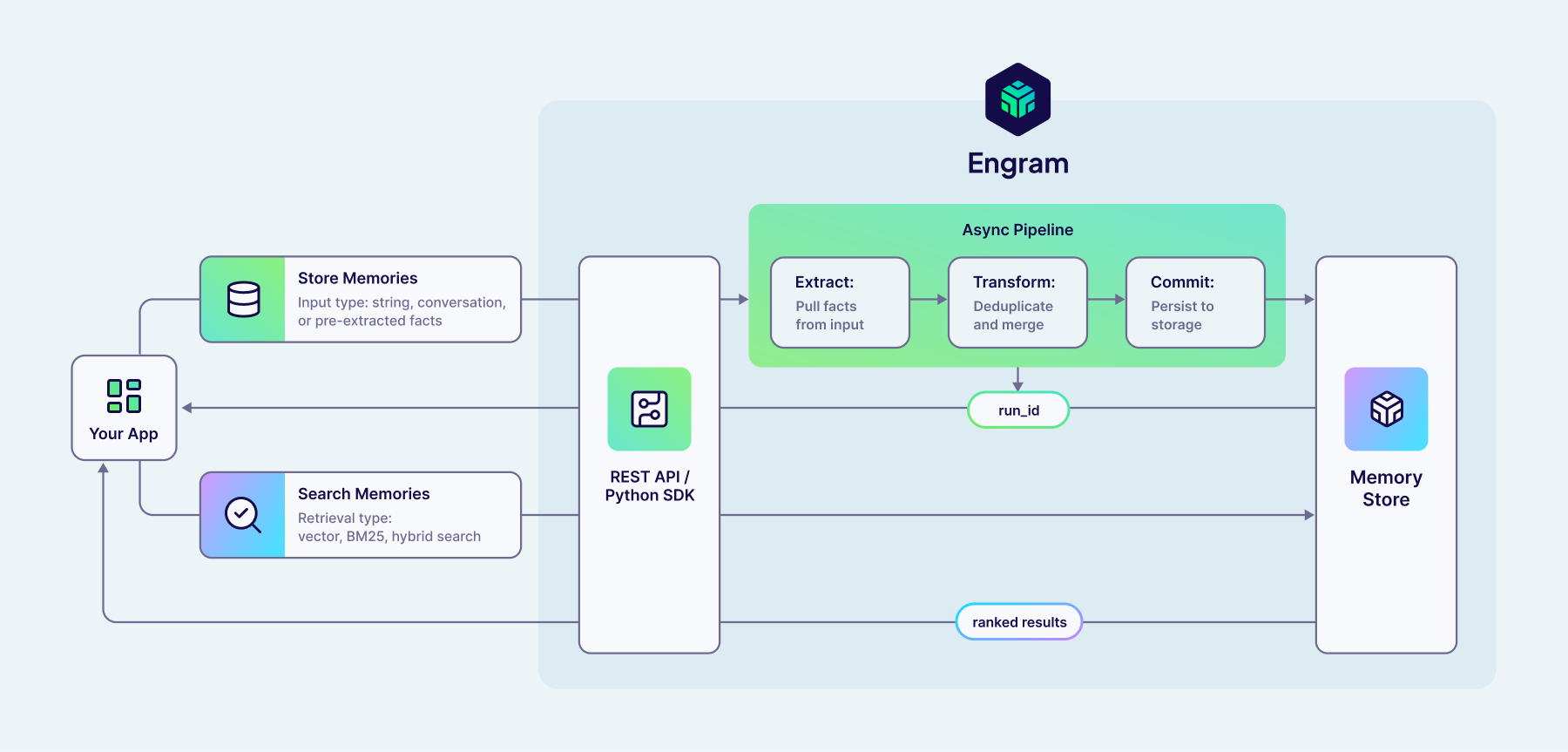
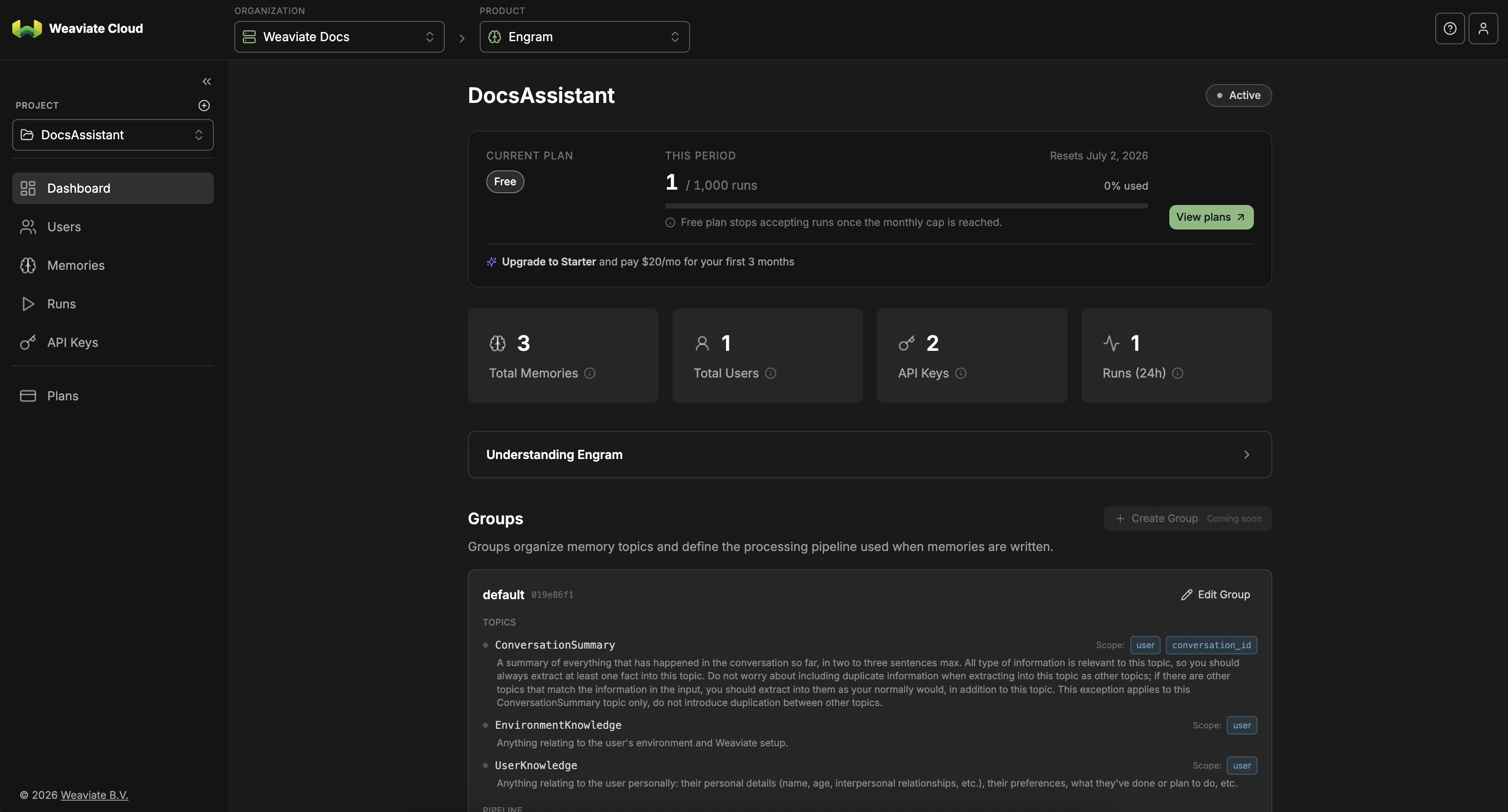
Pricing: free tier includes 1,000 pipeline runs/month; paid plans start around $45/month, billed separately from the core database plan. Use cases ship as ready-made templates: cross-session personalization, continual learning from feedback, and shared state across multi-agent systems.
Ingest, index, query -- with an optional agent layer on either end.
Real isolation and real redundancy, if you configure them.
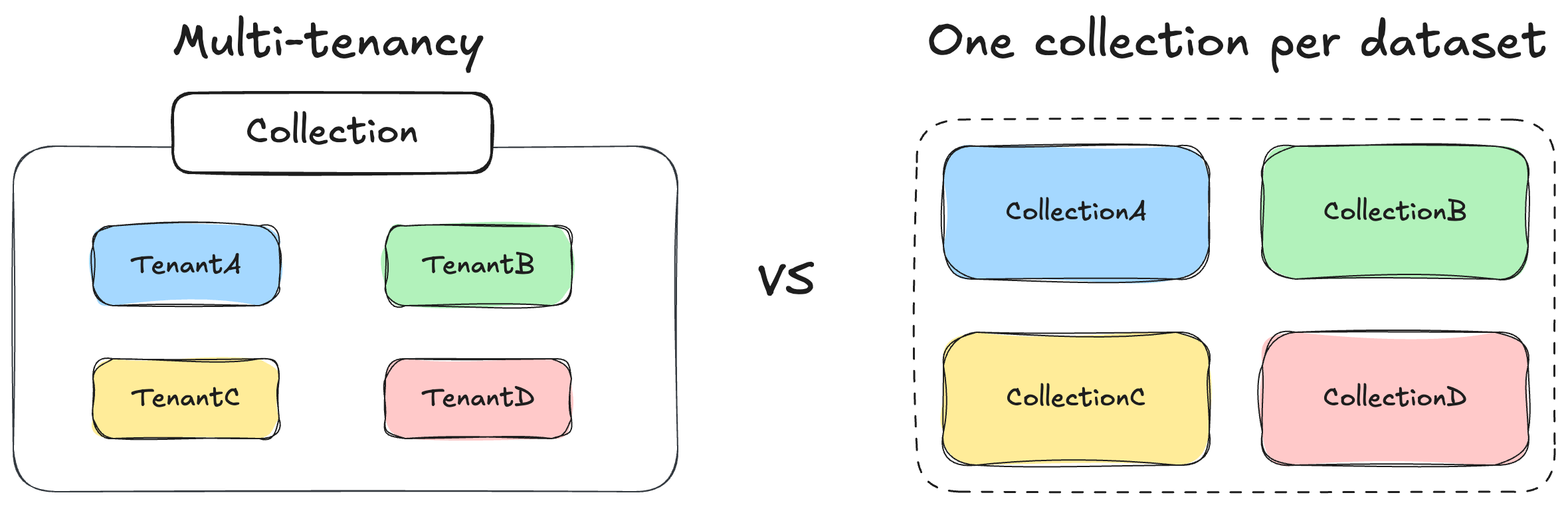
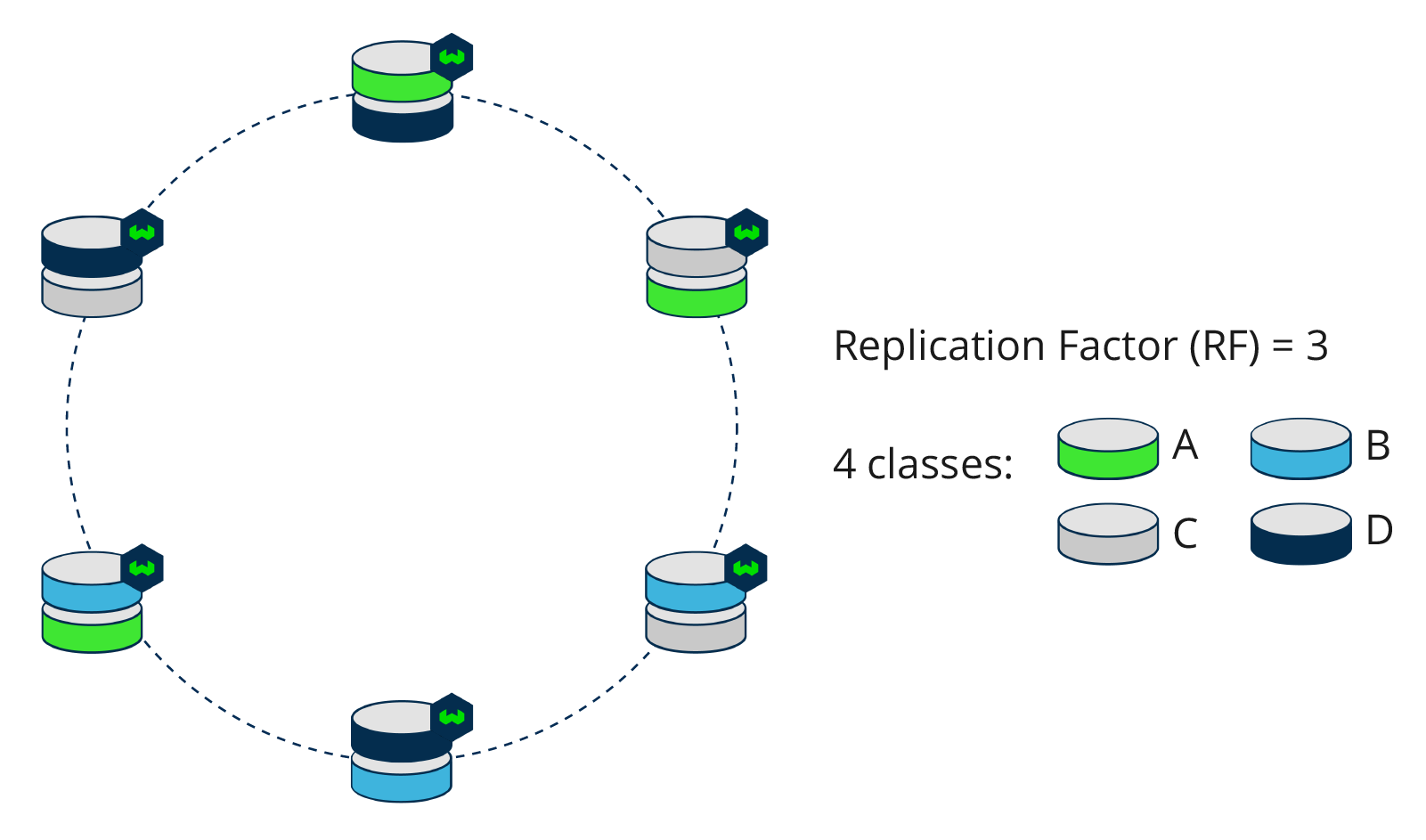
Multi-tenancy in Weaviate is native, not a schema convention: tenants can be activated, deactivated, or offloaded into cold storage tiers independently, which matters once you're running thousands of small, isolated tenants rather than one big shared index. Replication is configurable per collection, with quorum-based consistency (ONE/QUORUM/ALL) trading off latency against durability.
MCP is built into the database binary itself -- nothing extra to run.
Since a preview shipped in v1.37.1, the Model Context Protocol server lives inside the main weaviate/weaviate binary and is served at /v1/mcp on the same port as the REST API -- one environment variable turns it on. That's a meaningfully tighter integration than a bolt-on MCP sidecar: an MCP client like Claude Desktop, Claude Code, Cursor or VS Code can inspect your schema, run vector or hybrid searches, and modify objects, all governed by Weaviate's existing authentication and RBAC. A separate community-maintained mcp-server-weaviate package also exists for teams on older Weaviate versions.
Three separate meters -- vector dimensions, storage, and backups.
| Cost dimension | Flex (from) | Premium Dedicated (from) |
|---|---|---|
| Vector dimensions | $0.00465 / 1M | $0.002718 / 1M |
| Storage | $0.12 / GiB | $0.1505 / GiB (dedicated infra premium) |
| Backups | $0.0290 / GiB | $0.0134 / GiB |
| Minimum monthly spend | $45 | $400+ (prepaid contract) |
What's actually enforced today, versus what's just wired up.
Worth being precise here, because "Weaviate went proprietary" would be an overstatement and "nothing changed" would be understating it. What's true, verified directly against the live weaviate/weaviate repository on Sep 22, 2026: the top-level LICENSE file still splits the codebase into BSD-3-Clause (everywhere) and a separate Weaviate License (only inside wl/, currently a near-empty directory holding just the license text, dated Aug 26, 2026). The mechanism that will eventually check that license -- a signed LICENSE_KEY validated against license.weaviate.io -- was merged into the codebase on Sep 15, 2026, with enforcement explicitly off by default. Nothing you can run today is behind that gate. It is, however, the same playbound other infrastructure vendors (Elastic, MongoDB, Redis) have used before tightening licensing terms later, which is why it belongs in a limitations list rather than a footnote.
Teams that want search and memory in one product, not five.
| Situation | Why Weaviate fits | Likely plan |
|---|---|---|
| Solo developer or small project prototyping RAG | Free tier or self-hosted Community Edition, no card required | Free or self-hosted |
| Team needing keyword + semantic search in one query | Mature hybrid search (BM25F + vector, tunable alpha) | Flex |
| Team building agents that need to remember users | Engram layered on top of the same database | Flex + Engram free/paid tier |
| Regulated org needing HIPAA or private networking | Only Premium Dedicated includes HIPAA and PrivateLink | Premium (Dedicated) |
| Team wanting zero-ops managed simplicity, small scale | Weaviate still requires more schema/index decisions than a fully managed peer | Consider Pinecone instead |
Six real gaps, sourced rather than assumed.
Community forum reports describe RAM usage more than double the on-disk footprint, and one 60M-object deployment hit ~130GB RAM and OOM'd even after capping the vector cache. Compression helps, but you need to plan for it explicitly.
A documented GitHub issue describes vectors created on 1.19 becoming incompatible with 1.27 clients, with no schema-patch path offered; a separate report describes a 24-hour migration for one dataset.
Dormant and unenforced today (verified Sep 22, 2026), but the LICENSE_KEY/wl/ infrastructure merged Sep 15, 2026 is exactly the kind of plumbing that precedes a licensing change elsewhere in this industry.
29 G2 reviews is thin next to some category peers -- treat the ~4.6/5 rating as a soft signal, not a statistically strong one.
A recurring G2 pattern: some official client SDKs trail newer core features, pushing developers back to raw REST calls for the latest functionality.
HIPAA, PrivateLink and customer-managed encryption keys all require Premium Dedicated, a $400+/mo prepaid contract with no visible self-serve path.
Weaviate's real trade-off is breadth (search + memory + multi-modal) versus a narrower, simpler tool.
| If you mostly need... | Compare Weaviate with... |
|---|---|
| Fully managed, zero-ops simplicity, small-to-mid scale | Pinecone -- also reviewed by JAVIS |
| Rust-level performance, single-binary self-hosting | Qdrant (JAVIS review, Fit Score 89/100) |
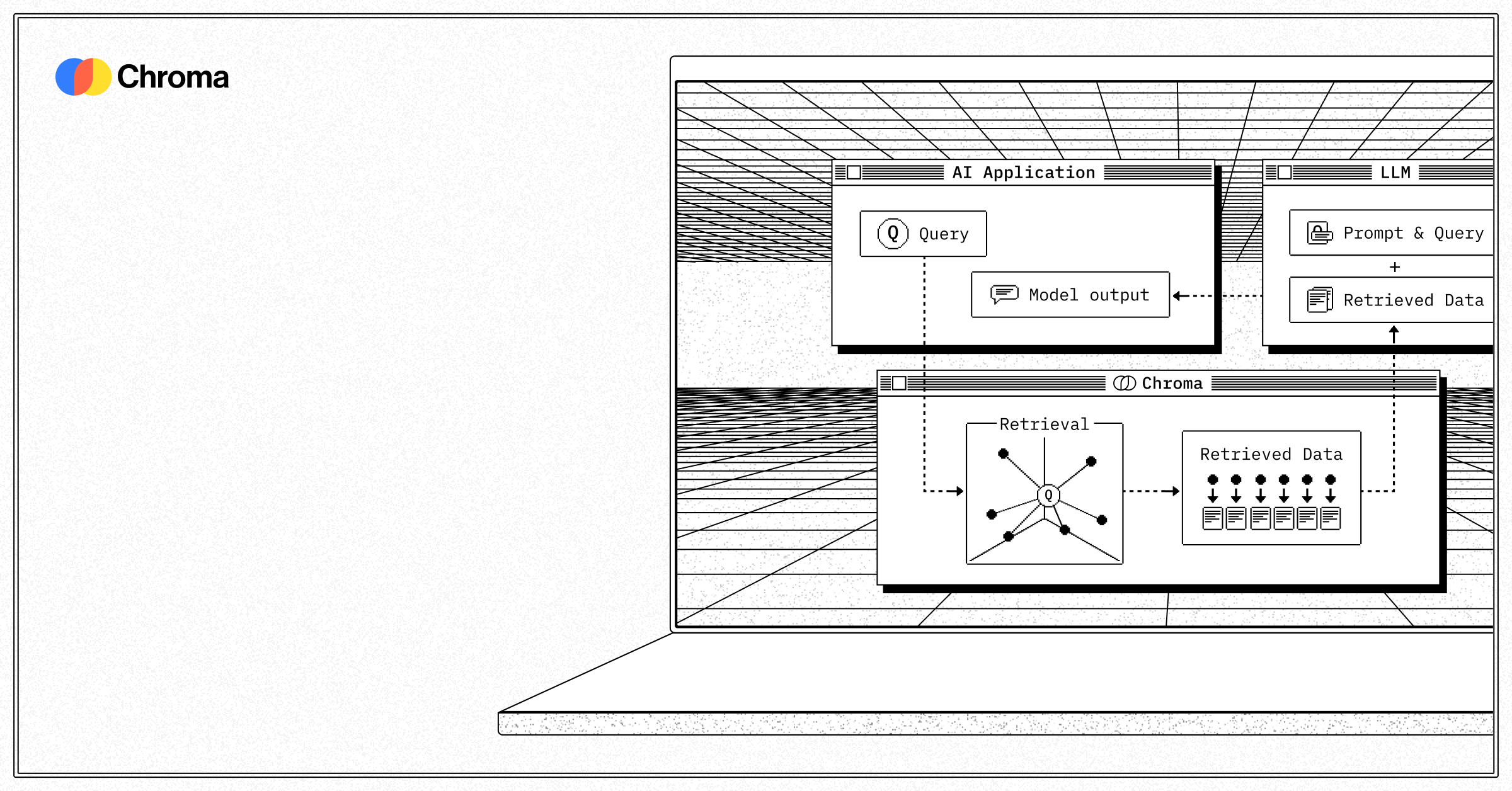
| The lightest possible embedded vector store for a small app | Chroma -- also reviewed by JAVIS |
| Billion-scale, distributed deployment on Kubernetes | Milvus (milvus.io) -- built for 100M+ vector scale |
| You're already running Postgres and want to add vectors | pgvector -- an extension, not a separate database to operate |
No public affiliate/referral commission program was found. JAVIS has not enrolled in anything.
weaviate.io/partners describes only B2B technology, platform and system-integrator partnerships (AWS, Google Cloud, Snowflake, managed-service providers) -- not a content-creator affiliate or referral commission scheme. JAVIS holds no tracking link of any kind for Weaviate. Every CTA in this article points to Weaviate's official site, unmodified.
Go to the official page.
Open WeaviateRead the alternative that matches your real question.
Choose the next articleWeaviate sits right in the middle of the vector-database category JAVIS is mapping.
Questions people are actually searching right now
Is Weaviate open source?
Yes -- the core database is BSD-3-Clause, one of the most permissive licenses in the vector-database category, verified directly against the LICENSE file in weaviate/weaviate on Sep 22, 2026. A separate, currently-dormant "Weaviate License" now exists in a small subdirectory of the same repo for future enterprise features, but it doesn't gate anything you can use today.
Is Weaviate free?
Yes, in two ways: the Community Edition is free to self-host with no object cap on your own infrastructure, and Weaviate Cloud has a genuine Free tier (100,000 objects, no credit card) before you'd ever need to pay.
How much does Weaviate Cloud cost?
Flex starts at $45/month pay-as-you-go for unlimited objects with a 99.5% uptime SLA. Premium (Shared or Dedicated) is a prepaid contract starting around $400/month, required for SSO/SAML, HIPAA, or PrivateLink.
What is Engram?
Engram is Weaviate's separate managed memory service for AI agents, generally available since June 3, 2026. It turns raw agent conversations into structured, durable, scoped memory via an async pipeline, with a free tier (1,000 pipeline runs/month) and paid plans from about $45/month.
Does Weaviate support MCP?
Yes -- an MCP server has been built directly into the weaviate/weaviate binary since a v1.37.1 preview, served at /v1/mcp on the same port as the REST API, enabled with one environment variable, and compatible with Claude Desktop, Claude Code, Cursor and VS Code.
Is Weaviate better than Pinecone or Qdrant?
Different trade-offs: Pinecone wins on fully managed simplicity with less operational surface area; Qdrant wins on raw single-node performance and the simplest self-hosted deploy; Weaviate wins on built-in hybrid search, native multi-modal vectorization, and now agent memory (Engram) bundled into one product.
What happened to Weaviate's Personalization Agent?
It has been marked "Sunset" on Weaviate's own product page. Weaviate's guidance is to move personalization/memory workloads to Engram and natural-language retrieval workloads to Query Agent.
Is Weaviate's memory usage really a problem?
It's a documented, recurring community complaint at scale -- one forum report describes ~130GB RAM usage on 60M objects even after capping the vector cache. Compression settings and replication factor both affect this meaningfully; it is not a universal problem at small scale.
Where this came from, and when it was checked.
GitHub stats (stars/forks/license/latest release): GitHub data for github.com/weaviate/weaviate and .../releases/latest, Sep 22, 2026.
Docker pull count: Docker Hub data for hub.docker.com/r/semitechnologies/weaviate, Sep 22, 2026 (22,105,322 pulls).
Licensing (BSD-3-Clause + new Weaviate License): direct read of github.com/weaviate/weaviate/blob/main/LICENSE and wl/LICENSE-WEAVIATE (dated Aug 26, 2026); PR #13081 "Replace WEAVIATE_LICENSE env toggle with LICENSE_KEY form check" (merged Sep 15, 2026); PR #12942 "license check against license.weaviate.io (log-only by default)" (closed, unmerged, superseded -- used only to confirm design intent, not shipped behavior). All checked live Sep 22, 2026.
Pricing (Free/Flex/Premium Shared/Premium Dedicated, full comparison table, vector-dimension/storage/backup rates): weaviate.io/pricing, official, read directly, Sep 22, 2026. Pricing-model-change history: weaviate.io/blog/weaviate-cloud-pricing-update, official, Oct 27, 2025.
Funding timeline: PR Newswire ("SeMI Technologies' $16M Series A"), Goodwin Law (Series B), Clay/Tracxn/Battery Ventures (Series C, $50M @ $200M valuation, Oct 10, 2025), Ricoh press release ricoh.com/release/2026/0616_1 (Mar 13, 2026 strategic investment). Not independently audited by JAVIS.
Engram: weaviate.io/blog/engram-generally-available and weaviate.io/product/engram, official, GA confirmed June 3, 2026.
Query Agent / Personalization Agent sunset: weaviate.io/blog/weaviate-agents, weaviate.io/product/personalization-agent, weaviate.io/product/query-agent, official.
Built-in MCP server: docs.weaviate.io/weaviate/configuration/mcp-server, official.
Stack AI case study (attributed quote, cost-savings claim): weaviate.io/case-studies/stack-ai, official, attributed to Antoni Rosinol, co-founder.
Real screenshots/media: weaviate.io official OG image, and seven images from the official weaviate/docs repository (weaviate-ecosystem.png, query_agent_architecture_light.png, engram architecture.png, engram console/dashboard.png, weaviate-cloud-overview-page.png, weaviate-multi-tenancy-vs-multiple-collections.png, replication-factor.png).
Official video: youtube.com/watch?v=VAxrREiugxQ, authorship confirmed on YouTube (author "Weaviate vector database", channel @Weaviate). Exact original publish date could not be confirmed through available tools; channel authorship was verified directly.
User sentiment: G2 product listing (~4.6/5, 29 reviews, rating-distribution breakdown); Weaviate Community Forum threads and GitHub issues (#9626 schema migration, memory-usage threads); the Stack AI case study above.