Gumloop Review 2026: The Visual Workflow Builder That Became an Agent Platform, Raised $50M, and Now Bills by the Credit Plus an 8% Fee
Gumloop used to be the drag-and-drop way to chain AI steps. The homepage now says "Build, share, optimize and control agents", the pricing page labels Workflows "(Legacy)", the company says it raised a $50M Series B led by Benchmark, and Pro is $37 a month for 20,000 credits with unlimited seats after a card-required 14-day trial. Credits are worth $0.005 each and every run carries an 8% orchestration fee, which doubles to 16% if you bring your own model key. This review checks what is true today against Gumloop's pricing page, docs, changelog and enterprise page, says plainly that independent reviews are thin, and flags the default that lets new connectors act without asking.
| Ownership | Independent (AgentHub Inc.); $50M Series B led by Benchmark, company-stated |
| Free tier | None found; card-required 14-day Pro trial |
| Cheapest paid plan | $37/mo Pro, 20,000 credits, unlimited seats |
| Security | SOC 2 Type II (vendor); RBAC and audit logs on Enterprise |
| Independent reviews | Product Hunt 5.0 (9); no Trustpilot or G2 data |
Gumloop is no longer the drag-and-drop AI workflow tool people remember. It is an agent platform with unusually honest credit docs, and a few defaults you need to change on day one.
"If you want a place where anyone on a team can build an agent, connect it to Slack and 300-plus apps, and have IT see what it does, Gumloop is one of the more complete answers. Just do not mistake $37 for the whole bill: the credits, the 8% orchestration fee and the approval defaults are where the decisions are."
My honest read: Gumloop has three layers now. Agents are the core: you pick a model, write instructions, add connectors, skills, knowledge and subagents, then trigger them from chat, Slack, Teams, email, a schedule, a webhook or an app event. Gumball is the personal agent every account gets, with a morning report, a labelled inbox and a brief before each meeting. And Gumloop for IT is the governance layer: spend caps, RBAC, audit logs, connector policies, hosted and proxied MCP servers. The visual Workflows product still exists but the pricing page labels it "(Legacy)". The company's own Series B post says "Some people reading this may associate Gumloop with drag-and-drop workflow building... we've evolved into so much more." This is a VERIFIED EDITORIAL REVIEW: Gumloop's pricing page and its FAQ data, docs, changelog, enterprise page and blog were checked on Oct 3, 2026, alongside Product Hunt and Hacker News. I did not run a controlled hands-on test, and independent user reviews of the new agent product are thin (see Users).
Build an agent once, give it tools and knowledge, then let the whole team use it where they already work.
The docs open with: "Gumloop is an AI agent platform. Build AI agents that use your tools and data to do real work, then automate them with triggers, schedules, and the API." The homepage is shorter still: "Build, share, optimize and control agents." Four things sit under that. The agent builder has tabs for Agent, Triggers, Access and Settings. Company Brain is a knowledge base agents can search once you connect drives and tools (SharePoint was added in the Sep 29, 2026 changelog). Skills are reusable knowledge packs that agents load when a task needs them, and an organization can sync them with a GitHub repository. And Gumball is the personal agent with its own email address and, in beta, a phone number you can text.
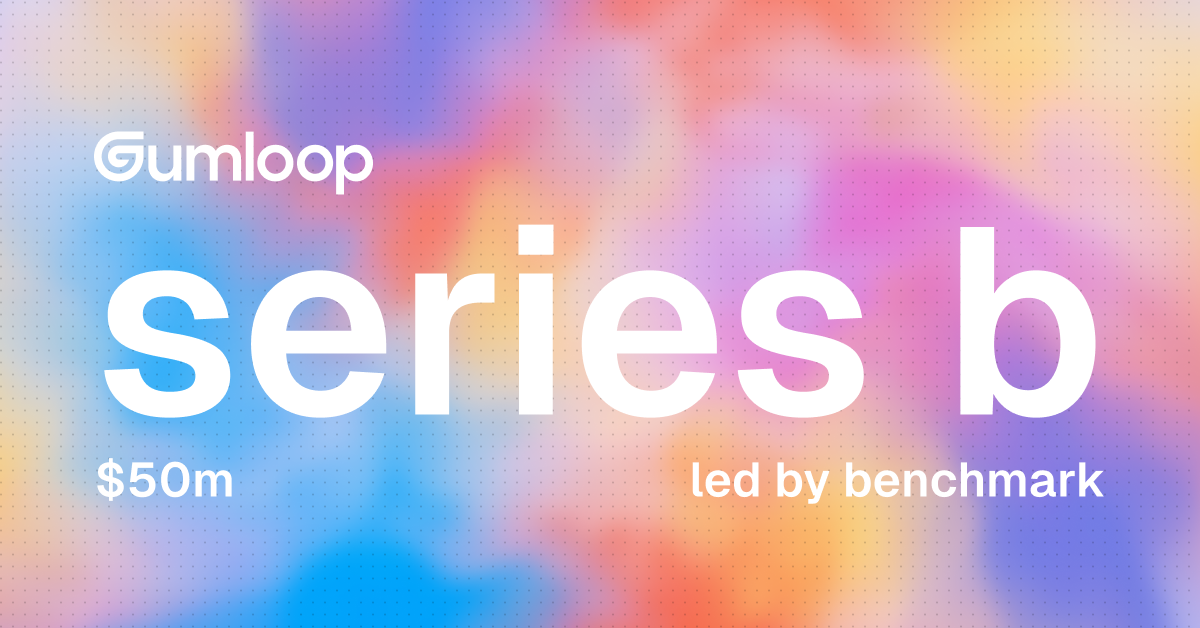
Ownership and funding: AgentHub Inc. operates Gumloop (the footer says "AgentHub Inc."). Its blog says it raised a $50M Series B led by Benchmark, with Nexus VP, First Round, Y Combinator, Box Group, The Cannon Project and Shopify Ventures participating, following a $17M Series A reported in January 2025. I found no acquisition. Everything here is the company's statement; I did not verify the round with an investor source.
Well funded and expanding quickly, with adoption figures that are mostly Gumloop's own.
Gumloop blog, 2026 (the post shows no date). Prior: $17M Series A, Jan 2025. Funding is not usage.
Listed in the Series B post as "AI-forward companies". Marketing, not audited, and no seat counts given.
558 followers. A small, self-selected sample and mostly older product launches (Feb 2024, Sep 2024).
Homepage and pricing page. The homepage "Tasks Automated" and "Agents Deployed" counters load dynamically and were not readable.
| Date | Event | Source |
|---|---|---|
| 2024-02-07 | AgentHub launched on Product Hunt (listed under the Gumloop product page) | producthunt.com/products/gumloop |
| 2024-09-16 | Gumloop Chrome extension launched on Product Hunt | producthunt.com/products/gumloop |
| 2025-01 | $17M Series A reported (Hacker News item 42658188) | blog.gumloop.com via Hacker News |
| 2025-03-31 | guMCP, open-source MCP servers hosted free via a Gumloop account (Show HN) | Hacker News item 43535889 |
| 2026 | $50M Series B led by Benchmark; post says Gumloop has evolved beyond drag-and-drop workflows | gumloop.com/blog/series-b |
| 2026-09-24 | Password-protected artifacts; per-trigger model choice; Reflections flag wasted credits | gumloop.com/changelog |
| 2026-09-29 | Text Gumball (beta) over iMessage, RCS or SMS; SharePoint in Brain; Claude Sonnet 5.5 and GPT-6.1 Sol added | gumloop.com/changelog |
| 2026-10-01 | GLM-5.3 added; 16 new connectors including Amplitude, Buffer, Coda, ZoomInfo | gumloop.com/changelog |
Position, honestly: Gumloop has strong funding and a fast shipping cadence (a changelog entry roughly every few days). It competes with the classic builders and with newer agent platforms; JAVIS's Zapier, Make and n8n reviews cover the incumbents, and Gumloop's own pricing page links comparison pages against ChatGPT Agent, Claude Cowork, Dust, Glean, Grok Bot, n8n, Relevance AI and Zapier. I have not verified those vendor comparisons.
The evidence is thin: a perfect Product Hunt score from nine people and mostly neutral mentions elsewhere.
Reviewers call it "ideal for folks who are not too well versed with heavy duty technical automation", say there is "a ton more customization here where you can solve much larger problems" than traditional low-code tools, and that "they have insane support". One says it replaces fragile custom scripts. Praise is about ease, flexibility and support; no review I could read mentions pricing or credits.
A commenter wrote "I like this! MCP is still very new, and a new paradigm, and super powerful. Psyched to see it integrated in gumloop." The cofounder positioned guMCP against closed alternatives. That is early goodwill for the MCP side of the company, not a verdict on the current agent product.
Gumloop is used as a reference point ("a direct competitor to gumloop.com", "agent in something like gumloop that loops page by page") and named alongside Glean and ChatGPT apps in comparison questions. I found no detailed complaint or praise thread. Volume is low: the Series A story I found scored 1 point.
One self-serve plan at $37 a month with 20,000 credits, a trial that needs a card, and Enterprise on request.
14-day Pro trial
Every new account starts a one-time 14-day trial of Pro. A card is required and it rolls into paid Pro unless you cancel first.
- Cancel from Manage Subscription
- One-time offer per customer
- No standing free plan found
Pro
20,000 credits a month (7,400 at list price plus 12,600 bonus), unlimited agents, seats and teams.
- 35+ models, bring your own keys
- Company Brain, GitHub Skill Sync, shared credentials
- Agent-scoped connector policies
- Concurrency: 5 workflow runs, 25 agent chats
Pay as you go
Overage beyond the 20,000 credits. Off by default, so agents simply stop when credits run out.
- Default cap 1,000,000 credits ($5,000) per period
- You can set a lower cap
- Unused credits do not roll over
Enterprise
Custom credits that roll over, negotiable orchestration fee, org-wide governance.
- RBAC, SSO/SCIM, audit logs, incognito mode
- Optional VPC and embedded Gumloop expert
- Dedicated Slack support
- Custom MCP hosting and concurrency
| Pricing-page row | Pro | Enterprise |
|---|---|---|
| Included credits | 20k per month | Custom; unused credits roll over |
| Orchestration fee | 8% | Discounts available |
| Models | 35+ and bring your own keys | 35+ and custom proxy support |
| Connector policies and guardrails | Agent-scoped | Org-wide |
| MCP server hosting | 1 | Custom |
| Concurrent workflow runs / agent chats | 5 / 25 | Custom / Custom |
| Virtual Private Cloud | Not listed | Optional |
| Support | Gumloop University, email support | Plus dedicated Slack support; embedded expert optional |
Decide by who will build, how much your agents will do, and how much IT oversight you need.
That is Gumloop's pitch. Start the 14-day trial with one real agent per team.
See Zapier, Make or n8n. Gumloop's visual Workflows are marked Legacy.
Credits track model usage, tool calls and compute. Pay as you go is off by default, which caps the bill by stopping the agents.
Read the BYOK rule first: model credits drop to zero, but the orchestration fee doubles from 8% to 16%.
That is Enterprise. Ask for the SOC 2 report and the trust centre (trust.gumloop.com).
An agent is a model plus instructions, connectors, skills, knowledge and a trigger, and it can edit itself.
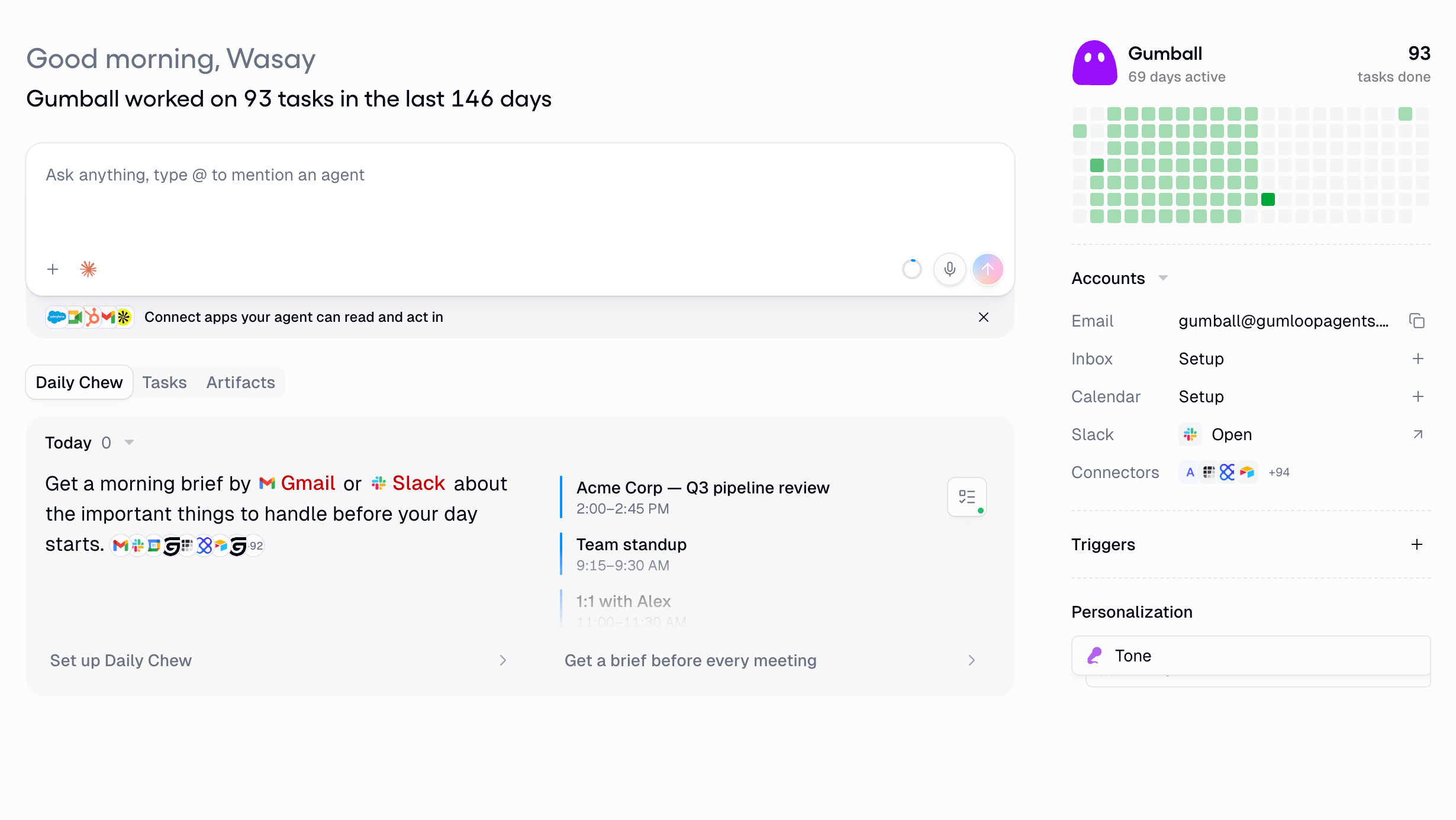
From the docs and the builder screenshot: an agent has a model (the builder shows "Recommended", currently DeepSeek V4 Flash in the screenshot), instructions, connectors (each with its own approval mode), skills ("instructions and scripts this agent loads when a task needs them"), knowledge sources from Company Brain, subagents, secrets and abilities (browser, code sandbox, ask-question, artifacts and more). Triggers can run it on a schedule, once, from a webhook, from an app event, or from a trigger AI builds for you. Each trigger can now use its own model (Sep 24, 2026 changelog).
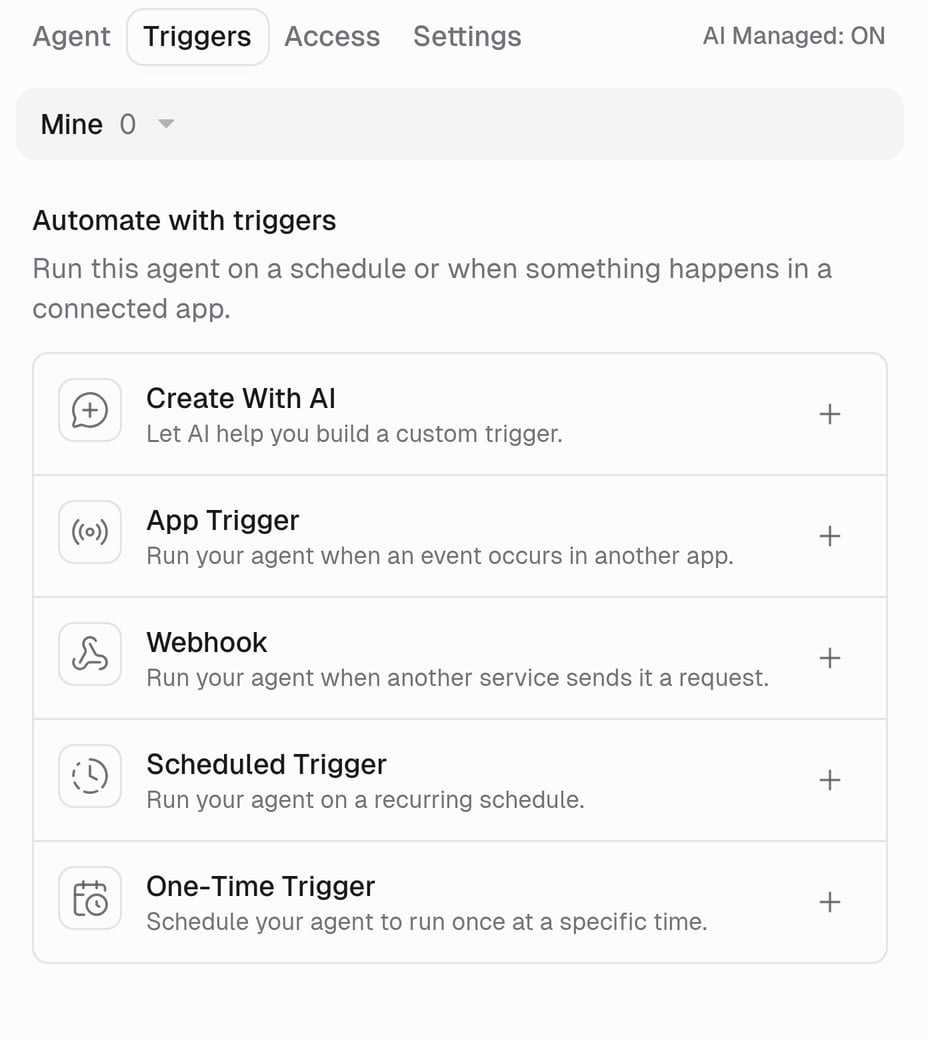
The twist worth knowing: agents can edit their own instructions, skills and triggers. The builder has an "Edit Own Instructions" toggle (on in the docs screenshot), the Sep 29 changelog says edits are listed above the chat input so you can see them, and Reflections can apply "confident edits on their own" when auto-apply is on. That is a strength for maintenance and a thing to govern for risk.
Gumloop's own demo of Gumball, the personal agent that comes with every account, which is the easiest way to see what an agent feels like before you build one.
Published by the official "Gumloop" YouTube channel. Vendor demo, so it shows the best case; it does not show credit costs. I could not read its publish date.
Describe the job, give the agent tools, approve what writes, then read the credit breakdown.
Gumloop own step-by-step lesson on creating a first agent, which matches the input and action steps in the diagram above.
Published by the official "Gumloop" YouTube channel. Vendor tutorial from the Getting Started series; UI details may have moved since it was recorded.
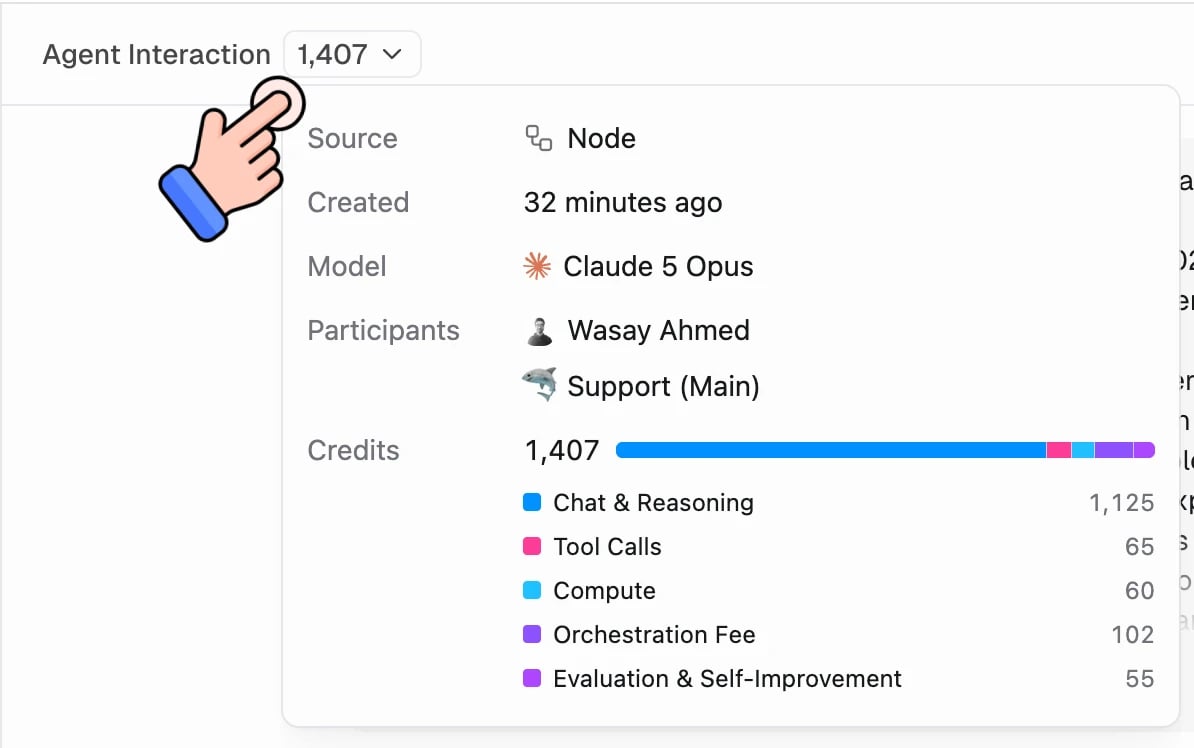
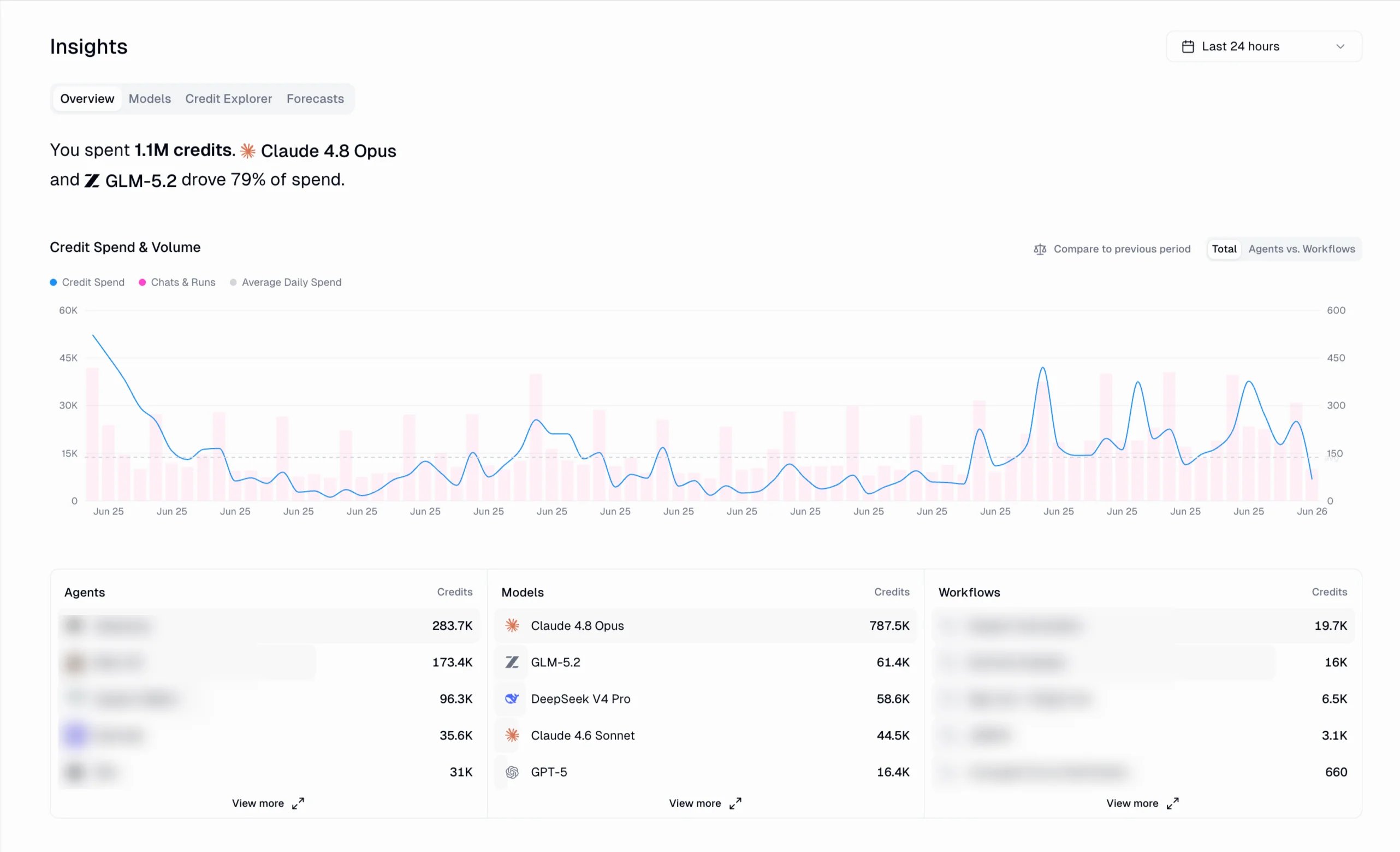
Each chat shows its running cost in the header, and selecting it opens a breakdown. That visibility is the most useful operational feature in the product, because credit costs here are "variable": the docs say the same agent might cost 2 credits for a quick question and 200 for deep research. The docs also describe Evaluations (grade every interaction against criteria) and Reflections (suggest instruction changes and flag wasted credits), which are the closest thing to a feedback loop.
Agents get a real Chromium browser, a code sandbox and a home in Slack, Teams and email.
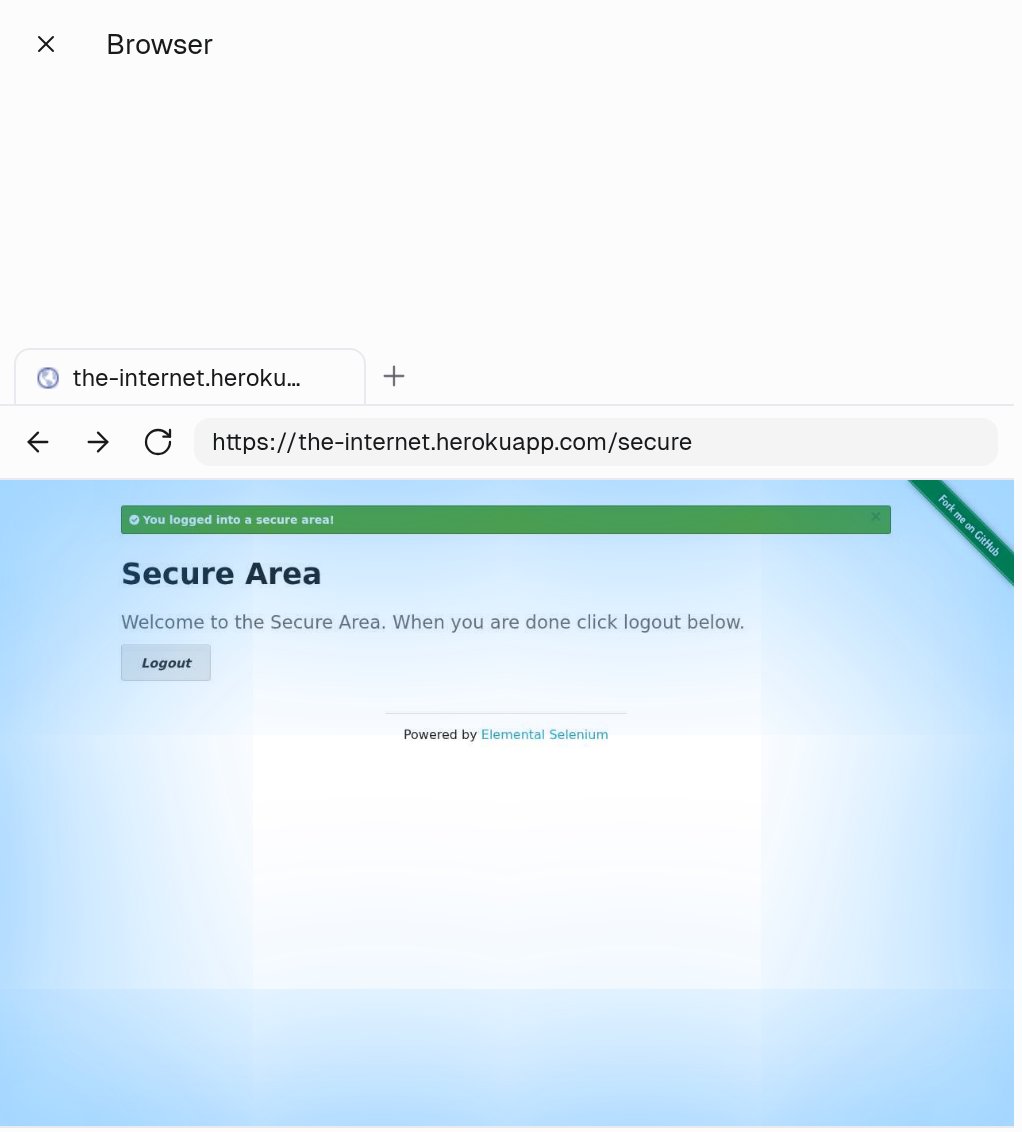
The agent browser is "a real Chromium browser that runs inside your agent's cloud sandbox": open sites, click, type, fill forms and download files, including JavaScript-heavy pages. Logins and 2FA codes are typed in without the agent seeing the password, sessions persist in browser profiles, and the agent pauses and hands you the keyboard at a login, 2FA code, CAPTCHA or purchase confirmation. You can watch live and replay every step. The proxy is off by default. The docs themselves say to prefer a connector where one exists: "it is faster and more reliable than clicking through the site". The browser is an ability you turn on per custom agent.
For teams, agents can be added to Slack, Microsoft Teams, given their own email inbox or a hosted page on gumloopagents.com. In Slack the Sep 2026 update shows a task card with each step as it finishes, and agents "know when a message is for them" in busy threads. Code runs in a sandbox with managed secrets. Billing for the browser and sandbox is time-based compute (5 credits per session-minute), not per click.
300-plus connectors, an MCP catalog, and enterprise-grade MCP hosting and proxying.
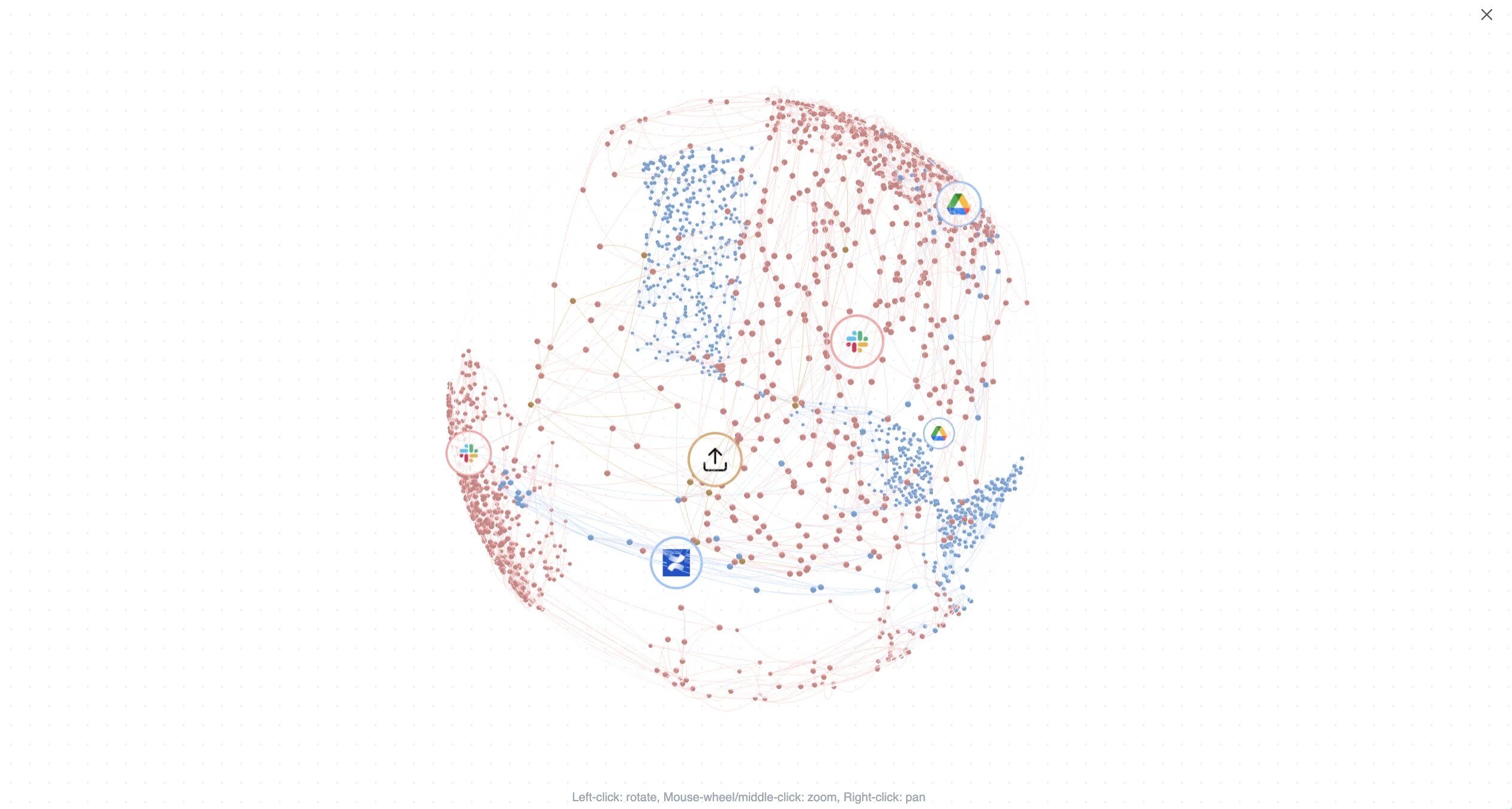
The homepage lists "300+ Connectors", the Oct 1 changelog added 16 more in one release, and the credit docs note "30+ services" that bill a pass-through charge (such as Apollo or Firecrawl). Gumloop publishes MCP pages per tool (gumloop.com/mcp) and, from March 2025, open-sourced guMCP. For companies it goes further: hosted MCPs deploy your own servers from GitHub with lifecycle management, proxied MCPs route external servers through a managed proxy with centralised monitoring, and managed tunnels reach servers inside a private network without inbound ports. The Series B post also pitches Gumstack, which logs tool calls made by Claude Code, ChatGPT, Cursor and custom agents. If MCP is new to you, JAVIS's Claude MCP and Connectors guide explains the idea.
| Integration path | What it does | Status as read |
|---|---|---|
| Connectors | Gmail, Slack, Google Sheets, HubSpot, Salesforce, Jira, GitHub and more; most cost 1 credit per successful call | Homepage says 300+; 16 added Oct 1, 2026 |
| Paid-API connectors | Apollo, Exa, Firecrawl and others add their own charge on top of the 1 credit | Each tool page lists its cost |
| Gumloop MCP and CLI | Use Gumloop from Claude, Cursor and the terminal; sync Brain from the CLI | Listed under Developer on the pricing page |
| REST API and chat completions | Run agents over REST; chat completions now support tool calls and images | Changelog Oct 1, 2026 |
| Hosted and proxied MCP | Deploy or proxy MCP servers with monitoring and access control | Enterprise features docs; pricing lists 1 hosted server on Pro |
| Okta, SAML, SCIM | Identity provider sign-in and provisioning | Enterprise docs and Okta integration page |
One credit is half a cent; a chat is the sum of four lines plus a fee. Know the fee, especially with your own keys.
| What you are paying for | Rule from Gumloop docs / pricing page | JAVIS arithmetic |
|---|---|---|
| A credit | $0.005 (200 credits per $1) | 20,000 credits = $100 at list; Pro is $37 |
| Chat and reasoning | The model's list cost, converted at $0.005 per credit | A $0.03 model call is 6 credits |
| Tool calls | 1 credit per successful connector call, plus that tool's own charge | 1 credit = $0.005 |
| Compute | 5 credits per session-minute of active work, minimum 1 credit per response | $0.025 per minute |
| Orchestration fee | 8% of reasoning + compute + tool calls | Docs example: 425 credits plus a 34-credit fee = 459 credits, about $2.30 |
| Bring your own model key | Model credits drop to zero; fee rises to 16% of what the task would have cost at list | Same 425-credit task: 68 credits fee, 93 credits total if compute and tools are unchanged, plus your provider bill (about $2 of tokens) |
| Credits per month on Pro | 20,000, no rollover (Enterprise rolls over) | About 43 chats of the 459-credit example |
| Running out | Agents stop; pay as you go (off by default) bills $0.005 per credit, capped at 1,000,000 credits ($5,000) per period unless you lower it | Worst-case overage bill is bounded at $5,000 per period |
Two takeaways. First, the BYOK rule is counter-intuitive: bringing your own key does not remove Gumloop's cut, it doubles the percentage, so it mainly helps when your provider contract is much cheaper than list price or when data policy demands it. Second, a long agent chat gets costlier per message because "every message carries the earlier conversation as context" and each connected tool adds its definition to the prompt, so keep agents focused and pick cheaper models for routine triggers.
Good approval tooling, but the default is "Always allow", so you have to turn the safety on.
| Control | What Gumloop says |
|---|---|
| Default approval mode | "Always allow" is the default for a connector. Other modes: Ask each time, Ask for writes/deletes, Never allow, Custom per tool |
| App Rules | Conditional approvals written as CEL expressions on the actual tool arguments, for example require approval only when an email goes outside your domain; agents can draft rules in natural language |
| Where approvals appear | In the chat, the notification inbox, the Tasks page and, for Slack agents, Approve / Reject buttons in the thread plus a Slack DM |
| Browser logins | Agent never sees saved passwords; pauses for 2FA, CAPTCHA and purchases |
| Compliance (enterprise page) | "SOC 2 Type II: independently audited and compliant"; GDPR; Zero Data Retention agreements for third-party models. No auditor is named on the page; a trust centre exists at trust.gumloop.com |
| Enterprise controls | RBAC and custom roles, SAML/OIDC SSO and SCIM, audit logging, AI model restrictions, spend caps, VPC deployments, static egress IPs |
| Self-editing agents | Agents can change their own instructions, skills and triggers; changes are listed above the chat input, and Reflections can auto-apply edits when enabled |
| Data retention and training | Not stated on the pages I read beyond the ZDR line for third-party models; ask for the DPA |
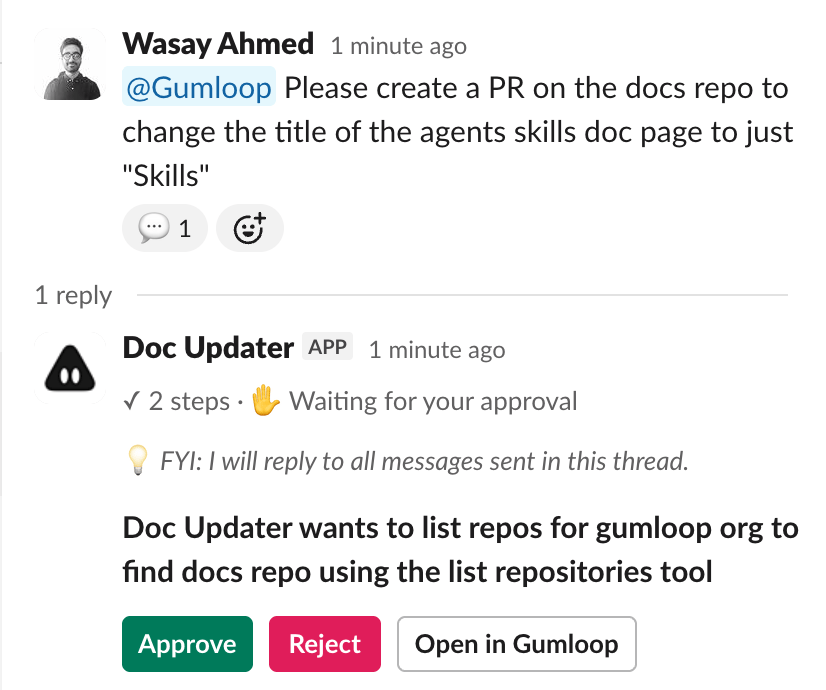
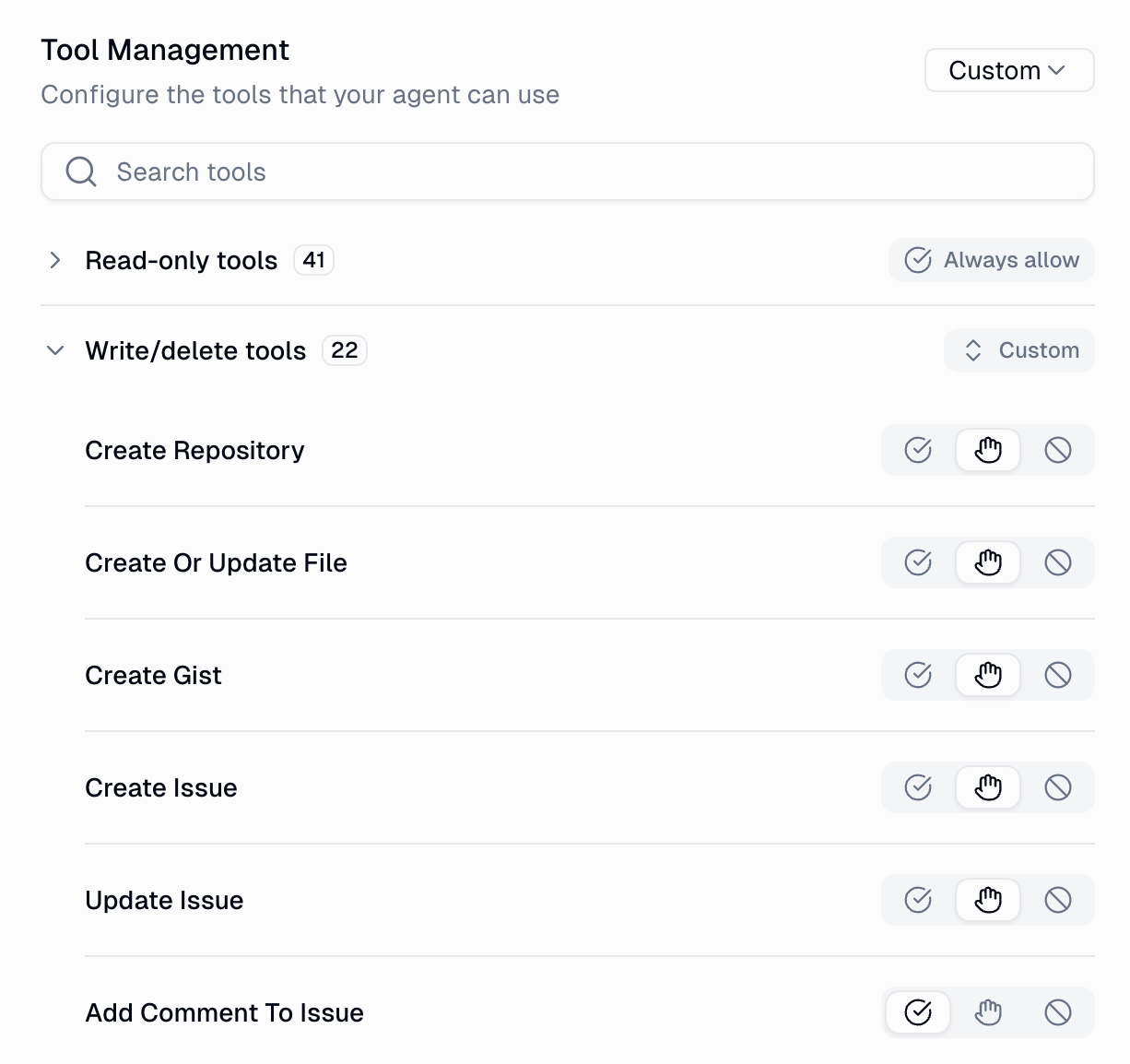
Best for teams where many non-engineers will build agents and IT wants oversight.
| Situation | Why Gumloop fits | Likely plan |
|---|---|---|
| Ops, sales or support team that wants its own agents | Prompt-to-agent builder, 300+ connectors, Slack and email deployment | Pro |
| Team with several departments sharing one budget | Unlimited seats and teams on one credit pool, Insights dashboard | Pro |
| Individual who wants a personal assistant | Gumball: morning report, smart inbox, meeting prep, text | Pro trial first |
| Security-led company-wide rollout | RBAC, SSO/SCIM, audit logs, org-wide connector policies, VPC | Enterprise |
| Team already running MCP servers | Hosted and proxied MCP, managed tunnels | Enterprise |
| Someone who wants fixed, deterministic flows | Workflows are labelled Legacy; classic builders are the better fit | Look at Zapier, Make or n8n first |
| Budget-sensitive hobbyist | No free plan; $37 minimum plus a card for the trial | Probably not yet |
Six real gaps, not manufactured ones.
The self-serve entry is a card-required 14-day trial then $37 a month. There is no standing free tier I could find.
Credits, tool pass-through charges, compute and an 8% fee. It is documented well, but it is hard to forecast before you have run your own agents.
Using your own model key raises the orchestration fee from 8% to 16% of the full list cost, which many buyers will not expect.
New connectors default to "Always allow", agents can edit their own instructions, and the safest settings need manual setup.
Nine Product Hunt reviews, no Trustpilot page, G2 unreadable. Almost all positive material is from Gumloop itself.
From AgentHub and drag-and-drop workflows to agents, Gumball, Brain and Gumstack. Workflows are now "Legacy"; names in older guides and videos will not match.
Also: concurrency limits apply on Pro (5 workflow runs, 25 agent chats) and credits do not roll over outside Enterprise.
Gumloop is best for team-built agents. Others win on determinism, self-hosting and code control.
| If you mostly need... | Compare Gumloop with... |
|---|---|
| Classic trigger-and-action automation with the biggest app catalogue | Zapier review |
| A visual scenario builder with low entry pricing | Make review |
| Self-hosting and developer control with AI nodes | n8n review |
| Developer plumbing for hosted integrations in your own product | Pipedream review |
| Code-first agent frameworks | LangGraph review and CrewAI review |
| Understanding MCP before choosing a platform | Claude MCP and Connectors guide |
| Entry paid point (verified Oct 3, 2026) | Gumloop | Zapier (per JAVIS review) | Make (per JAVIS review) |
|---|---|---|---|
| Cheapest paid plan | Pro $37/mo, 20,000 credits, unlimited seats | Professional $19.99/mo billed annually | Core $9/mo |
| What you pay for | Credits at $0.005 plus an 8% fee | Tasks | Credits |
| Free option | 14-day Pro trial, card required | Free plan | Free plan |
No affiliate relationship shapes this review.
JAVIS has not established a publisher affiliate program with Gumloop. Every CTA in this article points to the official product. If that changes, the review's facts, limitations and alternatives will not.
Go to the official page.
Open GumloopRead the alternative that matches your real question.
Choose the next articleGumloop sits between an automation platform and an agent framework.
Every card below links to a published JAVIS article.



Questions people are actually searching right now
Is Gumloop free?
There is no standing free plan I could find. New accounts get a one-time 14-day trial of Pro that requires a card and converts to $37 a month unless you cancel. Verified on gumloop.com/pricing and docs.gumloop.com, Oct 3, 2026.
How much does Gumloop cost in October 2026?
Pro is $37 a month with 20,000 credits (7,400 at the $0.005 list price plus 12,600 bonus), unlimited agents, seats and teams. Enterprise is custom with rolling credits. Usage is billed in credits plus an 8% orchestration fee, and overage is $0.005 per credit if you enable it.
Is Gumloop still a drag-and-drop workflow builder?
Workflows still exist and appear in the app sidebar, but the pricing page labels them "(Legacy)" and the company says it has evolved into an agent platform. Plan your build around agents.
What does bringing my own API key do?
Model-token credits drop to zero and MCP tool calls fall to a minimum of 1 credit, but the orchestration fee rises from 8% to 16% of the full list cost of the task.
What happens when I run out of credits?
Agents stop and you are prompted to enable pay as you go, which is off by default and capped at 1,000,000 credits ($5,000) per billing period unless you set a lower cap. Monthly credits do not roll over on Pro.
Can agents act without approval?
By default, yes: connector approval defaults to "Always allow". You can switch to Ask for writes/deletes, Ask each time, Custom per tool, or write conditional rules.
Is Gumloop secure and compliant?
The enterprise page states SOC 2 Type II, GDPR and zero-data-retention agreements for third-party models, plus RBAC, SSO/SCIM, audit logs and VPC options. These are vendor claims; request the SOC 2 report from the trust centre.
What are the best Gumloop alternatives?
Zapier, Make or n8n for deterministic automation, Pipedream for developer plumbing, or LangGraph and CrewAI for code-first agents. See the alternatives table.
Where this came from, and when it was checked.
Pricing and plans: gumloop.com/pricing, checked Oct 3, 2026, including its FAQ data (credit value, orchestration fee, BYOK, overage); docs.gumloop.com credits page.
Product: gumloop.com homepage and enterprise page; docs.gumloop.com docs index and the Welcome, Agents, Gumball, Human in the Loop, Agent browser and Credits pages; gumloop.com/changelog (entries Sep 24, Sep 29 and Oct 1, 2026).
Security: gumloop.com/enterprise and docs Human in the Loop; gumloop.com/security returned 404; trust.gumloop.com returned 200 and was not read (vendor statements only).
Market: gumloop.com/blog/series-b (funding and investors, company statement, no visible date); Hacker News items 42658188 (Series A title) and 43535889 (guMCP); Product Hunt page (5.0, 9 reviews, 558 followers).
Real users: Product Hunt; Hacker News. Trustpilot gumloop.com and www.gumloop.com returned 404, G2 could not be read and Reddit was not available to us, so none is cited. Independent evidence is therefore thin and I say so in the article.
Alternatives and prices: live JAVIS reviews of Zapier, Make, n8n, Pipedream, LangGraph and CrewAI.
Official videos: youtube.com/watch?v=qD0iF6l9RX4 and _bvkqyAMiyI; author "Gumloop" confirmed on YouTube.
Research method: every fact was read directly from official pages, docs and public APIs.
JAVIS Fit Score (74/100): editorial composite, not a benchmark: product coherence and builder experience (strong), credit and cost documentation quality (strong), governance and approval tooling (strong, but unsafe defaults), breadth of connectors and MCP (strong), pricing complexity and BYOK fee rule (weak), no free tier (weak), thin independent evidence and rapid product churn (weak). Weighted by judgement; no automated test was run.