
Qodo Review 2026: The Former CodiumAI Is Now an AI Code Reviewer. Is It Worth $30 to $240 a Month?
Qodo started life as CodiumAI, the IDE plugin that wrote tests and code. In 2026 it is a different product: an AI code review and governance platform that comments on every pull request, learns your team's rules, and plugs review skills into Claude Code, Codex and Kiro. This review checks what Qodo does and costs as of Oct 4, 2026 against its own pricing page and documentation, an independent public benchmark where it ranks first on one view and ninth on another, and what developers say on the JetBrains Marketplace and Hacker News.
| Made by | Qodo (formerly CodiumAI) |
| What it is now | AI pull request review, team rules and code governance |
| Cheapest paid | $30/mo for 2,500 shared credits (about 18 reviews) |
| Free | 14-day trial; free plan only for eligible open source repos |
| Independent bench | #1 offline (Deep mode), #9 of 14 on the live leaderboard |
Qodo is a serious AI reviewer for teams with many repositories and written-down standards. Small teams should compare noise and quota first.
"Buy Qodo if your bottleneck is reviewing code that agents and people write faster than seniors can read it, and if you care about rules, cross-repo impact and an audit trail. If you just want a second pair of eyes on a few PRs a week, the credit math and the noise complaints deserve a trial first."
Here is how I read it. Qodo made a hard pivot. The CodiumAI-era IDE assistant that generated code and tests became, through 2026, a review-first product: Qodo's own changelog says it is "transitioning from a code generation tool to a code review agent," with team users moved to a review-only experience by the end of March 2026. What you buy today is a set of review agents that run on every pull request in GitHub, GitLab, Bitbucket, Azure DevOps or Gerrit, a rules system that mines your team's standards from code and PR history, and an Agentic Toolbox that lets your coding agent call the same reviewer before you open a PR. The independent picture is mixed but respectable: Qodo's Deep mode tops Martian's offline Code Review Bench, while its default reviewer sits ninth of 14 on Martian's live leaderboard. Pricing is credit-based, from $30 a month for a shared pool, with no permanent free tier. This is a VERIFIED EDITORIAL REVIEW built on Qodo's pricing page, documentation and changelog as of Oct 4, 2026, Martian's public benchmark, and public user comments. No controlled hands-on test was run for this article.
One platform, three places it shows up: the pull request, the developer's agent, and an admin portal.
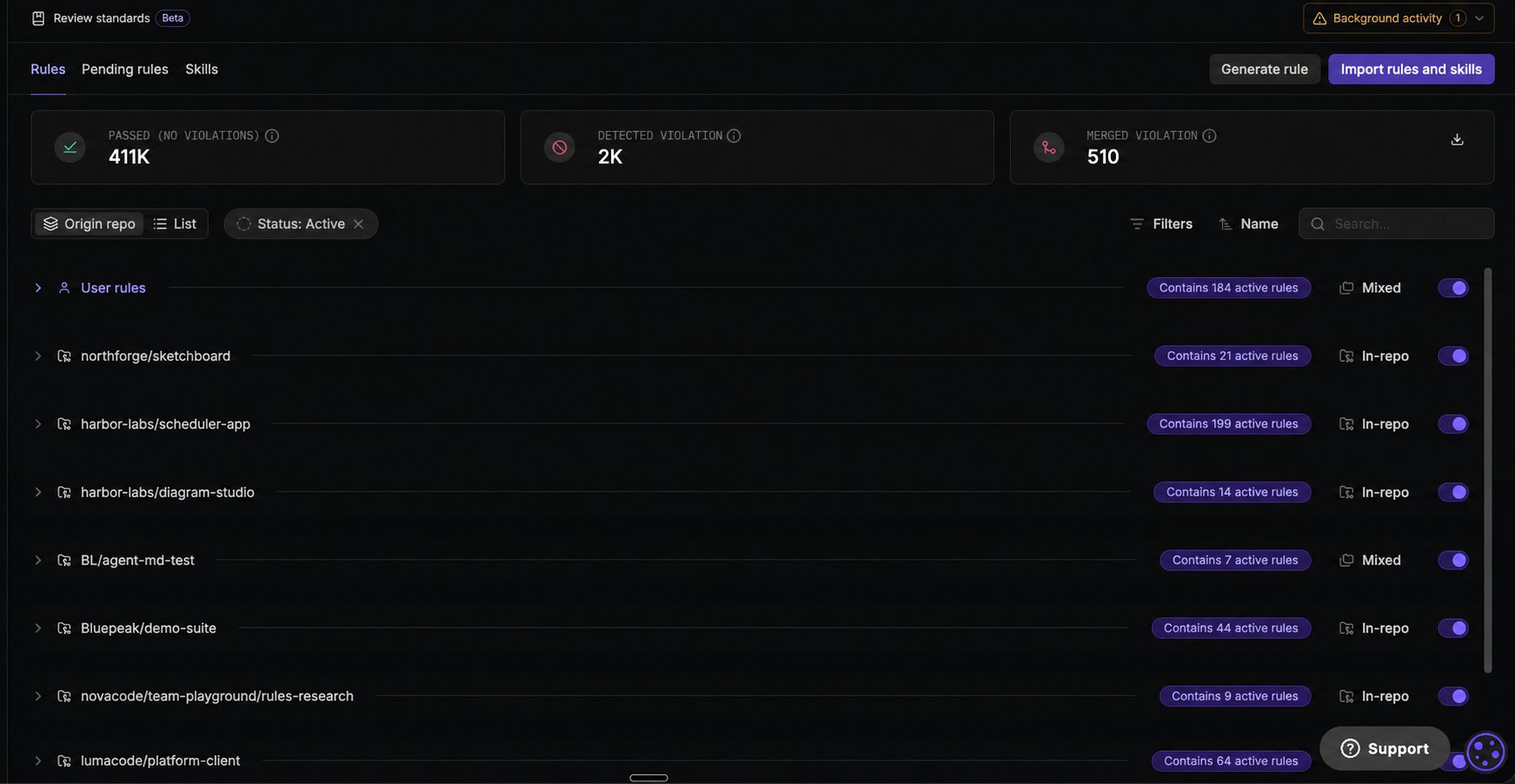
Qodo's documentation describes three parts. Git code review posts a summary and prioritized findings on each pull request. The Agentic Toolbox gives coding agents such as Claude Code, Codex and Kiro Qodo's review, codebase context and rules through a CLI, MCP or marketplace plugins. Code Governance is the portal where admins manage rules, see findings across repositories and track how teams respond. Underneath sits what Qodo calls its context engine, which indexes your repositories, past PR discussions and linked tickets.

Map built from Qodo's documentation (platform overview, Agentic Toolbox, integrations and What's New pages), Oct 4, 2026.
Well funded, widely installed in its CodiumAI days, and now competing in the most crowded corner of AI coding.
$40M Series A (Sep 30, 2024) plus $70M Series B led by Qumra Capital (Mar 30, 2026), per Qodo and its press release.
"Qodo: AI Code Review" listing, Oct 4, 2026. Lifetime installs, including the CodiumAI years. Not active users.
Qodo plugin on JetBrains Marketplace, Oct 4, 2026. Downloads include updates.
PR-Agent, the open source reviewer Qodo built and has since donated to a community organization (MIT license).
What an independent benchmark says
Martian publishes an open Code Review Bench with two views. Its offline benchmark tests tools against 50 hard-to-find bugs (as of Sep 8, 2026), and its offline leaderboard reports results across 1,050 scored PRs; its online tracker scores real open source pull requests from the last month. Qodo looks very different in the two.
Swipe the table sideways to see every column.
| Offline benchmark (F2 score) | F2 | Precision | Recall |
|---|---|---|---|
| #1 Qodo Deep | 65.1% | 67.1% | 64.6% |
| #2 Cubic Dev | 64.9% | 61.5% | 65.8% |
| #3 Augment | 64.0% | 59.5% | 65.2% |
| #4 Qodo (default) | 60.6% | 55.4% | 62.0% |
| #5 GitHub Copilot | 58.0% | 38.5% | 66.5% |
| #11 CodeRabbit | 51.1% | 32.6% | 59.5% |
Swipe the table sideways to see every column.
| Online leaderboard (F1 score) | F1 | Precision | Recall | PRs |
|---|---|---|---|---|
| #1 Cubic Dev AI | 65.3% | 72.0% | 59.7% | 38,359 |
| #3 CodeRabbit | 61.8% | 70.0% | 55.3% | 306,158 |
| #4 GitHub Copilot | 61.0% | 67.0% | 56.0% | 575,556 |
| #9 Qodo Code Review | 57.8% | 72.7% | 48.0% | 16,500 |
| #10 Cursor | 57.1% | 72.5% | 47.1% | 58,842 |
Swipe the table sideways to see every column.
| When | What changed |
|---|---|
| Sep 30, 2024 | CodiumAI announces its new name, Qodo, with a $40M Series A ($50M raised in total). |
| Feb 4, 2026 | Qodo 2.0: multi-agent pull request review replaces the older Qodo Merge experience. |
| Mar 11, 2026 | Qodo 2.2 changelog: Qodo is moving from code generation to code review; free users switched now, Teams users to review-only by the end of March. |
| Mar 30, 2026 | $70M Series B led by Qumra Capital; $120M raised in total. |
| Sep 1 and Oct 1, 2026 | Legacy v1 commands deprecated, then removed or moved to v2 alternatives. |
| Sep 7, 2026 | Qodo 2.9: Agentic Toolbox generally available as Claude Code and Codex plugins and a Kiro Power. |
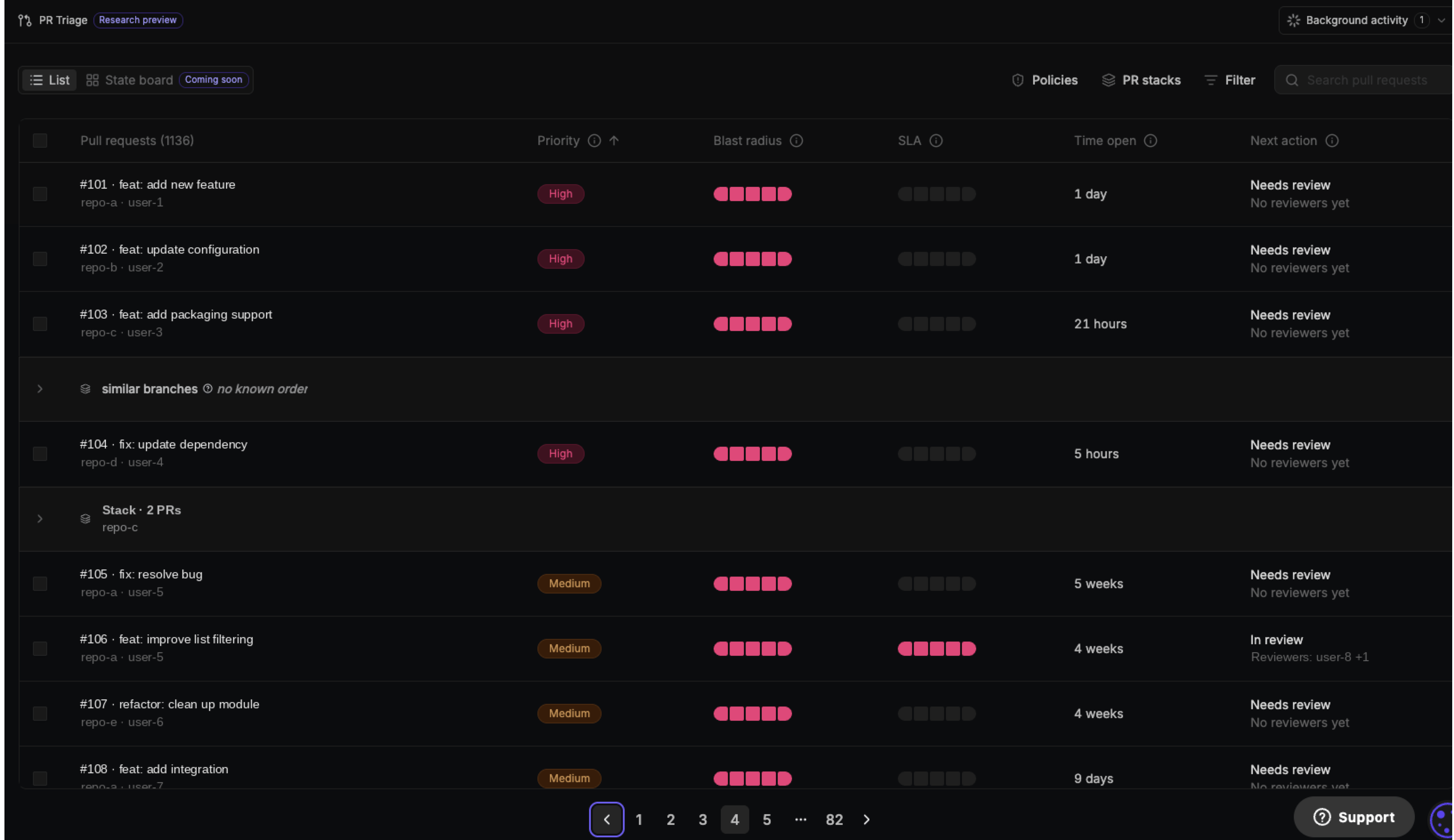
| Oct 1, 2026 | Qodo 3.0: PR Triage, onboarding wizard with review presets, analytics dashboard. |
Teams that use it value faster human review. Skeptics say AI reviewers, Qodo included, still add noise.
A developer whose team had used Qodo "for a while" called it "pretty helpful." They said it occasionally finds a serious issue, but the most useful parts were features that speed up a human review rather than replace it, such as the effort labels it adds to each pull request.
Several commenters lump Qodo in with other AI reviewers as noisy. One said Copilot and Qodo have "very high noise ratios" but "occasionally catch legit bugs" (Jan 21). One team said its thin in-house reviewer built on Claude and Codex beat both CodeRabbit and Qodo (Jun 5). Another found CodeRabbit and Qodo too noisy and built its own tool, later published as Revix AI (Sep 9). Another argued that Cursor Bugbot gives far more monthly quota for a similar price (Feb 4).
Older five-star reviews praise Qodo Gen as the most reliable AI coder the writers had tried. Later one-star reviews describe the chat panel stealing editor focus and PyCharm freezing, and an April 2026 reviewer objected that a forced update left only code review. An August 2026 reviewer called it useful with smooth integration, but said suggestion quality varies.
You buy a monthly pool of credits for the whole team, not seats. Unused credits expire; extra use bills at the same rate.
Free trial
14 days, no credit card.
- Unlimited reviews and credits
- Unlimited users during the trial
- Reviews pause when it ends unless you pick a plan
Pro Team 2,500
2,500 credits, about 18 reviews a month by Qodo's estimate.
- Agentic PR review, rules, Git and IDE integrations
- Monthly billing, no commitment
- Overage at $.012 per credit up to your cap
Pro Team 5,000 or 20,000
5,000 credits (about 36 reviews) or 20,000 credits (about 144 reviews) a month.
- Same features as the $30 pack
- Switch packs from the dashboard
- No self-serve annual plan
Enterprise
Annual contracts and negotiated pricing.
- SSO/SAML, audit logs, BYOK
- Single-tenant SaaS, on-prem or air-gapped
- Gerrit, self-learning rules, priority support
Swipe the table sideways to see every column.
| Plan | Monthly price | Credits | Qodo's review estimate |
|---|---|---|---|
| Free trial (14 days) | $0 | Unlimited | Unlimited |
| Pro Team | $30 | 2,500 | ~18 reviews |
| Pro Team | $60 | 5,000 | ~36 reviews |
| Pro Team | $240 | 20,000 | ~144 reviews |
| Overage | $.012 per credit | Up to your monthly cap | Same rate, no premium |
| Open source program | $0 | Core review only | Public GitHub repos with 200+ stars |
| Enterprise | Custom | Pooled | Negotiated |
Swipe the table sideways to see every column.
| Check you can do | Result (JAVIS arithmetic) |
|---|---|
| Price per credit, every pack | $30 / 2,500 = $60 / 5,000 = $240 / 20,000 = $.012 |
| Credits per review implied by Qodo's estimates | About 139 (2,500 / 18), so about $1.67 per review |
| What your month costs | The larger of your pack price or credits used × $.012, up to your cap |
| Example: about 80 reviews a month | About 11,100 credits: $60 pack plus overage = about $133; the 20,000 pack would cost $240 |
| Example: 15 reviews a month | About 2,100 credits: the $30 pack covers it |
Decide by review volume, how many repositories interact, and how strict your standards are.
Apply to Qodo's open source program: free core review for repos with 200+ stars.
Run the 14-day trial, read the credit dashboard, then expect the $30 pack. Compare with the AI review already in your Copilot or Cursor plan.
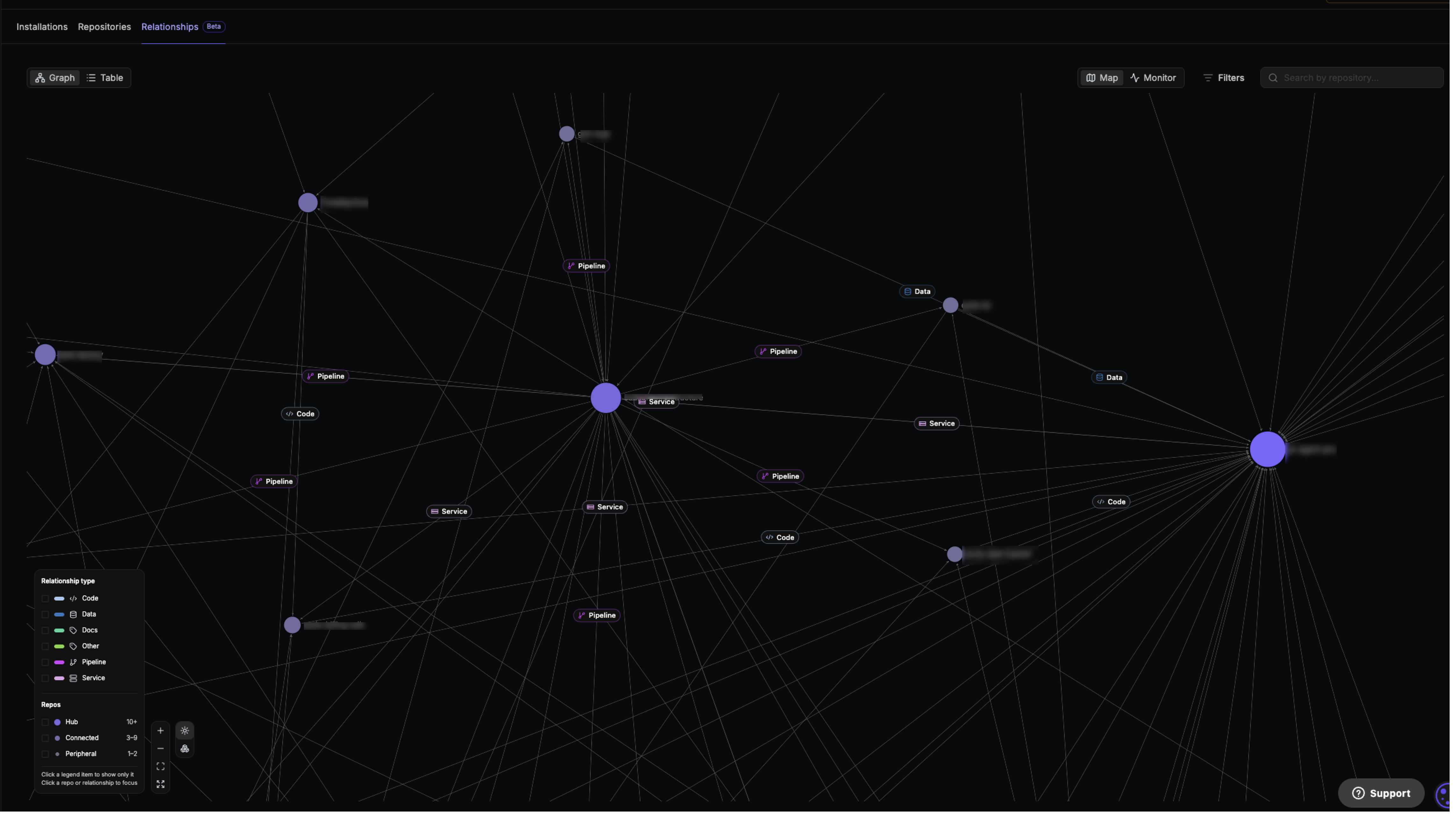
This is where Qodo is strongest: cross-repo context, Software Map and blast radius labels. Size the pack from trial usage.
Add the Agentic Toolbox so the agent runs Qodo's review and your rules before a PR exists.
Those are Enterprise-only. Talk to Qodo.
Qodo no longer aims to be that. Look at the alternatives below.
Every pull request gets a summary and prioritized findings, with evidence and a suggested fix.
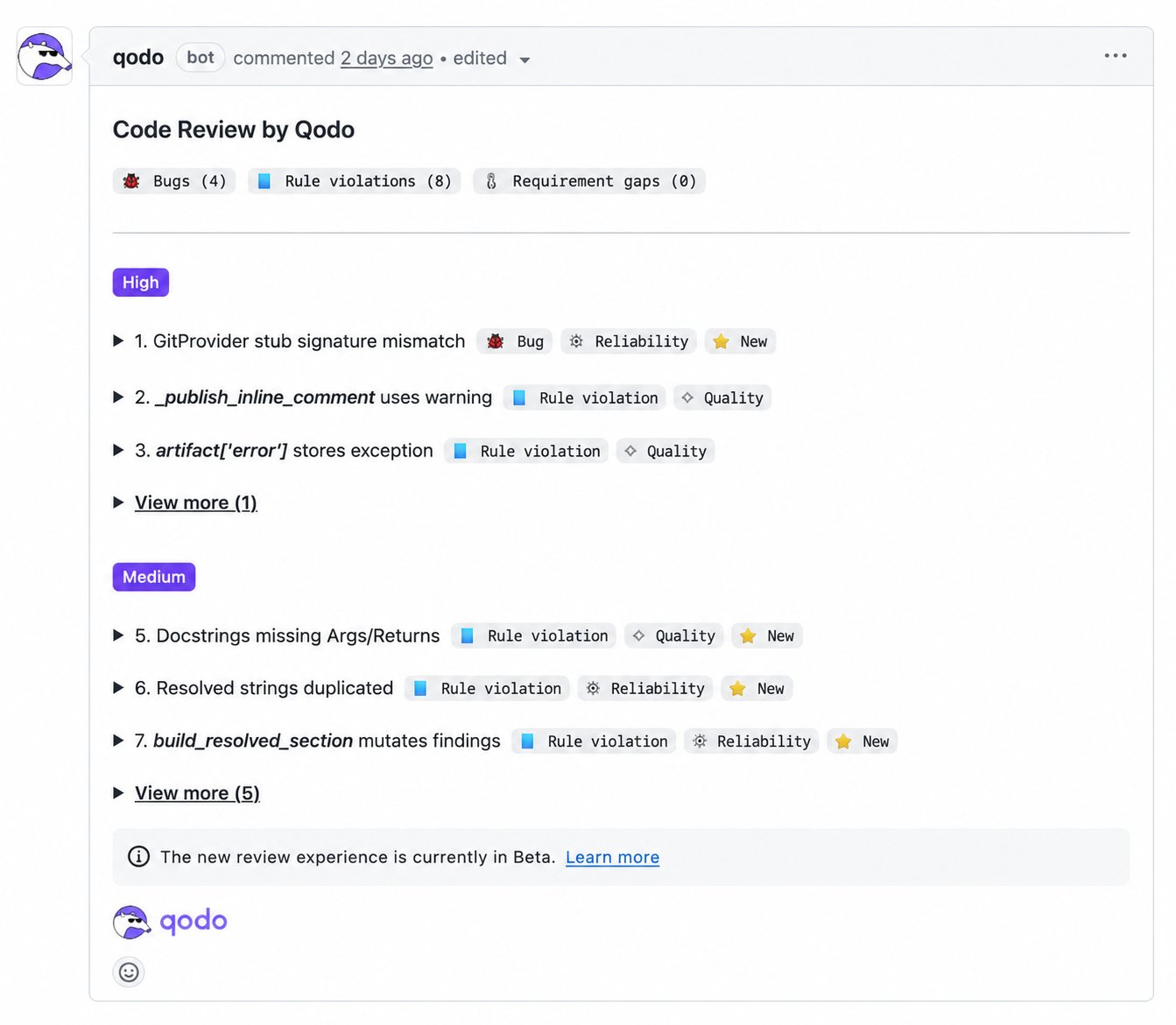
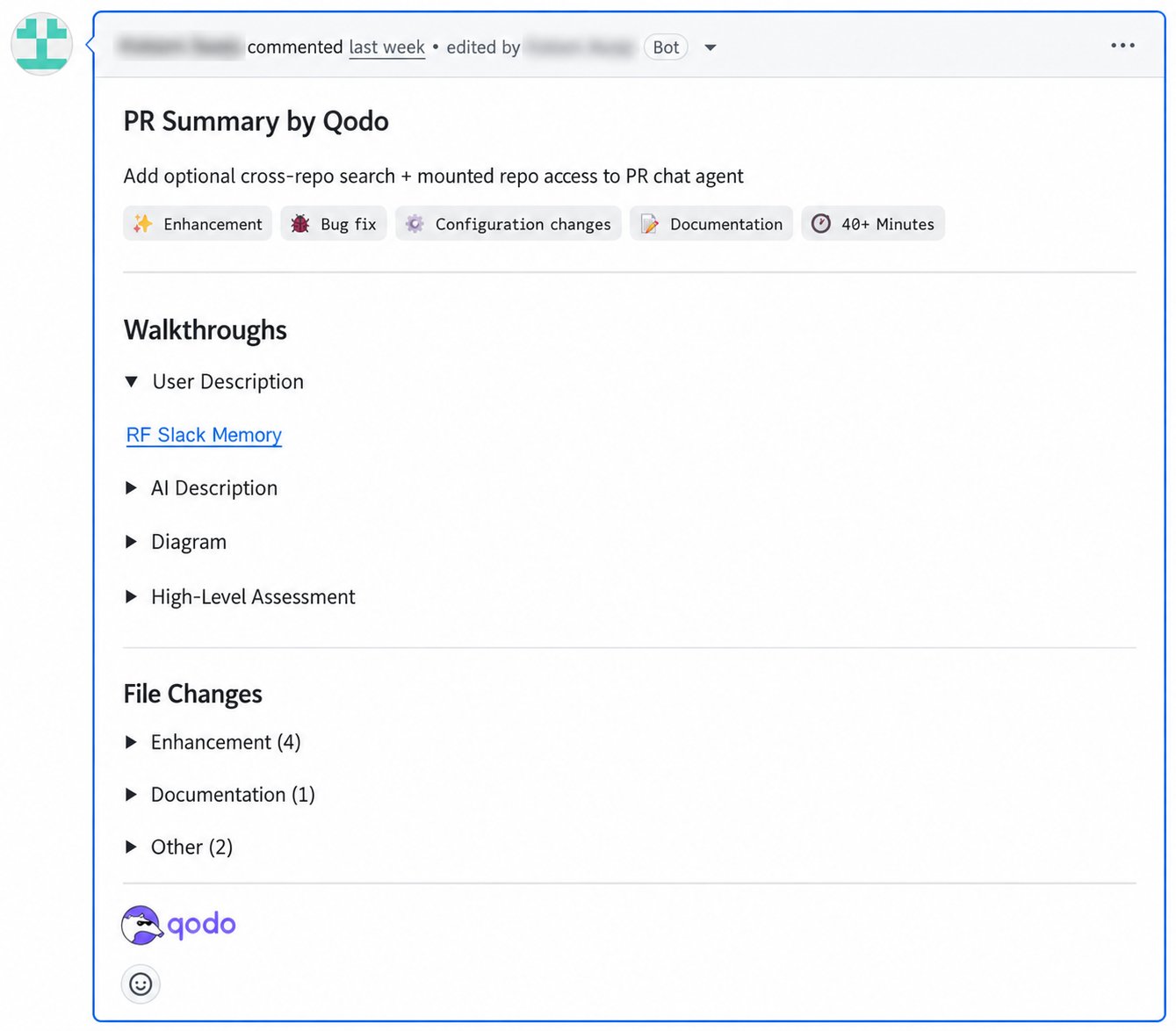
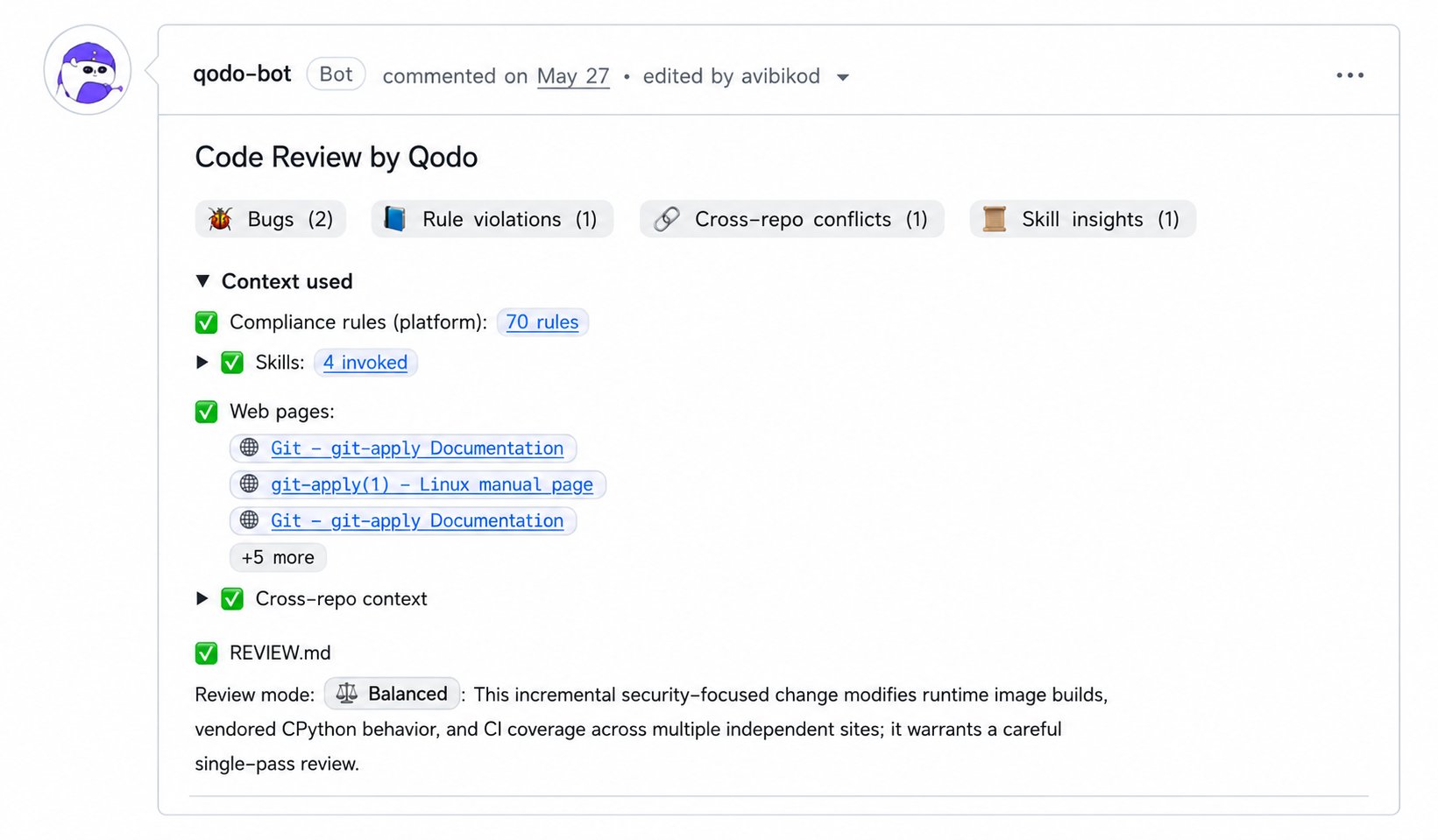
When a PR opens, Qodo posts a PR summary (labels, walkthroughs, an optional diagram and file changes) and a code review comment that groups findings by severity. Each finding is tagged as a bug, rule violation, requirement gap, cross-repo conflict and so on, and carries evidence plus a copy-paste prompt you can hand to your own coding agent. Developers can reply with /ask to question a finding, and Qodo tracks which findings were resolved on later pushes.
Swipe the table sideways to see every column.
| Review effort mode | What Qodo says it does |
|---|---|
| Auto (default) | Picks fast, balanced or deep per change, based on risk rather than diff size |
| Fast | Quick review for simple, low-risk changes such as docs |
| Balanced | The standard review used before effort modes existed |
| Deep | Most advanced model selection and multi-agent analysis; the mode that ranked first offline |
Qodo's own launch video for version 3.0 and its "software factory" governance pitch. Published Oct 1, 2026.
From the official "Qodo" YouTube channel (youtube.com/@QodoAI). Vendor video, so it shows the best case.
- Findings carry evidence and fix prompts, not just opinions.
- High precision on Martian's live leaderboard: when it flags something, it is more often real.
- Presets (Minimal, Standard, Comprehensive) and severity thresholds let you trade thoroughness for quiet.
- Recall on the live leaderboard is below the leaders: it will miss some issues.
- Several newer features (PR Triage, Spec and Design review agents, Web Search) are Research Preview, which Qodo says has no SLA and can produce low-quality results.
- Bitbucket and Gerrit get a reduced display, and CI-failure feedback is GitHub-only.
Rules and context go in once; review runs at the agent, in the IDE and on the PR; humans make the call.
The idea Qodo keeps repeating is "shift left": catch issues while the code is still in the developer's or agent's hands, so the pull request review is shorter. The rules system is what ties the stages together, because the same rules are used by the agent before the PR and by the reviewer on it.
Instead of competing with Claude Code or Codex, Qodo now plugs into them.
The Agentic Toolbox, generally available since Qodo 2.9 (Sep 7, 2026), installs as a Claude Code plugin, a Codex plugin, a Kiro Power, a CLI or an MCP server. Your agent then calls Qodo skills on its own: pull the rules for the task before writing, run Qodo's reviewer on local changes, and resolve findings. Qodo notes the Toolbox is a separate product from the deprecated Qodo Command and Qodo Gen command-line tools.
Swipe the table sideways to see every column.
| Skill | Stage | What it does |
|---|---|---|
| Get Rules (optional) | Write | Fetches the rules that apply to the task before code is generated |
| Codebase Wisdom | Understand | Gives the agent dependencies, impact and recent changes |
| Review | Review | Runs Qodo's PR review engine on local changes |
| Review Resolver | Resolve | Pulls Qodo findings into the agent and fixes them |
| Manage Standards | Govern | Creates, updates and retires team rules |
Qodo's walkthrough of agent-to-agent code review with the Toolbox. Published Sep 9, 2026.
From the official "Qodo" YouTube channel (youtube.com/@QodoAI). Vendor video.
Five Git platforms, three ticket trackers, three IDEs, and deployment from shared cloud to air-gapped.
Swipe the table sideways to see every column.
| Git platform | Multi-tenant | Single-tenant | On-prem | Air-gapped |
|---|---|---|---|---|
| GitHub Cloud | Yes | Yes | Yes | N/A |
| GitHub Enterprise Server | No | Yes | Yes | Yes |
| GitLab Cloud | Yes | Yes | Yes | N/A |
| GitLab Self-Managed | No | Yes | Yes | Yes |
| Bitbucket Cloud | Yes | Yes | Yes | N/A |
| Bitbucket Data Center | No | No | Yes | Yes |
| Azure DevOps Cloud | Yes | Yes | No | N/A |
| Gerrit | No | No | Yes | Yes |
Swipe the table sideways to see every column.
| Connects to | Tools | Status |
|---|---|---|
| Ticket trackers | Jira, GitHub Issues, Linear | Available; used to find requirement gaps |
| Specs and design | Confluence, Notion, Figma | Research Preview |
| IDE extension | VS Code, Visual Studio, JetBrains IDEs | Per developer install; local review |
| Coding agents | Claude Code, Codex, Kiro; any MCP client | Agentic Toolbox, generally available |
| IT and assets | ServiceNow, Jira Service Management Assets | Through your Qodo account manager |
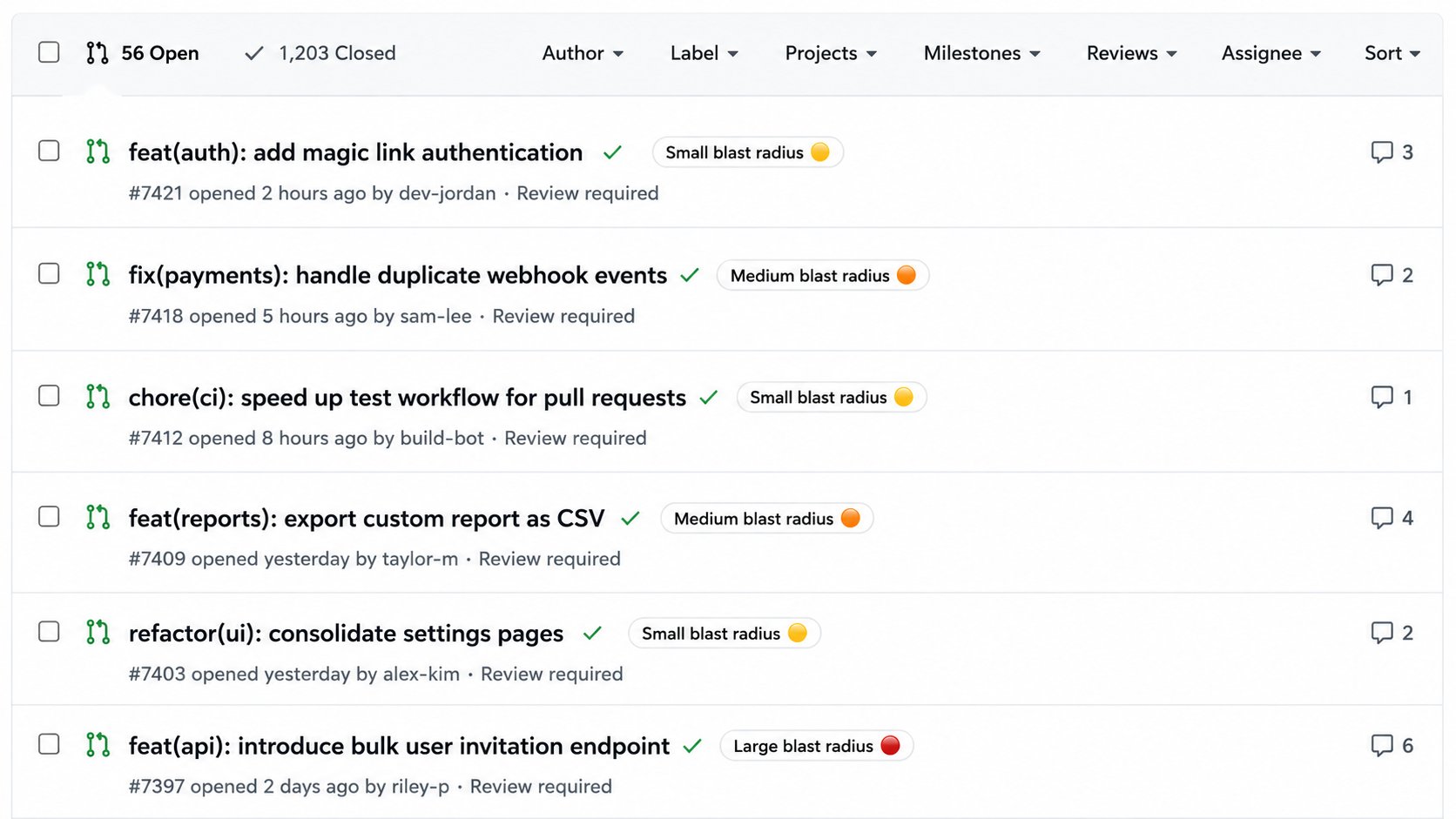
The portal is what the money buys at team scale: one queue, one map, one record of findings.
Swipe the table sideways to see every column.
| Cost driver | What happens |
|---|---|
| PR size and complexity | Larger or more complex reviews draw more credits, per Qodo |
| Review effort mode | Auto routes risky changes to deeper reviews |
| Re-reviews on new pushes | Each review draws credits, not each PR |
| Running out mid-month | Reviews keep running as overage at $.012 per credit until your cap; you get warnings first |
| Unused credits | Expire at the end of each monthly cycle |
| Number of developers | Not billed per seat; developers do not need Qodo accounts for PR review |
Qodo says it does not train on your code, holds SOC 2, and offers on-prem with your own model endpoint for Enterprise.
Swipe the table sideways to see every column.
| Control | What Qodo says |
|---|---|
| Training on your code | "Qodo does not train models on your code"; code is used only to generate reviews for your team |
| Data retention | "Strict data retention" listed on both Pro Team and Enterprise |
| Certifications | Trust Center lists SOC 2; the SOC 2 Type II report and a penetration test are available on request |
| Identity and audit | SSO/SAML and audit logs are Enterprise-only |
| Your own models | BYOK on Enterprise; on-prem can route to OpenAI, Anthropic, Vertex AI, AWS Bedrock or a self-hosted OpenAI-compatible endpoint |
| Deployment | Multi-tenant SaaS on Pro Team; single-tenant, on-prem and air-gapped on Enterprise |
| Who can trigger reviews | Admins can restrict reviews to registered users and make sign-up invite-only |
Best for engineering teams with many repositories, written standards and heavy agent-written code.
Swipe the table sideways to see every column.
| Situation | Why Qodo fits or not | Likely plan |
|---|---|---|
| Platform team with dozens of services | Cross-repo conflicts, Software Map, blast radius | Pro Team 20,000 or Enterprise |
| Team standardizing on Claude Code or Codex | Toolbox runs the same rules and reviewer before the PR | Pro Team |
| Regulated company | On-prem, air-gapped, BYOK, audit logs | Enterprise |
| Popular open source project | Free core review for 200+ star GitHub repos | Open source program |
| Small startup, a few PRs a week | Works, but compare with review already in your Copilot or Cursor plan | Trial, then $30 |
| Solo developer wanting code generation | Qodo moved away from generation; no permanent free tier | Look elsewhere |
Six real gaps, not manufactured ones.
After 14 days, reviews pause unless you pay; only eligible open source repositories get free review.
Hacker News commenters in 2026 call AI reviewers, Qodo included, noisy. Presets help, but you must tune them.
On Martian's live leaderboard Qodo's default reviewer found 48.0% of issues, against 59.7% for the top tool.
CodiumAI and Qodo Gen users lost code generation features; v1 commands were removed on Oct 1, 2026, some with no replacement.
PR Triage, Spec and Design review agents and Web Search are Research Preview, with no SLA.
The pricing page says Pro Teams supports up to 30 users; the docs say unlimited users per workspace.
Qodo wins on governance across many repositories. Others win if review is a side feature of a tool you already pay for.
Swipe the table sideways to see every column.
| If you mostly need... | Compare Qodo with... |
|---|---|
| Review bundled with your coding assistant | GitHub Copilot review (#4 on the live leaderboard) |
| An AI editor with its own PR reviewer | Cursor review (Cursor #10 live) |
| Deep codebase context for large repos | Augment Code review (#3 offline) |
| An autonomous agent that also reviews | Devin review (#7 live) |
| A dedicated AI PR reviewer | CodeRabbit, Greptile or Cubic (no JAVIS review yet; all rank above Qodo's default reviewer on the live leaderboard) |
| Free and self-hosted | PR-Agent, the open source project Qodo donated (MIT, community-maintained) |
Swipe the table sideways to see every column.
| Ways in (verified Oct 4, 2026) | What you pay | What you get |
|---|---|---|
| Free trial | $0 for 14 days | Everything, unlimited reviews |
| Open source program | $0 | Core PR review on eligible public GitHub repos |
| Pro Team | $30, $60 or $240 a month | Shared credits, full review platform, up to 30 users per the pricing page |
| PR-Agent (self-host) | Your own model costs | The original open source reviewer, without Qodo's platform |
No affiliate relationship shapes this review.
JAVIS has no affiliate arrangement with Qodo. Every call to action in this article points to Qodo's official site. If that ever changes, the facts, limitations and alternatives here will not.
Start the 14-day trial on your busiest repositories and watch the credit dashboard.
Open QodoRead the alternative that matches your real question.
Choose the next articleQodo sits between coding assistants, coding agents and code review tools.
Every card below links to a published JAVIS review.

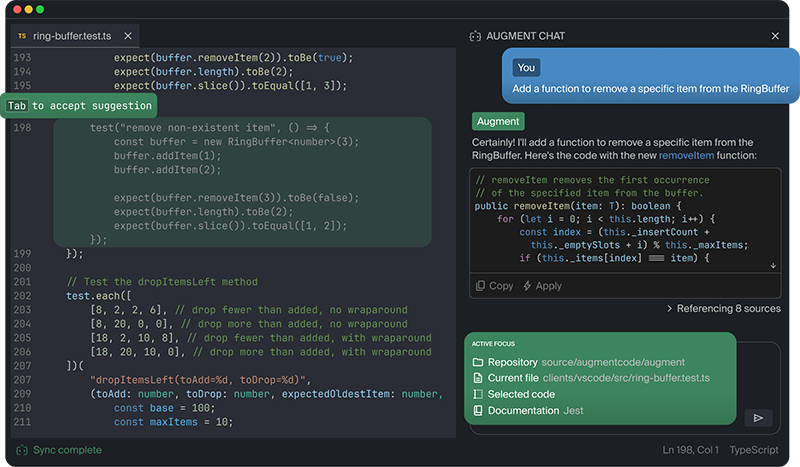

Card images are official product images.
Questions people are actually asking
Is Qodo the same as CodiumAI?
Yes. CodiumAI renamed itself Qodo in September 2024. The product has changed since then: it moved from code and test generation to AI code review and governance during 2026.
How much does Qodo cost in October 2026?
Pro Team credit packs cost $30 a month for 2,500 credits, $60 for 5,000 and $240 for 20,000, shared by the whole workspace. Extra use bills at $.012 per credit up to a cap you set. Enterprise pricing is custom.
Is there a free version of Qodo?
There is a 14-day free trial with unlimited reviews and no credit card. There is no permanent free tier, except Qodo's open source program for public GitHub repositories with 200 or more stars.
How many reviews do I get?
Qodo estimates about 18 reviews for 2,500 credits, 36 for 5,000 and 144 for 20,000. Bigger or more complex reviews use more credits, so measure during the trial.
Does Qodo train on my code?
Qodo says it does not train models on your code and uses it only to generate your team's reviews. Its Trust Center lists SOC 2.
Which Git platforms does Qodo support?
GitHub, GitLab, Bitbucket, Azure DevOps and Gerrit. Bitbucket Data Center and Gerrit are on-prem only, and some display features are reduced on Bitbucket and Gerrit.
Is PR-Agent the free version of Qodo?
No. PR-Agent is the open source reviewer Qodo built and then donated to a community organization. Its own repository says it is not the Qodo free tier.
What are the best Qodo alternatives?
GitHub Copilot's code review if you already pay for Copilot, Cursor's reviewer if you use Cursor, Augment Code for deep context, and dedicated reviewers such as CodeRabbit, Greptile or Cubic.
Where this came from, and when it was checked.
Pricing and plans: qodo.ai/pricing (credit packs, FAQ and plan comparison) and Qodo's pricing and usage and open source program documentation, as of Oct 4, 2026.
Product and features: Qodo documentation: platform overview and architecture, code review, review effort mode, Agentic Toolbox, integrations, deployment model support, Git provider feature support, Research Preview program, What's New (Qodo 2.9, 2.10 and 3.0), the changelog and the legacy v1 command sunset page.
Security: qodo.ai/pricing FAQ, trust.qodo.ai (updated Jun 17, 2026) and Qodo's on-prem documentation (vendor statements).
Market: Qodo blog post of Mar 30, 2026 on its Series B; PR Newswire release of Sep 30, 2024 on its Series A; the Martian Code Review Bench online and offline leaderboards as shown on Oct 4, 2026; the VS Code Marketplace and JetBrains Marketplace listings for Qodo; the PR-Agent repository.
Users: JetBrains Marketplace reviews of the Qodo plugin (Oct 2025 to Aug 2026); Hacker News comments 46334186, 46712069, 46892883, 48407230, 49621594 and 45880645.
Official videos: youtube.com/watch?v=F3JIgs5VrmU and iFCaYAKafQI, both from the official Qodo channel.
JAVIS Fit Score (72/100): editorial composite of review depth and independent benchmark standing (good: first offline in Deep mode, ninth live), governance and cross-repo features (strong), agent integration (strong), pricing clarity and entry cost (mixed: no permanent free tier, conflicting user limits), user sentiment on noise and the pivot (weak to mixed), security and deployment options (strong on Enterprise). Weighted by editorial judgement.