
HubSpot Review 2026: The Free CRM, Starter From $7 a Seat, and What Professional Really Costs
HubSpot sells a free CRM and six paid hubs; the two most small teams meet first are Marketing Hub and Sales Hub, each in Starter, Professional and Enterprise editions, plus a Starter bundle of every hub. As of Oct 27, 2026, the free tools cost $0 for up to two users, and HubSpot's pricing pages show Starter from $7 a seat a month for new customers paying annually. The catches sit one level down: the free edition holds 1,000 contacts, Marketing Hub Professional starts at $800 to $890 a month plus a $3,000 onboarding fee, marketing contacts move you up a price tier automatically, and paid plans renew on their own with no refunds mid-term.
Every HubSpot link in this review goes straight to hubspot.com, its legal pages or its knowledge base.
| Made by | HubSpot, Inc., Cambridge, Massachusetts; NYSE: HUBS; says it has 306,000+ customers in over 135 countries |
| What it is | A CRM with marketing, sales, service, content, data and revenue hubs on top, plus Breeze AI agents paid with HubSpot Credits |
| Free | $0, up to 2 users, 1,000 contacts, 2,000 marketing emails a month with HubSpot branding |
| Paid | Starter from $7 a seat (offer, list $20), Marketing Pro from $800 to $890 a month, Sales Pro from $90 to $100 a seat |
| Best for | Small teams that want marketing and sales on one CRM and can plan for the jump to Professional |
HubSpot's free CRM is still a real, no-cost way to start. The bill gets serious the day you need Professional.
$0 gets two people a real CRM. $7 a seat removes the branding. $890 a month is where automation at scale begins.
That ladder is the honest summary of HubSpot in 2026. The free tools are a genuine CRM, not a trial: HubSpot's free CRM page says "it's 100% free with no expiration date", and you get contacts, deals, pipelines, a shared inbox, forms, landing pages, live chat and Breeze Assistant. The limits are tighter than many people remember, though. HubSpot's Product & Services Catalog, as of Oct 27, 2026, describes the free tools as a "single free edition (with up to two free users)" and lists a contact limit of 1,000 for free accounts. Internet Archive copies of the same catalog show five free users in March and September 2024, two users by Oct 6, 2024, and the 1,000-contact line by Nov 4, 2024.
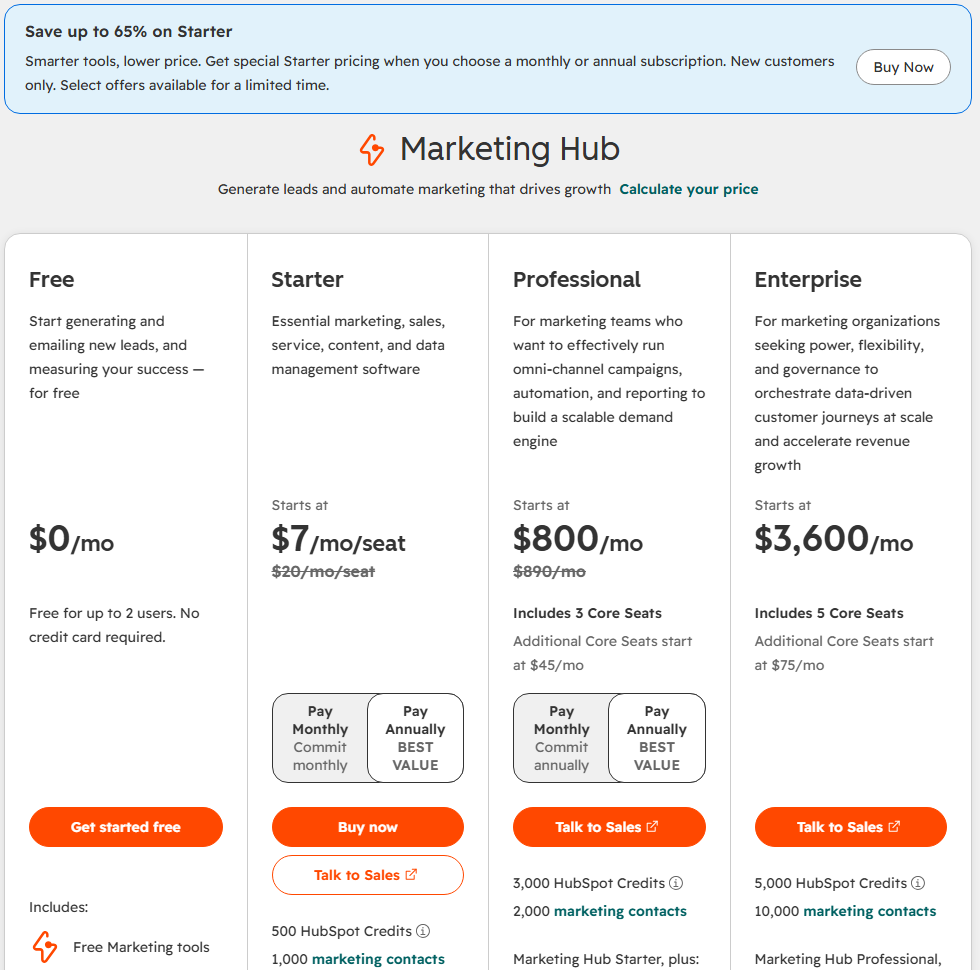
Starter is where most small businesses land, and right now it is cheap. The pricing pages show Starter at $7 a seat a month with "Pay Annually" selected, struck through from $20, and the Starter bundle page offers $10 a month if you pay monthly. Both are new-customer discounts. HubSpot's free CRM page advertises Starter at $15 a seat with an offer that "has no set end date", and the catalog lists $20. That is four prices for one seat on the same day, which we lay out in the Starter price table.
The real decision is Professional. Marketing Hub Professional lists at $890 a month for three seats and 2,000 marketing contacts, shown as $800 on the pricing page with annual payment, plus a required one-time $3,000 onboarding fee. Sales Hub Professional is $100 a Sales Seat at list ($90 shown with annual payment) plus $1,500 onboarding. Add marketing contacts, which bump you into the next tier the moment you pass your limit, and a paid contract that HubSpot's Terms say you cannot cancel or get refunded before it ends. None of that is hidden, but it is spread across the catalog, the Terms and the knowledge base.
One CRM database, six hubs on top, and seats plus credits as the meters.
Everything in HubSpot hangs off Smart CRM, the shared database of contacts, companies, deals and tickets. The hubs add tools on top: Marketing Hub for email, forms, ads and automation; Sales Hub for pipelines, sequences, calling and forecasting; Service, Content, Data and Revenue Hubs for support, websites, data syncs and quotes. Paid editions are sold by the seat (seat prices already appear in a catalog copy from Mar 24, 2024), and HubSpot Credits pay for AI agents and some automated actions. Marketing Hub adds a third meter: marketing contacts.
Swipe sideways to see the whole diagram.
The public site shows no live account, but the free CRM page carries HubSpot's own illustration of a contact record with the actions you get on it: note, email, call, task, meeting, Summarize with AI and Export contact data. We masked the sample person's photo and details.

Seat pricing arrived in 2024, the free edition shrank, and credits now meter the AI.
If your picture of HubSpot comes from a few years ago, three things are different. Paid editions are sold by the seat, and the catalog's list prices are the same in every copy we compared from Mar 24, 2024 to Oct 27, 2026. The free edition went from five users to two and gained a 1,000-contact limit in late 2024. And HubSpot's agents, from the customer agent to the prospecting agent, now run on a credit meter with a published rate sheet.
| Date | What HubSpot's own pages show |
|---|---|
| Mar 24, 2024 | Catalog copy: Marketing Hub Starter from $20 a seat, Professional $890 a month with 3 Core Seats, Enterprise $3,600; Sales Hub $20, $100 and $150 a seat; free tools "with up to five free users" |
| Sep 5, 2024 | Catalog copy: still five free users |
| Oct 6, 2024 | Catalog copy: free edition now "with up to two free users" |
| Nov 4, 2024 | Catalog copy: "Up to 1,000 contacts in free accounts" appears |
| Sep 16, 2026 | Customer Terms, Product Specific Terms, DPA, Acceptable Use Policy and Privacy Policy last modified; extra credits bought from this date default to pay-as-you-go instead of auto-upgrade |
| Oct 27, 2026 | Same list prices; Starter offers of $7, $10 and $15 a seat on different pages; a limited-release flexible seats-and-credits plan in euros is published |


Today's catalog says the same thing in two places. The free tools page keeps the two-user rule, and the technical limits table puts free accounts at 1,000 contacts against 15 million for paid accounts.


A public company with a large paying base, and a mobile app with tens of thousands of ratings.
HubSpot is not a startup you need to worry about disappearing. It trades on the New York Stock Exchange, its site says it has 306,000+ customers, and Wikipedia's infobox, citing the company's annual report, lists revenue of US$3.13 billion for 2025. Those figures measure different things, so keep them apart: customers are paying accounts as HubSpot counts them, app ratings come from mobile users only, and neither is market share.
| Signal | Value | What it measures |
|---|---|---|
| Customers | 306,000+ in over 135 countries | Paying customers, as HubSpot states on its Starter and free CRM pages |
| Revenue | US$3.13 billion (2025) | Annual revenue, per Wikipedia citing HubSpot's 10-K |
| Integrations | Over 2,000 apps | HubSpot Marketplace listings, vendor-stated |
| App Store (US) | 4.74 from 15,829 ratings | HubSpot mobile app, version 5.5.0 of Oct 23, 2026 |
| Google Play (US) | 4.5 stars, 13.6K reviews, 1M+ downloads | HubSpot Android app, updated Oct 22, 2026 |
| Product pace | 134 updates in the Fall 2026 Spotlight | Items HubSpot lists as new or updated |
HubSpot also publishes its own outcome claims, for example that after one year customers "acquire 129% more leads, close 36% more deals". The page does not say how that was measured, so treat it as marketing, not evidence.
The app gets good marks. The complaints are about price jumps and getting value from the paid hubs.
Independent evidence is thinner than for a consumer app. G2, Capterra and TrustRadius figures are not used here; the numbers below come from the US app stores and Hacker News. The store figures are large samples but cover only the mobile app. The Hacker News comments are a handful of individual opinions; we quote them for the patterns they show, not as a verdict.
“look at the price jump between starter and professional”
The commenter adds that the next tier is "suddenly $266/seat/month", his own division of the Professional price by its three seats.
“They were so sold on the hubspot promise they dedicated a significant amount of time and money to try to make the thing do what they expected”
About the ads reporting tools; the team then priced custom development around it.
“we switched to Active Campaign. So much better for us and way cheaper.”
Posted under a thread asking whether HubSpot is aggressive about collections.
| Source | Rating | Sample | Read as |
|---|---|---|---|
| Apple App Store, US | 4.74 / 5 | 15,829 ratings | Mobile users broadly satisfied with the companion app |
| Google Play, US | 4.5 / 5 | 13.6K reviews | Same pattern on Android |
| Hacker News, 2024 to 2026 | No score | 4 relevant comments | Price jump to Professional, cost of custom work, switching for price; one 2024 comment expected the seat change to hit small startups |
The pattern matches the pricing. Nobody in this small sample complains that the free CRM is bad; the friction starts when a team needs Professional features and meets a price several times higher, or when paid tools need extra work before they deliver what the team expected.
Free, Starter, Professional, Enterprise: the plans and what each one is really for.
HubSpot showed every price in US dollars on Oct 27, 2026, after detecting our location as Vietnam; the currency menu also offers euros, pounds and others. Its pricing pages opened with "Pay Annually" selected, so the big numbers are annual-commitment prices. The catalog on legal.hubspot.com gives the list prices behind them.
Up to 2 users, 1,000 contacts, 2,000 marketing emails a month with HubSpot branding, 10 custom properties.
Per seat a month: $7 billed annually or $10 monthly as new-customer offers; $20 list. 500 credits, 1,000 marketing contacts, no branding.
Marketing Hub: $890 list a month with 3 seats and 2,000 marketing contacts ($800 shown with annual payment) plus $3,000 onboarding. Sales Hub: $100 a Sales Seat list ($90 shown) plus $1,500.
Marketing Hub a month with 5 seats and 10,000 marketing contacts, billed annually, plus $7,000 onboarding. Sales Hub $150 a seat plus $3,500.

The Starter column on HubSpot's "Free Tools" pricing page is the whole Starter bundle, which the site's menu now calls the Small Business Bundle: Marketing, Sales, Service, Content and Data Hub Starter for the same starting seat price as one Starter hub, with 1,000 marketing contacts and 500 credits.


HubSpot's own Free versus Starter table on the Starter page is the clearest statement of the free limits: basic CRM with 10 custom properties and 1,000 total contacts, 2 users, one automated action per email, and no agents or payment processing.

The catalog is the page to trust for the full picture, because it shows what the pricing cards leave out: seats included, extra seat prices, credits, marketing contacts and onboarding fees.
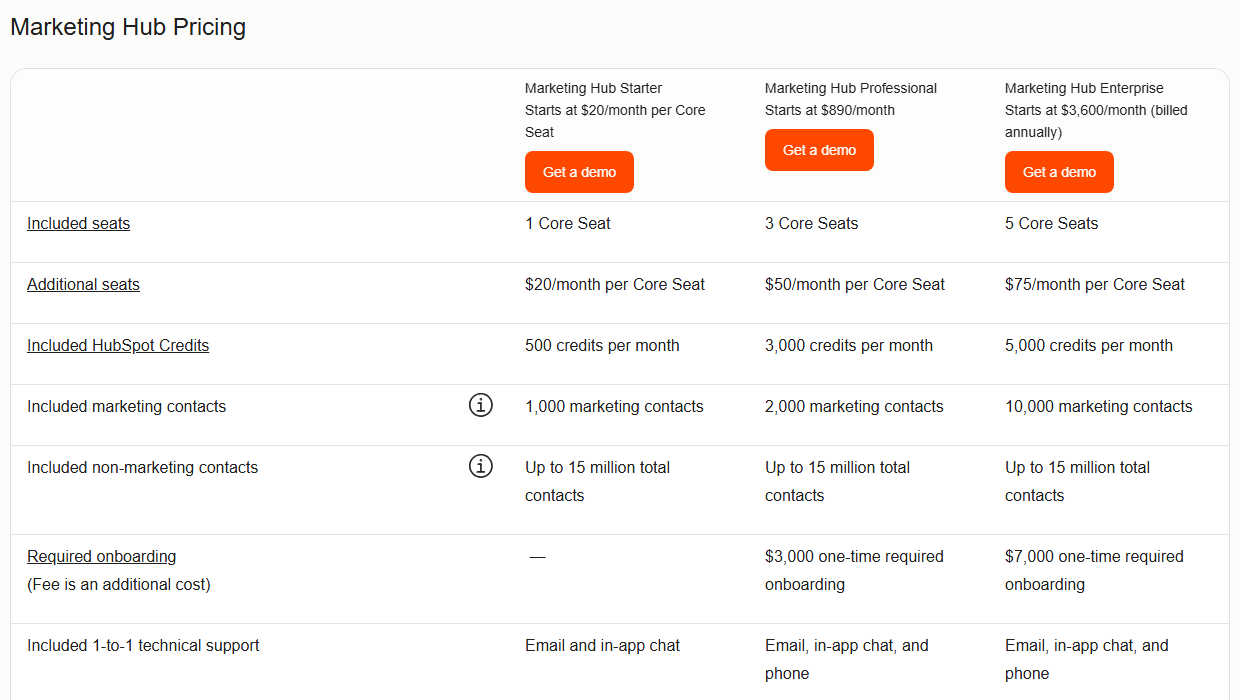

Seats explain why the Professional price is not "per user" in the usual sense. A Core Seat gives access to every product you buy at your highest edition, and Sales Hub's advanced selling tools need a more expensive Sales Seat. If you mix editions, the catalog says all Core Seats are "priced based on the highest level of your subscription services".

HubSpot's own pages quote $7, $10, $15 and $20 for the same Starter seat.
This is not an error so much as stacked offers, but it matters when you budget. Each figure below was on a HubSpot page on Oct 27, 2026. The cheapest two are limited-time new-customer discounts; the $15 offer "has no set end date"; the $20 list price is what the Terms allow HubSpot to move you toward at renewal.
Swipe sideways to see the whole table.
| Item | Pricing pages | Starter bundle page | Free CRM page | Catalog (list) |
|---|---|---|---|---|
| Starter seat, a month | $7 (Pay Annually), struck $20 | $7 billed annually, $10 billed monthly | $15, offer with no set end date | $20 per Core Seat |
| Marketing Hub Professional | $800 (Pay Annually), struck $890 | Not shown | Not shown | $890 a month |
| Extra Marketing Pro seat | From $45 a month | Not shown | $50 a seat (CRM Professional) | $50 per Core Seat |
| Sales Hub Professional seat | $90 (Pay Annually), struck $100 | Not shown | Not shown | $100 per Sales Seat |
| Name of the bundle | Starter (Free Tools page) | HubSpot Starter | Plan card named Starter | Customer Platform |

Four realistic setups, priced from HubSpot's own numbers.
These examples use the catalog's list prices and the pricing pages' annual-payment prices on Oct 27, 2026, in USD before tax. Marketing contact charges use the catalog's tier rates; the pages do not say whether the new-customer seat discount also applies to contact tiers, so we assume it does not.
Swipe sideways to see the whole table.
| Setup | What you pay for | A month | First year | At list price |
|---|---|---|---|---|
| Solo founder, Starter | 1 seat | $7 (annual offer) or $10 (monthly offer) | $84 or $120 | $240 a year |
| 3-person team, Marketing Hub Starter, 3,000 marketing contacts | 3 seats + 2 contact blocks of 1,000 at $50 | $121 with the seat offer | $1,452 | $1,920 a year |
| Sales team of 5, Sales Hub Professional | 5 Sales Seats + $1,500 onboarding | $450 shown with annual payment | $6,900 | $7,500 |
| Marketing team, Marketing Hub Professional, 10,000 marketing contacts | Base with 3 seats + 2 blocks of 5,000 at $250 + $3,000 onboarding | $1,300 shown with annual payment | $18,600 | $19,680 |
Two things stand out. First, the step from Starter to Professional is the whole story: one Marketing Hub Starter seat lists at $20 a month and Marketing Hub Professional at $890, about 44 times more, before onboarding. Second, contacts can matter as much as seats. On Marketing Hub Professional, every block of 5,000 marketing contacts above 2,000 adds $250 a month at the first tier, so a list of 22,000 contacts adds $1,000 a month to the base price.
| Edition | Included | Price per extra block |
|---|---|---|
| Starter | 1,000 marketing contacts | $50 per 1,000 (to 3,000), $45 (to 5,000), $40 above |
| Professional | 2,000 marketing contacts | $250 per 5,000 (to 22,000), falling to $150 above 82,000 |
| Enterprise | 10,000 marketing contacts | $100 per 10,000 (to 50,000), falling to $60 above 500,000 |
Automatic tier upgrades, no mid-term exits, and a renewal that can move to list price.
HubSpot's paid plans behave like annual business contracts, even when you pay monthly. Five rules are worth reading before you buy.
1. One contact too many moves you up a tier, for the rest of the term
The knowledge base article on marketing contacts billing (updated Aug 14, 2026, as read on Oct 27, 2026) is blunt: "If you exceed your current tier by even one marketing contact, you’ll be upgraded to the next contact tier." It adds that "contact tier upgrades occur automatically and cannot be prevented once the limit is exceeded", and "You are billed for the higher contact tier until your subscription's next renewal date, even if your marketing contact count later drops." You can set a maximum number of marketing contacts so imports and forms stop creating them, but it is off unless you turn it on.

2. You cannot cancel or downgrade mid-term
Section 4.1 of the Customer Terms of Service (last modified Sep 16, 2026) says you may not cancel before the end of your current term "and we will not provide any refunds of prepaid fees or unused Subscription Fees through the end of your Current Term." The knowledge base repeats it: "Mid-contract downgrades are not permitted." and "Mid-contract cancellations are not permitted." To leave, you turn off auto-renewal and keep paying until the term ends.


3. Renewal can bring you up to list price
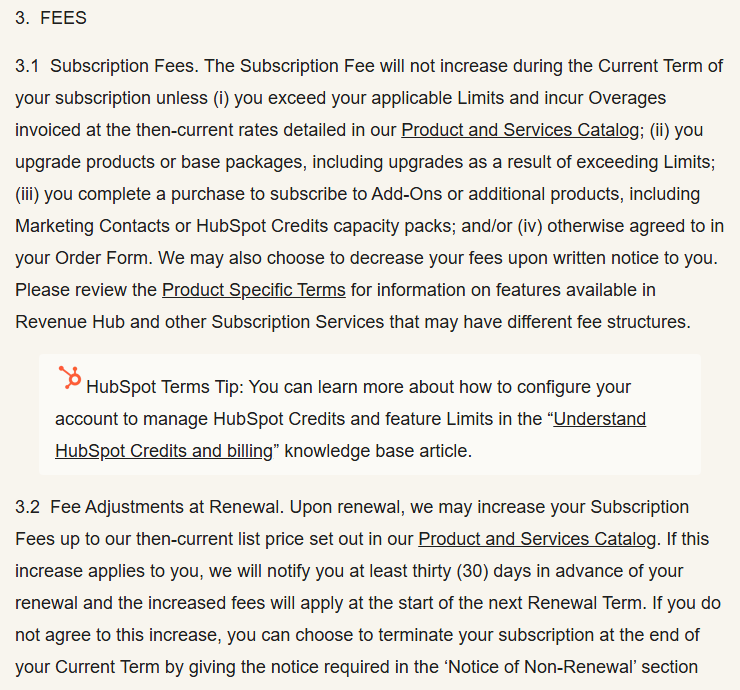
Section 3.1 fixes your fee during the term unless you pass a limit, upgrade or add products. Section 3.2 then allows an increase at renewal "up to our then-current list price", with at least 30 days' notice. If you bought Starter at $7, the list price on Oct 27, 2026 was $20.
4. Free services can be cut back at any time
Section 4.4.4 says: "We may suspend, limit, or terminate the Free Services for any reason at any time without notice." The free CRM has no expiry date, but it also has no service promise, and the 99.95% uptime commitment in the Product Specific Terms (section 9.2) "does not apply to our Free Services".
5. Getting your data back after you leave depends on your plan
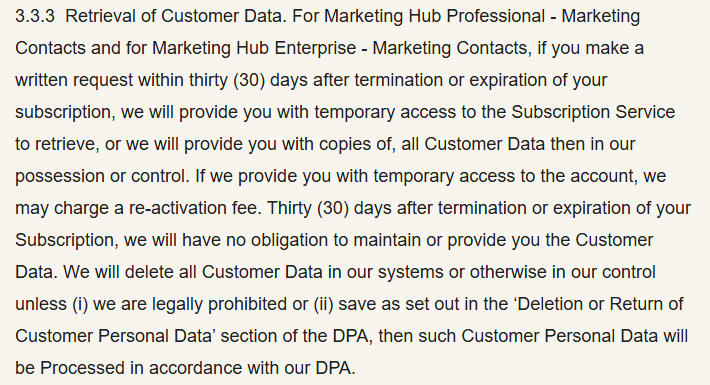
The Product Specific Terms (section 3.3.3) give Marketing Hub Professional and Enterprise customers 30 days after termination to ask for temporary access or copies of their data, with a possible re-activation fee. For Starter, HubSpot points you to export tools during your term. Export before your last day, whatever plan you are on.
Which HubSpot plan, if any, fits you?
What each edition adds, in plain terms.
Both hubs share the CRM, so the edition you pick is mostly about automation depth and reporting. The table summarises the headline features HubSpot lists on its pricing pages on Oct 27, 2026; the catalog has the full list with limits.
Swipe sideways to see the whole table.
| Edition | Marketing Hub adds | Sales Hub adds | Credits a month | Support |
|---|---|---|---|---|
| Free | Forms, landing pages, email (2,000 sends, branded), ad management, live chat | Deals, pipelines, tasks, meetings link, email tracking | None for free users | Community and knowledge base |
| Starter | Email marketing, simple marketing automation, CRM segments, Data Agent, no branding | Agent Hub, Agent Builder, prospecting agent, notetaker, calling, task queues, intent signals | 500 | Email and in-app chat |
| Professional | Marketing Studio (beta), AEO (beta), Content Agent and Nurture Agent (beta), social media, video | Deal Progression and Deal Plans (beta), forecasting, conversation intelligence, sequences | 3,000 | Adds phone |
| Enterprise | Multi-touch revenue attribution, lookalike segments (beta), customer journey analytics, email approvals | Deal splits, deal journey analytics, lead form routing, pipeline approvals, sandbox | 5,000 | Email, chat and phone |
Email volume is tied to contacts, not sold separately. The catalog's FAQ says there are no separate email sending fees and sets the monthly send limit at 5 times your contact tier on Starter, 10 times on Professional and 20 times on Enterprise. The free edition gets 2,000 sends a month with HubSpot branding.
From form fill to closed deal, and where each step costs money.
Agents are included in name, but each action spends credits at $0.01 apiece.
Every paid edition includes a monthly credit allowance: 500 on Starter, 3,000 on Professional and 5,000 on Enterprise for Marketing or Sales Hub, and more for the Customer Platform bundle at Professional and Enterprise. The catalog says "Unused credits do not roll over into the following month." Only users with paid seats can use credits.


| Agent action | Credits | Cost past your allowance | Starter allowance covers |
|---|---|---|---|
| Customer agent resolves a chat | 50 | $0.50 | 10 a month |
| Prospecting agent, one lead | 100 | $1.00 | 5 a month |
| Content agent, one piece (beta) | 1,000 | $10.00 | None |
| AI action in a workflow | 10 | $0.10 | 50 a month |
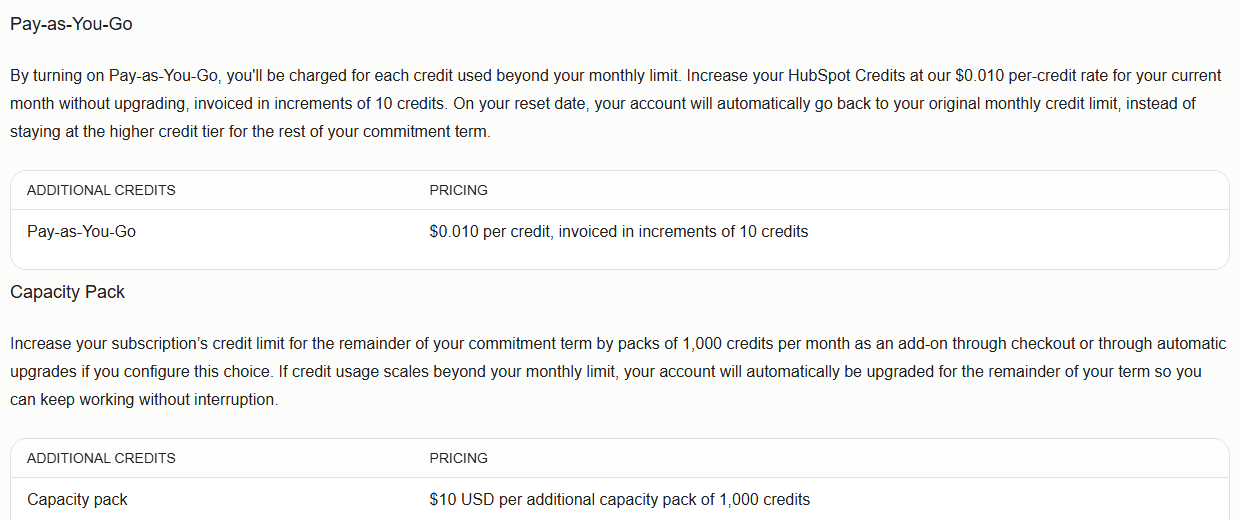
When you run out, the default is that credit-using features pause until the reset or until you buy more. Extra credits cost $0.010 each on pay-as-you-go, or $10 for a pack of 1,000 a month that stays for the rest of your term. The Manage HubSpot Credits article (updated Oct 20, 2026, as read on Oct 27, 2026) adds a quiet change: if you bought extra credits before Sept. 16, 2026, auto-upgrade is the default; from that date, pay-as-you-go is. It also warns that features currently in beta may start using credits later.

HubSpot's own walkthrough of the Fall 2026 updates
HubSpot embeds this recording on its Fall 2026 Spotlight page under "Dive into our latest product updates". It comes from HubSpot's YouTube channel (@HubSpot-CRM) and, by its title and placement, covers the agent, Breeze Assistant and CRM releases this section prices. It is a long keynote with presenters on stage; we have not reviewed the full recording, so treat it as HubSpot's pitch rather than a demonstration of what your plan includes.
HubSpot now plugs into Claude, and into more than 2,000 apps.
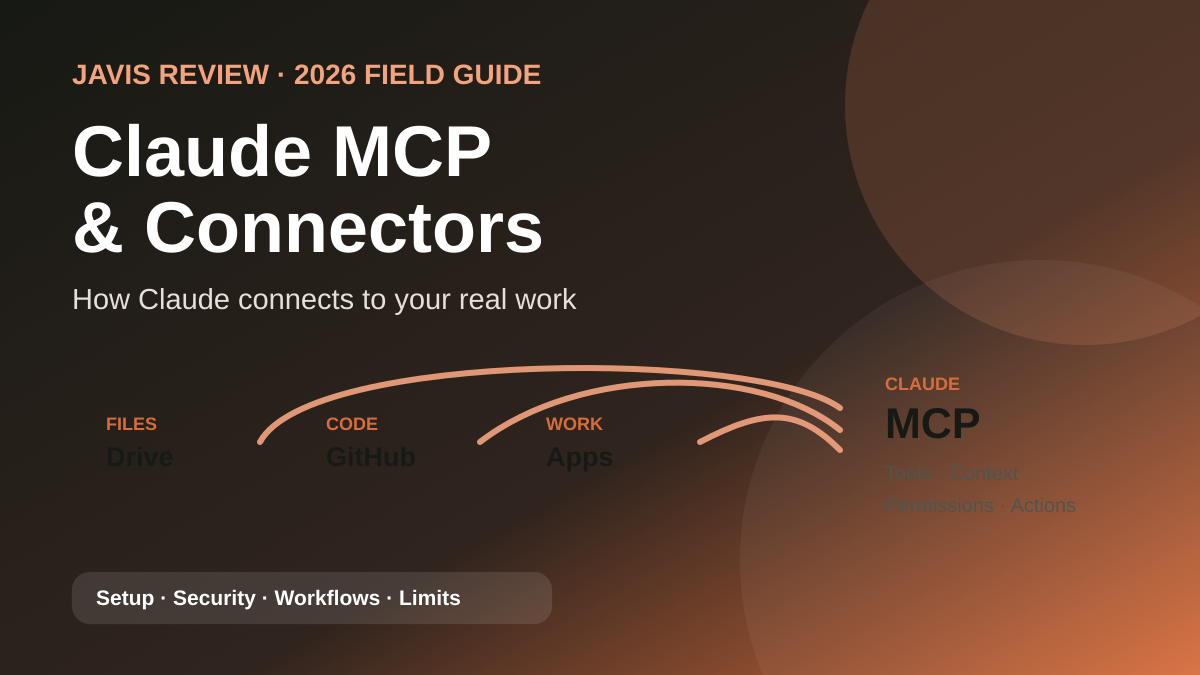
HubSpot runs a dedicated page for its connector for Claude, which its knowledge base lists for all products and plans. The knowledge base article (updated Oct 19, 2026, as read on Oct 27, 2026) lists what Claude can do with it: read CRM records and engagement history, create and update contacts, deals and tasks, analyse marketing email performance, and write blog posts. Two conditions matter: "You must have a paid Anthropic subscription", and in bulk "you can only create or update 10 records at a time". A Super Admin approves the connector and chooses what data it can see; create and update actions are logged in HubSpot's audit log.


Beyond Claude, the free CRM page counts over 2,000 apps in the HubSpot Marketplace, and every account can use HubSpot's APIs within published limits. For automations HubSpot does not cover, many teams wire it to Zapier or Make. If you want to understand how connectors like this behave inside Claude, our guide to Claude MCP connectors covers permissions and limits.
A limited-release plan where emails and workflow actions spend credits.
HubSpot publishes a separate catalog supplement for a "flexible seats-and-credits pricing program", priced in euros and described as a limited release, with a Nordic pilot mentioned throughout. It is not the plan you see on the US-dollar pricing pages, but it shows where HubSpot's pricing may be heading: two seat types (GTM and Ops), much larger credit allowances (5,000, 10,000 and 15,000), and credits charged for things that are flat-fee today.


As printed, the first 10,000 email sends cost 15 credits each under this program, and the free edition gets 300 sends a month instead of 2,000. If you are offered the flexible plan, model your email volume against the rate sheet before you sign, and ask HubSpot to confirm the per-email rate in writing.
Standard enterprise paperwork, a 99.95% target, and AI providers that see your data.
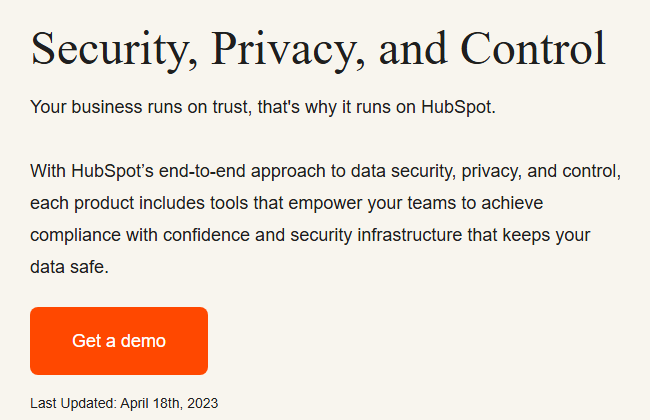
HubSpot's security page (last updated Apr 18, 2023) points to a Trust Center with a SOC 2 Type II report, a SOC 3 report and penetration test summaries; its products run on cloud providers with SOC 2 Type 2 and ISO 27001 certifications. The Product Specific Terms commit to "commercially reasonable efforts" toward 99.95% monthly uptime, with a credit only after two or more consecutive months below target, and not for free services.
The AI terms deserve a careful read. Section 7.6 of the Product Specific Terms says your AI Input and AI Output, "including Customer Data, will be shared with and processed by our AI service providers". Section 7.1 notes that some HubSpot AI settings "may be on by default". Sensitive Data handling, including protected health information under a Business Associate Agreement, is an Enterprise feature, and the connector for Claude cannot see engagement data when Sensitive Data is on.

| Control | Where it stands |
|---|---|
| Uptime | 99.95% monthly target, credit after 2+ months below; not for free services |
| Data after you leave | 30-day retrieval for Marketing Hub Professional and Enterprise; export during term otherwise |
| AI and your data | Shared with third-party AI providers; some AI settings on by default |
| Who can connect AI tools | Super Admin approves the Claude connector and its data permissions |
| Sensitive and health data | Enterprise only, under the Sensitive Data Terms |
Fit by work pattern.
| You are | Fit | Likely plan |
|---|---|---|
| A freelancer or two-person shop tracking leads | Strong while under 1,000 contacts | Free tools |
| A small business that wants marketing email and a pipeline together | Strong | Starter bundle |
| A course seller or coach with a growing email list | Mixed: marketing contacts drive cost | Starter, watch the contact tier |
| A B2B marketing team running multi-step campaigns | Strong if budget allows | Marketing Hub Professional |
| A sales team of 5 to 20 reps | Strong | Sales Hub Professional |
| A newsletter-only publisher | Weak | A newsletter tool instead |
What to weigh before you commit.
- A free CRM with no expiry date and real tools
- One database for marketing, sales and service
- Starter bundle includes every Starter hub
- Published catalog with limits, rates and fees
- Large mobile user base with high store ratings
- Connector for Claude on every plan
- Free edition: 2 users, 1,000 contacts
- Starter to Professional jump of about 44 times at list
- Required onboarding of $1,500 to $7,000
- Automatic contact tier upgrades, billed until renewal
- No mid-term cancellation, downgrade or refund
- Renewal can move to list price
- Agent use metered in credits that expire monthly
- Four different Starter prices across HubSpot pages
The deepest limitation is structural: HubSpot is cheap to enter and expensive to grow in. That is a fair trade for teams that will use Professional features, and a poor one for teams that only need a contact list and a newsletter.
Match the alternative to the job.
Prices below were on each vendor's pricing page on Oct 27, 2026, in USD, at entry level. Plans are not like-for-like: Salesforce prices per user, Mailchimp per contact band, HubSpot by seat plus contacts.
Swipe sideways to see the whole table.
| Need | Option | Entry price | Why consider it | JAVIS review |
|---|---|---|---|---|
| CRM suite from a large vendor | Salesforce Starter Suite | $25 a user a month (monthly or annual) | Sales, service and email marketing in one suite; Pro Suite $100 a user, billed annually | Not yet |
| Low-cost CRM for small teams | Zoho CRM | Free for 3 users (page title); CRM Plus from $20 a user | A larger free user count than HubSpot's two | Not yet |
| Email marketing first | Mailchimp | Essentials from $13, Standard from $20 a month (0 to 500 contacts) | Cheaper if you mainly send campaigns | Not yet |
| Newsletter publishing | beehiiv | See our review | Built for newsletters and paid subscriptions | beehiiv review |
| Connect HubSpot to other apps | Zapier or Make | See our reviews | Automations across tools HubSpot does not cover | Zapier, Make |

This review has no affiliate links.
Every HubSpot link here goes straight to hubspot.com, its pricing pages, its Customer Terms of Service or its knowledge base, without tracking parameters. The score, the drawbacks and the alternatives would be the same either way.
How this review was put together: HubSpot's pricing pages for Marketing Hub, Sales Hub and the free tools; the Product & Services Catalog with its products, free tools and technical limits pages; the Flexible Seats-and-Credits supplement; the Customer Terms of Service, Product Specific Terms, DPA, Privacy Policy, Acceptable Use Policy and security page; knowledge base articles on cancellation, marketing contacts billing, credits and the Claude connector; product, Starter, free CRM and Claude pages; Internet Archive copies of the catalog from Mar 24, 2024 to Oct 11, 2026; the US App Store and Google Play listings; Hacker News; Wikipedia; and Salesforce, Zoho and Mailchimp pricing pages, as of Oct 27, 2026. This review is not hands-on tested: no HubSpot account, no free signup, no campaign and no support contact. Screenshots show public pages only.
Other tools for growing traffic, sending newsletters and automating the rest.
Each card opens a published JAVIS review, routed by where you are.


Questions people ask before choosing HubSpot
Is HubSpot's CRM really free?
Yes. As of Oct 27, 2026 the free tools cost $0 with no credit card and no expiry date, for up to two users and up to 1,000 contacts, with HubSpot branding on emails, forms and chat and 2,000 marketing email sends a month. HubSpot's Terms let it limit or end free services at any time.
How much does HubSpot Starter cost?
The list price is $20 a seat a month. New customers saw $7 a seat a month paying annually or $10 paying monthly on Oct 27, 2026, and the free CRM page showed a $15 offer. The Starter bundle includes Marketing, Sales, Service, Content and Data Hub Starter.
How much is Marketing Hub Professional?
$890 a month at list for three Core Seats and 2,000 marketing contacts ($800 shown with annual payment), plus a required one-time $3,000 onboarding fee. Extra marketing contacts start at $250 a month per 5,000.
What happens if I go over my marketing contacts?
HubSpot upgrades you to the next tier automatically, even by one contact, and bills the higher tier until your renewal date. You can set a maximum number of marketing contacts to stop imports and forms from creating more.
Can I cancel HubSpot at any time?
No. Paid plans renew automatically and you cannot cancel, downgrade or get a refund mid-term. You turn off auto-renewal and the plan ends at the end of the term, after which the account drops to the free tools.
Does HubSpot work with Claude?
Yes. HubSpot's connector for Claude works on all HubSpot plans, needs a paid Claude plan (Pro, Max, Team or Enterprise) and Super Admin approval, and can read and update CRM records, ten at a time in bulk.
Do AI agents cost extra?
They use HubSpot Credits. Starter includes 500 a month, Professional 3,000 and Enterprise 5,000; extra credits cost $0.010 each. A resolved customer agent conversation uses 50 credits.
Where this came from, and when.
Every price, limit, rule and rating in this review comes from the pages below, as of Oct 27, 2026 unless another date is given. Expand for the full list, the scoring method and what the review does not cover.
Show sources, scoring method and scope
Pricing: hubspot.com/pricing/marketing, /pricing/sales and /pricing/crm (USD, "Pay Annually" selected, location detected as Vietnam); hubspot.com/products/crm/starter; hubspot.com/products/crm; legal.hubspot.com/hubspot-product-and-services-catalog with its products, free tools, add-ons and technical limits pages; hubspot.com/flexible-seats-and-credits-pricing-supplement.
History: Internet Archive copies of the HubSpot Product & Services Catalog from Mar 24, Sep 5, Oct 6 and Nov 4, 2024; May 7, 2025; and Oct 11, 2026.
Knowledge base (knowledge.hubspot.com): Downgrade or cancel your HubSpot subscription (Jul 9, 2026); Understand marketing contacts billing (Aug 14, 2026); Understand marketing contacts (Oct 23, 2026); Manage HubSpot Credits (Oct 20, 2026); Understand the effects of downgrading a paid HubSpot subscription (Aug 17, 2026); Set up and use the HubSpot connector for Claude (Oct 19, 2026); Export your content and data.
Legal: Customer Terms of Service, Product Specific Terms, Data Processing Agreement, Privacy Policy and Acceptable Use Policy (all last modified Sep 16, 2026); Website Terms of Use (Apr 14, 2026); security page (Apr 18, 2023).
Product: hubspot.com home, Marketing Hub, Sales Hub, free CRM, Starter, Claude and Fall 2026 Spotlight pages.
Independent evidence: Apple App Store US listing of the HubSpot app (4.74, 15,829 ratings); Google Play US listing (4.5, 13.6K reviews); Hacker News comments 48445540, 49860403, 46947977 and 40116037; Wikipedia's HubSpot article. G2, Capterra and TrustRadius figures are not used.
Competitors: salesforce.com/sales/pricing, zoho.com/crm/zohocrm-pricing.html and mailchimp.com/pricing/marketing, Oct 27, 2026.
Fit score, 62 out of 100: five criteria worth 20 points each. Price clarity 10 (a full public catalog, but four Starter prices, annual-first displays and contact tiers spread across pages); capability 18 (one CRM across marketing, sales and service, agents, a Claude connector); independent evidence 12 (large app store samples, few written reviews we could open); terms, data and security 10 (auto-renewal, no mid-term exit, renewal at list price, limited data retrieval, AI providers process customer data); cost and fit 12 (excellent free and Starter value, a steep Professional step). Editorial judgment from published facts, not a hands-on test.
Not covered: Service, Content, Data and Revenue Hub in depth; deliverability; support quality; the speed of the editor; the quality of AI output; add-on prices beyond the catalog figures quoted; and prices in other currencies.
Video: "HubSpot Spotlight Live from UNBOUND 2026" (YouTube id 2kjlwugSao8) from HubSpot's official channel, as embedded on hubspot.com/spotlight; contents beyond its title and placement not reviewed in full.