
Amp Review 2026 (Formerly Sourcegraph Amp): Now an Independent Company, Built Around Cloud Orbs, With a Free Hobby Tier and No Editor Extension
If you searched for Sourcegraph Amp, the first thing to know is that it is not a Sourcegraph product any more. Amp announced on Dec 2, 2025 that it was becoming its own company, its npm package moved from @sourcegraph/amp to @ampcode/cli in May 2026, and its site is ampcode.com. Since then it killed its VS Code and Cursor extensions, rebuilt the CLI, introduced cloud machines called orbs, added monthly subscriptions in July (Megawatt $20, Gigawatt $200) and on Sep 13 made Amp free to start when you bring your own compute and model keys. This review checks all of it against Amp's own pricing, docs and Chronicle, adds what real developers said on Hacker News, and is blunt about the trade-offs of a tool that says it will keep breaking things to stay on the frontier.

| Ownership | Independent since Dec 2025 (spun out of Sourcegraph) |
| Free tier | Hobby is free; pay-as-you-go orbs, or your own runners free |
| Cheapest paid plan | $20/mo Megawatt ($10 with the education discount) |
| Editor extension | None: killed Mar 5, 2026; CLI, web and Mac/iOS apps |
| Trustpilot record | No reviews (unclaimed profile) |
Amp is an opinionated bet that agents should run in the cloud while you do something else. If that is your workflow it is among the most interesting tools around; if you live in an editor, it has left you behind on purpose.
"The pricing story changed completely this year. It used to be pay-as-you-go tokens at API prices, which many people found expensive. Now there is a free Hobby tier, a $20 plan, and you can plug in a ChatGPT subscription or your own keys with no Amp token fee. The catch is that the product moves fast and deletes things, and the part you pay for is orb time."
My honest read: Amp suits developers who are comfortable in a terminal, who want several agents working in parallel on remote machines, and who value a team that says out loud what it is killing. It does not suit people who want an in-editor assistant (the extensions were removed), people who need a stable feature set, or anyone nervous about a roughly 20-person company as a vendor. The Sourcegraph connection is now history, not a safety net. This is a VERIFIED EDITORIAL REVIEW: ampcode.com pricing, docs, security reference and Chronicle, the Sourcegraph announcement, the npm registry and Hacker News threads were checked on Oct 3, 2026. I did not run a controlled hands-on test.
A coding agent you can run in the cloud (orbs), on your own machine (CLI, runners) or from your phone.
Amp's docs introduce it as "a coding agent and development environment built for the frontier". The key pieces: Orbs, which the docs call "machines that Amp creates per thread, with your code, tools, and plugins already set up", so you can send a prompt, close the laptop and let the agent keep working. The Dial, four modes (low, medium, high, ultra) that decide how hard Amp works rather than which model it uses. Puck, a meta-agent that starts, monitors and messages other agents (also by voice). The CLI (amp) on macOS, Linux and Windows via WSL, runners that let Amp use your own machines, and macOS and iOS apps. Threads, portals (live previews of an app inside the orb) and multiplayer let a team follow the same agent. Amp is deliberately "Opinionated": the docs say "If we don't use and love a feature, we kill it."
Ownership: Amp is its own company. Amp's Dec 2, 2025 post says "Amp's traction spun us out of Sourcegraph. Amp is profitable." The Sourcegraph blog post of the same date says Sourcegraph continues as the enterprise code-search company, with Dan Adler as CEO, and that founders Quinn Slack and Beyang Liu remain on Sourcegraph's board while founding Amp Inc. Amp's About page now calls itself "an independent agent research lab" and also operates Amp Labs, which embeds small teams inside companies. Sourcegraph appears among customer logos on Amp's About page, and Amp's MCP docs include a Sourcegraph MCP server example, so the two still interoperate.
A small, fast-moving independent with strong developer mindshare and few public numbers.
Amp engineering post, Aug 13, 2026: "We're 20 people, mostly engineers". A headcount, not a user count.
Amp's Dec 2, 2025 announcement. A self-reported claim with no figures; I found no revenue number.
Hacker News, Aug 25, 2026. Attention, not satisfaction.
Hacker News, Dec 2, 2025. Attention, not satisfaction.
| Date | Event | Source |
|---|---|---|
| 2025-12-02 | Amp announces it is becoming its own company; Sourcegraph announces the split (board investors named: Craft, Redpoint, Sequoia, Goldcrest, a16z) | Amp Chronicle; Sourcegraph blog |
| 2026-02-19 | Amp announces it is killing its VS Code and Cursor extensions (self-destruct Mar 5, 2026) | Amp Chronicle |
| 2026-05-06 / 05-14 | CLI rebuilt ("Amp, Rebuilt"); npm package renamed to @ampcode/cli (was @sourcegraph/amp) | Amp Chronicle |
| 2026-05-21 | Amp Labs launched: small teams embedded in companies; Westpac partnership announced Jul 29 | Amp Chronicle |
| 2026-06-30 / 07-09 | Agents in Orbs; The Dial replaces smart, deep, rush and large modes | Amp Chronicle |
| 2026-07-18 | Monthly subscriptions launch in beta | Amp Chronicle |
| 2026-09-13 | "Free Agent": free Hobby tier, no-extra-charge Teams, no Amp fees for BYOK | Amp Chronicle |
| 2026-09-28 / 09-29 | Opus 5.5 powers medium; "Plaid Speed" 6x faster inference for GPT-6 Astra | Amp Chronicle |
What I weigh most is the pace. In ten months Amp changed ownership, killed its editor product, rebuilt its CLI, launched cloud orbs, introduced subscriptions and made the base product free. That is either the frontier or instability, depending on what you need.
Developers praise result quality and the Oracle/Librarian tools. The loudest complaints were price, which has since changed, and skepticism about orbs.
One commenter who switches between agents said Amp is "still on top, costs more, but has the best results. The librarian and oracle make it leagues ahead of the competition." Another: "it's so expensive I'm having a hard time even being able to judge it fairly" after spending $5, $10 and $20 in three tries. A third said Amp "feels like a product used by the people that build it". These predate the July 2026 subscriptions.
Skeptic: "a thin wrapper over a remote virtual machine, a new name for remote virtual machines". The post's author replied that "some wrappers enable new ways to hold and use and reuse the thing they wrap". A user comparing cloud agents said "Orbs have been more consistent, along with Cursor's agents" than Codex cloud, from their experience. Others noted that big model vendors already offer similar products.
Amp says it has no pull requests and still passed SOC 2 by using signed commits, restricted push access and CI. A commenter pushed back: "an engineer who knows your codebase and tests can sneak in malicious code/backdoors because you're high trust". Another defended it as risk-based. It is a culture signal more than a product review.
Hobby free, Megawatt $20, Gigawatt $200, Teams no extra charge, Enterprise custom.
Hobby
Bring your own compute and model keys.
- Pay-as-you-go for orbs, or your own runners free
- Use your ChatGPT sub and other subs, BYOK
- No Amp token fees or limits
- Public and private repositories
Megawatt
45,000 minutes of orb time.
- Everything in Hobby
- 45,000 orb minutes and Amp credits for any model
- Unlimited public/private repos, own portal domains
- Education discount: $10/month
Gigawatt
480,000 minutes of orb time.
- Everything in Megawatt
- 480,000 orb minutes
- Access to the a1.3xlarge orb size
Teams and Enterprise
Teams has no extra charge; members pick tiers.
- Shared threads, multiplayer, portals, plugins, skills
- SAML/OIDC SSO if at least one member is on a paid tier
- Enterprise: SCIM, audit logs, spend limits, IP allowlists, priority support
- Enterprise credits only, no paid seats
| Item | Price | What it covers |
|---|---|---|
| Hobby | Free | Orbs pay-as-you-go; own runners free; BYOK and ChatGPT subscription with no Amp token fees |
| Megawatt | $20 / month | 45,000 minutes of orb time plus Amp credits usable on any model |
| Gigawatt | $200 / month | 480,000 minutes of orb time; a1.3xlarge orbs |
| Education | $10 / month | Megawatt for students and teachers (Aug 18, 2026 post) |
| Teams | No extra charge | Workspace features; members can be on different tiers; pooled credits |
| Enterprise | Custom | Pooled credits only; SCIM, audit logs, spend limits, regional endpoints |
| Paid credits | Provider API prices, no markup (non-enterprise) | Expire 12 months after purchase; web search also consumes credits |
| Orb size | CPUs / memory | Standard price |
|---|---|---|
| a1.tiny | 1 / 2 GB | $0.08 per hour |
| a1.small | 2 / 4 GB | $0.17 per hour |
| a1.medium (default) | 4 / 8 GB | $0.33 per hour |
| a1.large | 8 / 16 GB | $0.66 per hour |
| a1.xxlarge | 16 / 32 GB | $1.32 per hour |
| a1.3xlarge (Gigawatt and Enterprise only) | 16 / 44 GB | $2.13 per hour |
Arithmetic you can check: an a1.medium orb at $0.33 an hour costs about $0.0055 a minute, so an hour of pay-as-you-go orb time at that size is $0.33. The docs say larger orbs "use the allowance faster", so the 45,000 included minutes are not 750 hours of any size; I cannot convert them to dollars. Orb time is separate from model usage, which bills credits at API prices without markup.
Decide by where you want the agent to run and what you already pay for.
Start on Hobby: no Amp token fees, and your own runner is free compute.
Orbs. Megawatt at $20 includes 45,000 minutes; pay-as-you-go is possible on Hobby.
Not Amp. The VS Code and Cursor extensions were removed on Mar 5, 2026.
Gigawatt at $200, or compare flat-priced tools.
Teams (SSO with one paid member) or Enterprise for SCIM, audit logs and spend controls.
Be careful: Amp removes features regularly and is a small company. Compare Claude Code, Codex or Cursor.
You choose how hard Amp works; Amp chooses the models.
The Dial replaced the old smart, deep, rush and large modes on Jul 9, 2026. Per the docs: low is for small, well-defined tasks; medium is the default; high is for hard tasks where "a subtle miss would be expensive"; ultra is for hard, open-ended work such as migrations. The mode is fixed at the first message because switching models mid-thread gave bad results and "invalidates the prompt cache", so you start a new thread to change it. Each mode has an Oracle for second opinions, and subagents handle search, difficult reasoning, external-code research (Librarian) and reading other threads. You can pin specific models per role in the dial editor or link a ChatGPT subscription so low, medium and high run on it.
| Mode | Main agent (per ampcode.com/modes) | Oracle | Use it for |
|---|---|---|---|
| low | GLM-5.3-Flash (high) | GPT-6 Astra (x-high) | Focused fixes, tests, small refactors |
| medium (default) | Opus 5.5 (high) | GPT-6 Astra (x-high) | Messy or multi-part tasks |
| high | GPT-6 Astra (med) | Fable 5.1 (x-high) | Hard tasks where a miss is costly |
| ultra | Fable 5.1 (high) | GPT-6 Astra (x-high) | Migrations, architecture, cross-system changes |
| Puck (meta-agent) | GPT-5.6 Sol | n/a | Starting and steering other agents |
- Task-based modes instead of a model menu, with a second-opinion Oracle built in.
- Per-role model pinning and ChatGPT subscription routing for people who want control.
- Agents can prove work with screenshots, videos and portals, so review is less line-by-line.
- The mode cannot change inside a thread, so a wrong first choice costs a restart.
- Model routing changes under you; Amp itself says "No backward compatibility, no legacy features".
- Claude Fable models need data retention enabled on your own Anthropic workspace if you bring your own key.
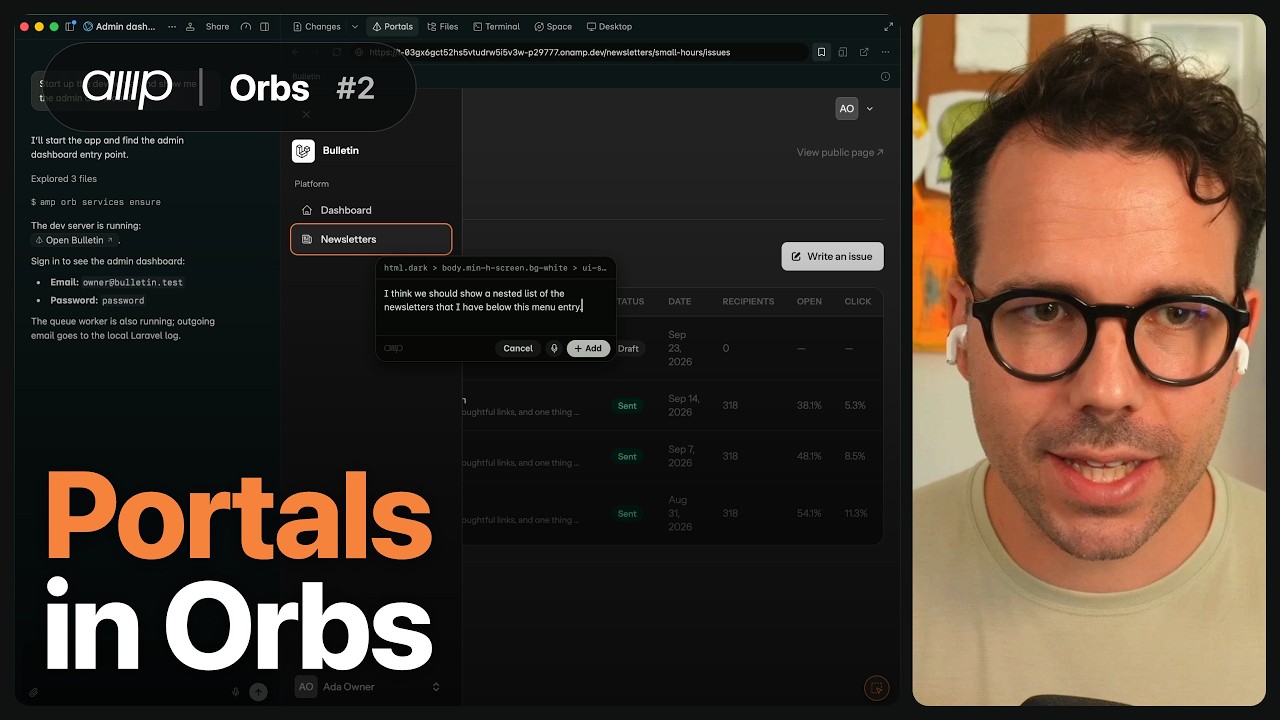
Amp's own getting-started walkthrough for orbs, the clearest primary-source view of the core workflow and the Dial picker.
Published by the official "Amp, Inc." YouTube channel (https://www.youtube.com/@AmpCodeInc). Vendor demo, so it shows the best case; the UI may have changed since it was recorded.
Send a prompt, let an orb work, check proof, ship.

The docs are specific about how orbs behave: an orb pauses 5 minutes after the agent stops working or 20 minutes after you last interacted, whichever is later, and a paused orb costs nothing. Starting orbs is paced: "a burst of 20 metered orbs", then "one new orb every five minutes". A shared tmux terminal lets you and the agent use the same filesystem. For a deeper take on the idea, Amp's own "Orbs, Explained" note is the primary source, and the Claude Code setup guide shows the local-terminal approach for contrast.

Orbs are the product; schedules, webhooks and other agents make them autonomous.
Beyond a single prompt, Amp's Chronicle describes agents that "set their own schedules, wake themselves up, and keep working" (Jul 21, 2026), event-driven orbs that receive requests and react to outside events (Jul 23), agents that spawn and message other agents across threads (Jul 17), and Slack access (Jul 20). Puck can start one agent per script in a repository and summarise the results. Orbs also get OIDC identities (Jul 14) so they can reach production logs with scoped, temporary credentials instead of stored keys. Amp's homepage demo shows an agent that checks production canaries and wakes itself up to compare numbers.
| Job | Trigger | Where it runs | What to watch |
|---|---|---|---|
| One-off fix from a bug report | Prompt or Slack message | A fresh orb | Pay-as-you-go orbs bill by the minute while working |
| Monitor a rollout | Agent-set schedule | An orb that wakes itself | Production access via OIDC; scope it narrowly |
| Parallel investigation | Puck starts several agents | One orb per thread | Spawn pacing: burst of 20, then one per 5 minutes |
| Local, free run | CLI `amp` or a runner on your machine | Your machine | No orb minutes; you carry the compute and risk |
| Scripted run | `amp -x` / `amp -ox --orb-size` | Local or orb | Execute mode is for scripts; check permissions first |
- Long-running or parallel tasks that you do not want on your laptop.
- Teams that want agents to prove work with a running preview rather than a diff alone.
- Orb time is a second meter on top of model credits, and the minutes included in a tier are weighted by orb size.
- Agents that wake themselves and hold production access need tight scopes and monitoring.
- Amp's own security reference says prompt-injection reports are typically not eligible for bug-bounty rewards.
A 26-minute official walkthrough of how an Amp engineer works: monitoring rollouts, fixing bugs from reports and shipping from threads.
Published by the official "Amp, Inc." YouTube channel (https://www.youtube.com/@AmpCodeInc). Vendor demo by an Amp engineer; it is the same video featured on the Amp homepage.
MCP, plugins, skills and any model provider you already have.
Amp supports local and remote MCP servers (amp mcp add), and recommends bundling MCP servers inside skills so their tools load only when needed. Orbs and Puck can use MCP servers too (Aug 19, 2026), and an orb can present an Amp ID token to a remote server. Model routing accepts API keys (Anthropic, Google AI Studio, Meta, OpenAI, xAI), subscriptions (ChatGPT, SuperGrok), cloud platforms (Bedrock, Vertex), and gateways such as OpenRouter, Vercel AI Gateway, Cloudflare AI Gateway, Ollama Cloud and custom URLs. Plugins and skills can be shared across a workspace, and there is an SDK and a Python SDK (Dec 2025). If MCP is new to you, JAVIS's Claude MCP and Connectors guide explains the idea.
| Integration | What it does | Status as read |
|---|---|---|
| MCP servers | Extra tools for the agent, local or remote; OAuth supported | Documented at ampcode.com/docs/customize/mcp; an example includes a Sourcegraph MCP server |
| Skills and plugins | Reusable instructions and custom modes/agents; shared in a workspace | Documented; global plugins and skills (Aug 11, 2026) |
| Model routing | Your keys, ChatGPT/SuperGrok subscriptions, cloud platforms, gateways | All tiers; more BYOK providers opened to every tier Sep 30, 2026 |
| Slack and Puck | Summon Amp from Slack; manage agents by chat or voice | Chronicle Jul 20, 2026 |
| GitHub and Git | Projects hosted by Amp or cloned from Git; amp clone | Docs; commit signing identity configurable (Aug 28) |
| macOS and iOS apps | Threads, orbs and Puck on your devices; Mac can be a runner | Chronicle Aug 28 and Sep 24, 2026 |
Two meters: model credits and orb time. Decide which one you actually need.
| What you are doing | What you pay / hit |
|---|---|
| Using your own ChatGPT subscription or API keys, local runner | $0 to Amp; you pay your provider and use your own machine (Hobby) |
| Remote agents on Hobby | Orbs pay-as-you-go at the size price, for example $0.33 an hour on a1.medium |
| Megawatt | $20 a month for 45,000 orb minutes plus Amp credits; usage past that needs credits or a higher tier |
| Gigawatt | $200 a month for 480,000 orb minutes |
| Paying Amp for model inference | Provider API prices with no markup for individuals and non-enterprise workspaces; credits expire 12 months after purchase |
| Enterprise | Custom, pooled credits only; BYOK terms differ ("custom pricing applies") |
SOC 2 Type II and minimal retention for everyone, with the caveats Amp itself documents.
| Control | What Amp says |
|---|---|
| Compliance | SOC 2 Type II certified; annual pentest of clients, backend and infrastructure; reports via the Security Trust Portal |
| Model training | "Neither Amp nor our subprocessors train models on your data, unless you have explicitly opted into training"; Enterprise can never enable it |
| Retention | Minimal Data Retention for all users when using Amp-managed provider connections; it limits provider retention but "does not mean that no data is ever retained" (abuse monitoring, up to 30 days for some models, legal holds) |
| Code visibility | "Partial code data" (snippets or whole files chosen as context) goes to Amp servers and model providers; the entire codebase is not stored or indexed |
| Providers | Anthropic, OpenAI, SpaceXAI, Meta, Gemini Enterprise Agent Platform, Bedrock, Baseten, Fireworks and others for inference; e2b for orb compute; Parallel for web search |
| Secrets | Automatic redaction is "best-effort"; orb secrets are hidden in shell output; OIDC tokens for scoped access |
| Deletion | Deleted threads removed within 30 days; deleting a thread deletes its orb; project snapshots reused for up to 72 hours |
| Audit logs | Application audit logs are retained at least 30 days but not exposed to admins; auth-event logs for Enterprise admins |
The practical read: the paperwork is strong for a small company (SOC 2 Type II, retention terms for all tiers), and the docs are unusually candid about limits, including best-effort secret redaction and no bug-bounty rewards for most prompt-injection findings. Amp also says it ships to main without pull requests, using signed commits, restricted push access and CI. That is a defensible control set for a 20-person team, but it is worth asking about in a vendor review. This is not legal or security advice.
Best for terminal-comfortable developers who want parallel cloud agents.
| Situation | Why Amp fits | Likely plan |
|---|---|---|
| Developer with a ChatGPT or API subscription | No Amp token fees; your own runner is free | Hobby |
| Solo developer running agents remotely | Orbs plus included minutes and credits at a flat $20 | Megawatt |
| Engineer running many parallel agents daily | Larger allowance and the 3xlarge orb size | Gigawatt |
| Small team wanting shared threads and multiplayer | Teams tier has no extra charge; SSO if one member pays | Teams |
| Anyone who wants an editor sidebar assistant | Editor extensions were removed | Not Amp |
| Enterprise with compliance and spend control | SCIM, audit logs, spend limits, IP allowlists, priority support | Enterprise |
| Teams that need a stable roadmap and big-vendor comfort | Amp deletes features on purpose and is about 20 people | Look at larger vendors |
Six real gaps, not manufactured ones.
Amp killed its VS Code and Cursor extensions (self-destructed Mar 5, 2026) and removed Amp Tab in January. If your day is in an editor sidebar, Amp no longer serves that.
Its own Chronicle lists TODOs, Fork, custom commands, public threads and the TUI sidebar as removed, and the docs promise "No backward compatibility, no legacy features". Your workflow can change under you.
Model credits and orb time are separate, orb minutes are weighted by size, and included usage does not roll over. Planning cost takes effort.
A company of about 20 people with no public revenue figure, spun out in Dec 2025, is a different bet from a large vendor. Amp itself says it is not a product that will "check every procurement box".
The CLI supports macOS, Linux and Windows via WSL; the docs recommend WezTerm or Alacritty on Windows for clipboard support.
Trustpilot has no reviews, and I could read no G2 or Reddit data, so most public sentiment is a few Hacker News threads, some of which predate the subscriptions.
Also noted: Amp data goes through many subprocessors (listed in its security reference), and some models, such as Claude Fable, require data retention on a bring-your-own Anthropic workspace.
Amp is best for cloud-parallel agents. Others win on editor integration, price or vendor size.
| If you mostly need... | Compare Amp with... |
|---|---|
| A terminal agent from a large model vendor | Claude Code setup guide, OpenAI Codex review |
| An AI-first editor | Cursor review |
| A cloud software-engineer agent | Devin review |
| An open-source agent control platform | OpenHands review |
| Understanding MCP before connecting tools | Claude MCP and Connectors guide |
| Entry point (verified Oct 3, 2026) | Amp | Codex (JAVIS review) | Cursor (JAVIS review) |
|---|---|---|---|
| Free option | Hobby: free with your own keys and compute | Free tier per its review | Hobby per its review |
| Cheapest paid plan | Megawatt $20 per month | See its review for Go/Plus/Pro | See its review for Pro |
| Unit that runs out | Orb minutes and credits | Plan usage limits | Plan usage limits |
| Editor extension | None | See its review | It is an editor |
No affiliate relationship shapes this review.
JAVIS has not established a publisher affiliate program with Amp. Every CTA in this article points to the official product. If that changes, the review's facts, limitations and alternatives will not.
Go to the official page.
Open AmpRead the alternative that matches your real question.
Choose the next articleAmp sits between the terminal agent and the cloud engineer.
Every card below links to a published JAVIS review.

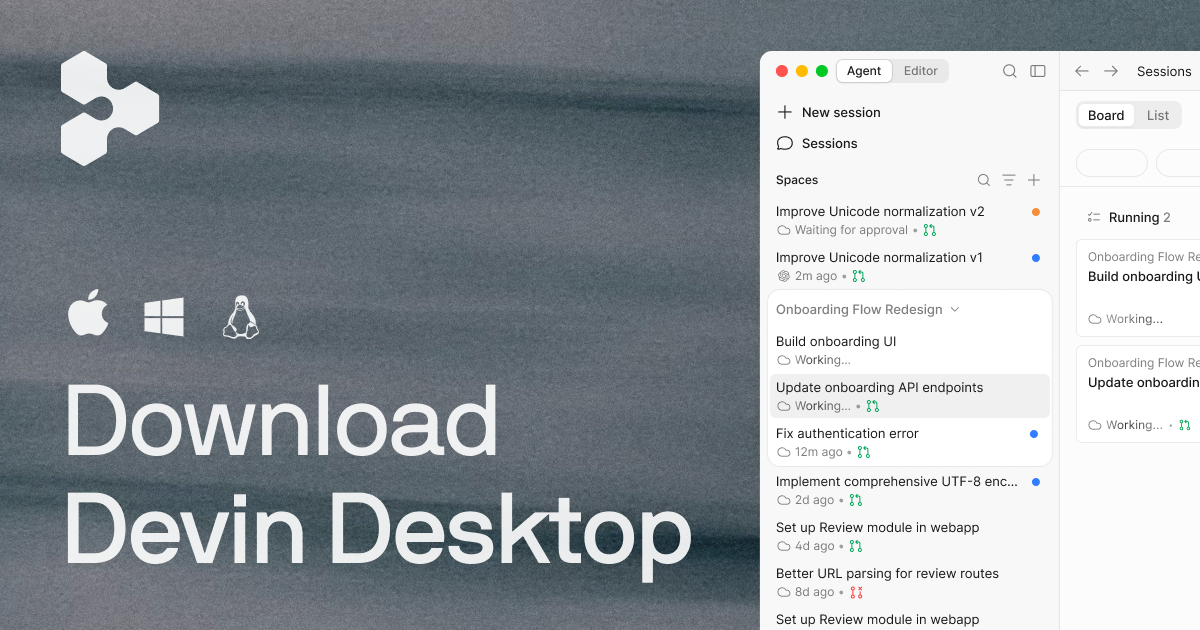
amp usage before buying credits.Card images come from each product's own site or its JAVIS review page.
Questions people are actually searching right now
Is Sourcegraph Amp still a Sourcegraph product?
No. Amp announced on Dec 2, 2025 that it was becoming its own company (Amp Frontier Corporation, also called Amp, Inc.), and Sourcegraph's own post says the two products go forward in separate companies. The CLI npm package moved from @sourcegraph/amp to @ampcode/cli on May 14, 2026.
Is Amp free?
Partly. Since Sep 13, 2026 the Hobby tier is free: you bring your own compute (a runner on your machine is free) and model subscriptions or keys, with no Amp token fees. Remote orbs are pay-as-you-go on Hobby. Verified on ampcode.com/pricing, Oct 3, 2026.
How much does Amp cost in October 2026?
Megawatt is $20 a month with 45,000 orb minutes, Gigawatt is $200 with 480,000, Teams has no extra charge, Enterprise is custom, and students and teachers can get Megawatt for $10. Model credits are at provider API prices with no markup for non-enterprise users.
What is an orb?
Amp's docs define an orb as a remote machine Amp creates per thread, with your code and tools set up, where the agent works without using your computer. It pauses after 5 minutes of no agent work and 20 minutes of no interaction, and a paused orb costs nothing.
Does Amp have a VS Code extension?
No. Amp announced on Feb 19, 2026 that it was killing its VS Code and Cursor extensions, which stopped working on Mar 5, 2026. Use the CLI, the web app, or the Mac and iOS apps.
Does Amp train on my code?
Amp says neither it nor its subprocessors train on your data unless you explicitly opt in, and that Enterprise can never enable training. Minimal Data Retention limits model-provider retention but does not mean no data is retained. Bring-your-own-key requests follow your provider's terms.
Can I use my ChatGPT subscription with Amp?
Yes. Sign in with ChatGPT and allow token sharing, and OpenAI model usage is billed to your ChatGPT subscription instead of Amp credits. Since Sep 13, no monthly plan is required for this.
What are the best Amp alternatives?
Claude Code or Codex for terminal agents from model vendors, Cursor for an editor, and Devin or OpenHands for cloud agents. See Alternatives above.
Where this came from, and when it was checked.
Pricing and plans: ampcode.com/pricing (tier toggle and FAQ included), ampcode.com/docs/pricing, /docs/orbs/sizes-and-costs; Chronicle posts "Free Agent" (Sep 13, 2026) and "Subscriptions, At Last" (Jul 18, 2026).
Product and history: ampcode.com home, About, /modes, docs (Orbs, Dial, CLI, Puck, MCP, model routing, secrets), Chronicle entries from Dec 2, 2025 to Sep 29, 2026; npm registry for @ampcode/cli.
Ownership: Amp "Amp Frontier Corporation" post (Dec 2, 2025); Sourcegraph blog "Why Sourcegraph and Amp are becoming independent companies" (Dec 2, 2025).
Security: ampcode.com/security and /docs/enterprise/minimal-data-retention (vendor statements).
Market: Amp posts for headcount and profitability (self-reported); Hacker News (items 49437117, 46124649, 49308073).
Real users: Hacker News threads above, read in full to depth two; Trustpilot ampcode.com is unclaimed with zero reviews. No G2 or Reddit data was read.
Alternatives: live JAVIS reviews of Codex, Cursor, Devin, OpenHands, Claude Code setup and Claude MCP.
Official videos: youtube.com/watch?v=1Niex0BvwQk and 0WeQLAZVJ8w; author "Amp, Inc." on YouTube. Two other official frames are shown as video thumbnails (2MUWvEbQI0w, VNJ8P1GqxnA).
JAVIS Fit Score (71/100): editorial composite of product ambition and speed (strong), pricing clarity after the Sep 2026 reset (good), documentation candour and security paperwork (good), feature stability and editor support (weak), two-meter cost complexity (mixed), vendor size and public evidence (weak). Weighted by judgement; no automated test was run.