
v0 by Vercel Review 2026: The Prototyping Tool That Rebuilt Itself Into a Shipping Platform
v0 is Vercel's AI app builder, and if your mental model is "the tool that turns a prompt into a React component," it's about two years out of date. As of this check, v0.dev forwards straight to v0.app -- the current official domain -- and the product behind it isn't a prototyping toy anymore. A February 2026 rebuild added a real Git panel (branches, auto-commits, pull requests), production-accurate previews that run in a Vercel Sandbox VM instead of a browser sandbox, and a stated shift in mission: "AI lowered the barrier to writing code. Now we're raising the bar for shipping it." Pricing has moved through multiple structures since May 2025, and the $20/month Premium plan some users are still on is now being sunset, with September 2026 community-forum reports of accounts getting auto-downgraded. And in April 2026, Vercel -- the same company whose infrastructure every v0 app deploys to with one click -- disclosed a real supply-chain security incident. This review checks what's actually true today against v0.app, Vercel's own blog and security bulletins, and real user sentiment from the App Store, Reddit, and G2.
| Current official domain | v0.app (v0.dev now redirects) |
| Feb 2026 rebuild | Full-stack + Git workflows, not prototype-only |
| Cheapest paid tier | Plus, $30/user/mo (listed against a struck-through $90) |
| Legacy Premium ($20/mo) | Being sunset, per v0's own FAQ |
| Parent company (Vercel) | $9.3B valuation, Series F, Sep 2025 |
v0 didn't just add features. It changed what kind of tool it's trying to be.
"Go to v0.dev today and it forwards you, in one hop, to v0.app -- the domain Vercel now treats as canonical. That's the small tell. The bigger one is what happens after you land: a chat box that still feels familiar, sitting in front of a Git panel that creates branches, writes commits, and opens pull requests on your behalf, and a preview pane that now runs your actual app in a real sandboxed VM instead of faking it in the browser. Vercel's own framing for the February 2026 rebuild is blunt about the shift: 'AI lowered the barrier to writing code. Now we're raising the bar for shipping it.' Meanwhile the pricing page has been rewritten at least three times since May 2025, a $20/month Premium plan is being quietly sunset out from under existing subscribers, and in April 2026 -- five months before this check -- Vercel itself disclosed a real security incident that touched the same infrastructure every v0 app deploys to."
None of that makes v0 bad at the thing it's always been good at: turning a plain-English description into a clean, deployable Next.js/Tailwind/shadcn-ui interface faster than almost anything else in this category. It does mean "the tool that makes pretty React components" is an outdated mental model, and that the cost/reliability/trust questions worth asking in 2026 are different from the ones worth asking in 2024.
One chat interface, now backed by real Git, a real sandbox, and a real mobile app.
v0 is an AI-powered development platform built by Vercel: describe what you want in natural language and it generates both the UI and the backend logic -- authentication, databases, API routes -- not just a static mockup, per v0's own FAQ. As of the February 2026 rebuild, every v0 project can optionally connect to a GitHub repo, gets a working-branch-and-pull-request workflow by default (you cannot push straight to main), and previews run inside a lightweight Vercel Sandbox VM that behaves like production rather than a browser polyfill.
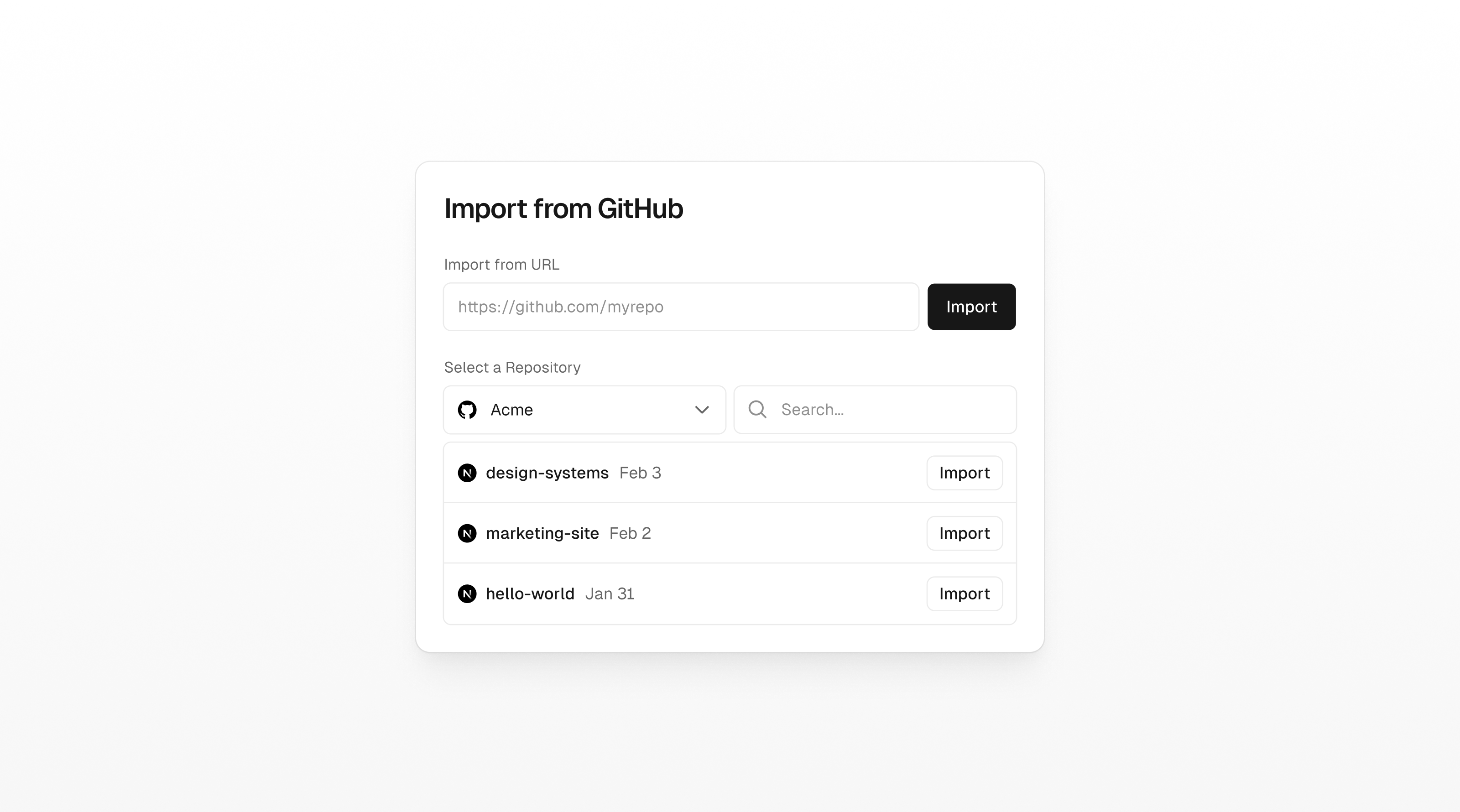
The one asterisk worth flagging up front: v0 still only outputs one stack -- Next.js, React, TypeScript, Tailwind CSS, and shadcn/ui. Ask for anything else and, per real user reports checked below, you tend to get React back anyway.
v0's real story in 2026 is a parent company scaling fast -- with numbers that don't always agree with each other.
Series F, $300M, co-led Accel + GIC, Sep 30, 2025.
491 ratings, apps.apple.com, checked Sep 28, 2026.
Vercel's own framing -- see metric note below.
Open-source Platform API SDK, GitHub, Sep 28, 2026.
| Era | What happened |
|---|---|
| 2015 → Apr 2020 | Guillermo Rauch founds ZEIT (2015); company rebrands to Vercel (April 2020) |
| Sep–Oct 2023 | v0 announced, public beta opens Oct 11, 2023 -- 100,000+ waitlist signups in 3 weeks |
| Oct 2024 | v0 reaches general availability; Vercel says 4M+ people have used it |
| May 13, 2025 | Official pricing overhaul: fixed message counts replaced by token-based credits |
| Sep 30, 2025 | Vercel closes $300M Series F at $9.3B valuation (Accel + GIC co-lead) |
| Feb 3, 2026 | "New v0": Git panel, Vercel Sandbox previews, Snowflake/AWS data connections -- production focus |
| Apr 19-23, 2026 | Vercel discloses a supply-chain security incident (Context.ai-linked OAuth breach) |
| Sep 28, 2026 (checked) | Domain is v0.app; Premium ($20/mo) being sunset; Plus/Business/Enterprise current |
The praise is about speed to a deployed URL; the complaint is about what iteration actually costs.
Reviewers describe spinning up a working prototype and sharing a live link "without opening a laptop," and note v0 "automatically fixes errors from browser console" during generation -- alongside a smaller thread of complaints that deploying directly from the mobile app is unreliable for some users.
A consistent pattern: v0 delivers "little to no direction needed on the visual side" and handles the full prompt-to-deployed-URL pipeline in one pass -- praised as eliminating "the blank canvas problem" for landing pages, dashboards, and internal tools.
The most consistent complaint in the sourced feedback: heavy users report $10-$30 in credits burned in a single day of iteration, including paying again to fix mistakes v0 itself introduced -- with no refund mechanism described.
Four current tiers -- plus a fifth, legacy one that's being phased out under existing users.
Free
$5/mo included credits, 7 messages/day.
- Design Mode, GitHub sync
- Deploy to Vercel
Plus
$30 credits/user + $2 free daily login credits/user.
- Access to all models
- Team collaboration, centralized billing
Business
Same credit structure as Plus.
- Training opt-out by default
Enterprise
All Business features, plus:
- SAML SSO, RBAC, support SLAs
- Data never used for training
Source: v0.app/pricing and v0.app/docs/faqs, verified Sep 28, 2026. Legacy Premium ($20/mo) not shown -- current-plan snapshot only.
Your answer depends on how much you plan to iterate, and on what stack.
Free tier -- $5/mo credits, 7 messages/day, is a genuinely usable starting point.
Plus, $30/user/month -- budget for token-based overage if you iterate heavily; it's the dominant real complaint below.
Enterprise, custom pricing -- Business ($100/user/mo) gets you training opt-out sooner if you can't wait for a sales cycle.
Confirm your renewal status before it lapses -- it's being sunset, and some accounts have already been auto-downgraded.
v0 isn't built for that -- see Alternatives below.
The thing that actually changed: v0 now behaves like a junior engineer with Git access, not a mockup generator.
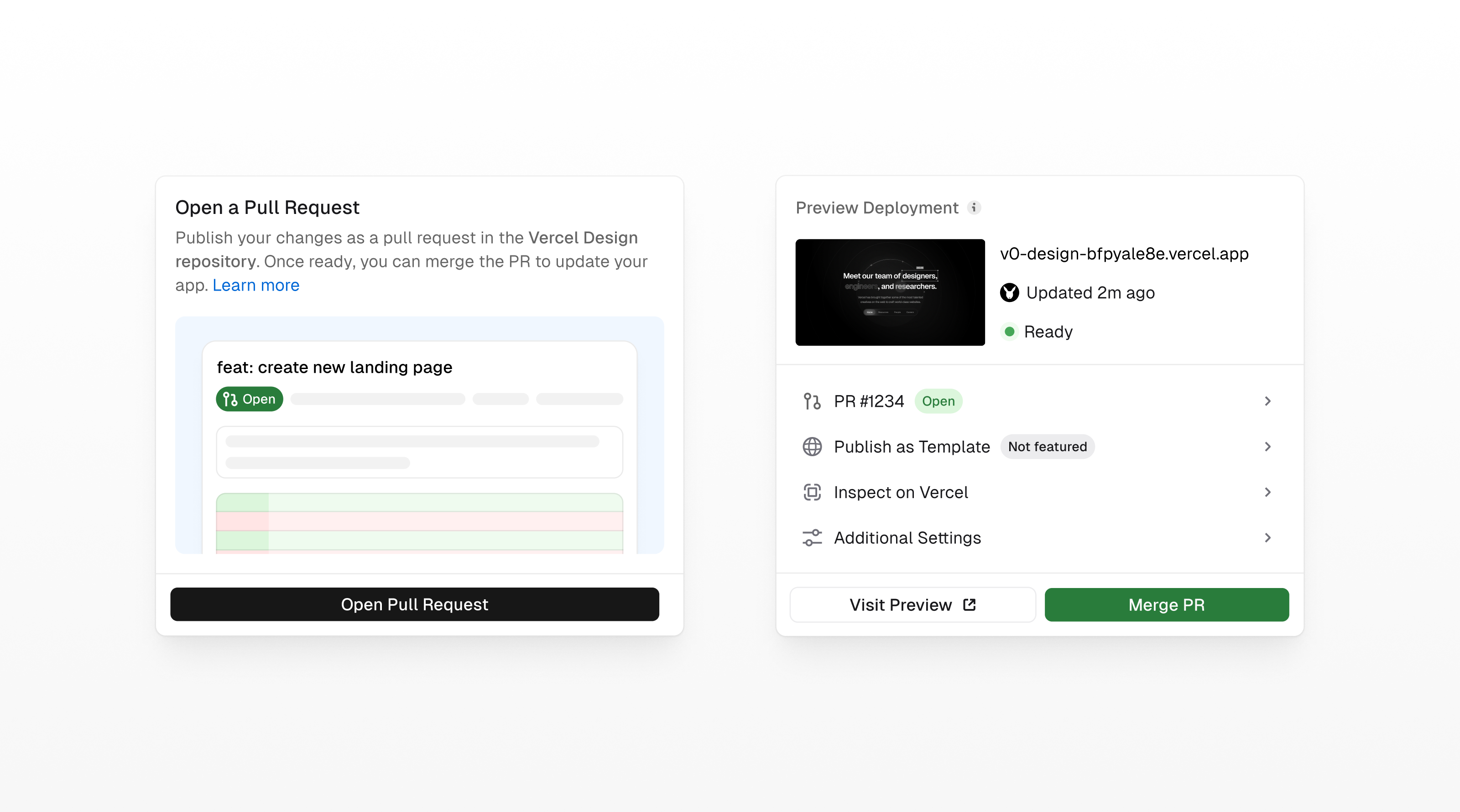
Before February 2026, a "v0 project" was a chat thread that produced code you then had to copy out, clean up, and wire into your own repo. Since the rebuild, connecting a GitHub repo gives every chat a real Git panel: v0 creates a working branch, writes commits as it edits, and opens a pull request for you to review -- by design, you cannot push straight to main. Previews changed too: instead of a browser-only approximation, they now run inside a lightweight Vercel Sandbox VM that supports server-side code, API routes, databases, and real environment variables, so what you see in preview is what actually ships.
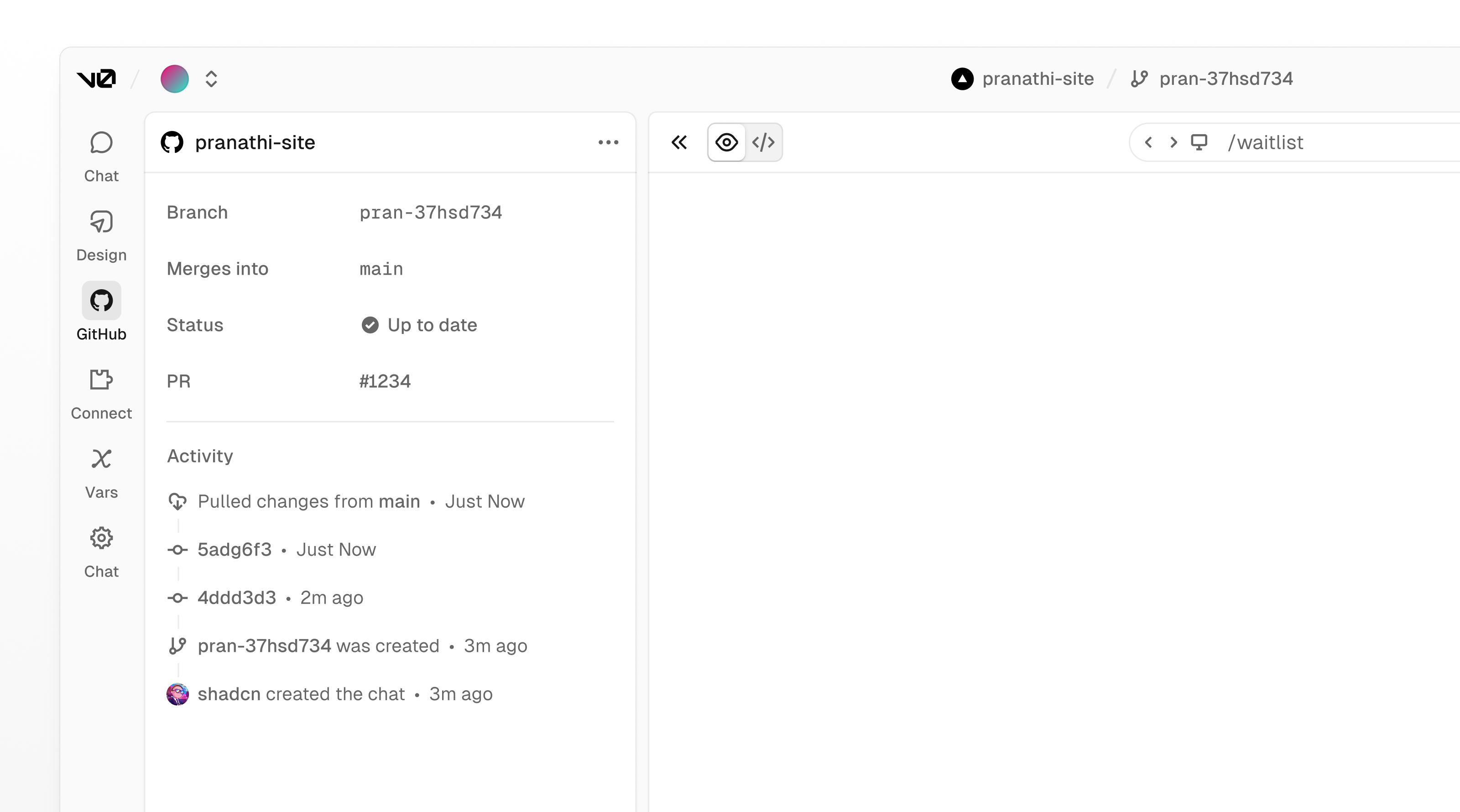
| v0 before Feb 2026 | v0 now (checked Sep 28, 2026) | |
|---|---|---|
| Primary output | Standalone React components/prototypes | Full-stack apps: UI + auth + databases + API routes |
| Version control | Manual copy-out of generated code | Git panel: branches, auto-commits, PR-only merges to main |
| Preview accuracy | Browser-based approximation | Real Vercel Sandbox VM -- runs like production |
| Data connections | Not offered | Snowflake, AWS, Neon, Supabase, Stripe (via Marketplace/MCP) |
- v0 also ships "Design Systems 2.0" -- it can generate UI using the exact same components your product already runs in production, demoed live against Microsoft Fluent, Shopify Polaris, IBM Carbon, and Palantir Blueprint, not just Vercel's own Geist.
- Design Mode (no code, no credits spent) lets anyone tweak copy, layout, and styling by clicking an element and typing an instruction.
- v0 won a 2025 Webby Award for developer tools.
- "Why does v0 feel slower?" is now a real FAQ entry -- previews run full production-accurate builds, which official docs admit "takes a bit more time than before."
- Several March 2026 user reports describe a reliability regression (ignored prompts, connection errors) that JAVIS could not confirm was fully resolved as of this check.
Prompt in, pull request out -- with a human still deciding what merges.
Official Vercel video walking through building a Next.js app from a single prompt, including API routes and database features.
Published by the official "Vercel" YouTube channel (youtube.com/@VercelHQ), checked Sep 28, 2026. Two related official candidates ("v0 for AI Apps | Demo" and the original 2023 "Introducing v0: Generative UI") were checked the same way and also confirmed as genuine Vercel uploads; this one was selected as the most current engineer-focused walkthrough.
v0 doesn't just generate code once -- it can browse, inspect, and keep working while you're away from your desk.
Beyond chat-to-code, v0 has autonomous agent capabilities: web search, live site inspection, and external tool/API calls during generation, per official docs. The v0 iOS app (general availability, 4.80/5 across 491 App Store ratings as of this check) extends that further -- start a project on desktop, leave your voice-prompted instructions on mobile, and get notified when a long-running agent task finishes. Vercel's own framing for why the mobile app exists: "70% of development happens outside traditional work hours," a stat drawn from its own usage data at the Series F announcement.
MCP is built in, and "bring your own design system" is a real, demoed feature.
v0 supports the Model Context Protocol natively: connect a custom MCP server (no-auth, custom headers, bearer token, or OAuth 2.0) via the "+" menu in any chat, or install a Vercel Marketplace integration -- Neon, Supabase, Stripe, and others -- with no additional setup, per official docs. Once connected, you control whether v0 uses those tools automatically, asks for approval first, or never uses them. Separately, "Design Systems 2.0" lets v0 generate UI using your product's actual component library instead of generic shadcn/ui defaults -- Vercel demoed this against Microsoft Fluent, Shopify Polaris, IBM Carbon, and Palantir Blueprint on top of its own Geist system.

There's a real Platform API behind v0 -- and your bill is token-metered, not seat-metered.
| Model tier | Input (per 1M tokens) | Output (per 1M tokens) |
|---|---|---|
| v0 Mini | $0.20 | $1.20 |
| v0 (standard/Pro) | $2.00 | $10.00 |
| v0 Max | $5.00 | $25.00 |
| v0 Max Fast | $10.00 | $50.00 |
Beyond the chat UI, the v0 Platform API (v0.app/docs/api/platform) and the open-source v0-sdk TypeScript package let developers create chats, manage projects, and trigger deployments programmatically -- useful for embedding v0 into an internal tool, CI pipeline, or another AI agent's toolchain.
v0's own generation-time checks are solid. Vercel's April 2026 platform incident is the bigger thing to know about.
| What | Detail |
|---|---|
| Root cause | Lumma Stealer malware compromised a Context.ai (third-party AI tool) employee, Feb 2026 |
| Escalation | Stolen credentials led to a Vercel employee's Google Workspace, then their Vercel account |
| Disclosed | April 19, 2026, 11:04 AM PST, with follow-up bulletins through April 23 |
| Data affected | Non-sensitive, plaintext environment variables (API keys, tokens, DB credentials) for a limited customer subset |
| Data NOT affected | Variables explicitly marked "sensitive"; no npm packages compromised (confirmed with GitHub, Microsoft, npm, Socket) |
People who live inside the Next.js/Vercel stack and want to ship, not just prototype.
| Situation | Why v0 fits | Likely plan |
|---|---|---|
| Solo builder validating an idea | Fastest documented path from prompt to a shareable, deployed URL | Free |
| Team already on Next.js/Vercel/shadcn-ui | Design Systems 2.0 can generate with your actual component library | Plus |
| Designer/PM who wants to ship without engineering time | Design Mode (no code, no extra credits) + Git-backed PRs an engineer can review | Plus or Business |
| Enterprise needing SSO/RBAC/no-training-on-our-data | Enterprise tier delivers all three; Business gets opt-out sooner | Business or Enterprise |
| Team needing a non-React output or a lower-cost iteration loop | Not v0's strength by its own documented stack limits and cost pattern -- see Alternatives | Consider Lovable or Bolt.new |
Four real gaps, not manufactured ones.
The May 2025 shift away from fixed message counts is honest about complexity, but the "$10-$30 burned in a day" complaint pattern is real and structural, not a rare edge case -- and you pay again to fix v0's own mistakes.
v0's own FAQ says the $20/month Premium plan is "being sunsetted," and September 2026 community-forum posts describe accounts getting auto-downgraded without a clear migration path or refund conversation.
Output is Next.js/React/TypeScript/Tailwind/shadcn-ui, full stop. Ask for Vue, Svelte, or plain HTML and, per sourced user reports, you tend to get React back regardless.
The April 2026 incident didn't come from v0's own code, and sensitive-marked variables were protected -- but it's a genuine supply-chain breach on the platform every v0 app deploys to, worth factoring into any "just click Publish" workflow.
If v0's React-only, Vercel-first tradeoff isn't what you need, here's how to think about it.
| If you mostly need... | Compare v0 with... |
|---|---|
| The strongest non-technical iteration loop with a Supabase backend | Lovable -- read our review |
| The fastest in-browser prototype via WebContainer tech, full IDE access | Bolt.new -- read our review |
| A broader "build and host anything" agent beyond just web frontends | Replit Agent |
| An AI-native code editor for engineers who want to stay in full control of the codebase | Cursor -- see our Cursor review |
| A terminal-first coding agent bundled with a general Claude subscription | Claude Code -- see our Claude Code setup guide |
No affiliate relationship shapes this review.
JAVIS has not established a publisher affiliate program with Vercel Inc. Every CTA here points to the official product.
Go to the official page.
Open v0Read the alternative that matches your real question.
Choose the next articlev0 makes the most sense next to the AI builders and agents it's directly competing with.


Questions people are actually searching right now
Is it v0.dev or v0.app now?
v0.app is the current official domain, verified live: v0.dev returns an HTTP 307 redirect straight to v0.app as of this check (Sep 28, 2026). Both names are used interchangeably in the community, but v0.app is canonical.
Is v0 free?
Yes -- the Free plan costs $0/month with $5 of included monthly credits and a 7-message-per-day limit, plus Design Mode, GitHub sync, and deploy-to-Vercel. Paid tiers start at Plus, $30/user/month.
What happened to the $20/month Premium plan?
It still exists for some legacy subscribers, but v0's own FAQ describes it as "being sunsetted," and September 2026 Vercel Community forum posts report accounts being auto-downgraded to Free. If you're on Premium, confirm your status directly rather than assuming it will auto-renew unchanged.
Can v0 build full-stack apps, or just UI?
Full-stack, as of the February 2026 rebuild and confirmed in v0's own FAQ: "v0 handles everything from simple components to full-stack apps with authentication, databases, and external API integrations." Older comparison articles describing v0 as "frontend-only" predate this change.
Is v0 secure?
v0's own generation-time checks (secret-leak scanning, vulnerable-dependency blocking) are real and have blocked 100,000+ insecure deployments since launch, per Vercel's own blog. Separately, Vercel the company disclosed a real supply-chain security incident in April 2026 affecting non-sensitive environment variables for a limited customer subset -- not a v0 code-generation flaw, but relevant to anyone deploying through v0's one-click Vercel integration.
What's the difference between v0 and Lovable or Bolt.new?
All three turn a prompt into a working app, but they differ in stack and audience: v0 is Next.js/React/Tailwind/shadcn-ui only and is deepest for teams already on Vercel; Lovable pairs a chat interface with a Supabase backend and is generally regarded as strongest for non-technical iteration; Bolt.new runs a full in-browser IDE on WebContainer technology and is typically the fastest to a running prototype. See our Lovable and Bolt.new reviews for the direct comparison.
Does v0 support MCP?
Yes, natively -- per official docs at v0.app/docs/MCP. You can connect a custom MCP server (four auth modes) or install a Vercel Marketplace integration like Neon, Supabase, or Stripe with no additional setup.
Who owns v0?
v0 is a product of Vercel Inc. (founded 2015 as ZEIT, renamed Vercel in April 2020), which also created Next.js. Vercel is privately held, most recently valued at $9.3B after a $300M Series F in September 2025 co-led by Accel and GIC.
Where this came from, and when it was checked.
Domain/redirect (v0.dev → v0.app): live request to v0.dev, Sep 28, 2026 -- confirmed HTTP 307 redirect to v0.app.
Product capabilities, FAQ, MCP, Design Mode: v0.app, v0.app/docs, v0.app/docs/faqs, v0.app/docs/MCP, v0.app/docs/api/platform -- all official, Sep 28, 2026.
Pricing (Free/Plus/Business/Enterprise, token rates): v0.app/pricing, Sep 28, 2026.
Premium sunset / pricing history: v0.app/docs/faqs (official, "being sunsetted" language) cross-checked against vercel.com/blog/updated-v0-pricing (May 13, 2025 announcement) and Vercel Community forum threads describing Sep 2026 auto-downgrades.
Feb 2026 rebuild (Git panel, Sandbox previews, data connections): vercel.com/blog/introducing-the-new-v0, official, published Feb 3, 2026; screenshots sourced directly from that post's own asset CDN (assets.vercel.com).
April 2026 Vercel security incident: official bulletin, vercel.com/kb/bulletin/vercel-april-2026-security-incident, cross-checked against independent security-research write-ups (Rescana, IONIX, Strapi, Trend Micro, CSA, HeroDevs, PushSecurity) for consistency.
v0 security-scanning stats (100k+ blocked deployments): vercel.com/blog/v0-vibe-coding-securely, official, published Aug 4, 2025.
Funding/valuation (Vercel Series F): vercel.com/blog/series-f (official) plus BusinessWire, Sacra, and other funding trackers for corroboration of the $9.3B figure and total ~$863M raised.
Usage figures (4M/6M/3.5M users; revenue run-rate $340M/$500M): multiple third-party trackers and press summaries (SaaStr, getpanto.ai, AgentMarketCap, okara.ai) referencing different dates and definitions -- explicitly flagged in-article as not directly comparable, none independently audited.
GitHub stats (v0-sdk): GitHub data for github.com/vercel/v0-sdk, Sep 28, 2026.
App Store rating: apps.apple.com listing for the v0 iOS app (id6745097949), via search-indexed snapshot, Sep 28, 2026.
Real screenshots/media: v0.app/chat/api/og, assets.vercel.com Feb 2026 blog screenshots (Git panel, Import from GitHub, Publish/PR), v0.app/docs/og/design-mode.
Official video: youtube.com/watch?v=Bm8fhmISZYo, authorship confirmed on YouTube (author "Vercel", channel @VercelHQ); two related candidates were checked the same way and also confirmed genuine before this one was selected as most current.
User sentiment: G2's Vercel product listing (rating/review count via search aggregation -- G2 could not be read directly, so this is a lower-confidence read); App Store reviews; independent 2026 user-sentiment roundups (Superdesign) and Vercel Community forum threads for the pricing-complaint pattern.