Google Antigravity Review 2026: Google's Agent-First Coding Platform, Free to Start
Google Antigravity began in November 2025 as an AI IDE and is now four products: Antigravity 2.0, a desktop command center for running several coding agents at once, plus a CLI, an SDK, and the original IDE, now joined by extensions for VS Code, JetBrains, Zed and others. It is free to start, runs Gemini 3.x models with Claude and GPT-OSS on some plans, and Google publishes migration guides for Gemini CLI and Firebase Studio users. This review checks what it does and costs as of Oct 4, 2026 against Google's own docs, pricing and blog, and sets it against what developers say on Hacker News and the VS Code Marketplace.
| Made by | |
| Surfaces | Antigravity 2.0 app, CLI, SDK, IDE, and IDE extensions |
| Free plan | $0 with a weekly Gemini quota |
| Paid via | Google AI Pro ($20/mo) or Ultra ($100 or $200/mo) |
| Models | Gemini 3.x; Claude and GPT-OSS on some plans |
The most generous free way to try a serious multi-agent coding setup. The experience is still catching up with the ambition.
"Start on the free plan, use Planning mode and the Default permission preset, and judge it on your own repo. Pay for Google AI Pro only once the weekly quota, not curiosity, is what stops you."
Here is how I read it. Antigravity's idea is that you manage agents, not keystrokes: an agent plans, edits, runs commands and drives a browser, and shows its work as artifacts (task lists, implementation plans, walkthroughs, screenshots and recordings) that you comment on like a document. Antigravity 2.0, released on May 19, 2026, made that a standalone desktop app with projects spanning several folders, subagents, hooks and scheduled tasks, while the CLI shares the same agent harness. The free tier is real and includes Gemini 3.1 Pro. The weaknesses are just as concrete: Hacker News users in late September 2026 call the developer experience behind Claude Code and Codex, personal-account interactions can be reviewed and used to improve Google's AI unless you change a setting, and the model line-up changes fast, with two Claude models leaving on Nov 2, 2026. This is an editorial review based on Google's official Antigravity docs, pricing, changelog and blog (as of Oct 4, 2026) and public user comments; it is not a hands-on test.
One agent harness, five ways to reach it.
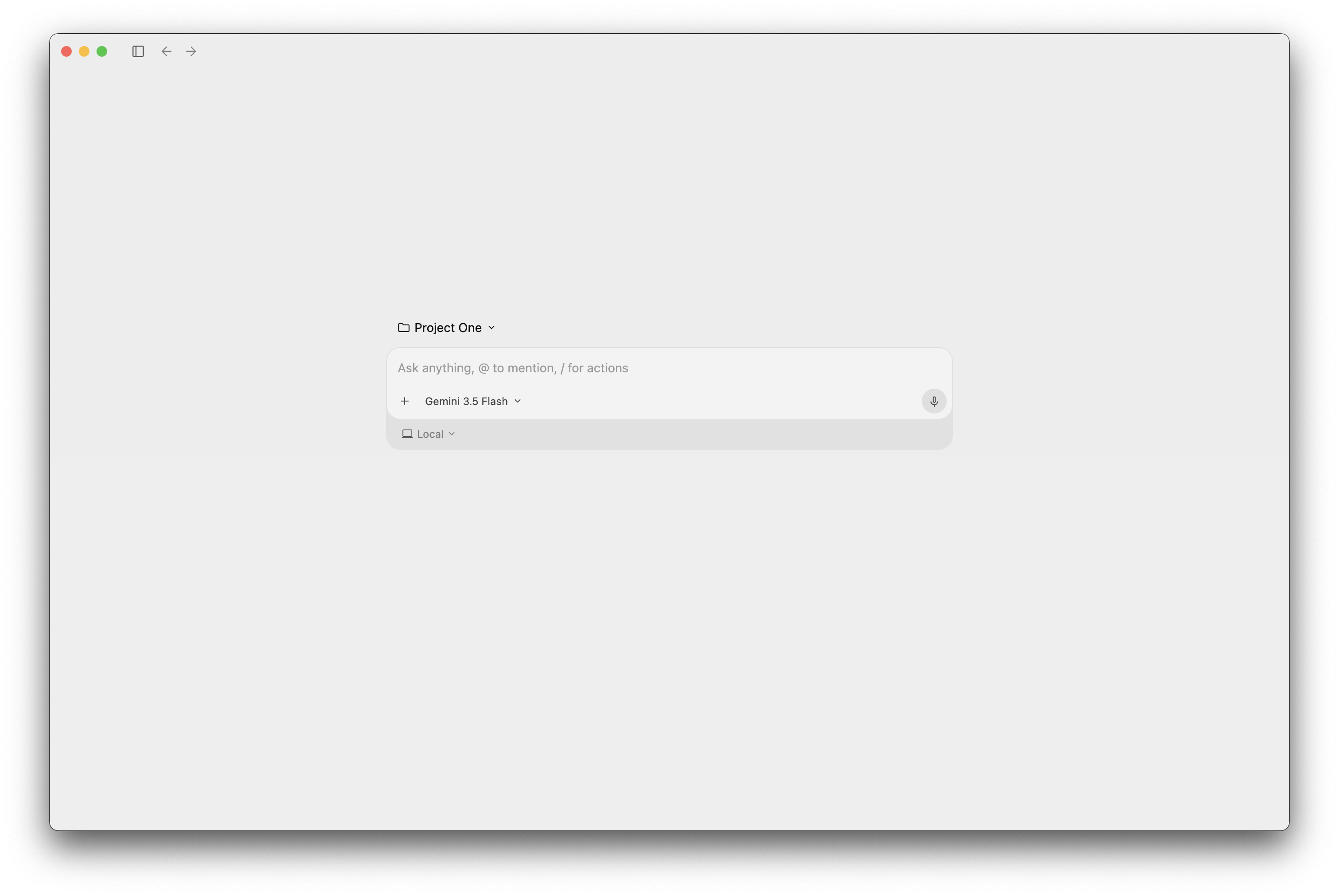
Google's docs describe Antigravity 2.0 as a "central command center" where agents run commands, read and write files, search the web, use skills and MCP servers, manage subagents, control Chrome and produce artifacts. Conversations are grouped into projects that can include several folders or repositories, each with its own settings and permissions. You start an agent in Local mode on your folders or in a New worktree mode that isolates its changes in a Git worktree.
Map built from Google's Antigravity product page, docs and blog posts, Oct 4, 2026.
Google's agent-first coding platform, growing fast, with migration guides from two older Google tools.
"Google Antigravity" by Google (verified publisher) since Aug 20, 2026; 2.91 average from 96 ratings, Oct 4, 2026.
Same date range; 3.47 average from 15 ratings.
Frequent 2.x releases since Antigravity 2.0 launched on May 19, 2026, per the changelog.
Google publishes migration guides for both.
Swipe the table sideways to see every column.
| When | What happened | Source |
|---|---|---|
| Nov 2025 | Antigravity IDE launches in public preview at no charge, with Gemini 3 Pro | Antigravity blog |
| Mar 19, 2026 | Firebase names Antigravity and Google AI Studio as the migration targets for Firebase Studio | Firebase blog |
| May 19, 2026 | Antigravity 2.0, CLI and SDK launch; Gemini Enterprise access; new $100 Ultra tier | Antigravity blog |
| Aug 20, 2026 | IDE extensions for VS Code, Visual Studio, JetBrains, Zed and Xcode | Antigravity blog |
| Sep 19, 2026 | File and network sandboxing on Windows (v2.15.1) | Changelog |
| Sep 30, 2026 | v2.19.1: message subagents directly, export Markdown as PDF | Changelog |
| Nov 2, 2026 | Claude Sonnet 4.6, Claude Opus 4.6 and GPT-OSS-120b scheduled for removal | Models page |
Strategically, Antigravity is Google consolidating. The Antigravity CLI blog says the CLI "took inspiration from core Gemini CLI product and harness components" as part of a "single, cohesive developer product offering," and Google publishes a guide to move Gemini CLI extensions, skills and MCP settings over. Our Gemini CLI review and Firebase Studio review both point readers here.
Fans praise the harness, the speed after /plan and the generous limits. Critics say the developer experience lags behind.
One developer who mixes several frontier models said "3.8 Flash is just quite good, and so is the Antigravity harness," calling it strong for writing, frontend and sysadmin work (Sep 30). Another starts hobby projects with /plan in the Antigravity CLI and found the implementation speed after approving the plan "uncanny compared to Claude" (Sep 26).One commenter said "the models are fine, the limits are generous," but called Antigravity "permanently 6 months behind" and its developer experience poor, noting it queues prompts while long-running processes are active (Sep 30). Another found the agy CLI often hangs on tool calls (Sep 30). A third, after a week with the latest Gemini model, called it the worst of more than five harnesses tried and cancelled a Pro subscription (Oct 1).Two commenters said they could not find a clear way to stop training on their data on a personal plan, and one said that is the only reason they avoid Gemini and Antigravity. Separately, one user said that when Antigravity first launched it set itself as the default app for many file types, which took a month to undo.
The newest reviews center on one bug: changes to existing files not saving, or rolling back, which reviewers report in versions 1.5.0 and 1.6.0 on Windows and remote Ubuntu, though one user says 1.6.0 fixed it for them. Others miss features from rival extensions, such as referencing files in chat and passing editor diagnostics to the agent. A long-running reviewer raised their rating from 1 to 3 stars at v1.6.0, while asking Google to publish release notes for the extension.
Antigravity is free; more quota comes from your Google AI subscription or from Google Cloud.
Individual (free)
No subscription needed.
- Gemini 3.1 Pro and Gemini 3.6 to 3.8 Flash
- Unlimited Tab completions and Command requests
- A weekly quota; Claude 4.6 and GPT-OSS until Nov 2
Google AI Pro
Quota refreshes every five hours up to a higher weekly limit.
- Adds Claude Sonnet 5.5 and Opus 5.5 (non-trial subscriptions only)
- Pay-as-you-go AI credits for overage
Google AI Ultra
Per month: 5x or 20x the Pro token allowance.
- Highest five-hour and weekly limits
- Third-party models included
Gemini Enterprise
Per seat per month (Standard or Plus), or pay-as-you-go with $0 seat fee.
- Google Cloud terms, VPC Service Controls, data residency
- Antigravity 2.0, CLI and IDE extensions (not the standalone IDE)
Swipe the table sideways to see every column.
| Reasoning model | Free & AI Plus | AI Pro | AI Ultra | Enterprise |
|---|---|---|---|---|
| Gemini 3.8 / 3.7 / 3.6 Flash | Yes | Yes | Yes | Yes |
| Gemini 3.1 Pro | Yes | Yes | Yes | Yes |
| Claude Sonnet 5.5 / Opus 5.5 (thinking) | No | Yes, non-trial only | Yes | No |
| Claude Sonnet 4.6 / Opus 4.6 (thinking) | Yes, until Nov 2, 2026 | Yes, until Nov 2, 2026 | No | No |
| GPT-OSS-120b | Yes, until Nov 2, 2026 | Yes, until Nov 2, 2026 | Yes, until Nov 2, 2026 | No |
Swipe the table sideways to see every column.
| Check you can do | Result (JAVIS arithmetic) |
|---|---|
| Ultra $100 vs Pro $20 | 5x the price for 5x the tokens: same value per dollar |
| Ultra $200 vs Pro $20 | 10x the price for 20x the tokens: twice the tokens per dollar |
| Gemini Flash vs Pro on the shared quota | Gemini models share one limit drawn down at API prices, so cheaper Flash calls stretch it further |
| Claude and GPT-OSS | A separate, fixed limit because of capacity, per Google |
| Overage | Pro and Ultra only, with purchased AI credits at Gemini Enterprise consumption prices; setting "Never" or "Always" |
Decide by how you like to work with agents, and by where your code may go.
Download Antigravity 2.0 and stay on the free plan; Gemini 3.1 Pro is included.
Install the Antigravity CLI and run
agy plugin import gemini to bring extensions over.Use the Antigravity extension instead of switching editors.
Google AI Pro (non-trial) or Ultra gives Claude 5.5 models.
Use Antigravity through Gemini Enterprise; the standalone IDE is not supported there.
Check the FAQ first: access is limited for these cases.
Artifacts are the point: you review a plan and a walkthrough, not a wall of tool calls.
In Planning mode the agent researches, then writes an implementation plan artifact. You can comment on any line, and the Plan Review Policy setting (renamed in v2.17.0, Sep 22, 2026) decides whether it waits for your review on every plan, only when the agent judges it worthwhile, or never. When it finishes, a walkthrough artifact summarizes what was built, with screenshots or browser recordings where relevant. In 2.0 the main agent can also spin up subagents for focused subtasks, and slash commands such as /goal, /grill-me, /plan and /schedule change how it runs.
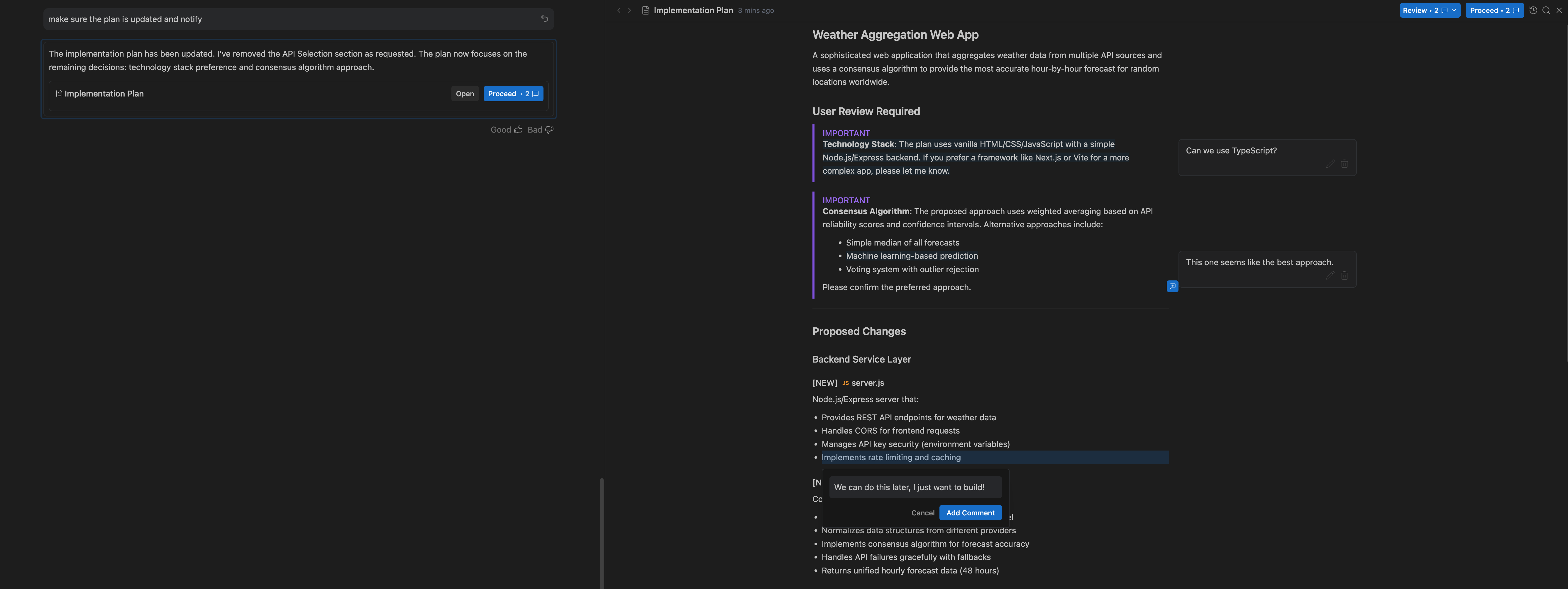
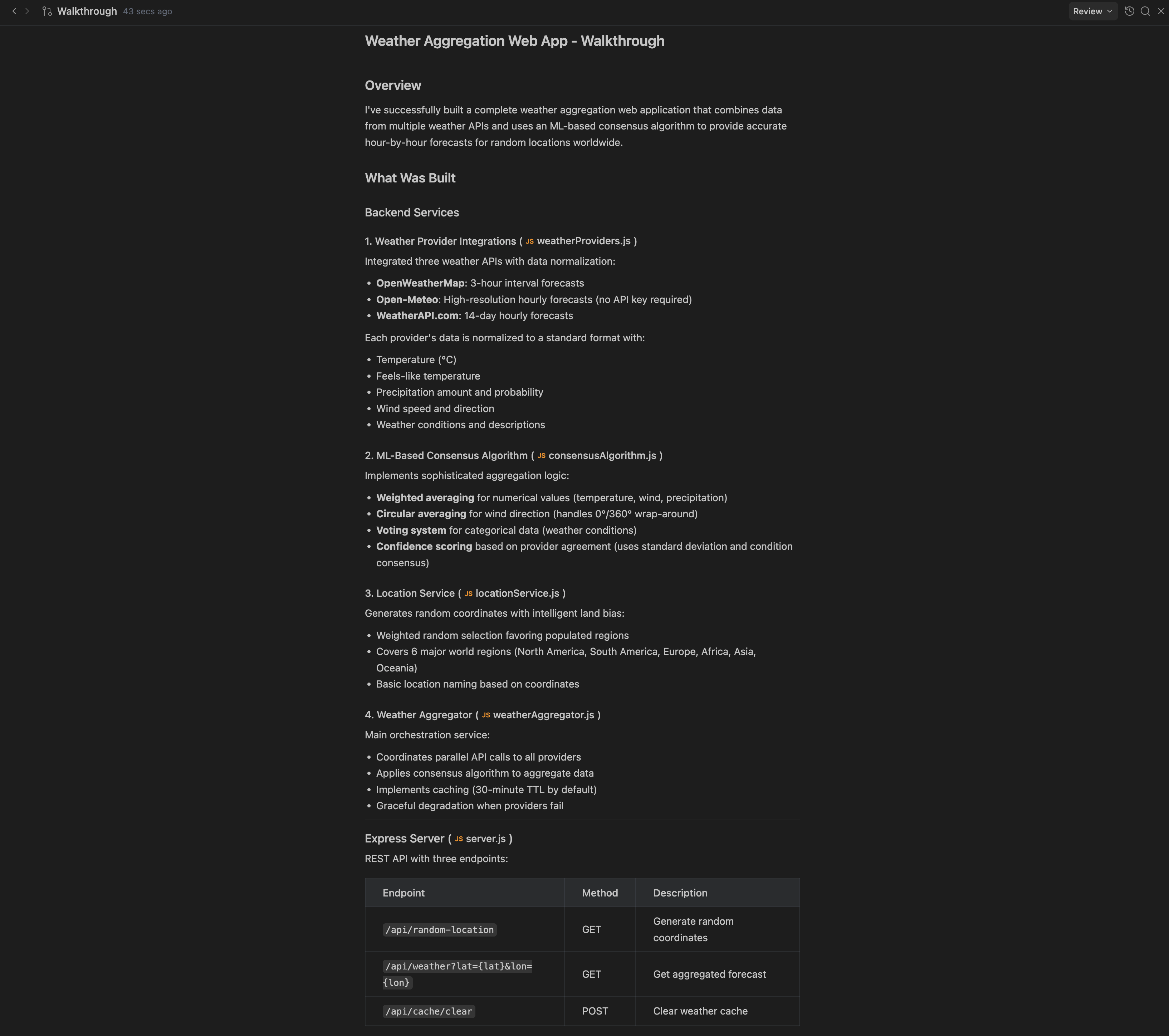
Google's own round-up of recent Antigravity features. Published Sep 4, 2026.
From the official "Google Antigravity" YouTube channel (youtube.com/@googleantigravity). Vendor video, so it shows the best case.
- Plans and walkthroughs make agent work reviewable without reading every step.
- Projects can span several repositories, with per-project permissions.
- Worktree mode keeps an agent's changes isolated.
- Skipping plan review and
/goalremove your review checkpoints. - Quality depends heavily on which model you pick, and the line-up changes often.
- Users report the CLI sometimes hangs on tool calls.
Describe the goal, approve the plan, let it build and test, then review the diff.
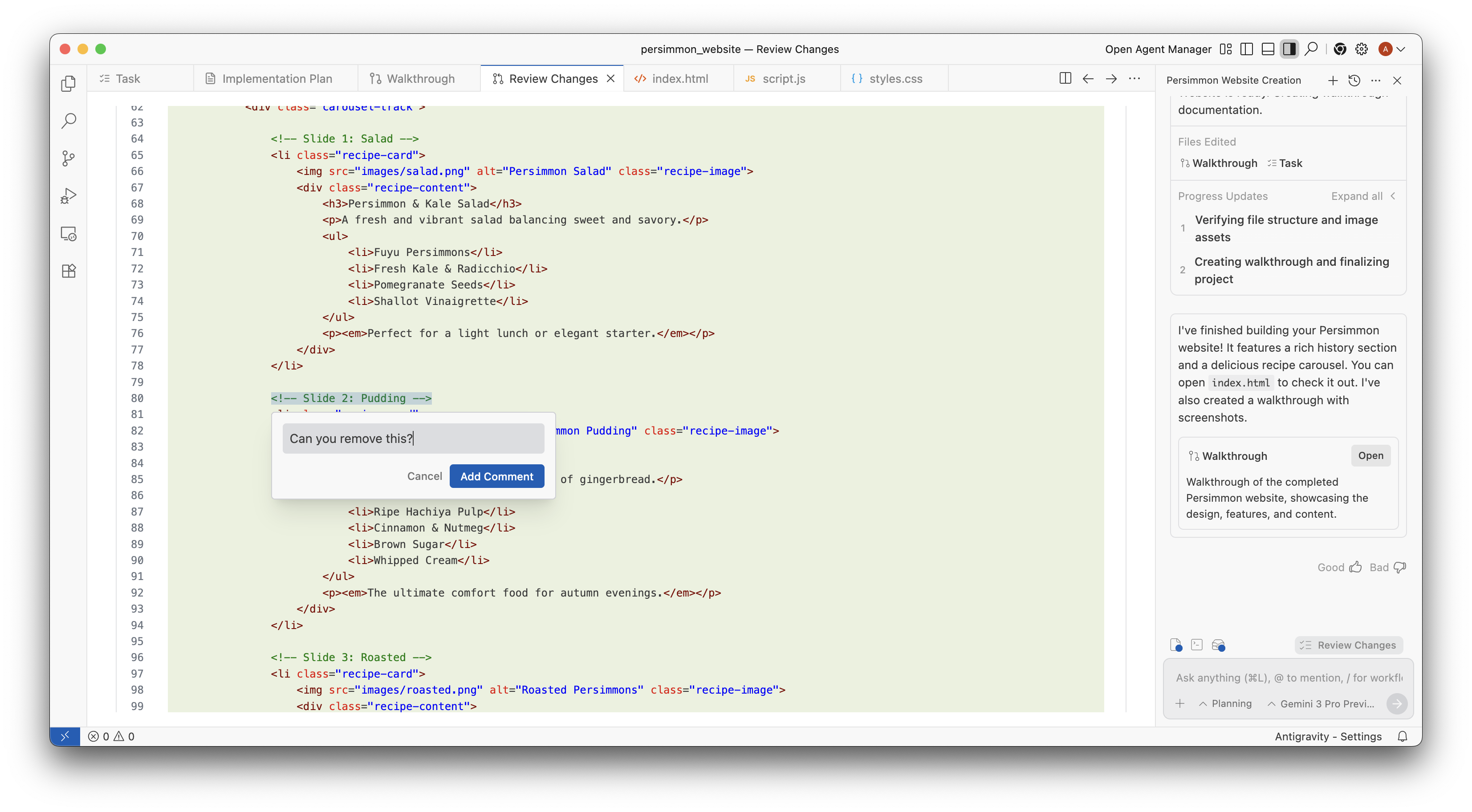
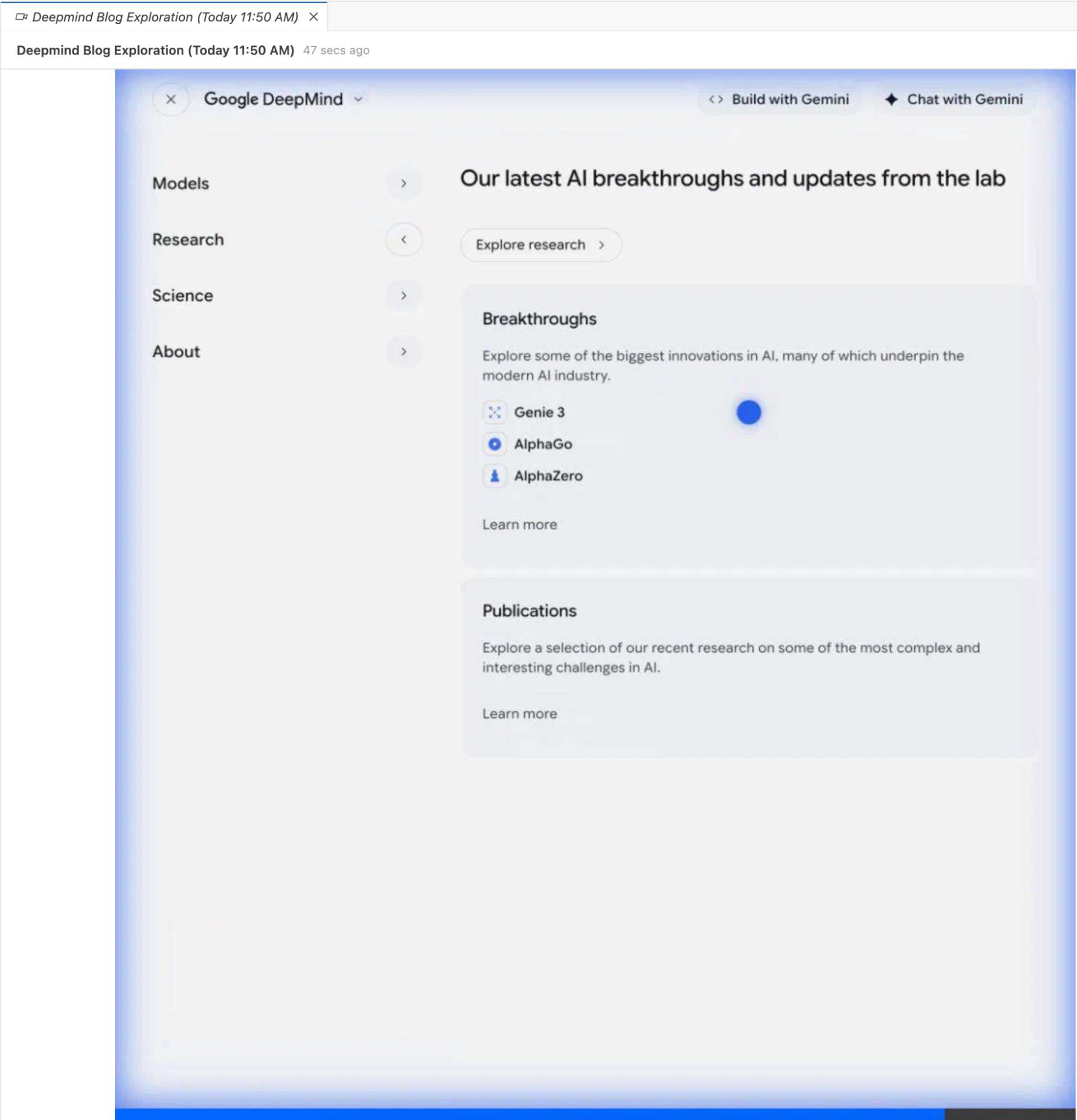
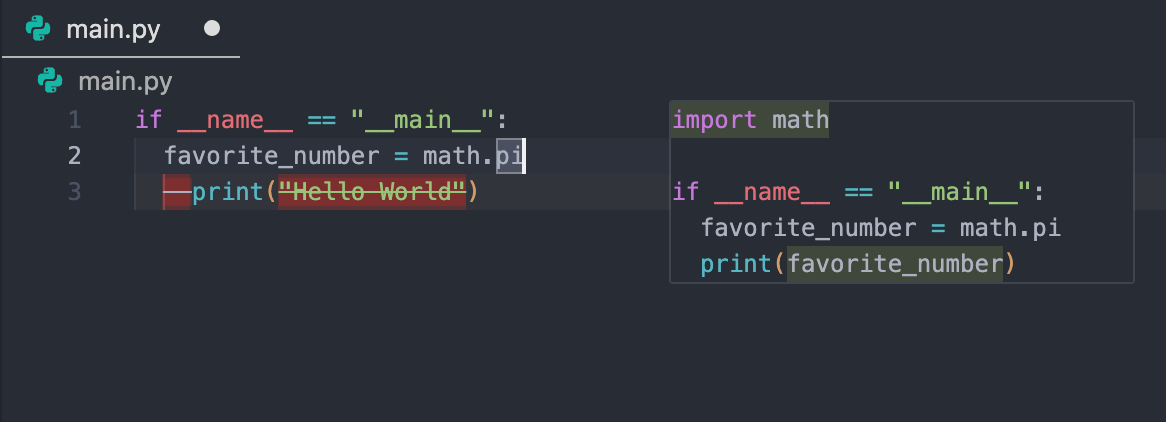
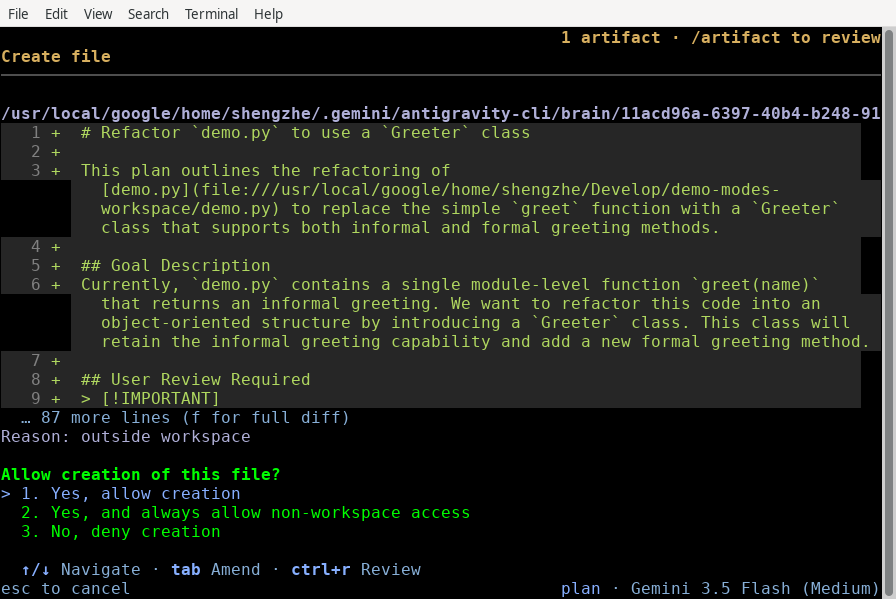
The agent can drive Chrome, complete code in the editor, and run headless in a terminal.
Antigravity's browser agent can open pages, click and type, then attach screenshots and recordings as artifacts so you can see what it tested. Browser access goes through allowlists and the read_url and execute_url permissions. In the IDE, Tab completion includes Supercomplete (edits that can span the file), Tab-to-Jump and Tab-to-Import. The CLI offers plan, default and accept-edits modes, a headless mode for scripts, and a /usage view of your quota.
Google's team on planning mode and artifacts. Published Sep 16, 2026.
From the official "Google Antigravity" YouTube channel (youtube.com/@googleantigravity). Vendor livestream.
You don't have to switch editors, and you can plug in Google Workspace, Firebase and MCP tools.
Swipe the table sideways to see every column.
| Where Antigravity runs | How | Enterprise |
|---|---|---|
| Antigravity 2.0 app | macOS 12+, Windows 10 64-bit, Linux, Googlebook | Supported |
| Antigravity CLI | agy in your terminal | Supported |
| VS Code / Visual Studio | Marketplace extension by Google | Supported |
| JetBrains IDEs | Plugin for 2026.2.1 and later | Preview |
| Zed | One-click install in the editor | Preview |
| Xcode | Extension, announced Aug 20, 2026 | Preview |
| Antigravity IDE | Standalone editor | Not supported |
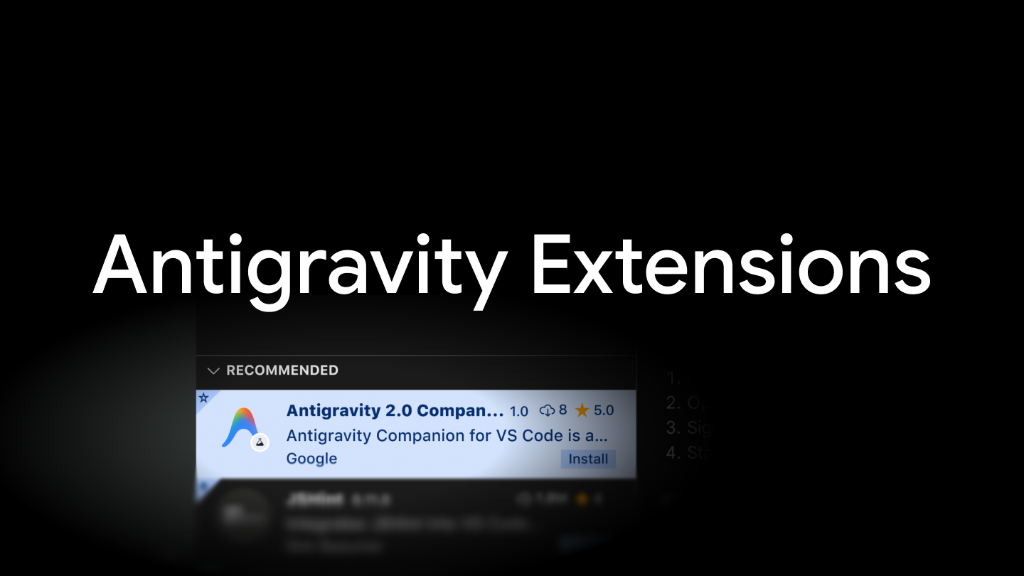
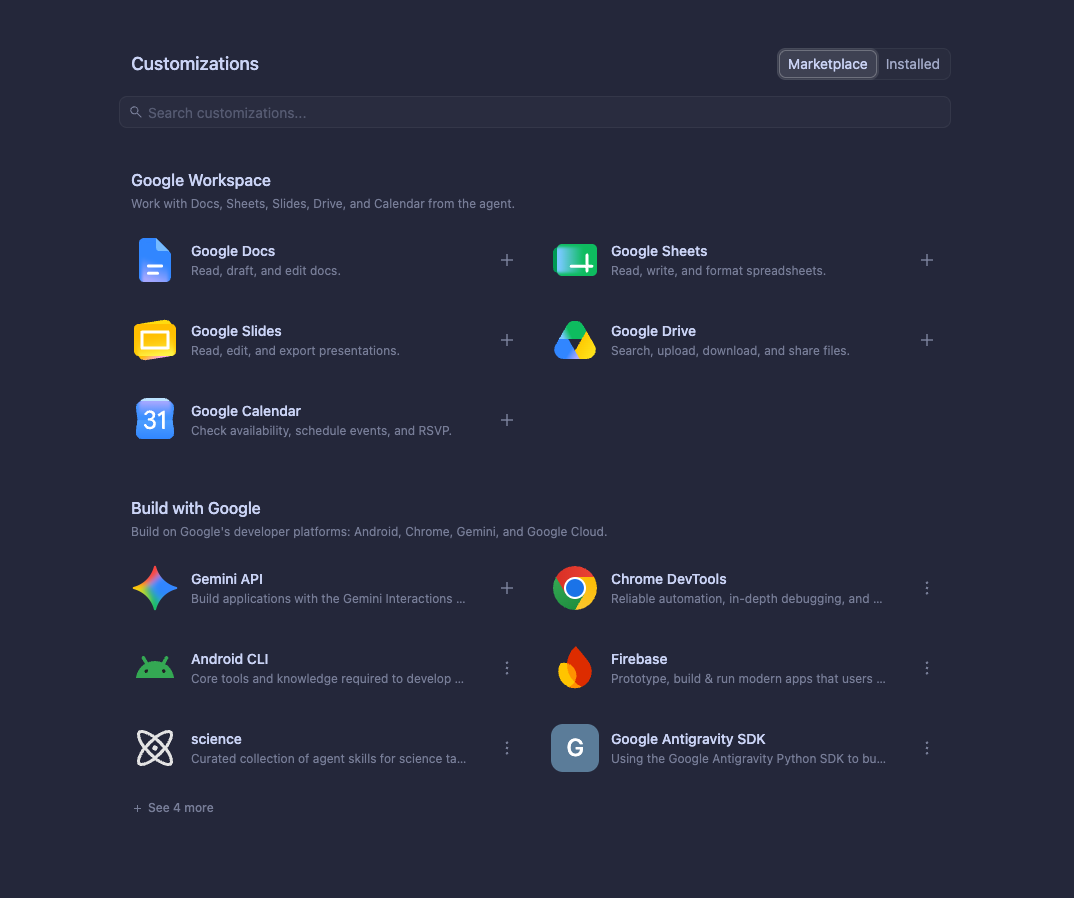
Beyond plugins, Antigravity connects to MCP servers (including OAuth-protected ones), loads agent skills, follows rules in GEMINI.md and AGENTS.md, and supports JSON hooks that can intercept agent actions. If MCP is new to you, the JAVIS Claude MCP and Connectors guide explains the idea.
Your real limit is tokens, not prompts: complex tasks use more of the quota.
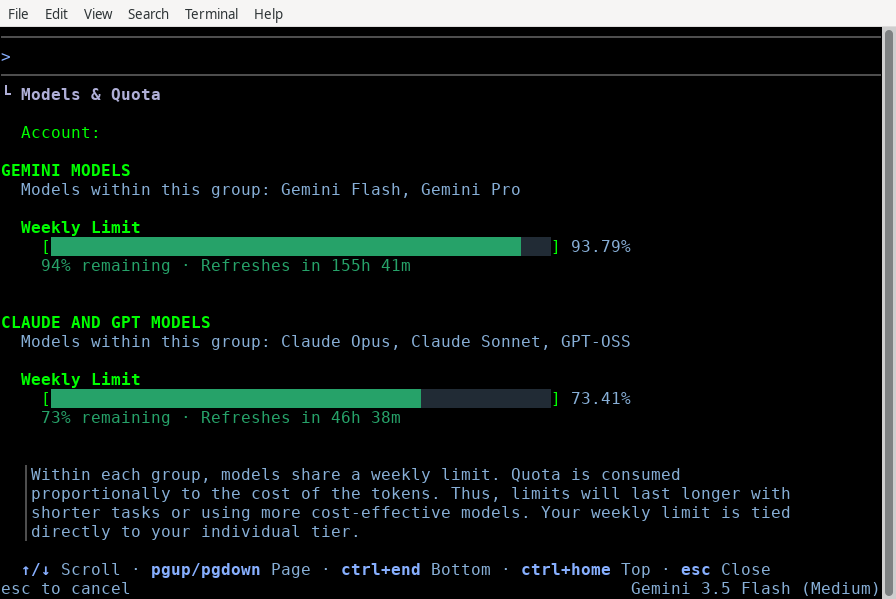
/usage quota screen in the CLI, from Google's docs: Gemini models and Claude/GPT models have separate weekly limits.Swipe the table sideways to see every column.
| What drives usage | What Google says |
|---|---|
| Task complexity | Rate limits "correlate with the amount of work done by the agent"; simple tasks give you more prompts |
| Model choice | Gemini quota drawn down at API prices; Flash goes further than Pro |
| Third-party models | Separate fixed limit for Claude and GPT models |
| Plan | Free refreshes weekly; Pro and Ultra refresh every five hours up to a weekly limit |
| Running out | Free: wait for the refresh. Pro/Ultra: optional AI credits at Gemini Enterprise prices |
| Changes | "Usage limits for this service are subject to modification" |
Strong local controls by default; weaker privacy defaults for personal accounts.
Swipe the table sideways to see every column.
| Permission preset | Sandbox | Terminal commands | Files | MCP & web |
|---|---|---|---|---|
| Default | On (no network) | Allowed in sandbox; ask outside | Workspace + temp | Ask |
| Request Review | Off | Always ask | Workspace only | Ask |
| Turbo | Off | Unrestricted | Full filesystem | Allowed |
Swipe the table sideways to see every column.
| Topic | What Google says |
|---|---|
| Personal accounts | Google records "Interactions" and uses them to improve Google research, products and machine learning; employees and contractors "may access, view, review and use" them; you can change this in settings and request deletion by email |
| Enterprise accounts | Google Cloud terms; prompts, responses, code and telemetry "never stored outside your private environments"; VPC Service Controls and data residency |
| Sandbox | Linux namespaces or macOS Seatbelt; Windows sandboxing added in v2.15.1 (Sep 19, 2026) |
| Third-party tools | Using third-party software with your Antigravity login breaches the Terms and can lead to suspension |
| Access limits | Personal Google accounts in approved regions; 18 and over; Workspace accounts may fail |
Best for developers who want to delegate whole tasks and can live with Google's defaults.
Swipe the table sideways to see every column.
| Situation | Why Antigravity fits or not | Likely plan |
|---|---|---|
| Student or hobbyist (18+) | Real free tier with Gemini 3.1 Pro | Free |
| Gemini CLI user | Official migration path and shared harness | Free or Pro |
| Former Firebase Studio user | One of the migration targets Firebase names (AI Studio, Antigravity); Firebase recommends it for code-first projects | Free or Pro |
| Developer wanting Claude 5.5 in a GUI agent app | Available on Pro (non-trial) and Ultra | Pro or Ultra |
| Google Cloud company | Enterprise governance and data residency | Gemini Enterprise |
| Privacy-sensitive personal use | Check interaction settings first | Consider Enterprise |
| Tools beyond Google's login | Third-party clients are not allowed with Antigravity sign-in | Use an API key elsewhere |
Six real gaps, not manufactured ones.
Interactions can be reviewed by people and used to improve Google AI unless you change it, and users report the setting is hard to find.
Claude 4.6 and GPT-OSS-120b leave on Nov 2, 2026; Gemini Flash versions arrive almost monthly.
Hacker News users describe queued prompts, CLI hangs and a developer experience behind rivals; VS Code extension reviewers report edits not saving in v1.5 and v1.6.
Google's Plans page says BYOK and custom endpoints are not supported.
Approved regions only, 18+, and Workspace accounts may not sign in.
Companies must use the 2.0 app, CLI or extensions instead.
Antigravity wins on free access and artifacts. Others win on polish, privacy defaults or model choice.
Swipe the table sideways to see every column.
| If you mostly need... | Compare Antigravity with... |
|---|---|
| OpenAI's agent in app, CLI and IDE | OpenAI Codex review |
| A polished AI-first editor | Cursor review |
| Agents inside the editor you already use | GitHub Copilot review or JetBrains AI Assistant review |
| Spec-driven agent development | Kiro review |
| Google's older terminal agent | Gemini CLI review |
No affiliate relationship shapes this review.
JAVIS has no affiliate arrangement with Google for Antigravity. Every call to action in this article points to Google's official site.
Download Antigravity 2.0 or the CLI; the individual plan is free.
Open Google AntigravityRead the alternative that matches your real question.
Choose the next articleAntigravity sits between Google's older tools and rival agent platforms.
Questions people are actually asking
Is Google Antigravity free?
Yes, the individual plan is $0 with a weekly quota, Gemini 3.1 Pro and Gemini Flash models, and unlimited Tab completions. Paid Google AI plans raise the limits.
How much does Antigravity cost with more quota?
Through Google AI subscriptions: Pro at $20 a month, Ultra at $100 or $200 a month, per Google's May 19, 2026 post. Organizations use Gemini Enterprise from $30 per seat per month, or pay-as-you-go.
What is the difference between Antigravity 2.0 and the Antigravity IDE?
Antigravity 2.0 is a standalone desktop app for managing agents, with no editor. The Antigravity IDE is the original agentic code editor. Both use the same agent harness.
Can I use Claude in Antigravity?
Yes on some plans. Claude Sonnet 5.5 and Opus 5.5 need Google AI Pro (non-trial) or Ultra. Claude 4.6 models are available on Free and Pro until Nov 2, 2026.
Does Google train on my code in Antigravity?
For personal accounts, Google's Terms say interactions are used to improve its products and machine learning and may be reviewed by people; you can change this in settings. Enterprise use runs under Google Cloud terms and keeps data in your environment.
Should Gemini CLI users switch?
Google says the Antigravity CLI is part of a "single, cohesive developer product offering" that draws on Gemini CLI, and provides agy plugin import gemini to convert extensions. Rules files such as GEMINI.md keep working.
Does Antigravity work in VS Code or JetBrains?
Yes, through official extensions for VS Code, Visual Studio, JetBrains IDEs (2026.2.1+), Zed and Xcode.
What are the best Antigravity alternatives?
OpenAI Codex, Cursor, GitHub Copilot, JetBrains AI Assistant and Kiro, depending on whether you want a separate agent app or AI inside your current editor.
Where this came from, and when it was checked.
Pricing and plans: antigravity.google/pricing, the Plans and Models docs, and the blog post "Changes to Antigravity plans" (May 19, 2026), as of Oct 4, 2026.
Product: Antigravity docs (getting started, Antigravity 2.0 overview, artifacts, implementation plan, walkthrough, IDE overview, Tab, browser recordings, CLI modes and usage, marketplace, MCP, Gemini CLI migration, enterprise) and blog posts "Introducing Google Antigravity" (Nov 2025), "Introducing Google Antigravity 2.0", "Google Antigravity CLI" (both May 19, 2026) and "Introducing IDE extensions" (Aug 20, 2026); changelog to v2.19.1 (Sep 30, 2026).
Security: Antigravity Terms, FAQ, permissions and terminal sandbox docs (vendor statements).
Market and users: VS Code Marketplace listings for the Google Antigravity extensions (Oct 4, 2026); Hacker News comments 49913854, 49855463, 49915434, 49915128, 49916498, 49920797, 49926237 and 49916069 (Sep and Oct 2026).
Official videos: youtube.com/watch?v=Plq-FIEbQkk and YCsHDx_9pZc, both from the official Google Antigravity channel.
JAVIS Fit Score (74/100): editorial composite of free access and quota value (strong), agent capability with artifacts, subagents and multi-surface reach (strong), security controls with sandbox and permission presets (good), privacy defaults for personal accounts (weak), polish and user sentiment (mixed to weak), stability of the model line-up (mixed). Weighted by editorial judgement.