Granola Review 2026: The Bot-Free AI Notepad, Its $14 Business Plan, and the Consent Question It Now Has to Answer
Granola transcribes meetings from your own computer audio, so no bot joins the call, then merges the transcript with whatever you typed into clean notes. It is free to start, $14 a user a month for Business, and very well rated in the app stores. The trade-offs: the free plan only shows your last 30 days, training on de-identified data is on until you switch it off, and a proposed class action filed on Jul 30, 2026 says bot-free capture breaks California’s all-party consent law.
There are no affiliate links in this review. Every Granola link goes straight to granola.ai or its help center.
| Made by | Granola, Inc. (founded in London in 2023) |
| What it is | AI notepad that transcribes from device audio, no bot |
| Basic | $0; unlimited notes, last 30 days visible |
| Business | $14 a user a month, billed monthly only |
| Enterprise | From $35 a user a month; annual option |
| Apps | macOS, Windows, iOS, Android, Apple Watch |
Granola is the most pleasant way to get meeting notes without a bot in the room. That same design is now its biggest legal and ethical question.
“Unlike a meeting bot, Granola isn’t automatically visible to other participants.” Granola co-founders Chris Pedregal and Sam Stephenson, Jun 1, 2026.
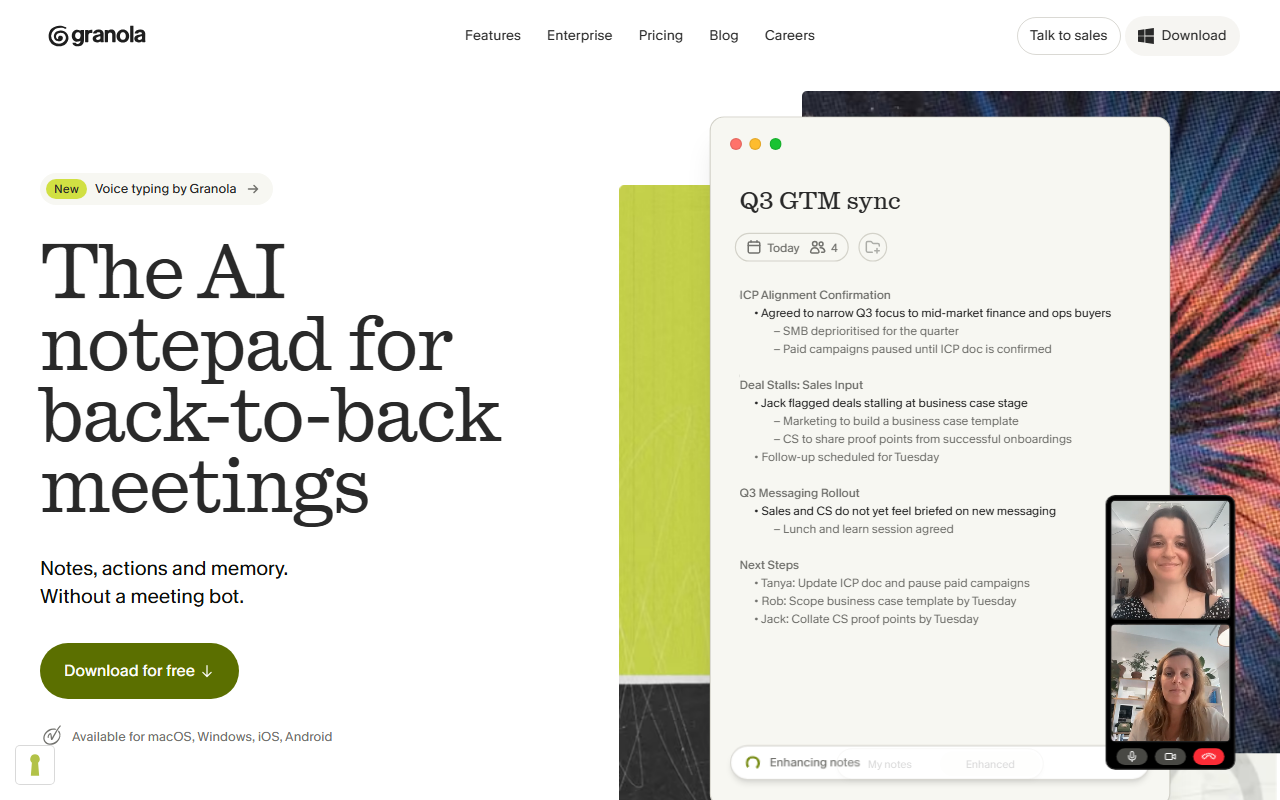
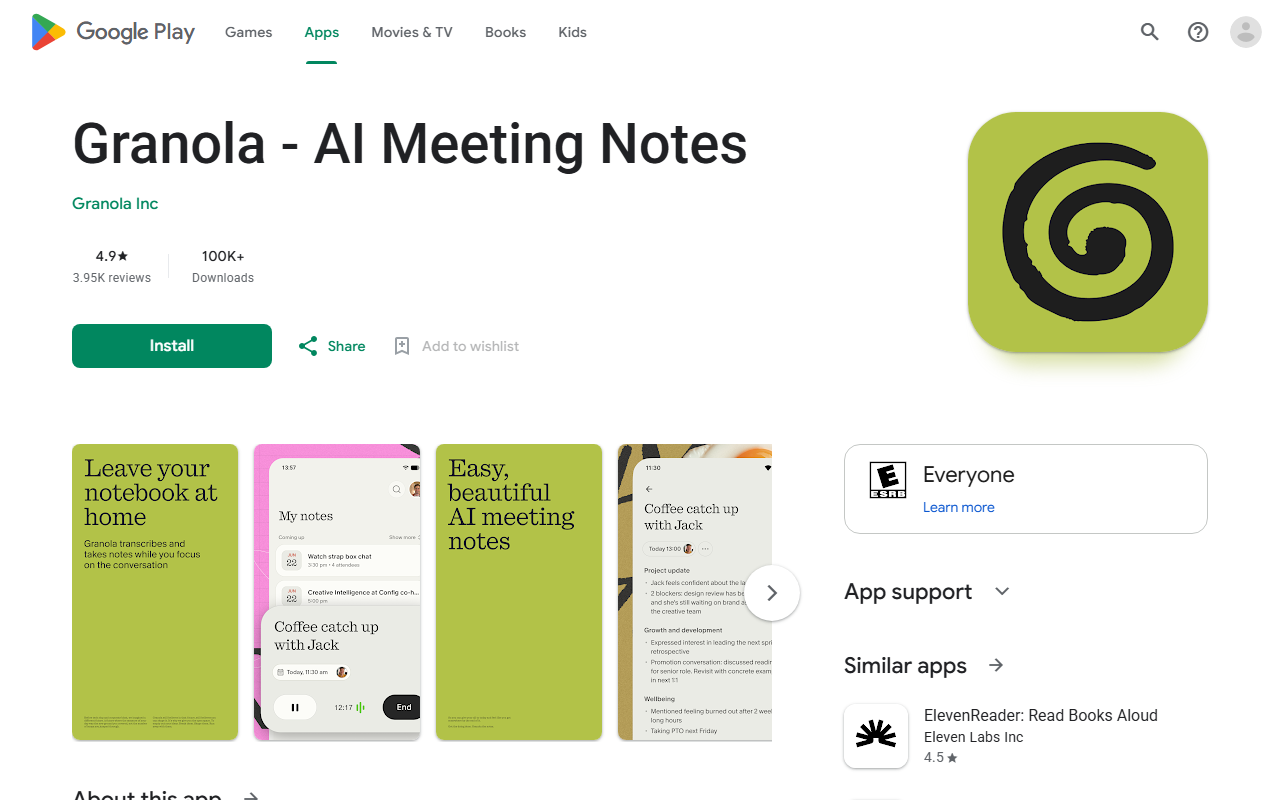
The idea is simple and people love it: you type a few rough notes during the call, Granola listens through your computer’s audio, and when the meeting ends it writes structured notes that keep your words and fill in the rest from the transcript. Nobody sees a recorder join, the audio is not kept, and it works the same on Zoom, Meet, Teams, Slack huddles or across a table on your phone. The iOS app holds a 4.96 average from 14,634 US App Store ratings, and Google Play (US) shows 4.9 from 3.95K reviews, as of Oct 29, 2026.
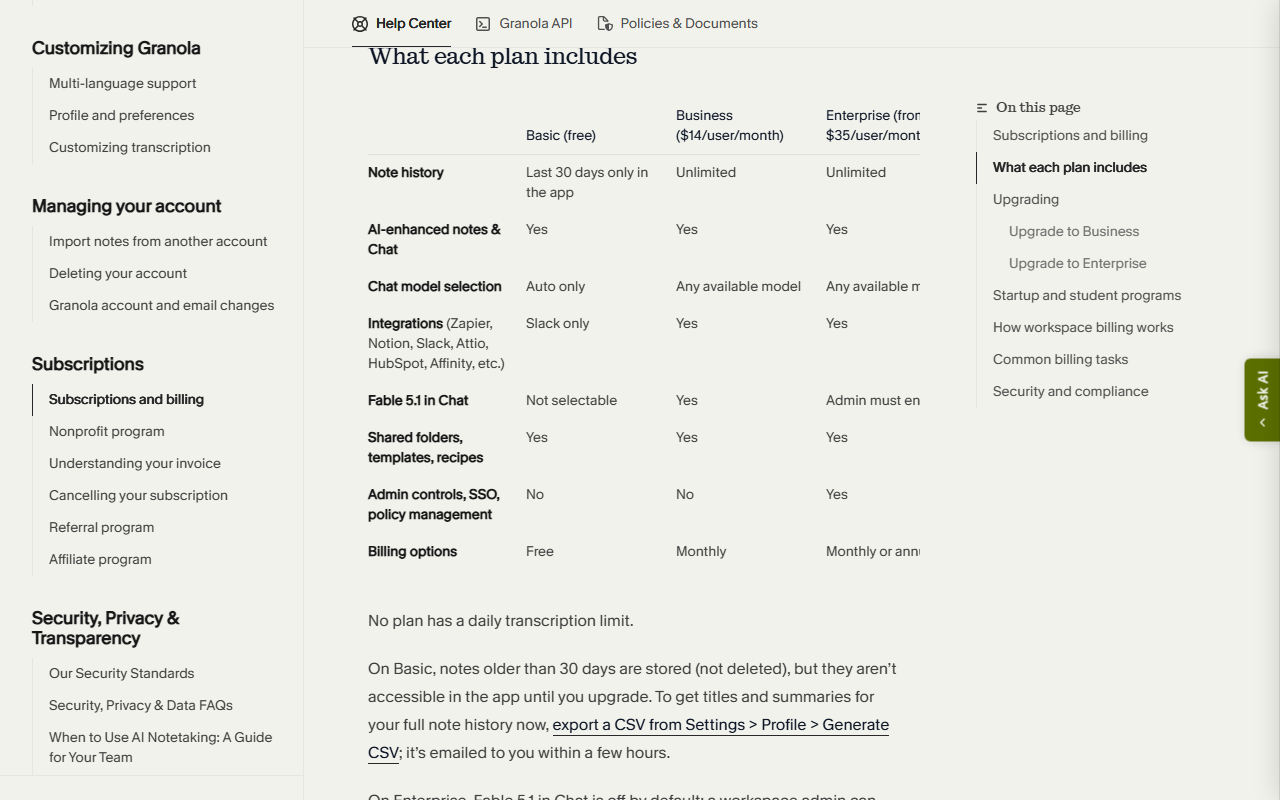
What it costs: Basic is free with no daily transcription limit, but only notes from the last 30 days are visible in the app. Business is $14 a user a month and is billed monthly only; annual billing exists only on Enterprise, which starts at $35 a user. Every active workspace member is a paid seat, and one workspace cannot mix free and paid seats.
The catches: because no bot appears, telling people falls on you. Granola offers an automatic chat message and a video watermark, but individuals have to switch them on. A proposed class action filed on Jul 30, 2026 in federal court in California alleges Granola was designed to record without all-party consent and uses transcript data for training by default; those are allegations, not findings. Separately, Granola’s own help center says it may use anonymized data to improve its models by default, with an opt-out in settings. Its status page lists four incidents in October 2026 alone, including an outage on Oct 29.
Not a hands-on test: JAVIS has not installed Granola, opened an account or transcribed a meeting with it. This review rests on Granola’s pricing page, help center, policies, blog and status page, store listings, press coverage and public comments, all dated.
A notepad that listens: you write the headlines, Granola writes the meeting.
Granola runs as a desktop app on macOS and Windows and as a phone app on iOS and Android, with an Apple Watch version since Jul 28, 2026. Per its security page, you start it manually for each meeting (it does not auto-join or auto-record), it transcribes your microphone and your computer’s meeting audio, and it uses outside providers such as Deepgram and Assembly for transcription and OpenAI and Anthropic for summaries. Around that core sit Briefs before a meeting, Granola Chat across all your notes, Recipes (saved prompts), shared Spaces and folders, and connectors to Claude, ChatGPT and other tools through MCP.

A unicorn built mostly on word of mouth, now facing Google and a lawsuit.
14,634 ratings, Oct 29, 2026
3.95K reviews, 100K+ downloads
at a $1.5bn valuation, Mar 25, 2026
proposed class action, N.D. Cal.
On Mar 25, 2026 Granola announced a $125M Series C at a $1.5bn valuation, led by Index Ventures with Kleiner Perkins, and named customers such as Vanta, Gusto, Asana, Cursor and Mistral AI. Reworked reported the next day that the valuation went from $250 million to $1.5 billion in under a year and that Granola reports 10% weekly user growth since launch; that growth figure is the company’s own. Store ratings measure people who chose to rate the app, not users or revenue.
The field is crowding. On Oct 8, 2026 TechCrunch reported that Google released AI Edge Foresight, an offline Mac note taker with a split-screen view it compared directly to Granola, and noted that Wispr and Calendly have shipped note takers and that Superhuman bought Fathom.
People love the notes. The worries are about privacy, sharing defaults and the odd lost note.
Independent evidence used here: the US App Store and Google Play ratings, two Google Play reviews visible on the listing, and Hacker News comments by item number, as of Oct 29, 2026. Trustpilot, G2 and Reddit are outside this review’s evidence. Store ratings are large samples; the Hacker News comments are a handful of individual views, so read them as signals, not a survey.
What people like
Calls Granola the best meeting app they have used: they jot a bullet such as “updates from Steve?” for each person, and after the call Granola fills each bullet from the transcript.
Says they are not affiliated, that Granola fleshes out what they type using the transcript, and that chatting with past meetings is useful. The same comment promotes the commenter’s own product.
4.96 from 14,634 App Store ratings and 4.9 from 3.95K Google Play reviews: very high marks at a large sample size, for the phone apps rather than the desktop app.
What people question
Was “extremely disturbed” that Granola automatically made each notes folder public to the whole organization, 1:1s included, and says it shook their trust. A 2025 report; check today’s sharing defaults yourself.
“Granola terrifies me.” Asks what the catch is for a capable free app that runs in the background with access to the microphone, calendar and private notes.
A recorded work meeting failed to upload; Retry kept failing and the only other choice was to delete the note and lose it. Ten people marked it helpful; Granola replied the same day asking them to get in touch.
Two more critical views on Hacker News: one commenter calls Granola “barely more than a wrapper” around transcription and a chatbot (comment 43781817, Apr 24, 2025), and another asks whether 1:1 notes kept in Granola could leak (comment 49789233, Sep 21, 2026). A balanced reading: almost nobody complains about the quality of the notes. The doubts are about trust: who can see a note, who agreed to be transcribed, and what happens to the data.
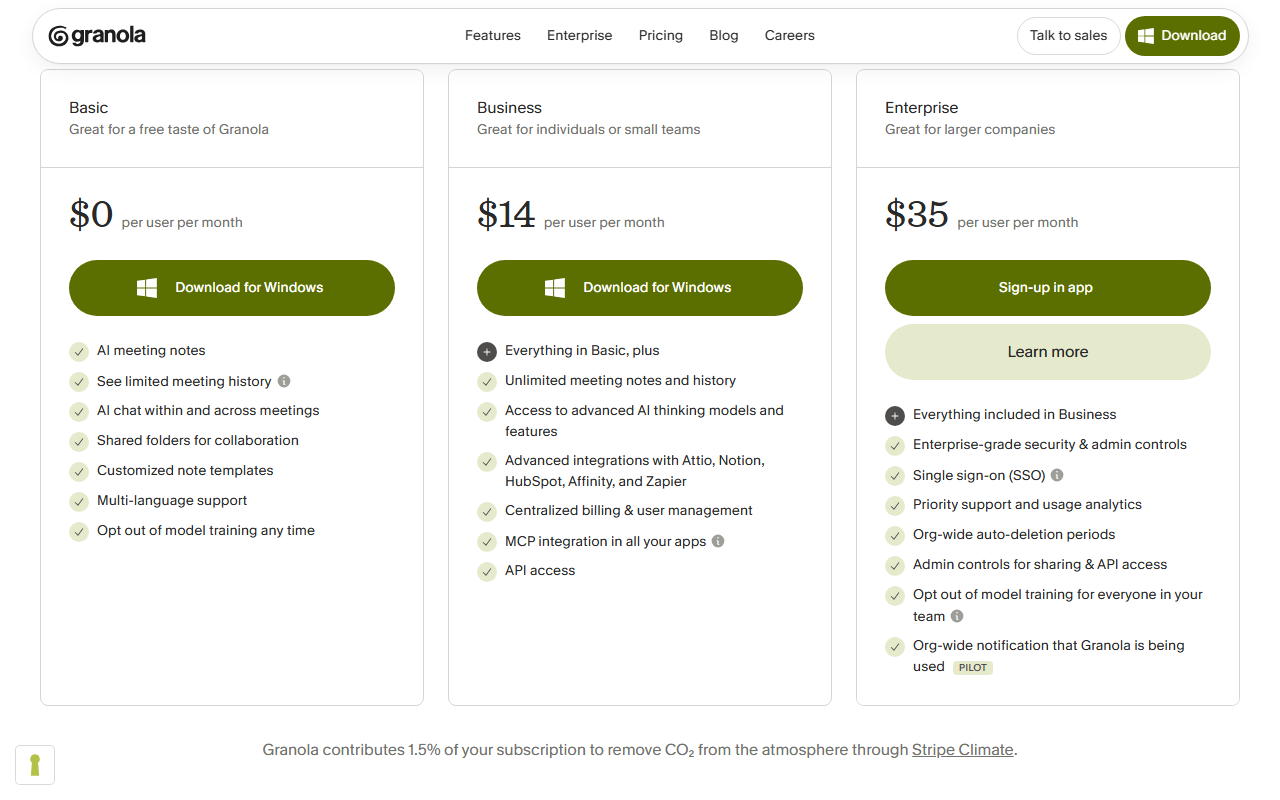
Free, then $14 a user a month on Business (monthly only), then Enterprise from $35.
Basic
per user per month
- AI meeting notes, no daily limit
- Last 30 days of history visible
- Chat on Auto model only
- Slack integration only
Business
billed monthly only
- Unlimited history
- Model choice in Chat
- Notion, HubSpot, Attio, Affinity, Zapier
- API access, full MCP
Enterprise
from; monthly or annual
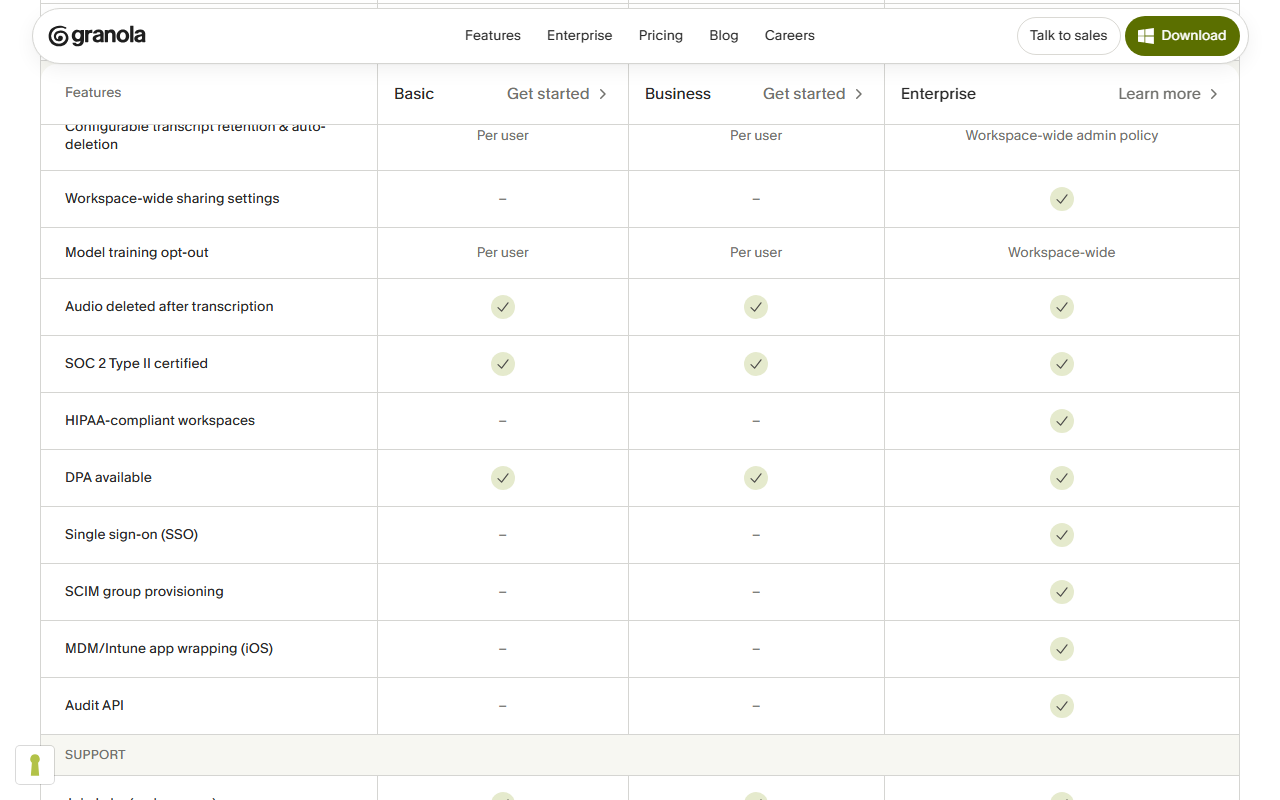
- SSO (50+ users), SCIM, audit API
- HIPAA workspaces with a BAA
- Training off by default
- Enforced transparency features
Discounts on offer. Accepted startups and students get 12 months of Business free, and registered nonprofits can apply for 50% off Business. Mobile apps are free to use without a paid plan. Cancelling. Per the help center you can cancel any time; the subscription runs to the end of the current billing cycle, “the end of the month from your last payment date”, then the workspace drops to Basic and older notes are hidden again, not deleted. Granola also says it gives 1.5% of subscriptions to carbon removal through Stripe Climate.
Cost is seats times $14: a solo user pays $0 or $168 a year, a five-person team $840.
All arithmetic uses the Oct 29, 2026 list prices. There is no minutes meter on any plan, so the only variables are seats and whether you need Enterprise.
| Scenario | Plan | Cost |
|---|---|---|
| A Solo, only needs this month’s notes | Basic | $0 |
| B Solo, wants the full archive and integrations | Business | $14 a month, $168 a year |
| C Five people sharing notes | Business | $70 a month, $840 a year |
| D Twenty-person team | Business | $280 a month, $3,360 a year |
| E Fifty people needing SSO | Enterprise (from) | $1,750 a month, $21,000 a year |
Match your situation to one line.
The notepad, the Brief, Chat across meetings, and Spaces for a team.
Enhanced notes. You type as much or as little as you like; when the meeting ends Granola writes notes, actions and follow-ups from your notes plus the transcript, using templates if you set them. No plan has a daily transcription limit, per the help center. Granola lists 32 languages as of Sep 2, 2026.
Briefs. Since May 20, 2026, opening a meeting note gives a short Brief: who you are meeting, what you discussed last time and what matters now. Pre-meeting Briefs and follow-up emails are Business features on the pricing table.
Granola Chat and Recipes. Chat answers questions within one meeting or across all of them, rebuilt as an agent with inline citations on Apr 21, 2026. Basic is fixed to an “Auto” model; Business can choose models, including Anthropic’s Fable 5.1, which the help center says is not covered by zero data retention (Anthropic keeps agent logs for 30 days).
Spaces. Since the Series C, notes live in Spaces with a Team Space and My Notes; folders sit inside Spaces with access controls. Notes are private until you share them.


A careful first week on the free plan.
No bot means nobody else sees it. Granola built tools for that; a lawsuit says they are not enough.
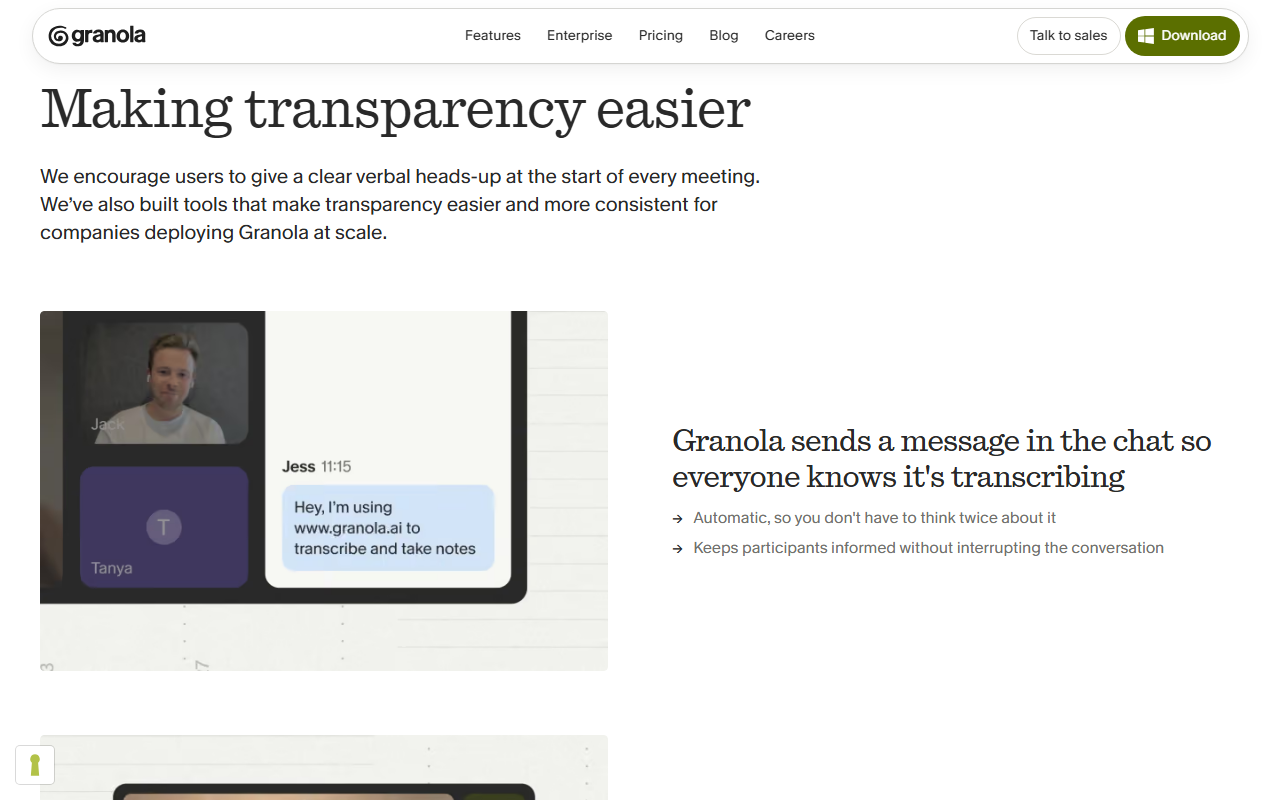
Granola itself names the trade-off: running locally means it is not automatically visible to other participants. Its answer, on its transparency page, is an automatic message in the meeting chat (“Hey, I’m using www.granola.ai to transcribe and take notes”) and a watermark on your video, across Zoom, Google Meet and Teams. Individuals can turn these on in every plan; only Enterprise admins can enforce them for a whole workspace (the Enterprise plan card marks the org-wide notification as a pilot). Granola also says it reminds you to ask each time you start, and its help center links a 50-state survey of recording laws.
The proposed class action, filed on Jul 30, 2026 by Tarra Chamberlain in the US District Court for the Northern District of California, argues that this design breaks the California Invasion of Privacy Act’s all-party consent rule and that Granola uses transcript data commercially, including for training, by default. Computerworld reported that Granola did not respond to a request for comment. A similar case against Otter.ai is running in the same district. These are allegations; no ruling on them has been reported in the coverage cited here as of Oct 29, 2026.
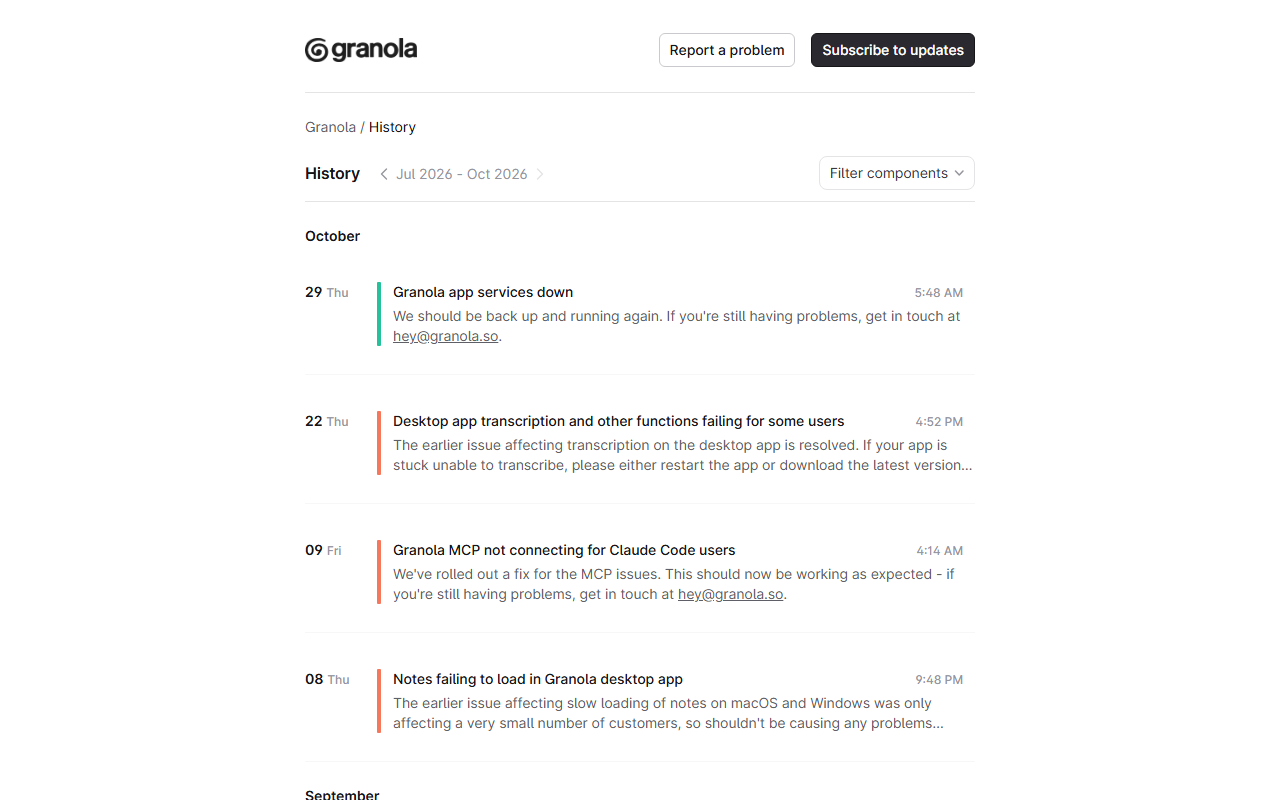
Outages, a failed upload with no audio to fall back on, and the 30-day wall.
Notes failing to load (Oct 8), MCP failing for Claude Code users (Oct 9), desktop transcription failing for some users (Oct 22) and app services down (Oct 29).
Granola keeps transcripts, not audio. A Google Play reviewer lost a note that never finished uploading.
On Basic, notes older than 30 days hide until you pay; MCP on Basic also sees only 30 days.
Granola’s status page shows the services-down pattern earlier too: Aug 13, Aug 17 (AI features) and Sep 4, 2026, each closed with a note that notes taken during the outage should be safe and may need a retry. For a meeting you cannot afford to lose, keep a second record.
MCP works on the free plan for 30 days of notes; the API needs Business.
Granola MCP, launched Feb 4, 2026, lets Claude, ChatGPT, Cursor and other MCP clients read your notes over browser sign-in. Per the help center, Basic covers personal and public notes from the last 30 days and some folder, search and transcript tools are paid-only; Business covers all personal and public notes; Enterprise admins choose the scopes. Rate limits average around 100 requests per minute and may change. The personal API (keys with personal or public note scopes) and workspace API keys need Business or Enterprise; Enterprise adds an audit API, and the developer docs also describe a legal holds API. Integrations with Notion, Zapier, HubSpot, Attio and Affinity are Business; Salesforce is Enterprise; Slack is on every plan. For how connectors behave inside Claude, see JAVIS’s Claude MCP and connectors guide.

No stored audio and SOC 2 on every plan; training on de-identified data unless you opt out.
What is kept. Per the security page, desktop transcribes in real time and keeps no audio; mobile caches audio temporarily and keeps only the transcript. Notes sit in a US-hosted AWS virtual private cloud, encrypted at rest and in transit, backed up daily. Granola says it is SOC 2 Type 2 audited and offers a DPA; HIPAA workspaces and a BAA are Enterprise only.
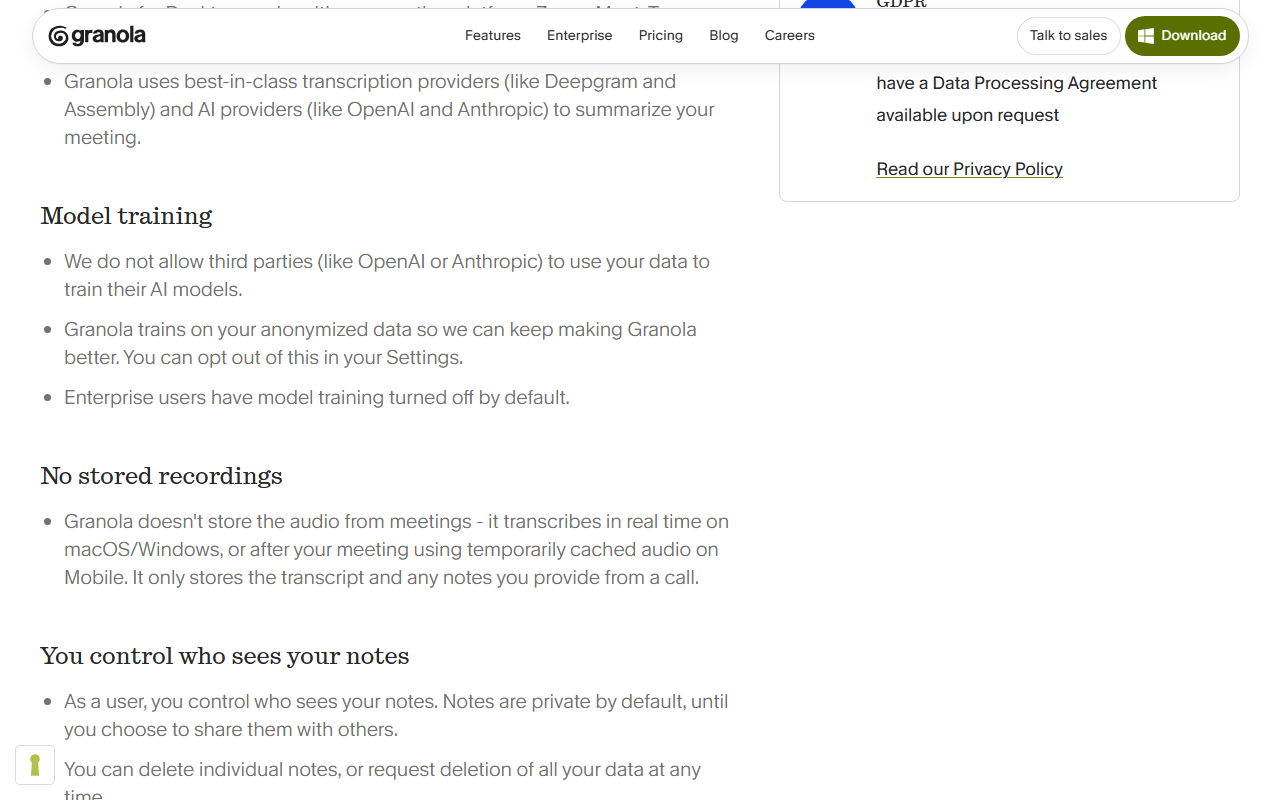
Training. The help center says: “By default, Granola may use anonymized data to improve our services.” You switch it off under Settings > Preferences (“Use my data to improve models for everyone”); the toggle is not in the Android app yet. Enterprise workspaces are opted out by default. The privacy policy (effective Sep 8, 2026) adds that de-identified data already built into models “may remain in those models and datasets indefinitely”, and that third parties such as OpenAI or Anthropic may not train on your data.
Retention. You can set transcripts to auto-delete after 1 day to 1 year, with a one-week cooldown; deletion is permanent and you can no longer regenerate notes or get full Chat answers for those meetings. Past incidents. Granola publishes post-mortems, including a 2025 exposure of a transcription API key in its iOS TestFlight beta that left transcripts of 333 beta testers vulnerable; it says the key was revoked on Mar 11, 2025, that only the reporting researcher accessed data, and that it missed the researcher’s first email.



People in back-to-back calls who like writing their own notes and do not want a bot.
Founders, product managers, investors and consultants who sit in many meetings, take light notes themselves and want them finished automatically; small teams on Business that want shared Spaces and their notes in Claude or ChatGPT.
Anyone who needs a replayable recording, works under strict consent rules without Enterprise enforcement, wants annual-billing discounts below Enterprise, or needs SSO with fewer than 50 users.
Eight things to check before relying on it.
No bot; transparency tools are opt-in below Enterprise.
Proposed CIPA class action filed Jul 30, 2026.
On until you switch it off; Enterprise is off by default.
Older notes hidden on Basic, also for MCP.
Nothing to replay or re-transcribe if a note fails.
No annual discount below Enterprise; all members pay.
Four status incidents in Oct 2026.
From $14 to at least $35; SSO needs 50+ users.
Not like-for-like: most rivals record audio or video and cap something else. Prices as of Oct 29, 2026.
| Tool | Entry paid, monthly | Entry paid, annual per month | How it differs |
|---|---|---|---|
| Granola Business | $14 | Not offered | No bot, no stored audio; free plan shows 30 days |
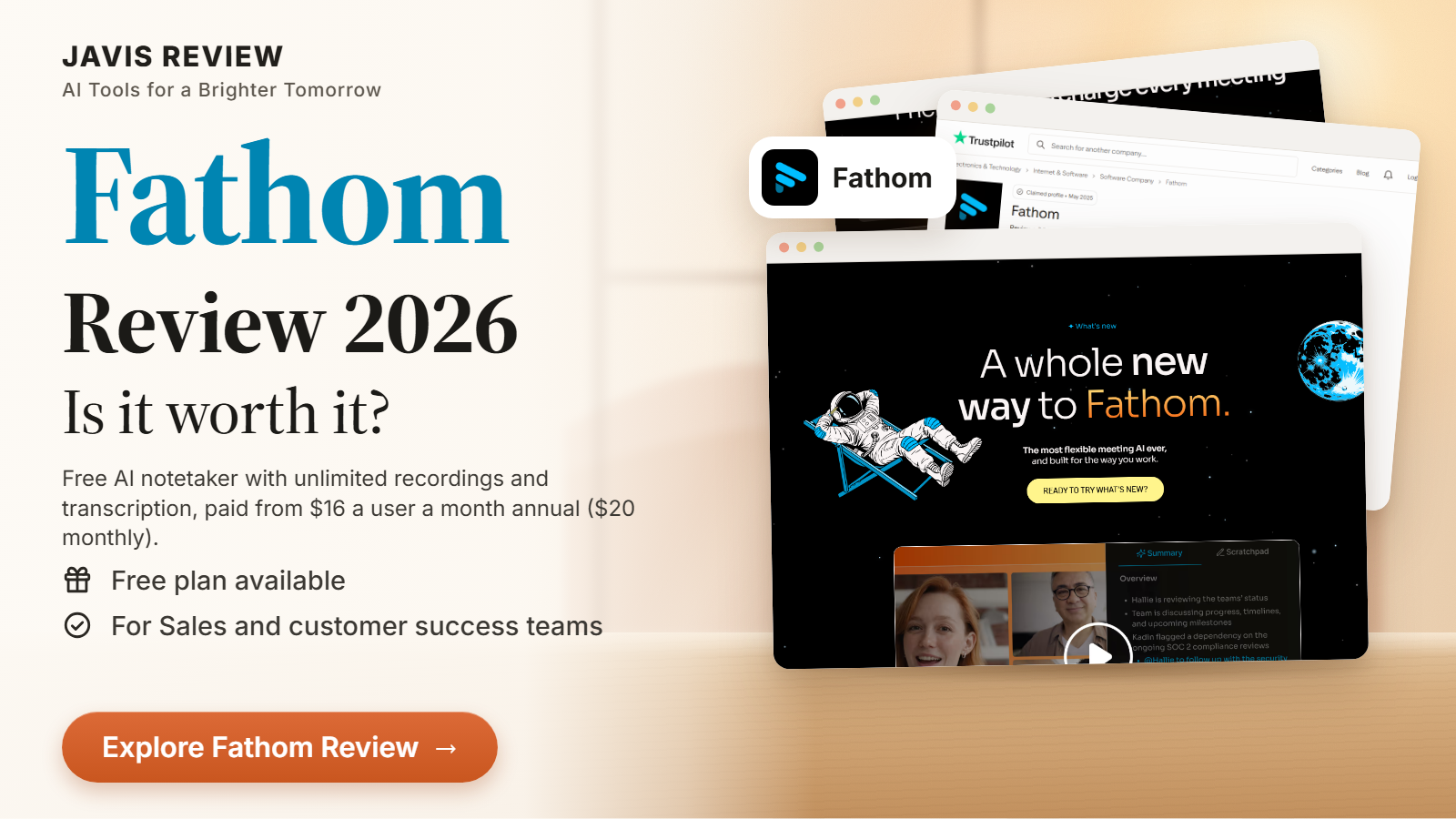
| Fathom Premium | $20 | $16 | Bot or bot-free capture, keeps recordings; free plan lists unlimited recordings |
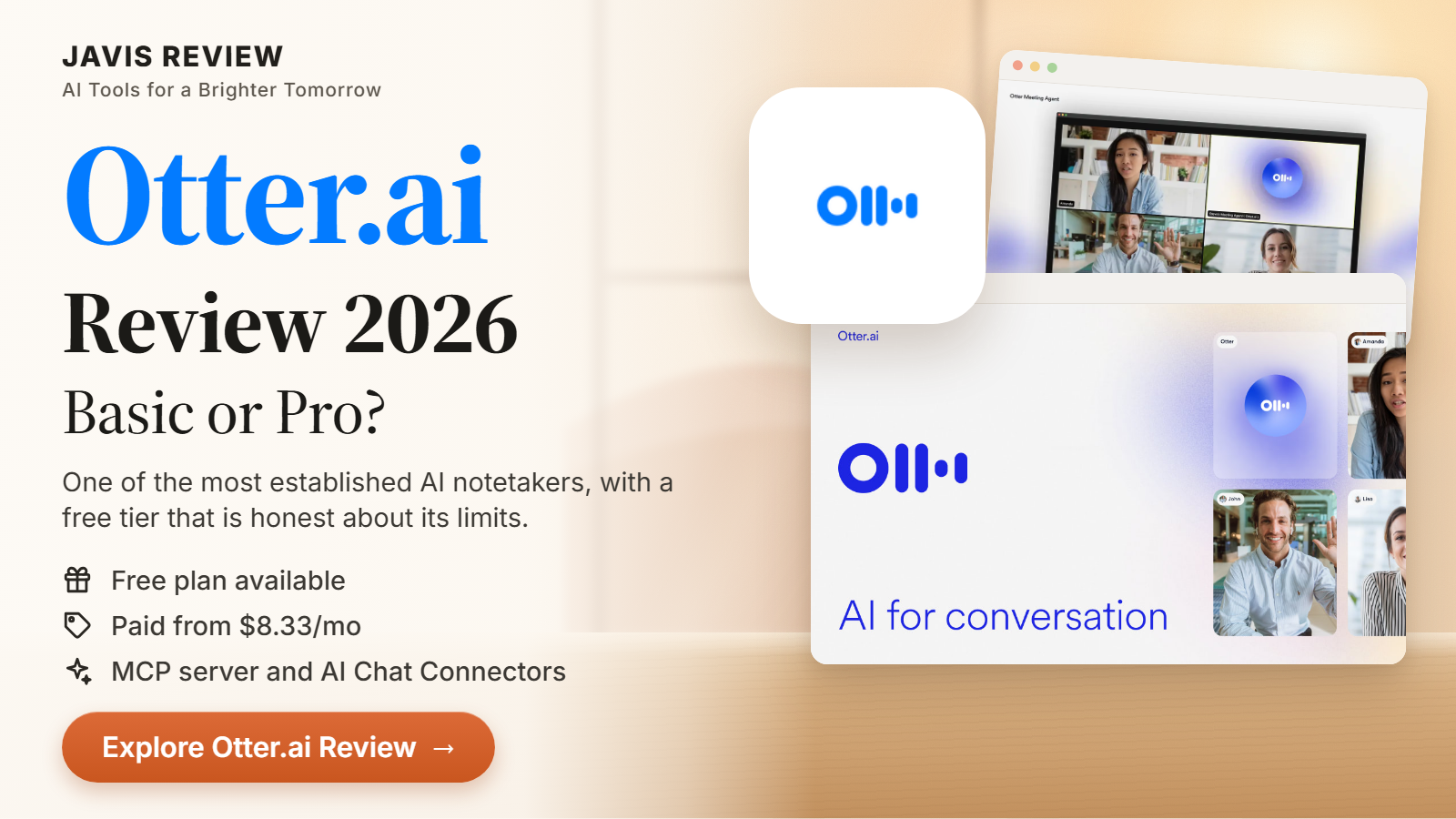
| Otter Pro | $16.99 | $8.33 | Minute caps: 300 a month free, 1,200 on Pro |
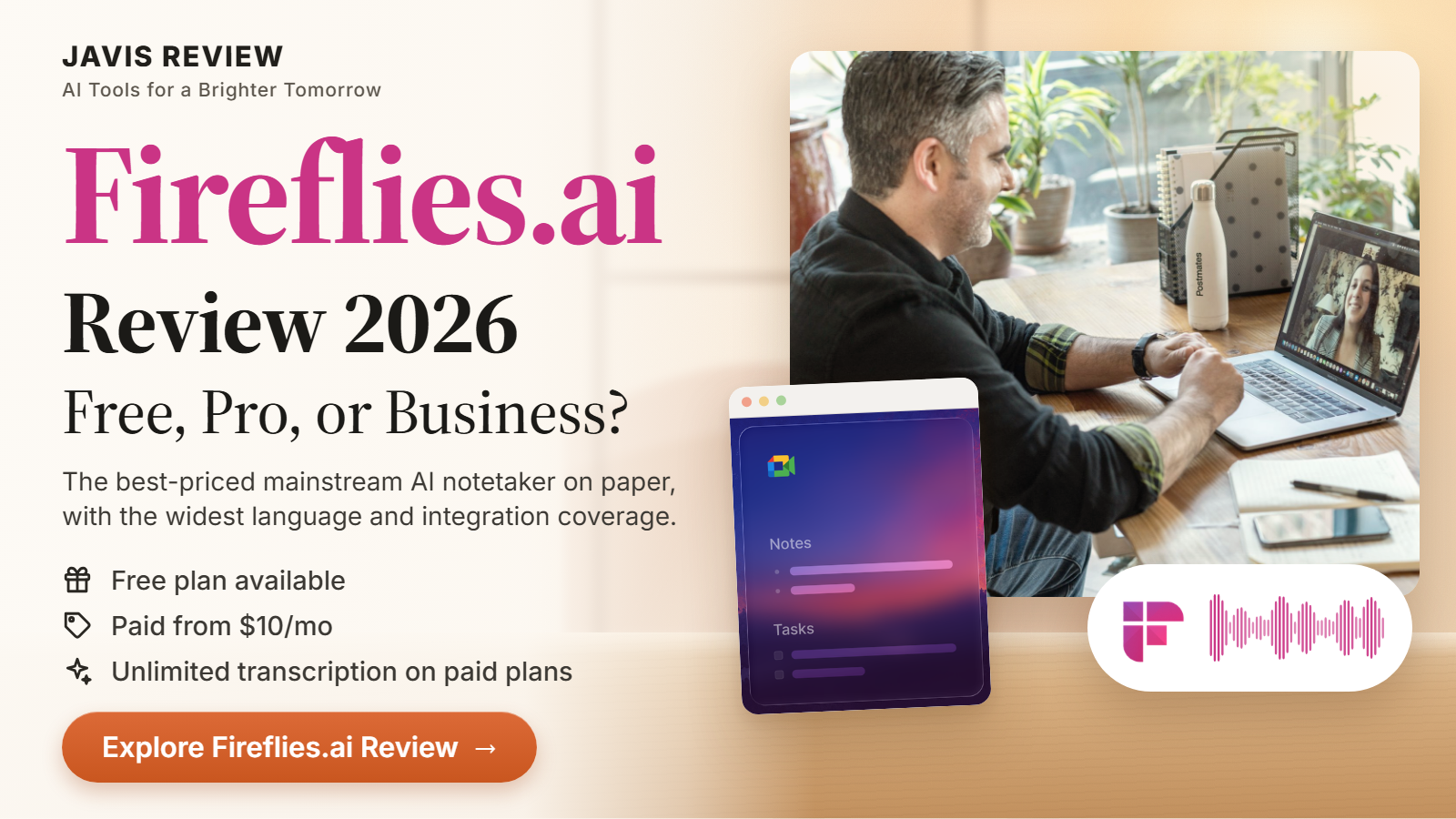
| Fireflies Pro | $18 | $10 | Bot or Chrome extension; monthly AI credits (20 on Free) |
| tl;dv Pro | $29 | $18 | Records video; unlimited recordings free |
This review has no affiliate links, and Granola did not see it.
Granola runs an affiliate program; JAVIS is not part of it. Every Granola link here goes to granola.ai or its pricing page without tracking parameters.
Hands-on status: JAVIS has not installed Granola, created an account or transcribed a meeting with it, so note quality, accuracy across languages and the transparency features themselves are not tested here. Prices and rules are from Granola’s own pages as of Oct 29, 2026; opinions come from public reviews and comments.
Basic needs no payment. Switch off training and set sharing before your first real meeting.
Open granola.aiCount every member as a seat and decide whether you need Enterprise controls.
Open the pricing pageChoosing a meeting assistant? These reviews cover the nearest ground.
Each card opens a published JAVIS review.
Questions people ask before committing
Is Granola free?
Yes. Basic costs $0 and has no daily transcription limit, but only notes from the last 30 days are visible in the app. Older notes are kept and come back if you upgrade.
How much is Granola Business?
$14 per user per month, billed monthly. Annual billing exists only on Enterprise, which starts at $35 per user per month.
Does Granola join my meeting as a bot?
No. It transcribes from your computer’s audio and microphone, or your phone in person, and you start it manually for each meeting.
Does Granola record audio?
It processes audio to transcribe it but does not store it; only the transcript and your notes are kept. Mobile caches audio temporarily until transcription finishes.
Does Granola train AI on my meetings?
By default it may use anonymized data to improve its models; you can opt out in Settings > Preferences. Enterprise is opted out by default. Third parties such as OpenAI and Anthropic may not train on your data, per Granola.
What is the Granola lawsuit about?
A proposed class action filed on Jul 30, 2026 in the Northern District of California alleges Granola records without all-party consent under California law and uses data for training by default. These are allegations, not findings.
Does Granola work with Claude or ChatGPT?
Yes, through Granola MCP. Basic covers the last 30 days of notes; Business covers all your personal and public notes.
Is Granola HIPAA compliant?
Only on Enterprise, with a signed BAA. HIPAA is not available on Basic or Business.
Where this came from, and when.
Pricing and limits: granola.ai/pricing (plan cards and comparison table) and the help center pages Subscriptions and billing, Cancelling your subscription, Granola MCP, Granola API and Understanding model selection, Oct 29, 2026. Security and privacy: granola.ai/security, granola.ai/transparency, the help center pages Models and training, Transcript auto-deletion, Is Granola HIPAA compliant and Sharing controls, the Privacy Policy (effective Sep 8, 2026) and the AssemblyAI key post-mortem. Company: Granola blog posts on the Series C (Mar 25, 2026) and on not using a bot (Jun 1, 2026), the announcements list, and status.granola.ai history.
Users and market: US App Store rating (4.96, 14,634 ratings) and Google Play US listing (4.9, 3.95K reviews, 100K+ downloads), Hacker News comments 43033134, 41833903, 44736878, 49091245, 43781817 and 49789233, Reworked (Mar 26, 2026), Computerworld (Aug 6, 2026) and TechCrunch (Oct 8, 2026), as of Oct 29, 2026. Competitors: Fathom, Otter, Fireflies and tl;dv pricing pages, monthly and annual views, Oct 29, 2026.
Score: price clarity 17 (simple plans; monthly-only Business and the 30-day wall need reading), capability breadth 16, independent evidence 14 (strong store ratings, thin elsewhere), security and data control 12 (training on by default, consent burden, past incidents), stability and fit 12 (October outages, pending lawsuit). Total 71. Editorial judgment, not a benchmark or hands-on test.
What this review does not cover: note and transcript accuracy, the Platform Terms of Service (published as a PDF), G2, Trustpilot and Reddit sentiment, and any court filings beyond the press coverage cited.