
Krea Review 2026: Krea 3, 40+ Models and an Agent in One App, With Pricing That Takes Some Reading
Krea bundles its own image models (Krea 3 launched on Oct 15, 2026) with Nano Banana, Seedance, Kling, Veo and other models behind one compute-unit balance, plus an agent, node workflows, LoRA training and an API. As of Oct 29, 2026, Pro is $35 a month or $21 a month billed yearly. This review works out what an image and a video really cost, where Krea's own pages contradict each other, and what users report about support and sign-up offers.
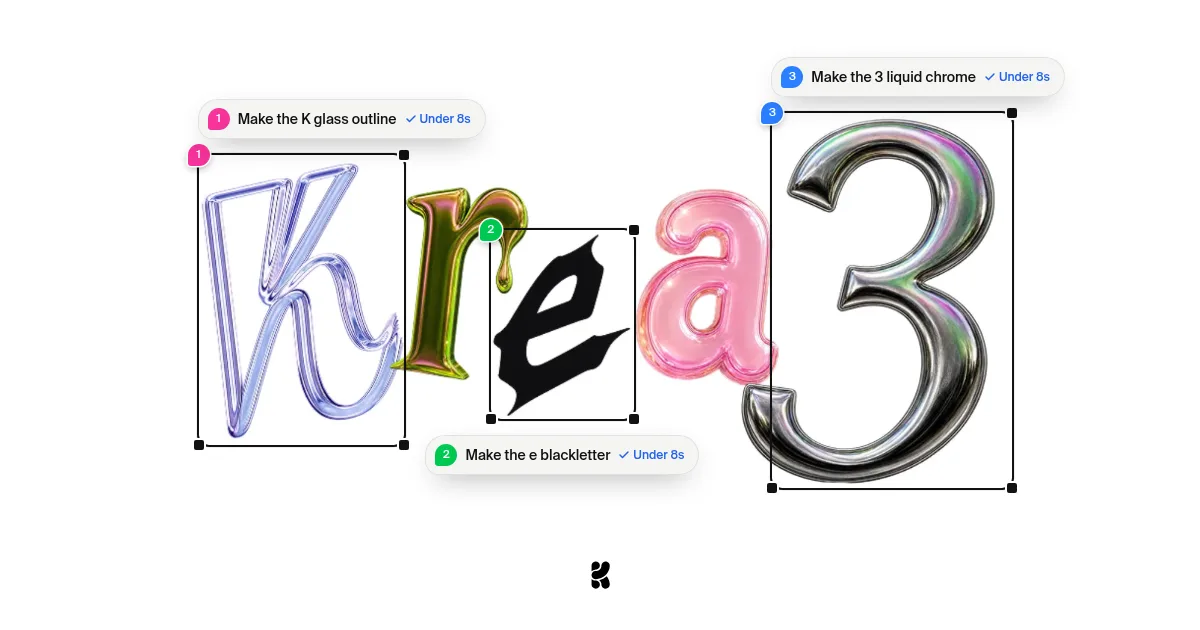
There are no affiliate links in this review. Every Krea link goes straight to krea.ai or its documentation.
| Made by | KREA.AI, INC., San Francisco |
| What it is | Browser and iOS creative suite for AI images, video, 3D and audio |
| Pricing | Free; Basic $9, Pro $35, Max $105, Business $200 a month |
| Catch | Units expire monthly; conflicting help pages; pop-up discounts |
| Evidence | Trustpilot 3.6 (177); App Store US 4.5 (715) |
Krea is one of the broadest AI creative apps you can buy, and its own Krea 3 model is cheap per edit. Pay monthly first, spend your units each month, and read the plan card rather than the help center.
“Krea 3 is an image editing model built for production. It changes only what you ask, finishes an edit in under 8s, and costs $0.06 per image.” That is Krea's own pitch for the model it made the app default on Oct 16, 2026.
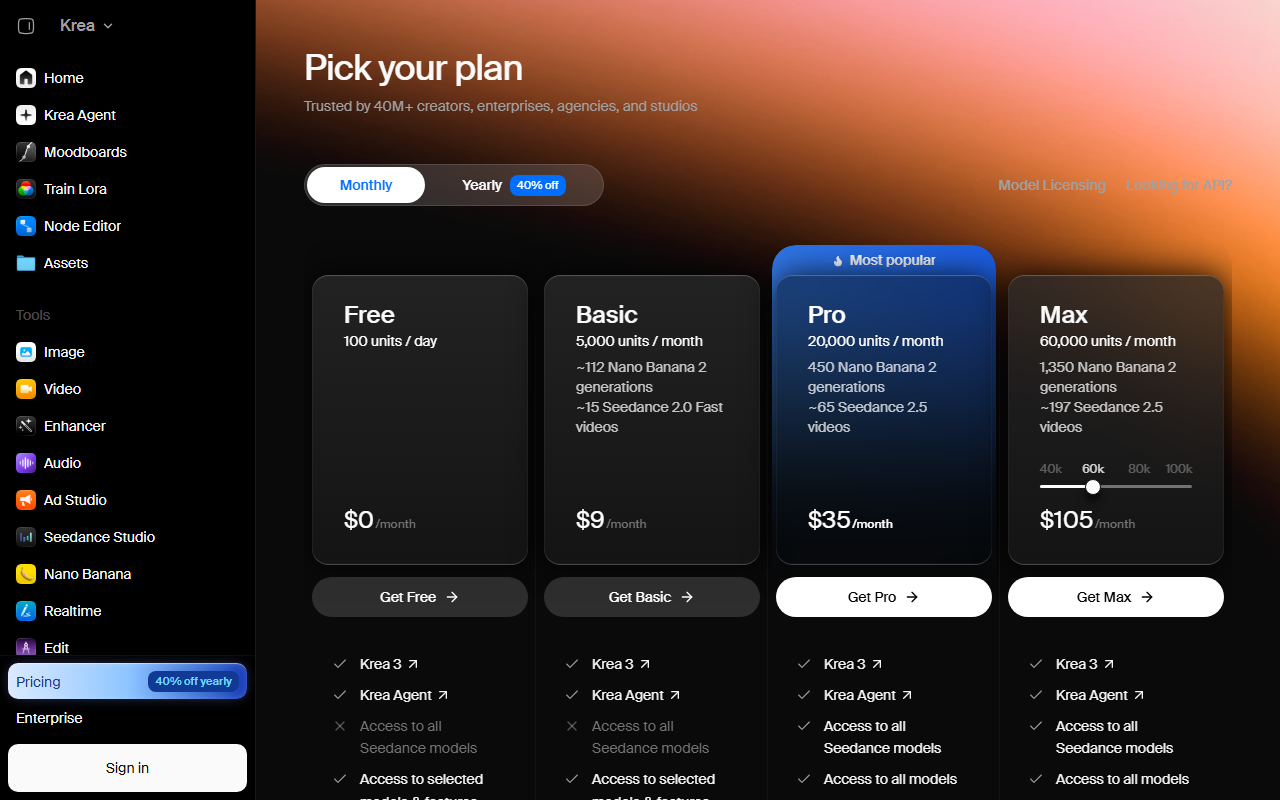
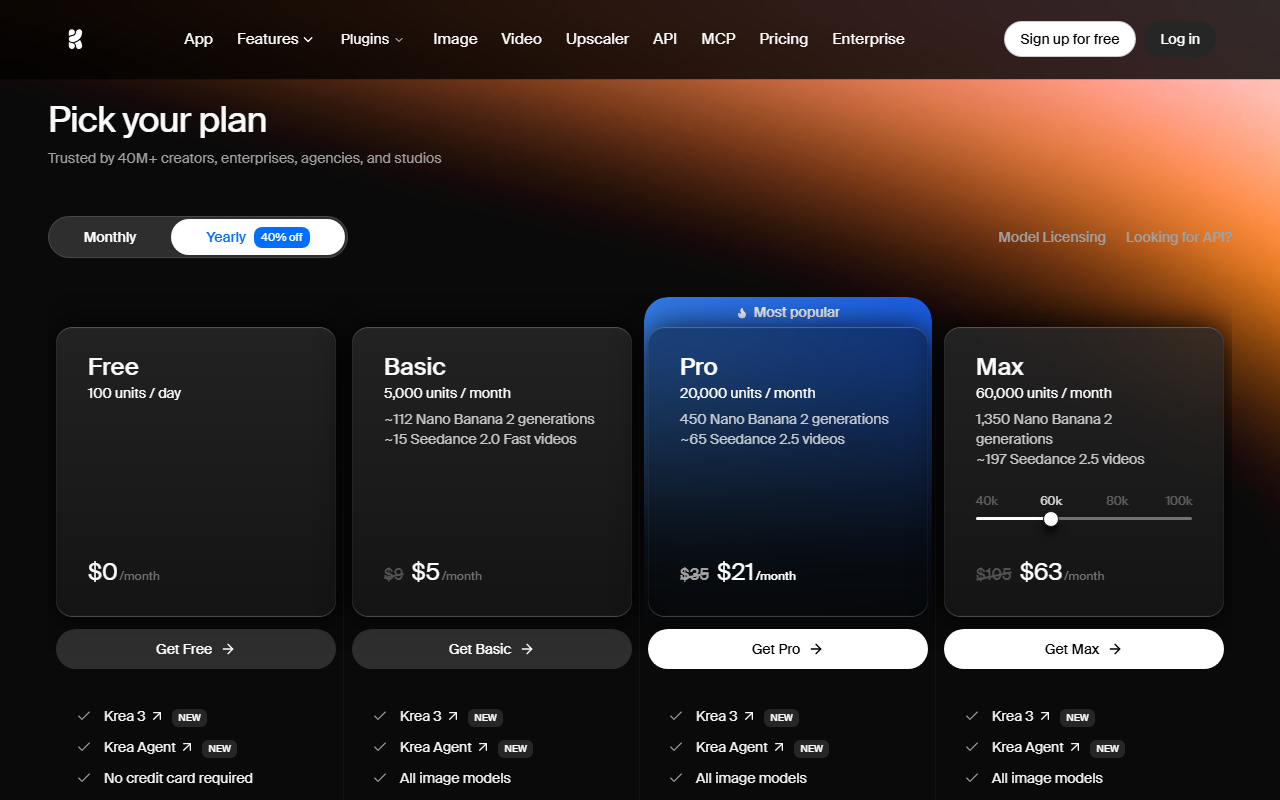
Krea puts 40+ image and video models in one app (its API page says 40+): its own Krea 1, 2 and 3, Google's Nano Banana family, ByteDance's Seedance, Kling, Veo and others, plus an upscaler that goes to 22K, real-time drawing, LoRA style training, a node editor and, since Sep 10, 2026, an agent on every plan. Everything in the app spends one pool of compute units. As of Oct 29, 2026 the plans are Free (100 units a day), Basic $9 (5,000 a month), Pro $35 (20,000), Max $105 (60,000) and Business $200 (80,000, up to 50 members), with yearly prices of $5.25, $21, $63 and $160 a month. On Pro that works out to about $0.078 per Nano Banana 2 image monthly and $0.047 yearly; Replicate charges $0.067 for the same model at 1K.
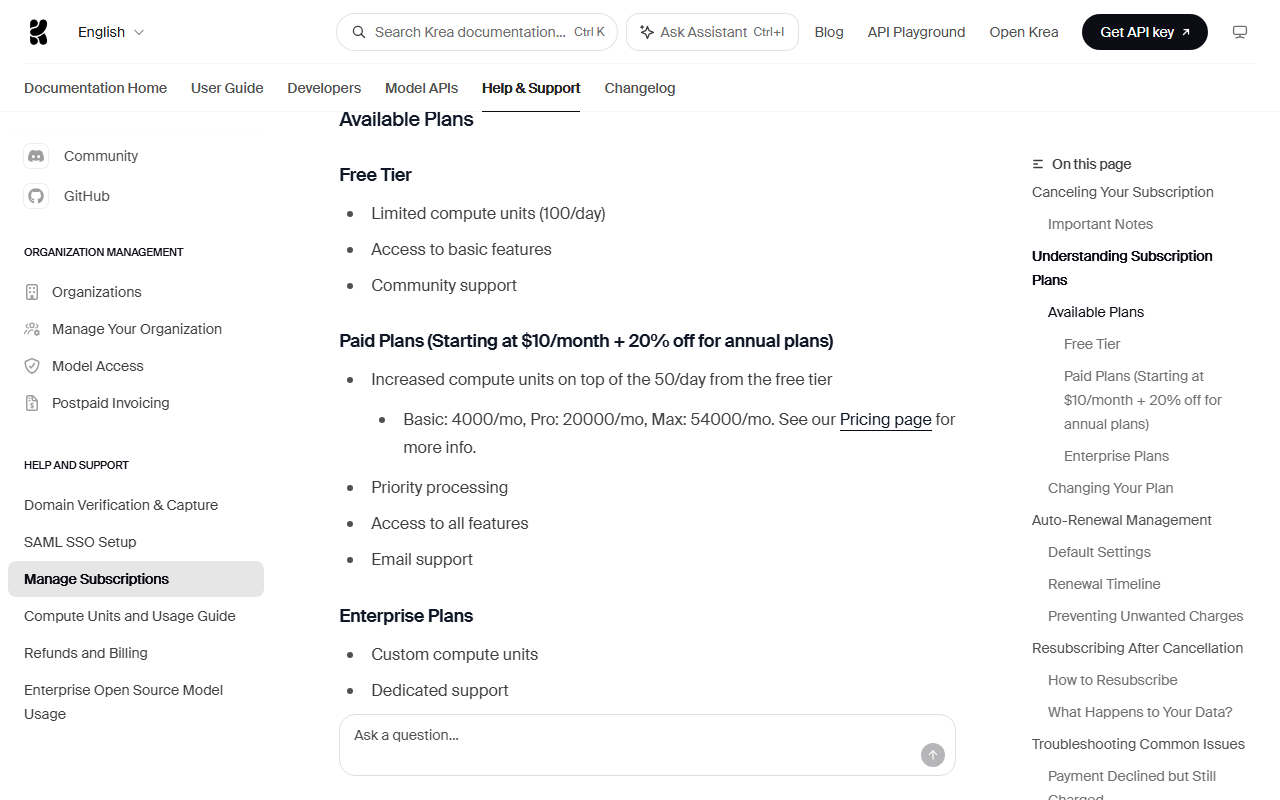
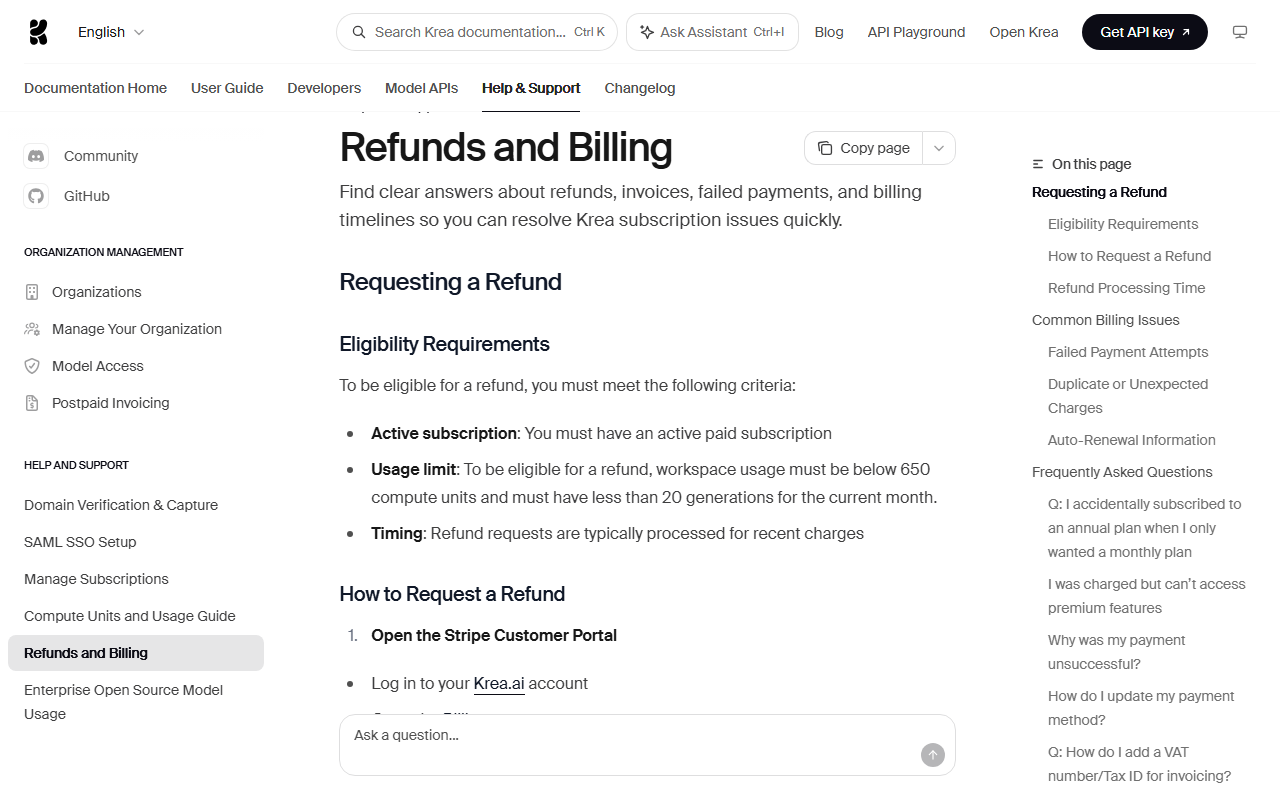
Three catches. First, units on individual plans do not roll over, compute packs expire after 90 days and a refund is offered only if you used under 650 units and fewer than 20 generations that month. Second, Krea's pages disagree: the help center still lists plans “Starting at $10/month + 20% off” with Max at 54,000 units, the yearly card shows Basic at $5 while the comparison table says $5.25, and the API page promises “Simple compute-unit pricing” while the docs say the API bills a separate balance. Third, sign-up offers: Hacker News and Trustpilot users describe stacked, time-limited discounts, and Krea's co-founder replied that competitors' tactics leave it “forced to defend yourself”.
Not a hands-on test: JAVIS has not created a Krea account, subscribed or generated an image. This review is built from Krea's pricing page (monthly and yearly views), documentation, changelog, blog, Terms, privacy policy, security and enterprise pages, Trustpilot, the US App Store listing, Hacker News and competitors' pricing pages, all dated Oct 29, 2026 unless stated. Output quality and speed are not measured here.
One app, many models, one unit balance; the API keeps its own wallet.
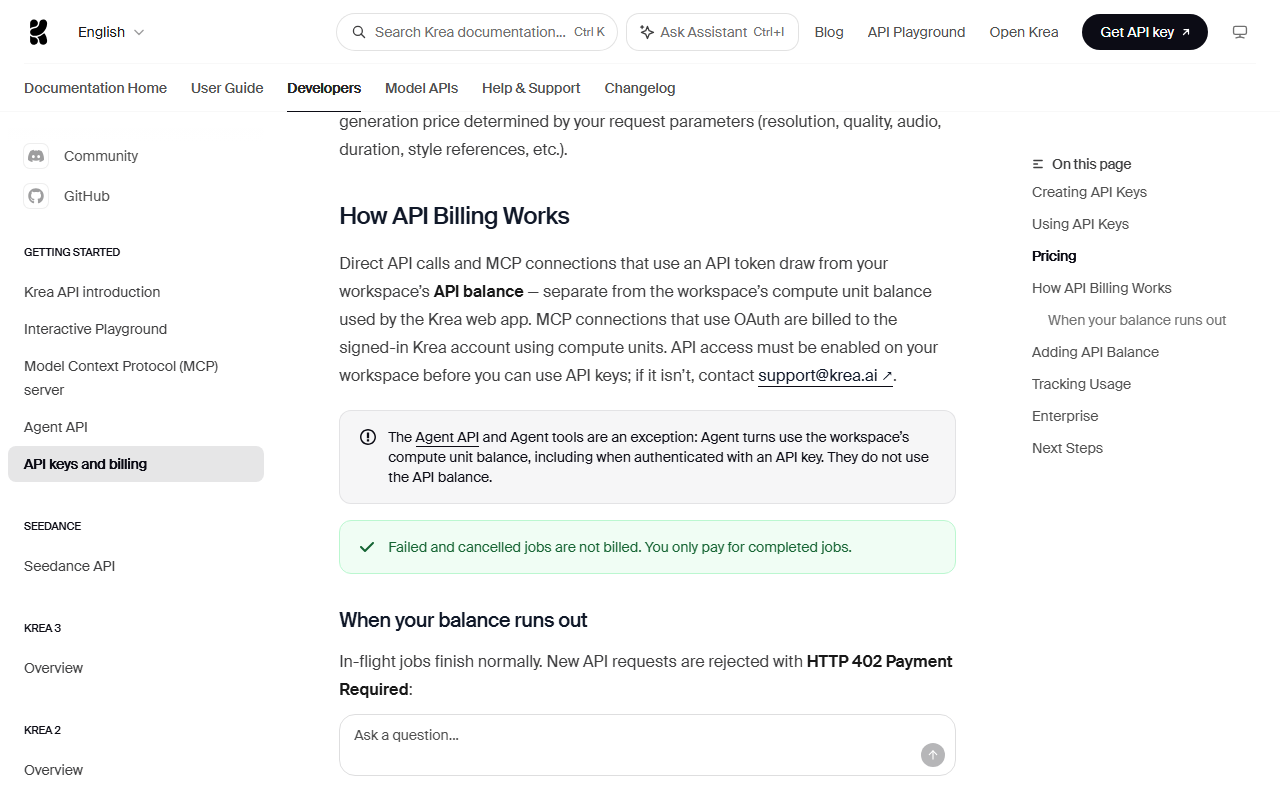
In the app you pick a tool (Image, Video, Enhancer, Edit, Realtime, Nodes, Agent) and a model, and each generation spends compute units from your workspace. Paid plans add a commercial license, more units and more models. Developers can call the same models through a REST API, an MCP server or the Agent API, but direct API requests draw from a prepaid API balance, not from your plan's units.
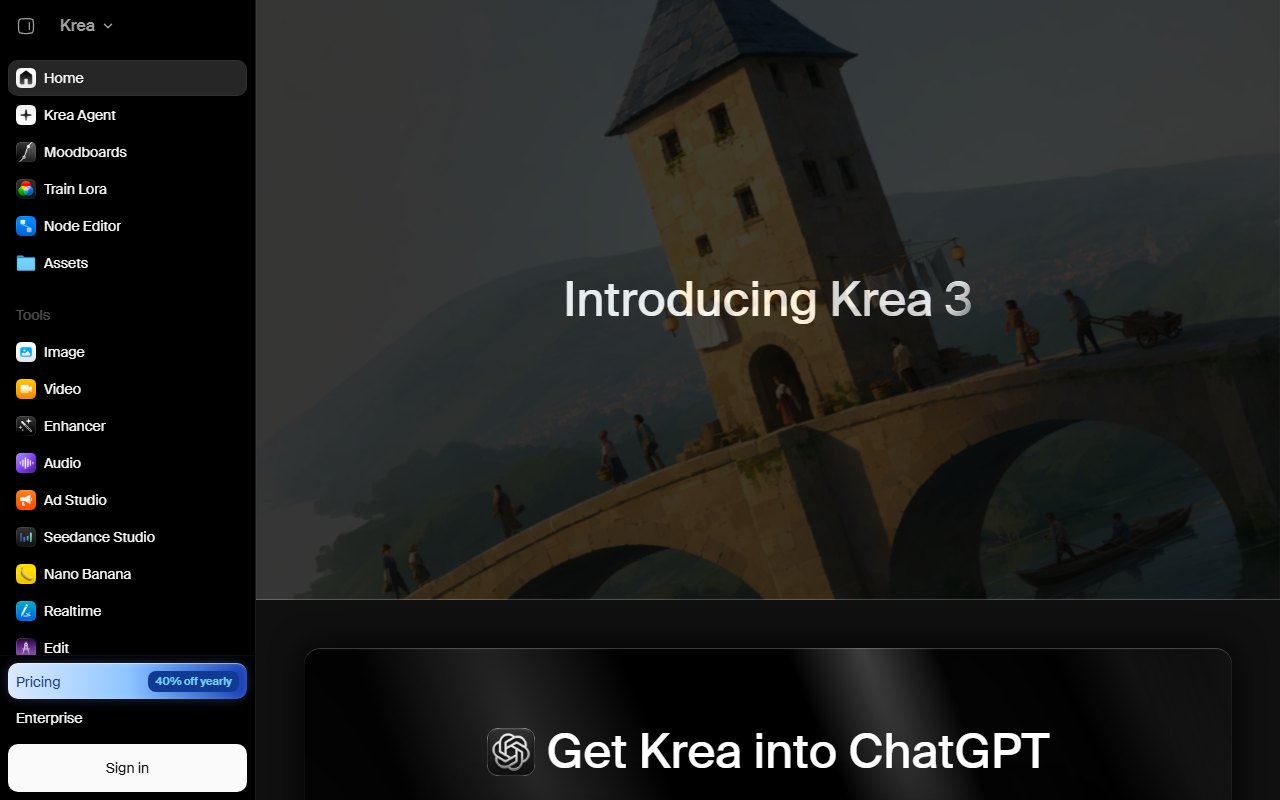
A small, well-funded San Francisco team that now ships its own models.
Krea started as a prompt-search site and became a multi-model creative app; in 2025 and 2026 it moved into model training. It co-released FLUX.1 Krea open weights with Black Forest Labs on Jul 31, 2025, released Krea 2 as open weights on Hugging Face in June 2026 (Krea-2-Raw shows 88,144 downloads, a download count, not users) and launched Krea 3, an editing-first model, on Oct 15, 2026. That launch drew 353 points and 108 comments on Hacker News.
Krea's pricing page says it is “Trusted by 40M+ creators” without defining the figure; its co-founder and CTO wrote on Hacker News on Dec 1, 2025 that the team was about 27 people with “millions of active users”. Funding comes from press reports, not Krea's own site: The AI Insider reported on Apr 8, 2025 a $47M Series B led by Bain Capital Ventures, $83M raised in total and a $500M valuation “according to sources”. The App Store lists the publisher as KREA.AI, INC.
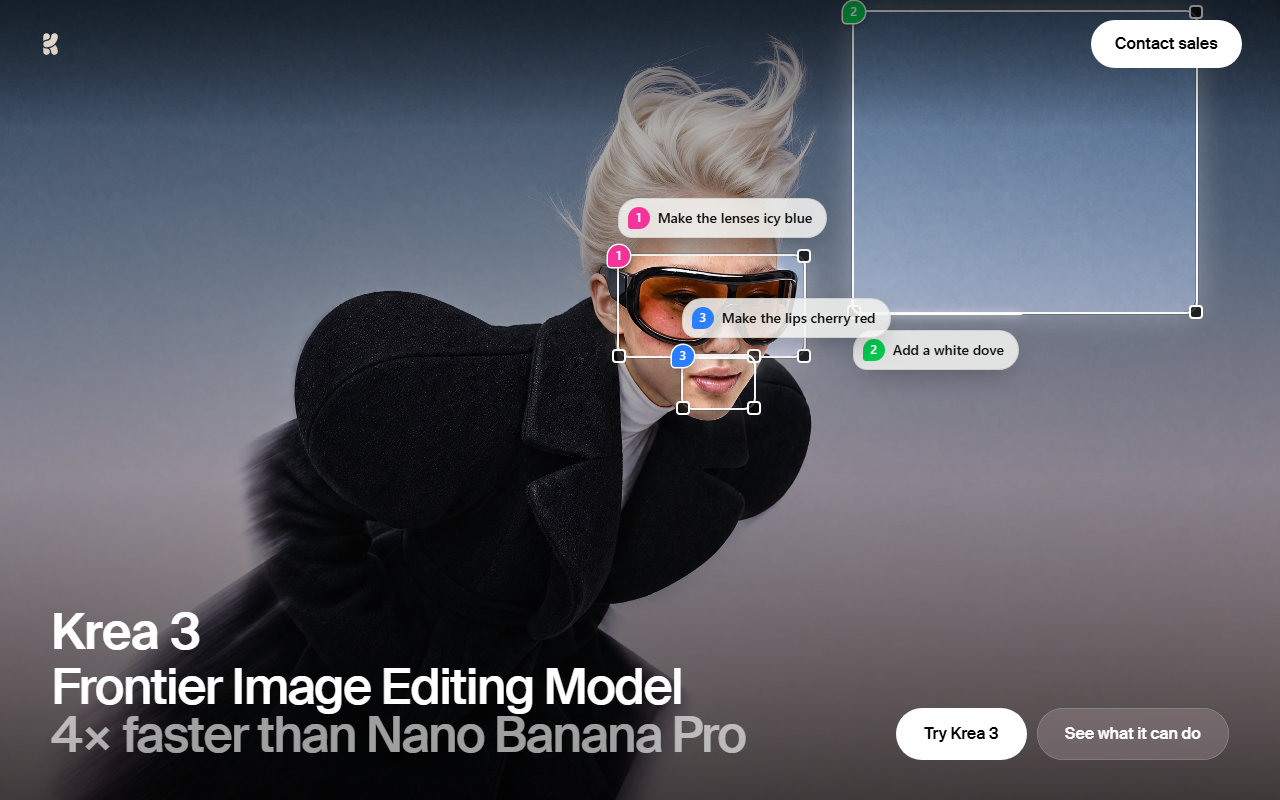
Fans praise the model range and results; critics name price, support silence and pushy sign-up offers.
Trustpilot shows 3.6 out of 5 from 177 reviews (128 in the last 12 months) as of Oct 29, 2026; the profile is claimed by Krea and many reviews carry an “Invited” label. On the US App Store, “Krea: AI Images and Videos” averages 4.5 from 715 ratings. The split is polarized: half the Trustpilot reviews give five stars and a third give one.
A buyer of an “Unlimited Seedance Pass” says server problems cost nearly two days, asked support for a few extra days before it expired and “received no response.”
“a million subscription options at sign up with all the classic ‘exclusive discount only valid for 59 minutes’”; the reviewer deleted the account without using it.
“great variety of options ... i use it for over a year and i'm very satisfied. The only downside is the prices.”
“Sneaky pricing. Offers you plans when you sign up, if you decline them, it offers you a discount.” Krea's co-founder answered that rivals' practices leave you “forced to defend yourself”.
A new user quotes the sign-up email: “I just unlocked a personal discount of 40% on your account, and switched Pro on for the next 3 hours”, and says the trial seemed broken.
Mixed Krea 3 results: one tester's bar-scene edit drew a T-shirt print over an invented jacket (“Gemini did much better”); another calls the showcase images cherry-picked.
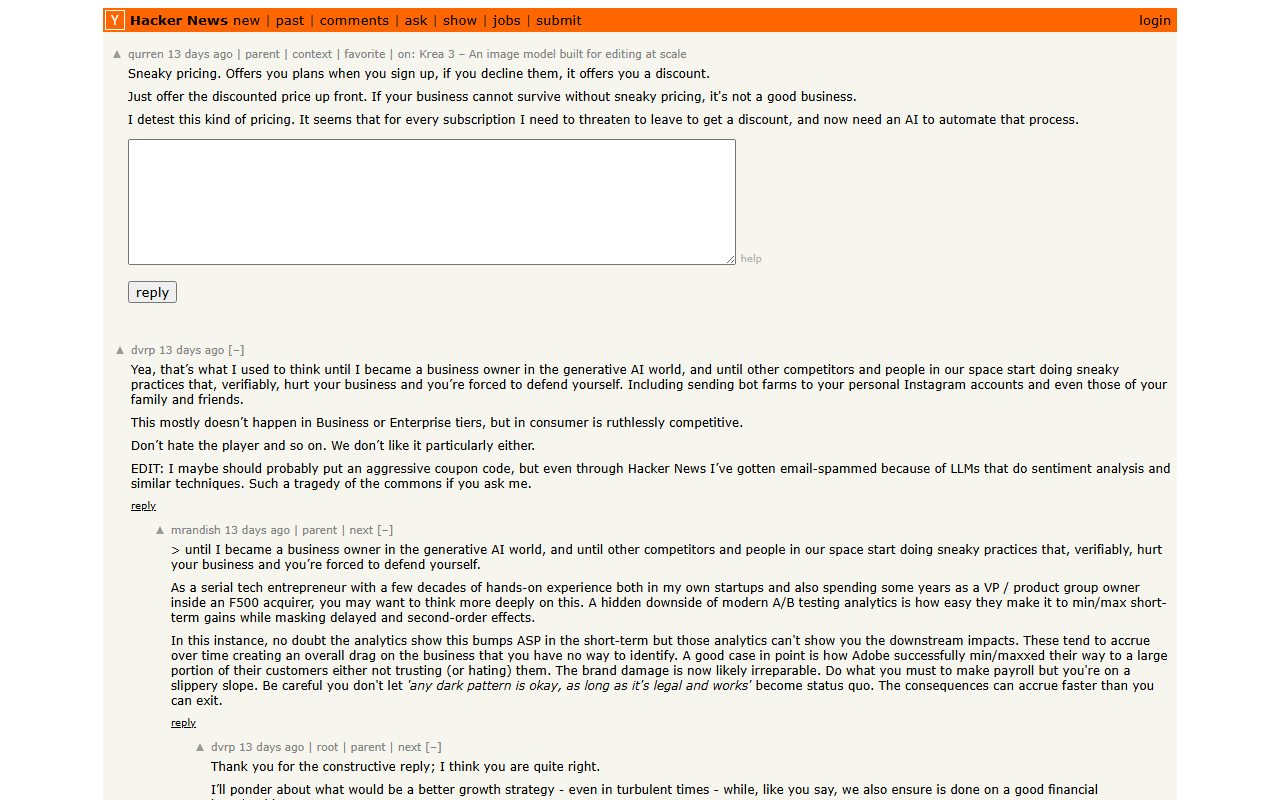
Free, Basic, Pro, Max, Business and Enterprise, priced in compute units.
As of Oct 29, 2026, krea.ai/pricing lists these plans (monthly price first, yearly price per month second):
- 100 units a day
- Krea 3 and Agent
- No Seedance models
- No commercial license per the FAQ
- $5.25 a month yearly (card shows $5)
- 5,000 units: about 112 Nano Banana 2 images
- Seedance 2, Fast and Mini only
- LoRA training up to 50 images
- $21 a month yearly
- 20,000 units: 450 Nano Banana 2 or about 65 Seedance 2.5 videos
- All models; job backlog in the API
- Early access to features
- $63 a month yearly
- 60,000 units (slider 40k to 100k)
- Krea 3 Ultra
- LoRA training up to 2,000 images
- $160 a month yearly
- 80,000 units; packs from 20k to 1.5M
- Up to 50 members, shared pool
- Units roll over; priority email support
- SAML SSO, custom seats
- Dedicated support, auto top-ups
- Zero Data Retention on the API
- Model licensing for self-hosting (separate)
The rules behind the prices
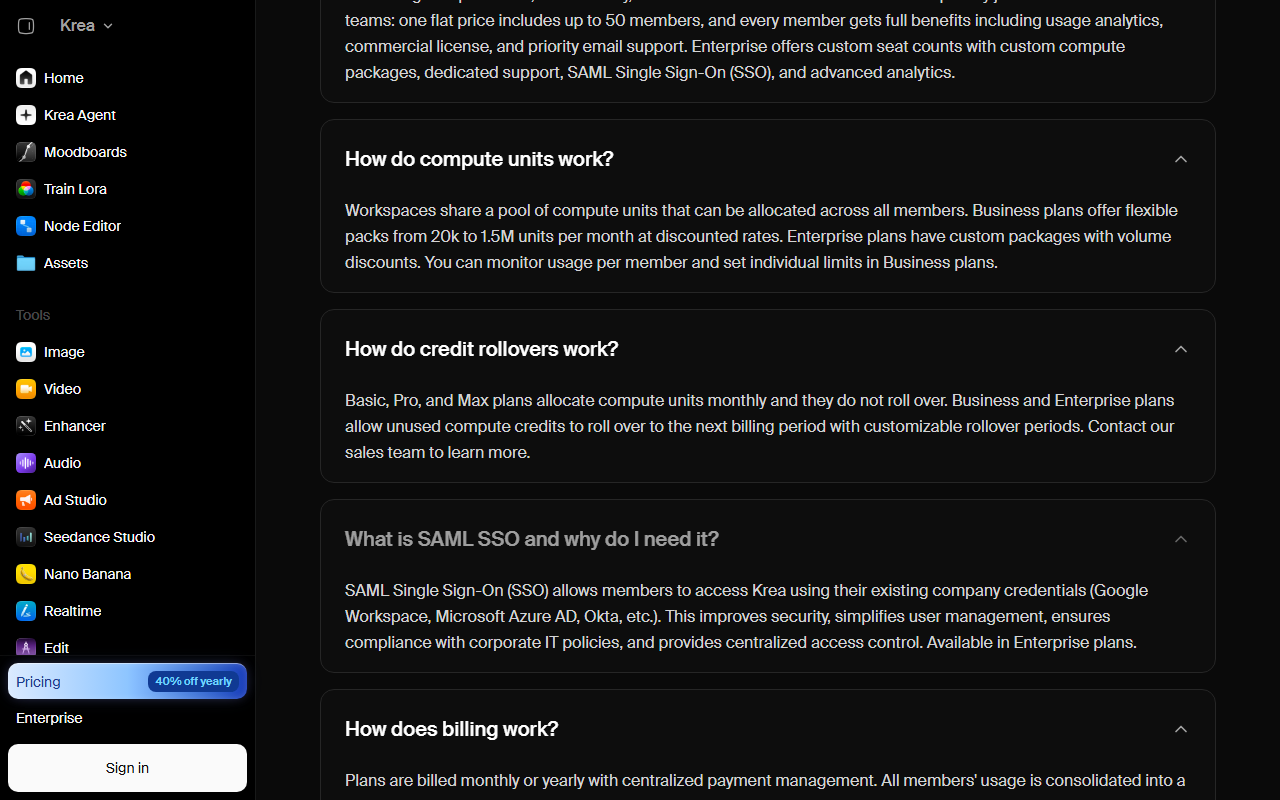
Per the pricing FAQ, Basic, Pro and Max units “do not roll over”, while Business and Enterprise units do; the compute-units guide adds that Business rollovers last a month on monthly plans and up to 12 months on annual ones. Compute packs of 2,000 to 50,000 units are “valid for 90 days”, and their prices appear only after you sign in. Every plan includes “unlimited relaxed generations” with Krea's in-house image models once units run out, and the changelog (Oct 26, 2026) adds nine free Krea 3 images on every plan. Plans auto-renew; the Terms say there is no prorated refund, and the refunds page offers a refund only if “workspace usage must be below 650 compute units and must have less than 20 generations for the current month.”
Worked examples: cheap per image if you use your units, costly if you do not.
These are invented workloads with the arithmetic shown. Krea prices generations in units, and its plan cards translate units into Nano Banana 2 images (about 44 units each, from 20,000 ÷ 450) and Seedance 2.5 videos; the clip length behind the video figure is not stated on the card.
A freelancer making product images
Pro monthly: $35 ÷ 450 = about $0.078 per Nano Banana 2 image. Pro yearly: $21 ÷ 450 = about $0.047, but you commit $252 for the year. Basic monthly is $0.080 an image. For comparison, Krea's own API lists Nano Banana 2 at $0.06 and Replicate charges $0.067 at 1K, both without a subscription.
A creator who also needs video
Pro's 20,000 units cover about 65 Seedance 2.5 videos, roughly 308 units each, or about $0.54 a video at the monthly price. A month of 300 Nano Banana 2 images uses about 13,300 units and leaves room for about 21 Seedance 2.5 videos. Seedance 2.5 is not available on Basic.
A team of five
Buying Pro for each person costs 5 × $35 = $175 a month with five separate pools that each expire. Business is $200 a month for one shared 80,000-unit pool for up to 50 members, with rollover, usage limits per member and priority email support. Per image it is dearer ($200 ÷ 1,800 = $0.111), so Business pays off through rollover and admin control, not unit price.
A developer on the API
Krea 3 through the API is $0.03 at 1K and $0.06 at 2K, plus $0.02 for each 1K reference image, so 1,000 2K edits with one reference cost $80. API balance is topped up in advance ($5 minimum, $10,000 maximum) and is separate from any plan; failed and cancelled jobs are not billed, per the docs.
Terms dated May 20, 2024, a broad license to what you upload, and help pages that lag the pricing page.
Krea's Terms of Service and privacy policy both say “Last updated: May 20, 2024”, older than Krea 2, Krea 3, the Agent and the current plans. Key points as of Oct 29, 2026:
When you submit “User Submissions”, you grant Krea a “worldwide, non-exclusive, perpetual, royalty-free, fully paid, sublicensable and transferable license” to use them for the service and its business, “including after your termination”, and other users a perpetual license to access them through the service. Paid plans carry a commercial license for outputs; per the FAQ the Free plan does not.
Plans auto-renew and there is no prorated refund. Liability is capped at the greater of $100 or what you paid in the prior 12 months. California law and individual arbitration apply, with a 30-day opt-out by mail; Krea pays arbitration fees for claims under $75,000.
Pages that disagree. The “Manage Subscriptions” help page says paid plans start “at $10/month + 20% off for annual plans” and lists Basic 4,000, Pro 20,000 and Max 54,000 units on top of 50 free a day; the pricing page says $9, 5,000, 20,000, 60,000, 100 a day and 40% off. The yearly Basic price is $5 on the card and $5.25 in the comparison table, and the yearly saving is 40% on Pro and Max but 20% on Business. The pricing FAQ says plan switches are prorated, while the refunds page says a switch from annual to monthly waits for the end of the annual term. Trust the plan card at checkout and keep a screenshot.
Match your situation to one line.
Generate, edit, upscale, train and chain, with Krea's own models alongside everyone else's.
Image and video generation across 40+ models, real-time rendering as you draw, 3D objects from text or images, audio, lipsync and motion transfer, an Ad Studio and a Seedance Studio.
Krea 3 for instruction-based edits (most under 8 seconds per Krea's model guide), an Image Editor, video restyle, and Topaz-powered upscaling up to 22K.
LoRA style training (50 images up to Pro, 2,000 on Max and above), moodboards, generative sliders for Krea 2, and a node editor whose workflows can be shipped as API endpoints.
The model picker matters for cost: Krea's model overview lists Krea 2 Turbo at about 2 credits, Nano Banana 2 at about 50, Nano Banana Pro at about 100 and Flux 2 Max at about 400 per generation, so the same plan buys very different volumes depending on the model. Krea's official video below covers Krea 2 image generation basics.
Brief the agent once, or wire models together in Nodes.
Krea Agent plans multi-step jobs from one brief, picks a model for each step and saves outputs to shared context. Per the Agent docs, generations it makes cost the same units as doing them by hand, and the planning model is included on paid plans except Extra High runs that use Claude Opus 5; on Free it is charged at 5% of the model's token price. One Trustpilot reviewer (Oct 22, 2026) complains the agent “continuously asks for regenerations, burns tokens”, so watch the Generations panel on long briefs. Nodes lets you chain models visually and, since Oct 22, 2026, edit workflows with teammates live.
Krea's own webinar with Doodles shows the style-training workflow on a real brand.
A REST API, an MCP server for Claude and ChatGPT, and plugins, on a separate wallet.
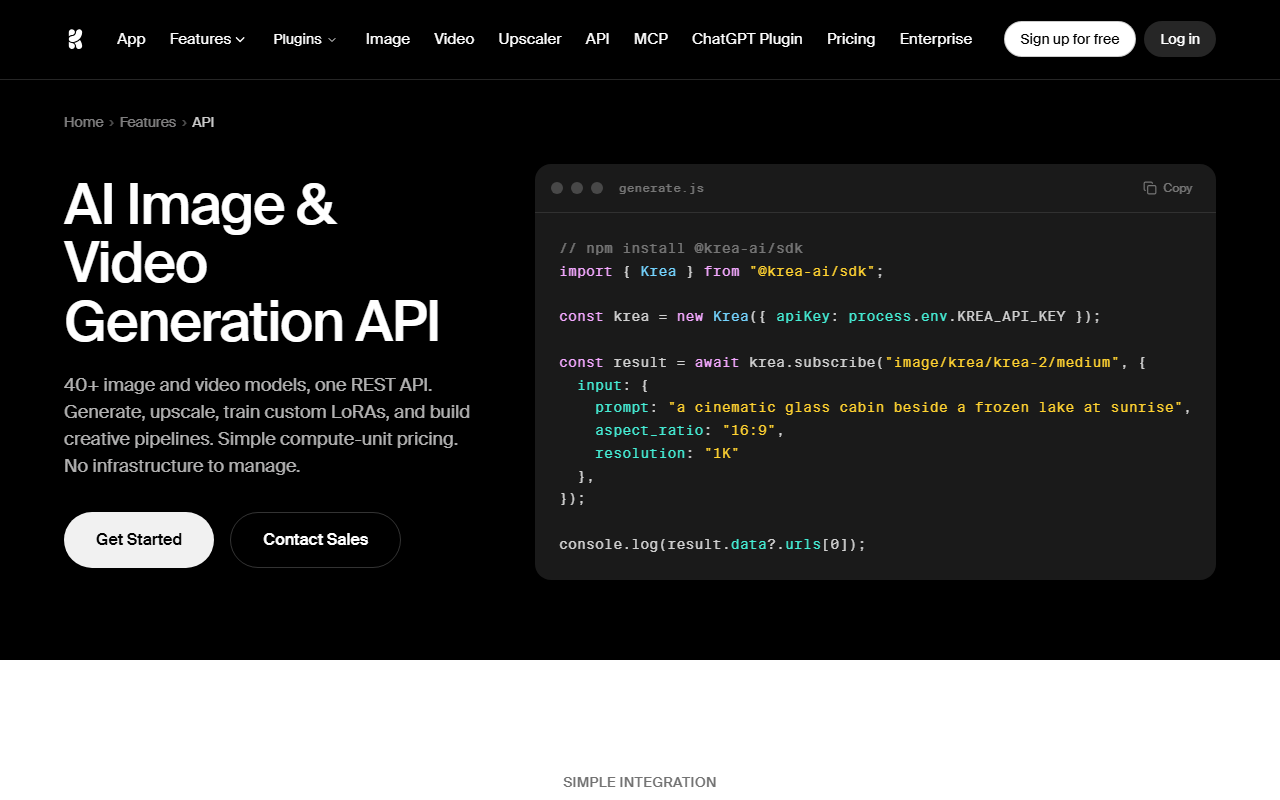
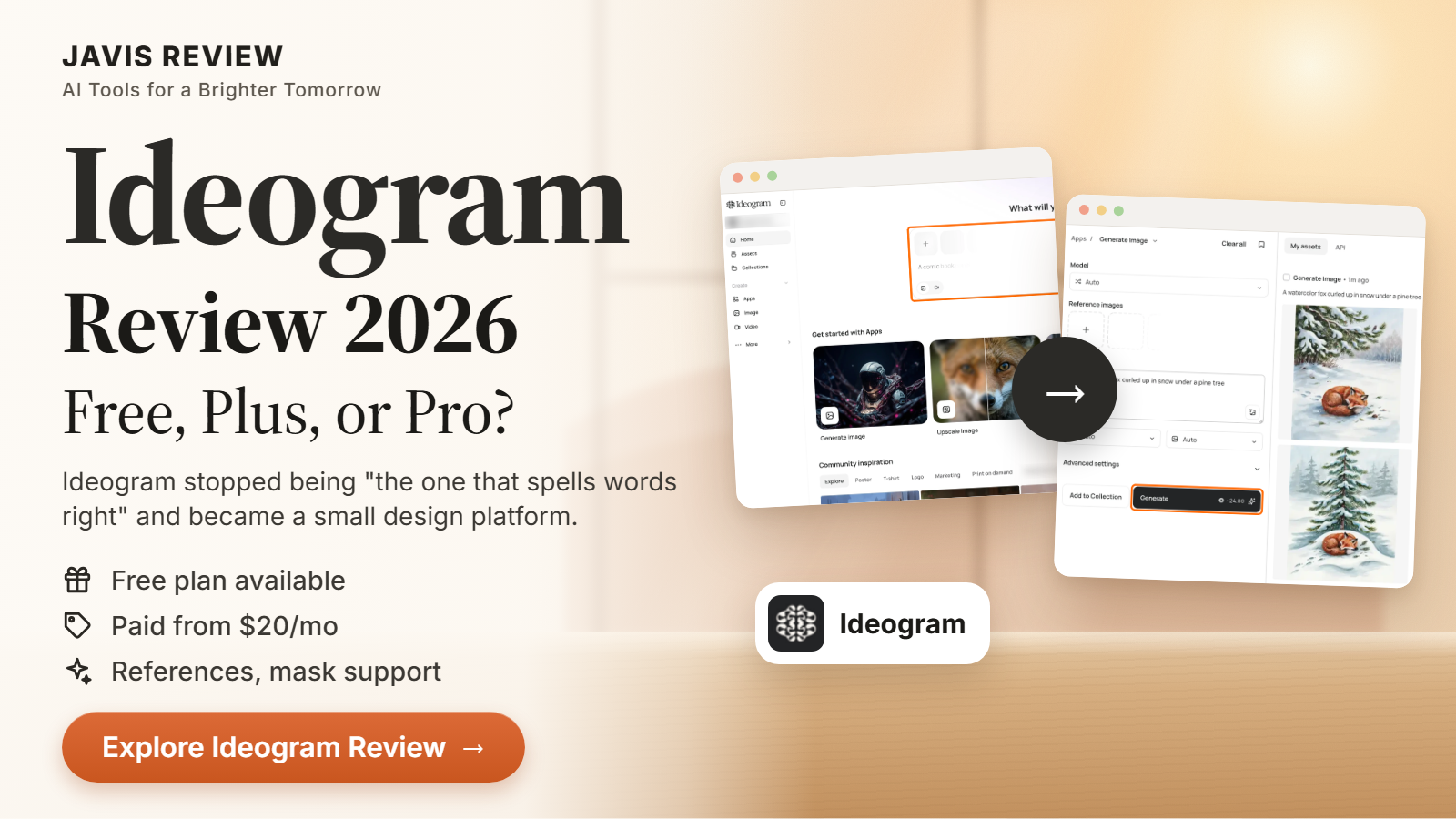
The API covers image, video, upscaling, LoRA training and deployed Nodes workflows, with SDKs for JavaScript, Python and Go, signed webhooks and per-plan concurrency (Pro and above can backlog jobs instead of getting a 429). Krea's API page lists Nano Banana 2 at $0.06 an image, Flux at $0.04 and Veo 3.1 at $0.20 a second. The page also says “Simple compute-unit pricing”, but the docs state that direct API requests draw from a separate “API balance”, that API access must be enabled on your workspace and that there is no endpoint to check the balance programmatically.
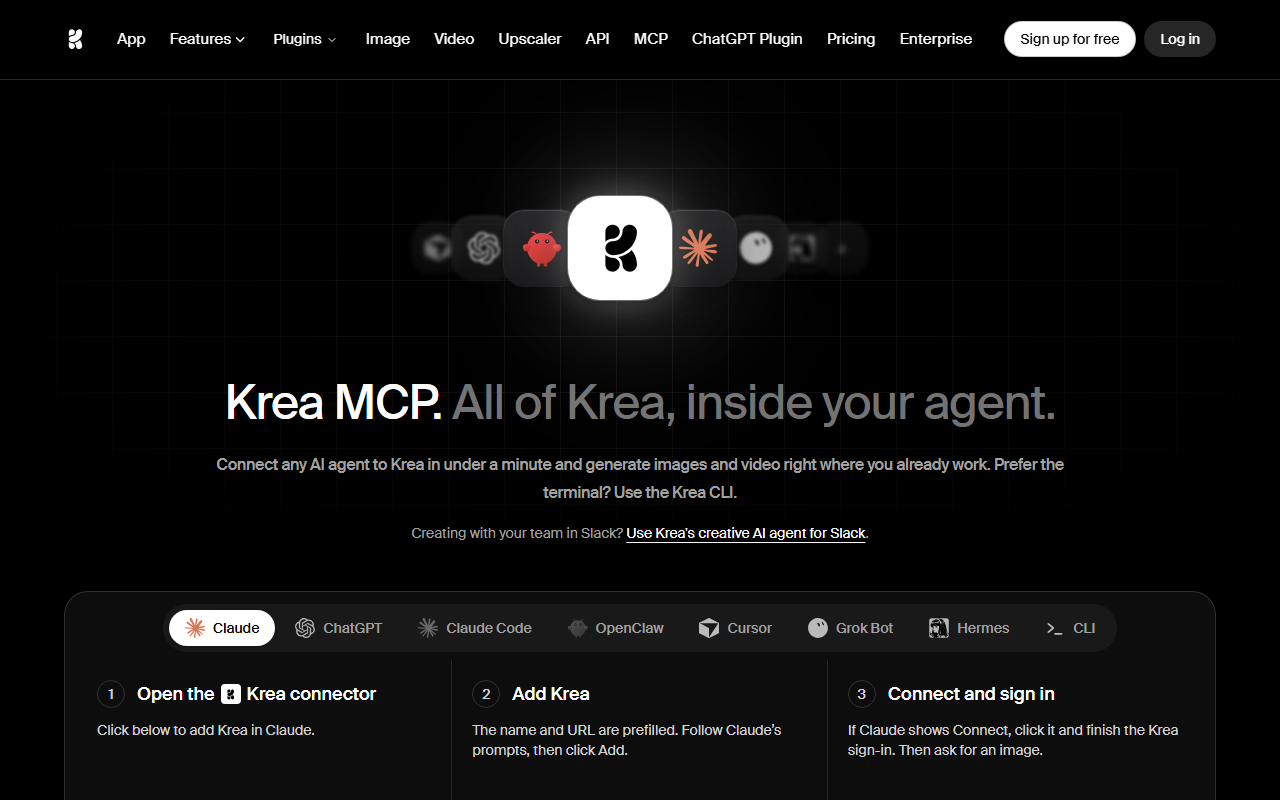
Krea MCP connects Claude, ChatGPT, Claude Code, Cursor and other agents to Krea with OAuth (billed to your plan's units) or an API key (billed to the API balance), and can list your trained styles. Our Claude MCP connectors guide explains how such connectors are added in Claude. Krea also ships plugins for creative software and a ChatGPT app.
SOC 2 and a no-training promise for enterprise; the consumer policy is older and vaguer.
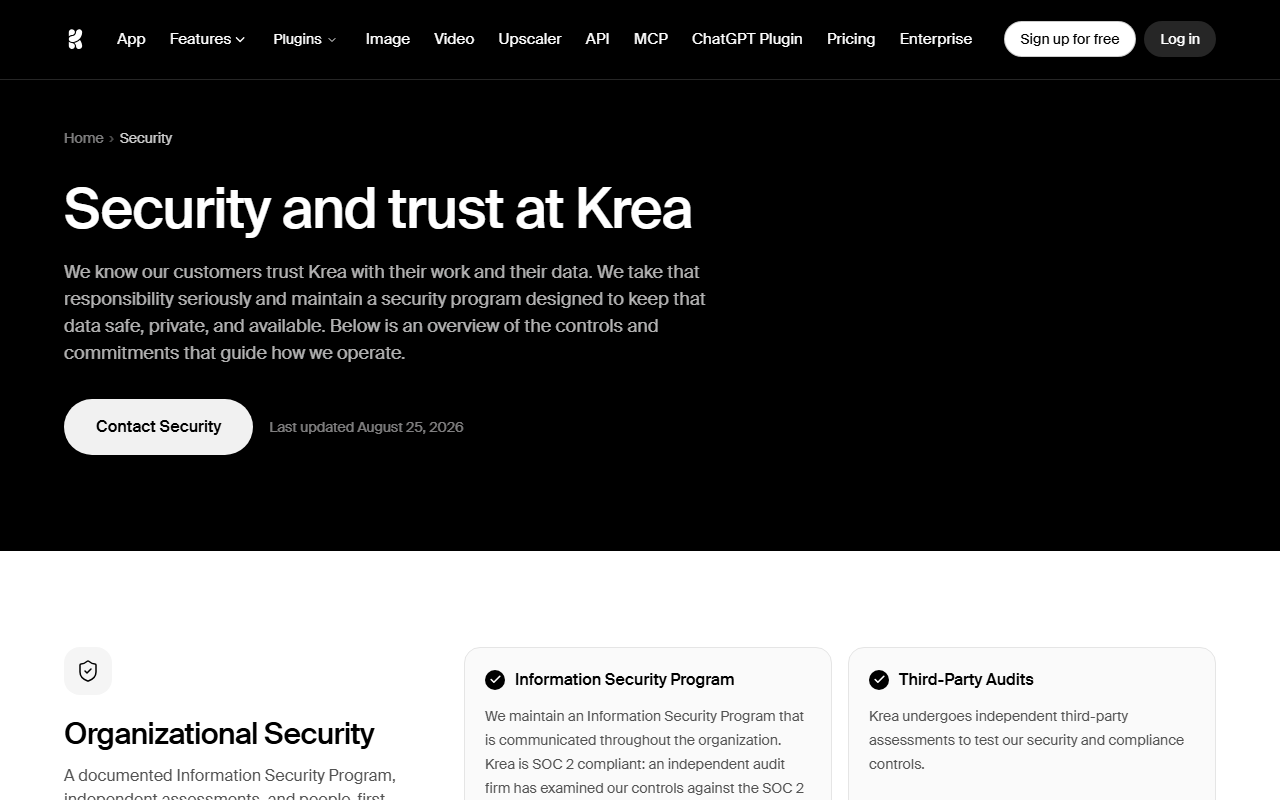
Krea's security page (last updated Aug 25, 2026) says Krea is SOC 2 compliant after an independent audit and runs third-party penetration tests at least annually; the enterprise page says the report is available under NDA through its Trust Center. The enterprise page also states “We never train on your data, and we never will.” Zero Data Retention exists for enterprise workspaces on the API for Krea 2 and Krea 3 models, turned on by sales.
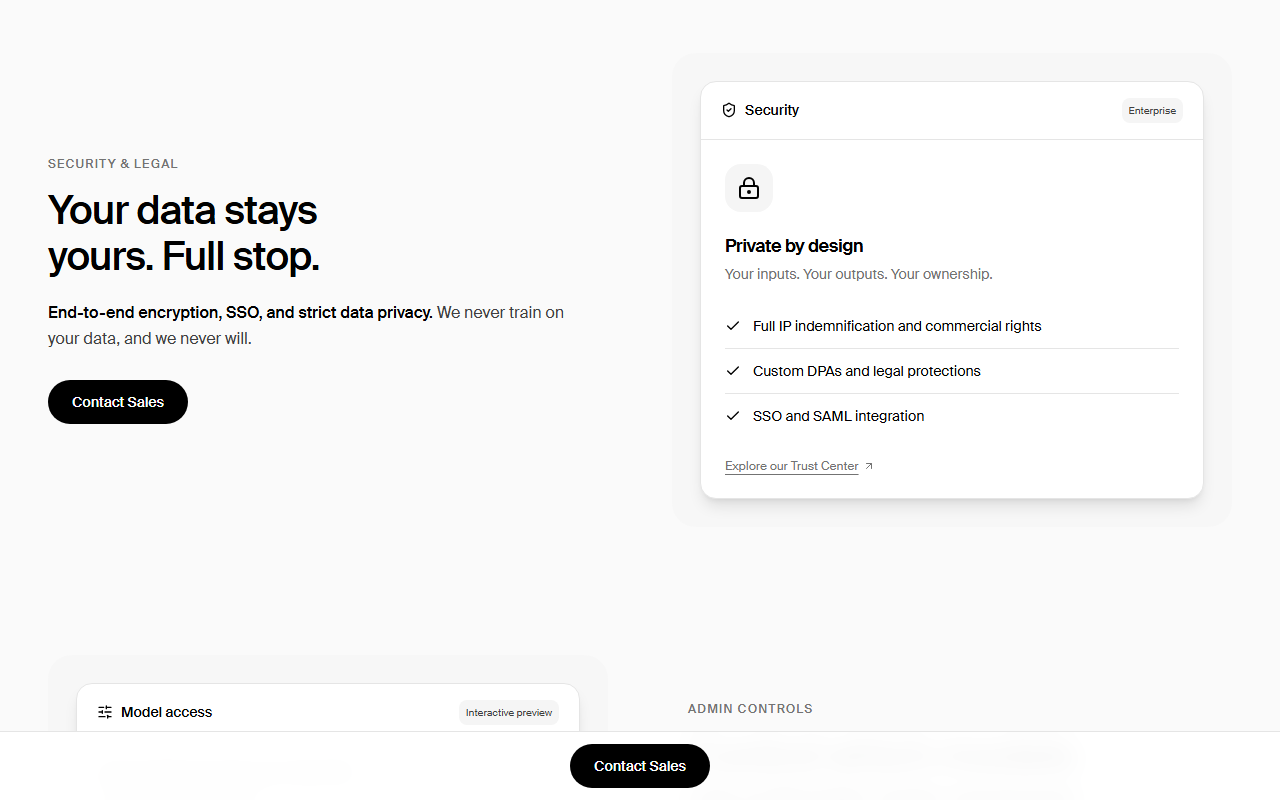
The consumer privacy policy, dated May 20, 2024, is less specific: it lists “Sensory Data such as photos, videos, or recordings of you” among data used for “Providing, Customizing and Improving the Services” and shared with service providers and analytics partners, and it does not say whether uploads train Krea's models. It does say Krea does not sell or share personal data. Combined with the broad upload license in the Terms, people uploading client work or photos of real people on Free or individual plans should read both documents first. Moderation is a separate friction point: one Trustpilot user says the app became “too censored” (Oct 3, 2026).
Designers, marketers and small studios who want many models without many subscriptions.
Freelancers and agencies switching between image, video and upscaling models weekly; brands that want a trained style applied across campaigns; teams that will use Business rollover and shared pools; architects and product designers using real-time and editing tools.
Occasional users who would let monthly units expire; developers who only need an API (pay per call instead); anyone who needs clear, current consumer data terms before uploading client material; buyers who want one stable price without offers.
Seven things to check before you subscribe.
No rollover on Basic, Pro or Max; packs last 90 days.
Only under 650 units and 20 generations.
Help center, card and table disagree on prices.
Time-limited sign-up discounts, per users.
Both the Terms and privacy policy date from May 20, 2024.
Priority email only on Business and up.
JAVIS generated no images.
Priced from each vendor's own page on Oct 29, 2026; the products differ, so the plans are not like-for-like.
| Option and when to pick it | What its own page says | JAVIS review |
|---|---|---|
| Krea Many models, editing, training | Free; Basic $9, Pro $35, Max $105, Business $200 a month; 40% off yearly on Pro and Max | This article |
| Midjourney One house style, strong aesthetics | Basic $10, Standard $30, Pro $60, Mega $120 a month; 20% off annual; Stealth Mode only on Pro and Mega | Midjourney review |
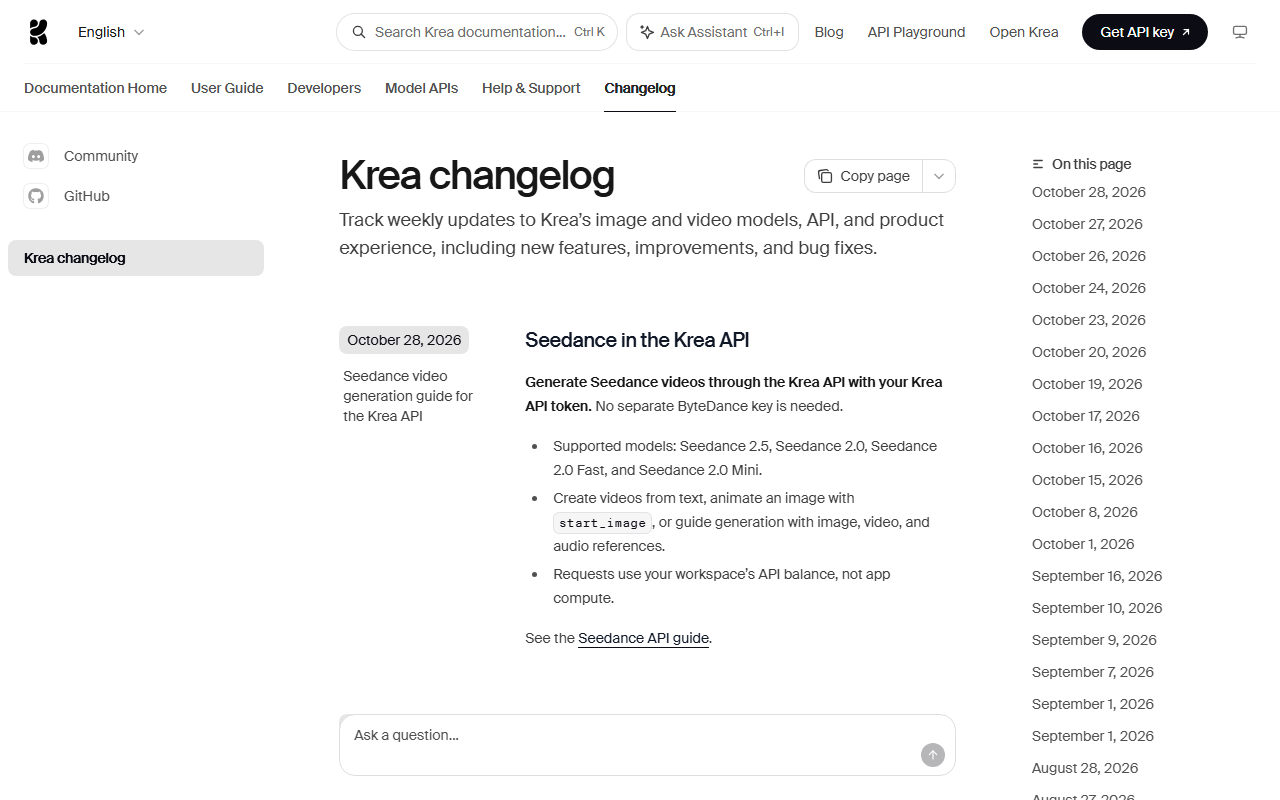
| Ideogram Text in images, design layouts | Plus $20 a month (2,400 priority credits); Pro $60 (7,500); private generation | Ideogram review |
| Leonardo AI Game and concept art workflows | Not priced here | Leonardo AI review |
| Adobe Firefly Adobe apps and licensed training data | Not priced here | Adobe Firefly review |
| Replicate Pay per call, no subscription | Krea 2 Medium $0.03 an image; Nano Banana 2 $0.067 at 1K | No live review yet |
For video-first work, Kling and Runway sell their own models directly; Krea also offers Kling inside its app.
Five steps that keep cost and risk in check.
This review has no affiliate links, and Krea did not see it.
JAVIS has no approved Krea affiliate link, so every link goes straight to krea.ai, its pricing page, its documentation or its terms, without tracking parameters.
Hands-on status: JAVIS has not created a Krea account, subscribed or generated an image. Cost examples use invented workloads with the arithmetic shown, and independent review evidence is limited, as section 04 says.
Monthly and yearly prices and unit counts.
Open Krea pricingEligibility, renewal and cancellation.
Open the refund docsComparing AI image and video tools? These reviews cover the nearest ground.
Each card opens a published JAVIS review.


Questions people ask before subscribing
Is Krea free?
Yes, the Free plan gives 100 compute units a day, Krea 3 and the Agent, but no Seedance models and, per the FAQ, no commercial license.
How much is Krea Pro?
$35 a month, or $21 a month billed yearly, for 20,000 units (about 450 Nano Banana 2 images or 65 Seedance 2.5 videos), as of Oct 29, 2026.
Do Krea compute units roll over?
Not on Basic, Pro or Max. Business and Enterprise units do roll over. Compute packs expire after 90 days.
Can I get a refund from Krea?
Only if your workspace used under 650 compute units and fewer than 20 generations that month; it is offered automatically when you cancel in the Stripe portal.
Can I use Krea images commercially?
Yes on Basic and above, per the pricing FAQ. Check the license of any third-party model and the Terms for what you grant Krea over uploads.
Does Krea train on my data?
The enterprise page says “We never train on your data”. The consumer privacy policy (May 20, 2024) does not address model training directly.
Is Krea's API cheaper than the app?
Per image it can be: Nano Banana 2 is $0.06 on the API against about $0.078 on Pro monthly, but the API needs its own prepaid balance.
What are the alternatives?
Midjourney, Ideogram, Leonardo AI, Adobe Firefly and, for pay-per-call use, Replicate; see section 15.
Where this came from, and when.
Pricing and product: krea.ai/pricing (monthly and yearly views, comparison table and FAQ answers), the home, Krea 3, API, MCP, enterprise and security pages; documentation on compute units, refunds, subscriptions, API keys and billing, rate limits, Zero Data Retention, the Krea 3 API, the Agent and the model overview; the changelog to Oct 28, 2026 and the blog to Oct 22, 2026; all Oct 29, 2026.
Legal: Krea Terms of Service and privacy policy, both last updated May 20, 2024, sections on user submissions, payments, liability and arbitration. We have not reviewed the SOC 2 report (available under NDA) or any enterprise contract.
Company: The AI Insider (Apr 8, 2025) for funding; Hacker News items 44745555, 48646659 and 50105648 and comment 46112959; Hugging Face model listings for Krea; the US App Store listing.
Independent evidence: Trustpilot page for krea.ai (177 reviews); App Store US rating (715 ratings); Hacker News comments 50106408, 50106498, 50108566, 50107259, 50108328 and 48670478. No G2 rating is quoted.
Competitors: docs.midjourney.com, ideogram.ai/pricing and replicate.com model pages, Oct 29, 2026. Cost examples are arithmetic on those prices with invented workloads.
Images: screenshots of public pages taken Oct 29, 2026 and Krea's Krea 3 social card. The two videos are from Krea's own YouTube channel.
JAVIS Fit Score (70/100): editorial composite, 20 points each. Price clarity 12: plan cards are clear, but help pages, card and table disagree, pack prices need sign-in and offers vary. Capability breadth 18: models, editing, training, agent, API. Independent evidence 14: large Trustpilot and App Store samples, polarized. Security and data control 13: SOC 2 and enterprise no-training promise, offset by 2024 consumer terms and a broad upload license. Cost control and fit 13: competitive per-image cost if units are used, lost if not. It is judgment, not a measurement.
What this review does not cover: output quality and speed, the actual price of compute packs, how often sign-up discounts appear, support response times, and whether open weights for Krea 3 will follow.