
Leonardo.Ai Review 2026: A Canva-Owned Model Hub Priced in Tokens You Cannot Easily Convert Into Pictures
Leonardo.Ai began in Sydney in 2022 as a fast-growing image generator and was bought by Canva in July 2024. In October 2026 its API docs list more than 50 model guides: its own Phoenix and Lucid Origin, then FLUX.2, GPT Image 2.5, Nano Banana, Seedream, Ideogram 3.0 and a long line of video models. It relaunched under the tagline "Yours to Create" in February with a Creative Engine API, runs pay-as-you-go billing for developers, and ships an MCP server. Trustpilot gives it 4.7 out of 5 for fast human support. The catches: tokens are spent at different rates by every model, free-plan output is public, models are retired with little warning, and some official pages are not available as plain text. This review checks what is true today against Leonardo's own help center and docs, Canva, independent reporting and user feedback.
| Ownership | Canva subsidiary since Jul 30, 2024 |
| Free tier | Real — 150 tokens a day, public |
| Cheapest paid plan | $12/mo Essential ($10 yearly) |
| Model catalog | 50+ model guides in the API docs |
| Trustpilot record | 4.7/5, 1,499 reviews |
Leonardo.Ai is no longer an image generator with a model of its own. It is a Canva-owned storefront for other people's best models — priced in tokens you cannot easily convert into pictures.
"When I read Leonardo's API docs this week, the first thing that stood out was the model list. Forty-nine guides: its own Phoenix and Lucid Origin, then FLUX.2, GPT Image 2.5, Nano Banana Pro, Seedream, Ideogram 3.0, and a video wall of Veo 3.1, Kling 3.0, Seedance 2.5, Wan 3.0 and Hailuo. Leonardo has quietly become the place where you pick the model, not the model. That is genuinely useful, because the best image model changes every few months. It is also why the one thing you cannot answer from the pricing page is what a month of Premium will actually buy."
The tokens are the story. A plan gives you a number; each model, resolution and feature spends a different amount; video spends the most; and unlimited "relaxed" generation only exists for a short list of models and only after your tokens are gone. Leonardo's Trustpilot score is a strong 4.7, driven by fast human support. Its most repeated complaint elsewhere is exactly the token opacity. I would use it as a flexible multi-model workbench with a Canva connection, and I would budget by actual jobs, not by the headline token count.
A model hub with a few models of its own, an editor on top, and Canva next door.


Leonardo.Ai started in Sydney in December 2022 and was acquired by Canva in July 2024. It is still run as a separate product at leonardo.ai, with a web app, iOS and Android apps, a Teams offering and, since February 2026, a developer-facing Creative Engine API. Inside the app you generate images and video, edit with an Inline Editor powered by Omni models, run ready-made Blueprints workflows, train personal models, upscale, remove backgrounds and make 3D textures. Its own image models are Phoenix (June 2024), Lucid Origin (Aug 2025, native Full HD) and Lucid Realism; everything else is licensed from partners.
Swipe sideways to read the full diagram.
Unlike Midjourney or Ideogram, Leonardo is owned by a larger company and sells itself partly as infrastructure for others. That changes the incentives: breadth and API revenue matter as much as any single model's look.
A Canva subsidiary competing on breadth: more than 50 model guides and a new API.
Acquisition announced Jul 30, 2024; terms undisclosed; 120-person team joined Canva.
Oct 2023 (about US$31M), per Wikipedia. Blackbird, Sierra, Samsung Next and others.
Registered users per Wikipedia, not current paying users. No 2026 figure found.
Image, video, audio and 3D guides listed in docs.leonardo.ai on Oct 3, 2026.
| Date | Event | Why it matters |
|---|---|---|
| 2022-12 | Leonardo.Ai founded in Sydney (CEO JJ Fiasson) | Began as a side project and grew fast on Stable Diffusion-era models. |
| 2023-10 | A$47M Series A | Outside funding before Canva. |
| 2024-06 | Phoenix, first in-house foundation model | Prompt adherence and in-image text. |
| 2024-07-30 | Canva announces the acquisition | Leonardo "will continue to run independently" (Canva); Phoenix to power Canva tools. |
| 2025-08-05 | Lucid Origin | Native Full HD model, text and layout. |
| 2026-02-23 | New brand and Creative Engine API | "Yours to Create" rebrand; API for developers and enterprises. |
| 2026-06-17 | Motion 1.0 retired | Video lineup consolidated. |
| 2026-07-09 | Sora 2 and Sora 2 Pro retired from the API | Provider-driven; shows how fast the catalog changes. |
Trustpilot loves the support team. Everywhere else, people argue about tokens.
4.7 out of 5. Praise is dominated by support speed ("problem solved within 5 minutes" is a representative review) and named support staff. Common issues are billing confusion around subscriptions and tokens, and occasional interface glitches. Leonardo replies to about 76% of negative reviews. Trustpilot is a volunteered and invited sample, not a random one.
Roundups say token opacity is the single biggest pricing complaint, that a free allowance can vanish in roughly ten images on heavy models, and that failed or blocked generations still consume tokens, the loudest one-star theme. Based on published summaries, not the underlying reviews, so these are patterns, not counts.
Both publishers sell competing products. Krea lists Leonardo's breadth as a strength and public free-tier output as a weakness. WaveSpeed argues Leonardo is slower and pricier per image and that its API is young; its own copy notes it is promotional. Useful for what to check, not as neutral evidence.
Free, Essential, Premium, Ultimate — priced in tokens whose value depends on the model.
Free
150 fast tokens a day; no rollover, no card needed.
- Creations are public
- No top-up tokens
- Video limited
Essential
$10/mo yearly. 8,500 tokens a month, 25,500 bank.
- Private creations
- 10 personal AI models
- 2 concurrent generations
Premium
$24/mo yearly. 25,000 tokens, 75,000 bank.
- Unlimited relaxed images on selected models
- 20 personal AI models, 3 concurrent
- Queue limit of 10
Ultimate
$48/mo yearly. 60,000 tokens, 180,000 bank.
- Relaxed image and video on selected models
- 50 personal AI models, 6 concurrent
- Queue limit of 20
Swipe sideways to see every column.
| Plan | Monthly / yearly per month | Tokens per month | Rollover bank cap | Price per 1,000 tokens (monthly / yearly) |
|---|---|---|---|---|
| Free | $0 | 150 per day (no rollover) | 150 | - |
| Essential | $12 / $10 | 8,500 | 25,500 | $1.41 / $1.18 |
| Premium | $30 / $24 | 25,000 | 75,000 | $1.20 / $0.96 |
| Ultimate | $60 / $48 | 60,000 | 180,000 | $1.00 / $0.80 |
| Teams Starter / Growth (3-seat minimum) | Reported $24 / $48 per seat | 25,000 / 60,000 per seat (implied by rollover table) | 75,000 / 180,000 per seat | Tracker-reported prices |
A useful oddity from Leonardo's own help center: a paid user with an empty rollover bank and no top-ups still gets the free 150-token daily reset, so the floor under a paid plan is the free plan. Cancel a paid plan and any unused rollover tokens are cancelled with it.
Your answer depends on model breadth, privacy and whether you need an API.
Premium is the realistic starting point; test on Free first with the 150 daily tokens.
Any paid plan: Private mode is a paid feature, and public images carry a licence to Leonardo.
Ultimate. Relaxed video generation exists only there, and only on selected models.
Creative Engine API: pay-as-you-go dollars, no monthly commitment, and an MCP server for assistants.
Canva's help center is reported to say that Leonardo Essential is no longer included for new Business sign-ups after Aug 31, 2026, and that existing Business subscribers lost it on Sep 30, 2026 and returned to the Free allowance of 150 tokens a day. Essential is still sold separately by Leonardo. Canva's page was not available to confirm the wording, so ask Canva before you rely on the bundle, and about Enterprise.
Look at API pay-as-you-go or at per-image-priced alternatives; token plans are hard to convert.
The differentiator is not one model. It is picking among many, then editing in place.
The feature that actually differentiates Leonardo in October 2026 is the model catalog plus the editor on top of it. Leonardo's help center describes "Omni models" (FLUX.1 Kontext, FLUX.2 Pro, GPT Image-1 and 1.5, Nano Banana and Pro, Seedream 4.0 and 4.5) that understand both images and text. They work as standalone generators and inside the Inline Editor: click any generated image, type a change, add up to six reference images depending on the model, and swap the Omni model without leaving the view. You can edit images made with any model that way.
Around that sits Leonardo's own work. Lucid Origin (Aug 2025) is described as native Full HD, strong on text and layout; Phoenix is the older foundation model prized for prompt adherence; Blueprints package a model, prompt and settings into a fill-in-the-blanks workflow (for example product photography producing an image and a video). Docs also list Veo 3.1, Kling, Seedance, Wan and Hailuo video, plus audio models for music, sound effects and dialogue.
| Capability | What Leonardo documents | Source |
|---|---|---|
| Own image models | Phoenix 0.9 and 1.0; Lucid Origin (Full HD); Lucid Realism | Help center and API docs |
| Omni editing | Inline Editor; up to 6 reference images depending on the model; works on images from any model | Help center, Omni Models article |
| Workflows | Blueprints: fill in inputs, get image and/or video outputs | Help center, Blueprints article |
| Partner video | Veo 3.1, Kling 3.0 / O3, Seedance 2.5, Wan 3.0, Hailuo 03, Grok Imagine 1.5 and more | docs.leonardo.ai model guides |
| Audio and 3D | Music v1, Sound Effects v2, Dialogue v3, Seed Audio 1.0, Rodin V2 | docs.leonardo.ai model guides |
| Personal models | 10 / 20 / 50 trainable models on Essential / Premium / Ultimate | Leonardo pricing page |

- One login and one token pool across many frontier models, which is real convenience when rankings shift quarterly.
- Editing is first-class: the Inline Editor and Blueprints reduce re-prompting.
- The docs are detailed and current, with dated deprecation notices.
- Partner models come and go: Sora 2 left on Jul 9, 2026; Veo 3 and Motion 1.0 left in June.
- Per-model token costs for newer video and image models are shown only in-app before you generate.
- Leonardo's official channel has no recent demo video, so you will be judging by trial.
Choose the model per job, edit in place, hand off to Canva.
Swipe sideways to read the full diagram.
Two habits pay off. First, always read the token cost on the Generate button before running a video or a new partner model; Leonardo shows it there. Second, test one prompt across two or three models at image size before committing tokens to the expensive one. Because Leonardo's help center describes the "Unlimited Generations" fallback as slower and only for supported models, do not plan on it for premium partner models.
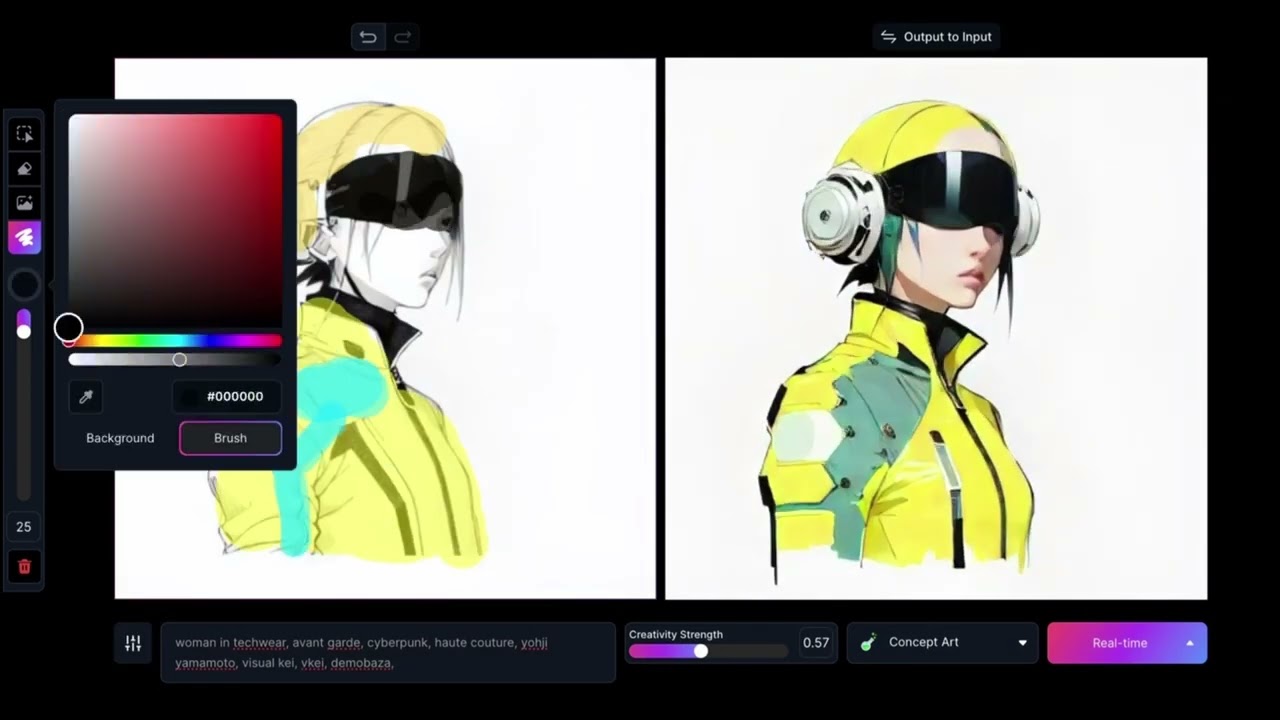
Context matters here: this is a Dec 2023 video, the only one on Leonardo's official channel. Leonardo's help center still documents Realtime Canvas but says it recommends the newer image models and Editor experience. Watch it for the sketch-to-render idea, not as a tour of today's interface.
Published by the official "Leonardo Ai" YouTube channel (youtube.com/@leonardoai), as of Oct 3, 2026.
The Canva link is deliberate: from the Library or Generations page you can choose "Edit in Canva" for a single asset or "Add to Canva" for several, Leonardo's help center says Edit in Canva works for all individual users, paid or free, but not for Teams users, and Canva's help center says signing in with Canva gives you the Free plan automatically.
Many video models, one expensive truth: tokens drain fastest here.
Video is where Leonardo's token model bites hardest. The platform runs partner video models (Veo 3.1, Kling, Seedance, Wan, Hailuo, Grok Imagine, Motion 2.0 and others). Third-party roundups say a single 8-second Veo 3 clip can cost as much as 300 or more basic image generations; JAVIS could not verify that exact ratio against official rates, because newer model costs are not published in the help center. What is official: Premium has unlimited relaxed generation for images only; Ultimate extends that to video, and the help center lists these unlimited video models: MiniMax H3 (480p), WAN 2.6, Hailuo 2.3 and 2.3 Fast, and Motion 2.0 and 2.0 Fast.
| Video-related fact | Detail | Source |
|---|---|---|
| Relaxed ("unlimited") video | Ultimate only; supported video models listed: MiniMax H3, WAN 2.6, Hailuo 2.3 / 2.3 Fast, Motion 2.0 / 2.0 Fast | Leonardo help center, tokens FAQ |
| Retired video models in 2026 | Motion 1.0 (Jun 17), Veo 3 and 3 Fast (Jun 29), Seedance 1.0 Lite (May 13), Sora 2 and Pro (Jul 9) | docs.leonardo.ai Deprecations |
| Newest listed | Wan 3.0, Seedance 2.5, Kling 3.0 / O3, Gemini Omni Flash, FLUX 3 Video | docs.leonardo.ai model guides |
| Where costs show | On the Generate button before you run it | Leonardo help center |
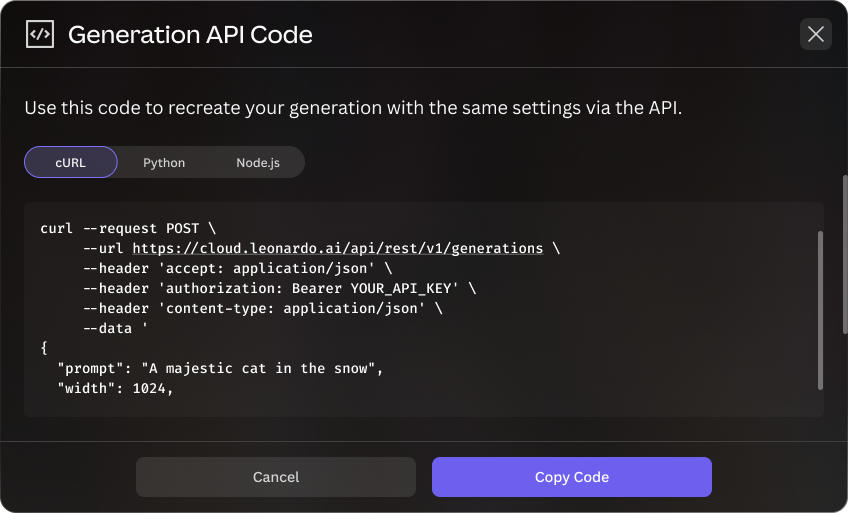
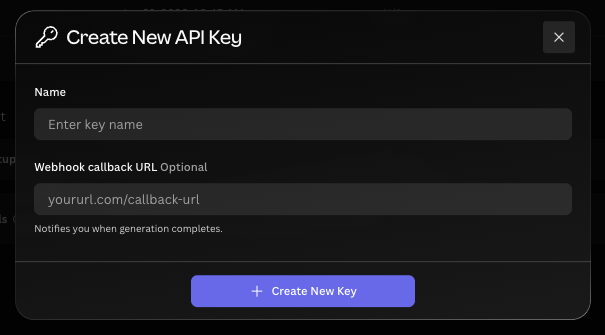
Automation: Blueprints can be executed through the production API, and the API supports webhooks and a pricing calculator, so repeatable pipelines (translate a poster, make product shots) are possible without the app.
A new API, pay-as-you-go billing, an MCP server and a Canva connection.
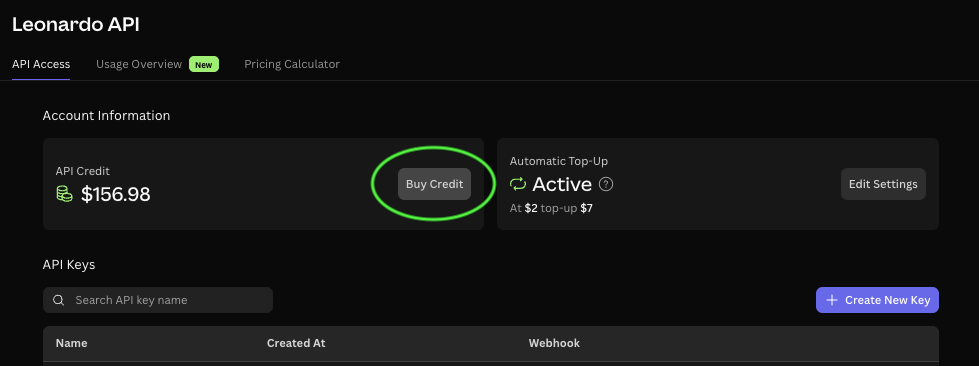
The developer story is new and moving fast. The Creative Engine API launched with the Feb 23, 2026 rebrand, and Leonardo moved API billing to pay-as-you-go: a dollar balance you top up manually or automatically, no monthly commitment, balance never expires, and a calculator to estimate costs. Existing Basic, Standard and Pro API subscribers can switch by cancelling their plan; Leonardo says the credits convert to dollars at a standard rate. Custom plans cover higher concurrency and enterprise volume.
There is also an official MCP server (mcp.leonardo.ai/v1/mcp), documented for Cursor and VS Code assistants. It requires an API key and any API plan, and currently exposes image generation with Lucid Origin, Lucid Realism and Ideogram 3.0.
Swipe sideways to read the full diagram.
| Integration | What it does | Where documented |
|---|---|---|
| Creative Engine API | Image, video, audio, 3D and upscale models behind one API; default concurrency and rate limits documented | docs.leonardo.ai (official) |
| MCP server | Lets assistants generate images with three listed models | docs.leonardo.ai/docs/connect-to-leonardoai-mcp (official) |
| Canva | Sign-in and asset handoff; some Canva AI image tools use Leonardo models | Canva Help Center (official) |
| Pay-as-you-go | Dollar balance, auto top-up, no expiry | docs.leonardo.ai PAYG guide (official) |
Tokens in the app, dollars in the API — and no universal exchange rate.
Leonardo's economics are two systems. The app spends tokens; the API spends dollars. For the app, Leonardo's help center publishes a legacy cost table (a default 768x768 image is 1 token, Alchemy 8 to 16, upscalers 5, Remove Background 2, full 3D texture 30) and states that every feature, image and video model has its own cost, shown before you generate. For newer models there is no public table to cite, so budget with a test.
| What you are doing | What it costs (documented) |
|---|---|
| Free plan | 150 tokens a day; unused tokens expire each day |
| Paid plan tokens | Monthly allowance; unused tokens bank up to 3 months, then expire; monthly allowance first, then the rollover bank, then top-ups |
| Top-up tokens | Never expire; need an active subscription; not available on Teams |
| Unlimited Generations | Premium images; Ultimate images and video; supported models only; starts only after all tokens are gone; slower |
| Legacy feature examples | Default image 1 token, Alchemy 8-16, upscaler 5, Remove BG 2, 3D texture 30 |
| API | Dollar balance, pay-as-you-go; usage deducted in real time; no discounts by default; custom pricing by request |
| Failed or blocked jobs | Independent roundups say they can still consume tokens; JAVIS did not find an official statement either way |
Private on paid plans, public on Free, with a perpetual licence on anything public.
| Question | What Leonardo says |
|---|---|
| Who owns paid private generations? | "When generating privately using a paid subscription, users retain full ownership, copyright, and all other intellectual property rights." |
| What about public images? | Leonardo and whoever takes over its rights keep a worldwide, perpetual licence to use, modify, publish and sublicense public images and prompts; other users get a licence to use them only as the features allow. |
| Free plan privacy | Free-plan creations are public. Private Mode is a paid feature. Switching an image to private later stops public use. |
| Commercial use | Allowed for personal and commercial purposes under the Terms of Service, with the public/private distinction above. |
| Refunds | Assessed manually by a human agent via support chat or email. |
| Partner-model terms | Partner models are third-party; availability can change with the provider (see Deprecations). |
On security, Leonardo's Teams plans have their own billing guides and per-seat token allotments. Leonardo does not publish a compliance page (SOC 2, ISO) that we could find, so no certification claim is made here; enterprise buyers should ask Leonardo or Canva directly.
Best for people who want choice and editing, not people who need predictable per-image pricing.
| Situation | Why Leonardo fits | Likely plan |
|---|---|---|
| Designer who wants many models in one place | One token pool across Lucid, FLUX, GPT Image, Nano Banana, Seedream | Premium |
| Video creator testing several video models | Veo, Kling, Seedance, Wan under one login; Ultimate for relaxed video | Ultimate |
| Developer adding generation to a product | Pay-as-you-go API, webhooks, MCP | API balance |
| Canva-centred marketing team | Sign in with Canva, Edit in Canva | Free, then paid |
| Someone who needs fixed, predictable per-image costs | Token variability makes this hard | Look at API or alternatives |


Four real gaps, not manufactured ones.
Each feature and model spends differently, newer model costs are not published in help articles, and independent roundups call it the top complaint.
Private Mode is paid only, and public images carry a perpetual licence to Leonardo. Competitor reviews flag this too.
Sora 2, Veo 3 and Motion 1.0 were all retired between June and July 2026. Workflows built on one model can break.
Plan prices rest on third-party trackers because Leonardo's pricing page is not available as text, the Canva Business bundle changed in 2026 and the wording is hard to confirm, and the official YouTube channel has a single video from 2023.
Leonardo is the breadth choice, not the cheapest, most painterly or most predictable.
| If you mostly need... | Compare Leonardo.Ai with... |
|---|---|
| The most distinctive look and nothing else | Midjourney — no free plan, no API (JAVIS review) |
| Exact text in images and layered editing | Ideogram — also hosts rival models (JAVIS review) |
| Video as the main job | Runway — the AI video specialist |
| Designing in a full editor with AI built in | Canva itself — some of its AI image tools run on Leonardo models |
| Pay-per-image API access to many models | Aggregator APIs (competitor roundups name several); compare per-image cost |
| Product (individual tiers) | Monthly price | Allowance | Free tier? |
|---|---|---|---|
| Leonardo.Ai Essential / Premium / Ultimate | $12 / $30 / $60 | 8,500 / 25,000 / 60,000 tokens | Yes, 150 tokens/day |
| Ideogram Plus / Pro | $20 / $60 | 2,400 / 7,500 credits | Yes, 30 credits/week |
| Midjourney Basic / Standard / Pro | $10 / $30 / $60 | 3.3 / 15 / 30 Fast GPU hours | No |
No affiliate relationship shapes this review.
JAVIS has not established a publisher affiliate program with Leonardo.Ai. Every CTA points to the official product or official documentation. This is a editorial review built from Leonardo's help center, API docs and Canva's help center, plus independent reporting and user-review sources. JAVIS did not run a controlled hands-on test of Leonardo for this article.
Go to the official page.
Open Leonardo.AiRead the alternative that matches your real question.
Choose the next articleLeonardo.Ai makes the most sense next to its rivals and the tools it connects to.
Leonardo's two closest rivals are Midjourney and Ideogram. For the rest, Runway covers video, ElevenLabs covers the audio side Leonardo is also starting to host, and Cursor is one of the assistants Leonardo's MCP server is documented for.



Questions people are actually searching right now
Who owns Leonardo.Ai?
Canva. The acquisition was announced Jul 30, 2024, with financial terms undisclosed; Canva said Leonardo would keep running independently. Leonardo is based in Sydney.
Is Leonardo.Ai free?
There is a free plan with 150 fast tokens a day that reset daily with no rollover. Free creations are public. Signing in with a Canva account also gives you the Free plan.
How much does Leonardo.Ai cost?
Essential is $12 a month ($10 yearly) for 8,500 tokens; Premium is $30 ($24 yearly) for 25,000; Ultimate is $60 ($48 yearly) for 60,000. Teams plans are per seat. Prices come from dated third-party trackers as of Oct 3, 2026; confirm at checkout.
Do unused tokens roll over?
On paid plans, yes, into a rollover bank worth up to three months of tokens (25,500, 75,000 or 180,000). Cancelling a plan cancels the bank. Top-up tokens never expire but need an active subscription.
Can I use Leonardo images commercially?
Yes under the Terms of Service. Paid private generations are owned by you. Public images, including all free-plan images, carry a perpetual licence to Leonardo and a usage licence for other users.
Does Leonardo have an API?
Yes. The Creative Engine API launched Feb 23, 2026 and now uses pay-as-you-go dollar billing. There is also an MCP server documented for Cursor and VS Code.
Which models can I use?
Leonardo's own Phoenix and Lucid Origin plus partner models such as FLUX.2, GPT Image 2.5, Nano Banana, Seedream, Ideogram 3.0 and video models like Veo 3.1, Kling 3.0, Seedance 2.5 and Wan 3.0. The docs list more than 50 model guides, and the list changes.
Is Leonardo included in Canva Business?
Canva's help center is reported to say that Leonardo Essential is no longer included for new Business sign-ups after Aug 31, 2026, and that existing Business subscribers lost it on Sep 30, 2026 and returned to the Free allowance of 150 tokens a day. Essential is still sold separately by Leonardo. Canva's page was not available to confirm the wording, so ask Canva before you rely on the bundle, and about Enterprise.
Where this came from, and when it was checked.
Plans and prices: dated third-party price trackers (Costbench, Fluxnote, Flexprice) as of Oct 3, 2026, because Leonardo's own pricing page was not available to us in text form, cross-checked against Costbench (verified Jul 25, 2026), Fluxnote (Aug 26, 2026) and Flexprice (Sep 22, 2026); token amounts and rollover caps confirmed in the official help center. A competitor review (Krea, Sep 14, 2026) reports different in-app prices; not reconciled.
Tokens, rollover, top-ups, unlimited generations, commercial use, private/public, refunds: intercom.help/leonardo-ai help center articles (token usage, token rollover, tokens FAQ, top-up tokens, commercial usage, private/public images, refunds), as of Oct 3, 2026.
Models, API, MCP, PAYG, deprecations: docs.leonardo.ai (index of more than 50 model guides, MCP server guide, PAYG guide, Pricing and Plans FAQ, Deprecations page updated Jul 9, 2026).
Company facts: Wikipedia (founding, Series A, user figures); TechCrunch, VentureBeat and Canva's announcement (acquisition Jul 30, 2024); EdTech Innovation Hub (Feb 23, 2026 rebrand and Creative Engine API); Canva Help Center (sign in with Canva, Edit in Canva) and Canva's own Leonardo.Ai page (canva.com/en_in/business/features/leonardo-ai, as of Oct 3, 2026) for the Canva Business and Enterprise Essential-plan bundle.
User sentiment: Trustpilot (as of Oct 3, 2026); independent roundups (eesel and others); Krea and WaveSpeed reviews, both from competitors and flagged as such.
Official video: Leonardo's official YouTube channel (@leonardoai) lists a single video, "Leonardo Realtime Canvas" (Dec 6, 2023), authorship confirmed on YouTube. It is embedded with an explicit legacy-interface caveat because no current official demo exists; Leonardo's help center still documents Realtime Canvas.
JAVIS Fit Score method: five criteria out of 20 by JAVIS editors: model quality and range 16, value and price clarity 12, editing and control 16, trust and terms 14, ecosystem and API 17 = 75. An editorial composite, not a benchmark.